We reviewed online casinos for Canadian players based on payout speed,
bonus value, payment methods, platform usability, and overall trust.
The sites below stood out for stronger offers, smoother withdrawals,
and a better real-money experience.
Play responsibly. Bonus terms apply. Age restrictions depend on your province.
































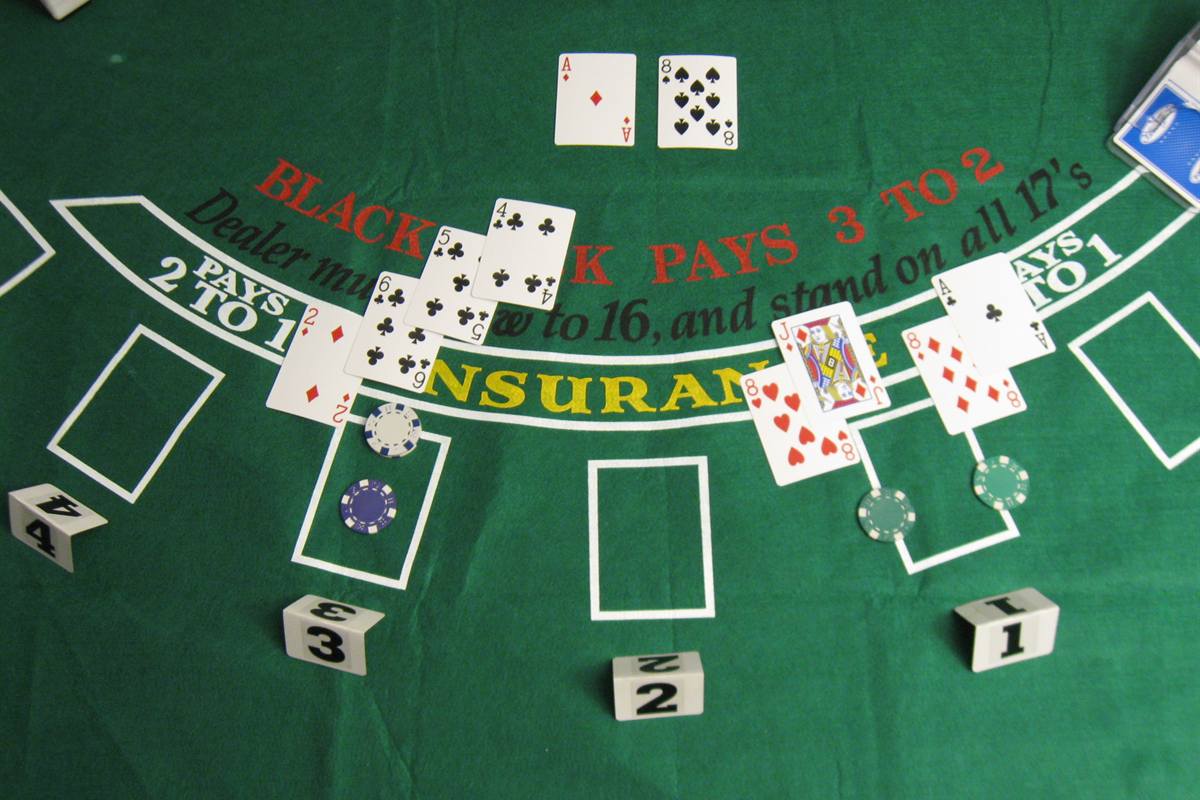
Card counting in blackjack means tracking high and low cards so you know when the next hands favour the player. This page covers the Hi-Lo count, the law in Canada, casino countermeasures, Canadian table rules and why counting fails online. Compare sites in our Canada online casino reviews.
Casino play is for adults only: you must be 19+ across most provinces, and 18+ in Alberta, Manitoba and Quebec. The clip below is WIRED’s English video in which a blackjack expert explains how card counting works.
What does card counting in blackjack actually track?
The balance of high and low cards left to play. Per Wikipedia, counters keep a running count of the high and low cards dealt. Every blackjack card counting Canada beginner starts with that one running total.
LiveScore says the count shows whether upcoming cards favour the player or the dealer. Per Wikipedia, counters then bet more when they hold the advantage and less when the dealer does. They also change playing decisions to fit the deck’s make-up.
The same idea reaches other tables. Our page on card counting at baccarat cites Chipy: any multi-deck shoe game with more than one hand per shuffle can be counted. Yet Eliot Jacobson calls baccarat counting a hopeless endeavor.
Why do high cards help the player?
They lift the chance of a blackjack and improve the player’s key moves. Per Wikipedia, aces, 10s and 9s are the cards that benefit the player. A deck rich in them is what the blackjack card counting Canada player waits for.
A blackjack often pays 3 to 2, though certain casinos pay only 6 to 5. Check the payout before you sit, because a 6 to 5 table cuts the reward high cards bring. High cards improve doubles on 11, 10 and 9 too.
A high-card shoe also gives more splits and can make insurance profitable. It raises the chance that a dealer showing 2 to 6 busts. In blackjack card counting Canada play, that makes insurance a count decision, never a habit.
Why do low cards favour the dealer?
Because dealer rules force a hit on stiff hands. Per Wikipedia, low cards from 2s to 7s benefit the dealer, since they rarely bust totals of 12 to 16. That makes them the dealer’s cards in blackjack card counting Canada terms.
A dealer with a stiff hand busts if the next card is a 10. When the shoe holds mostly low cards, that 10 rarely arrives, and the dealer draws small cards without busting.
This is why counting tracks low cards as closely as high ones. Each low card that leaves the shoe is one less card to rescue a stiff dealer hand. A blackjack card counting Canada player bets more once enough low cards are gone.
Do you need a special memory to count cards?
No. Per Wikipedia, counters do not need unusual mental abilities and do not memorize specific cards. They give each card a point score and track the sum, the method behind the blackjack card counting Canada players study.
A popular counting tutorial on video agrees: you do not have to be a mathematical genius or have a photographic memory. What matters is steady attention, so practise keeping one running number while cards fall at table speed.
The film Rain Man spread the myth that counters track every card. Its character counts through six decks with ease, and a casino employee says that is impossible. The skill is a running sum, not a memory trick.
Who invented card counting?
Edward O. Thorp, an American mathematician, per Wikipedia. He is called the father of card counting. His book Beat the Dealer, from the early sixties, set out the betting and playing strategies at the root of blackjack card counting Canada play.
The book taught a 10-count system. It is harder to use and less profitable than later systems. So start your blackjack card counting Canada practice with a later system, such as the Hi-Lo count.
The book has aged in another way. Casinos stopped dealing to the last card, so certain techniques in it no longer apply. Expect the shuffle to come before the shoe runs out.
Who counted cards before Thorp?
Jess Marcum, Joe Bernstein and a group called the Four Horsemen. Per Wikipedia, Marcum developed the first full point-count system. The blackjack card counting Canada story therefore starts before Thorp’s book.
Joe Bernstein was called an ace counter feared throughout Nevada in Harold Smith’s book I Want To Quit Winners. Even then, a skilled counter drew attention, a pattern that still shapes play today.
In the late fifties, Roger Baldwin, Wilbert Cantey, Herbert Maisel and James McDermott published Playing Blackjack to Win. Known as “The Four Horsemen”, they gave the first accurate basic strategy and a rudimentary count.
How did blackjack teams grow?
Ken Uston spread the idea. Per Wikipedia, he first wrote about the Big Player Team in the seventies, from his time on Al Francesco’s teams. Team play then became a lasting part of blackjack card counting Canada history.
Uston later became a Blackjack Hall of Fame inductee. His books and lawsuits cut both ways, because they grew team play and also made casinos more aware of it. Today’s blackjack card counting Canada player inherits both sides of that story.
Well-known teams with documented earnings in the millions include those run by Al Francesco, Ken Uston and Tommy Hyland. MIT groups and a team called “The Greeks” join that list. Read those sums as records, not a promise.
What links the MIT team to a Canadian film?
Ben Mezrich’s book Bringing Down the House. Per Wikipedia, it describes the MIT team, and its story inspired the Canadian movie The Last Casino. That film gives blackjack card counting Canada fans a homegrown screen version.
The Last Casino was later remade as the Hollywood film 21. Both films grew from the same story, so treat them as entertainment, not as a blackjack card counting Canada manual.
Colin Jones, author of The 21st Century Card Counter, co-ran the Church Team. Per a counting tutorial video, that team took millions from casinos, and its story appears in the documentary Holy Rollers.
What happened to the counting team arrested in Windsor?
A judge cleared them. Per Wikipedia, members of Tommy Hyland’s team were arrested in the mid nineties at a casino in Windsor, Ontario. The ruling still matters to blackjack card counting Canada players.
The arrests were for ace sequencing and team play. Court records showed Nevada casinos with ownership stakes in the Windsor casino pushed the cheating charges. So the push came from outside Canada.
The judge ruled that the players’ conduct was not cheating but merely the use of intelligent strategy. For a blackjack card counting Canada player today, that wording is worth knowing if staff ever call your play cheating.
Can you be arrested for counting cards in Canada?
Yes. LiveScore says card counting is not cheating under section 209 of Canada’s Criminal Code (R.S.C., chapter C-46). For blackjack card counting Canada players, counting is entirely legal, Ontario included, and you cannot be arrested for it.
The line is drawn at tools. Using software or devices to count is cheating under criminal law, and it can bring bans, fines and criminal charges.
Per LiveScore, smartphones, watches, calculators, cameras and sensors are prohibited, so counting happens in your head. Every blackjack card counting Canada player has to train the mind, not a gadget.
Can a Canadian casino ban you for counting?
Yes. LiveScore says most casinos are private establishments, so they can ban suspected counters. Even so, a Canadian casino cannot confiscate a blackjack card counting Canada player’s chips or detain them, because counting is not a crime.
Know your position if staff ask you to leave. The casino can bar you from play, but it has no right to take your chips or hold you there. Stay calm, collect your chips and walk out.
Bans happen in practice, as bj21’s Alberta counter, JackVegas, writes. He says he was eventually “tossed out like everybody else” and chased out of Canada almost entirely.
How does the Hi-Lo count value each card?
Plus one, minus one or zero. Per Wikipedia, Hi-Lo adds +1 for each card from 2 to 6 and subtracts one for each 10, jack, queen, king or ace. For blackjack card counting Canada newcomers, 7s, 8s and 9s count as zero.
Low cards push the count up because their removal raises the share of high cards left, per Wikipedia. High cards pull it down. A rising count means the cards to come are richer in tens and aces.
LiveScore puts it in player terms. Removing high cards (A, K, Q, J, 10) benefits the house, while removing low cards (2 to 6) benefits the player. Neutral cards (7, 8, 9) stay at 0.
How do you keep a running count?
Add as you go. Per Wikipedia, the running count is the running total of each card’s value. Every card dealt adds +1, -1 or 0 to the total that blackjack card counting Canada players carry forward.
LiveScore’s worked example deals Q, 8, 3, 7 and 6. The sum (-1) + (0) + (+1) + (0) + (+1) gives a running count of +1. Run this blackjack card counting Canada drill at home with a shuffled deck.
One wrong card spoils every total that follows it. Pair the count with sound basic play from our blackjack strategy for Canadians. The count works on top of your hand decisions, not in place of them.
How do you turn the running count into a true count?
Divide it. Per Wikipedia, a balanced count such as Hi-Lo converts the running count into a true count by dividing it by the decks not yet dealt. This lets blackjack card counting Canada players account for the decks in use.
LiveScore offers a clean case. A running count of +6 with two decks remaining gives a true count of +3. The same +6 means less when more decks are still in the shoe.
Wikipedia notes the true count can be calculated by division or approximated, and variations exist. Approximating means rounding to a figure you can hold in your head. Pick one method and stick with it, so your blackjack card counting Canada bets follow the same rule every shoe.
Why does deck estimation trip up new counters?
Guesswork under pressure. A video tutorial has a chapter titled “Running Count / True Count”. One viewer said deck estimation is one of the hardest parts of counting. It trips up blackjack card counting Canada beginners because every true count depends on that guess.
A wrong deck guess bends the true count. Overestimate the decks left and the count looks weaker than it is. Underestimate them and it looks stronger, which tempts you into bets that are too big.
Practise at home. Stack one deck, then two, and study how each pile looks from your seat. Check each guess against the real size afterwards. Repeat until your blackjack card counting Canada estimates land close every time.
What does level 1 mean for a count?
One point per card at most. Per Wikipedia, Hi-Lo is a level-1 count, so the count never moves by more than one per card. That keeps the math simple for blackjack card counting Canada beginners.
Wikipedia classifies systems as level 1, 2, 3 and so on, by the ratio between card values or the number of point values. A higher level means more for blackjack card counting Canada learners to remember.
Basic systems give each card a positive, negative or zero value. Hi-Opt I is another level-1 example. It scores 2 as 0, 3 to 6 as +1, 7 to 9 as 0, tens as -1 and the ace as 0.
Which other counting systems exist?
Hi-Opt II, Omega II and 10 Count are three level-2 options. Wikipedia also lists Hi-Opt I, KO, Red 7, Halves and Zen. Each blackjack card counting Canada system sets its own point values.
Hi-Opt II scores 2 and 3 as +1, 4 and 5 as +2, and 6 and 7 as +1. The 8 and 9 are 0, tens are -2 and the ace is 0.
Omega II scores 2 and 3 as +1, 4 to 6 as +2 and 7 as +1. Its 8 is 0, 9 is -1, tens are -2 and the ace is 0. The 10 Count scores 2 to 9 as +1, tens as -2 and the ace as +1.
How does the KO count skip the true count?
It is unbalanced. Per Wikipedia, KO scores 2 to 7 as +1, 8 and 9 as 0, and tens and the ace as -1. A full deck does not sum to zero, and KO spares blackjack card counting Canada players the division step.
Wikipedia says unbalanced systems remove the chore of tracking the number of cards or decks already played. The running count works alone, so there is no deck guess to get wrong.
The trade-off is typically lower playing efficiency. Red 7, a level-1 count like KO, scores 2 to 6 as +1 and the 7 as 0 or +1. Its 8 and 9 are 0, and tens and the ace are -1.
Do multilevel counts earn more?
Not always. Per Wikipedia, tracking more data with higher-level counts can hurt speed and accuracy. Certain counters earn more playing a simple count quickly than a complex count slowly, a point for blackjack card counting Canada beginners to weigh.
Multilevel counts such as Zen Count, Wong Halves and Hi-Opt II split card values further for accuracy. Advanced counts use values such as +2 and -2, or +0.5 and -0.5.
Halves is a level-3 count. It scores 2 as +0.5, 3 and 4 as +1, 5 as +1.5 and 6 as +1. The 7 is +0.5, 8 is 0, 9 is -0.5, and tens and the ace are -1. Time your blackjack card counting Canada drills before trusting Halves at a table.
What are betting correlation, playing efficiency and insurance correlation?
Three measures a system trades off. Per Wikipedia, counting systems balance betting correlation (BC), playing efficiency (PE) and insurance correlation (IC). Each one rates a different job, and blackjack card counting Canada players compare them when picking a system.
Playing efficiency gauges how well a system tells the player to change strategy to fit the actual undealt cards. A high PE means the count steers your hit, stand and double choices.
Insurance correlation matters because, per Wikipedia, part of a counter’s gain comes from taking insurance, which turns profitable at high counts. For blackjack card counting Canada players, that means taking insurance at high counts and turning it down otherwise.
Why do counters argue about the ace?
It helps betting but hurts playing. Per Wikipedia, ace-reckoned strategies count the ace and ace-neutral ones do not. Counting it improves betting correlation, since the ace is the most valuable betting card. Every blackjack card counting Canada system takes a side on this.
The cost is playing efficiency, because the ace counts as one or eleven. PE matters more in single- and double-deck games, while BC matters more in shoe games.
One fix is to leave the ace out and keep a side count of aces. In theory, a side count of every card can bring PE close to 100%, but complexity rises exponentially. Without side counts, PE can approach 70%.
How do point values mirror each card’s effect of removal?
They are chosen to follow it. Per Wikipedia, a system’s point values aim to correlate with each card’s “effect of removal” (EOR). In blackjack card counting Canada terms, EOR is the effect one card has on the house advantage once removed from play.
Larger ratios between values match EOR better and raise efficiency, per Wikipedia. The price is added complexity. Pick the largest ratio your blackjack card counting Canada sessions can handle without slowing down.
Zen shows a larger ratio at work. Its plus cards run +1 for 2 and 3, +2 for 4 to 6 and +1 for 7. The 8s and 9s stay at 0, tens drop to -2 and the ace sits at -1. Wikipedia rates it level 2.
How does a counter raise bets as the count climbs?
In proportion to the edge. Per Wikipedia, the Kelly criterion says bet increases are proportional to the player’s advantage, so the higher the count, the bigger the bet. That link sits at the heart of the blackjack card counting Canada players study.
Counters turn this idea into a bet ramp. Per Wikipedia, a ramp ties one bet size to each true count value. Write the ramp down before you sit and follow it at every table.
LiveScore keeps the rule short: bet low when the count is 0 or below, and increase at +1 or above. Before each new round, check the count, not your gut feeling.
What is a bet spread?
Maximum bet divided by minimum bet. That is how Wikipedia defines the betting spread. It shows how far a counter moves between the smallest and largest wager. Every blackjack card counting Canada plan sets this range before the first hand.
A wide spread carries a risk. Wikipedia notes that large bet variations are one way casinos detect counters. A sudden jump from the minimum to a top bet draws attention.
Per Wikipedia, a 1-15 unit spread with only one deck cut off a six-deck game can reach an advantage of up to 1.2%. That comes with a standard deviation of 3.5 on a 2.1 unit average bet. Expect wide swings in blackjack card counting Canada results.
How often does the count favour the player?
Only 10-35% of the time. Per Wikipedia, that is how often the count is positive enough to raise bets, depending on rules, penetration and strategy. Every blackjack card counting Canada session plays most hands at the minimum bet, waiting for the deck to turn.
This shapes how the game feels. Long stretches bring no reason to raise a bet. Players who grow bored and push chips out early give back the edge they came to earn.
Before you choose a table, check its rules and where the cut card sits. Poor rules or low penetration push a game toward the low end of that range.
What is Wonging, or back-counting?
Watching first, then joining. In blackjack card counting Canada terms, Wonging means standing behind a table, counting, and entering only when the count favours the player. Per Wikipedia, it is named after Stanford Wong, who proposed it.
The back-counter leaves when the count cools. Taken to its end, the Kelly criterion means betting nothing when the deck has no positive expectation, and Wonging puts that into practice. Per Wikipedia, back-counters skip hands without an advantage, so big jumps in bet size are less necessary.
Wikipedia says Wonging is generally done on 4, 6 or 8 deck shoes, though possible on 1 or 2 deck pitch games. Casinos that ban mid-shoe entry in single- or double-deck games make it impossible there, so check entry rules first.
Which playing deviations do counters use?
Splitting tens, doubling soft 18/19/20, standing on 15/16 and surrendering 14. Wikipedia lists these as counter deviations from basic strategy. Part of the profit in blackjack card counting Canada play comes from changing strategy to the known make-up of the cards.
These moves carry a cost. Per Wikipedia, splitting tens and doubling soft 19 and 20 are often called out to the pit as telltale signs. A blackjack card counting Canada player who splits tens invites a closer look.
LiveScore lists deviation from basic strategy as an advanced strategy, so learn the count first. A viewer comment on a counting video claims that deviations use the true count, not the running count. Convert to the true count before each playing decision.
When does insurance become a good bet?
Only when the count is high. Per Wikipedia, part of counting’s gain comes from taking insurance, which turns profitable at high counts. For blackjack card counting Canada players, insurance changes from a bet to skip into a tool for those moments.
A viewer under a counting video claimed that without a separate ace count, you take insurance at a disadvantage. That is one viewer’s claim, not a tested rule. Check what your count system says about insurance before you act.
In every blackjack card counting Canada session, treat insurance as its own decision, apart from the main bet. Skip it at neutral or low counts, where it gives no gain.
How big is a counter’s edge?
About 1%. Wikipedia gives that figure for a typical counter ranging bets in a six-deck game. It is a sensible target for blackjack card counting Canada players, and the rules at each table push it up or down.
Rules set the starting line. Per Wikipedia, perfect basic strategy once faced a house edge under 0.5%. As casinos switched to dealer hits soft 17 and 6:5 blackjack, the average Nevada house edge rose to 1%.
LiveScore says a smaller deck count, 3:2 payouts and doubling on any 2 cards lower the house edge. Wikipedia notes that advantages up to 2.5% are possible at normal penetration counting 6-deck Spanish 21 with redoubling. Check these rules before any blackjack card counting Canada session starts.
What does a counter win per hour?
About $50 an hour, per Wikipedia’s example. It assumes a $100 average bet, a 1% edge and 50 hands per hour, which works out to $1 per round on average. That is the plain math behind blackjack card counting Canada expectations.
Variance in blackjack is high, Wikipedia warns, so a sizable profit can take hundreds of hours. A losing week tells you little about your skill. Track your hours and results, and judge the plan only over long stretches.
Speed matters too. Per Wikipedia, more players at a table, and side bets, slow the game and cut hands per hour. A quiet table with little side betting gives the edge more rounds to work in each blackjack card counting Canada session.
How large a bankroll does counting need?
100 times the maximum bet, by a popular rule of thumb. Per Wikipedia, counters are advised to set aside a large, dedicated bankroll. Sized that way, blackjack card counting Canada bankrolls give a counter room to ride out long losing runs.
LiveScore says to keep a gambling bankroll separate from money for important things. It also says to pick a unit size and risk 1-5% of the whole bankroll per session. A session cap stops one bad night from draining the fund.
Online play still follows these bankroll rules. If you choose real money blackjack online, check that the table minimum matches your unit size and the table maximum covers your top bet.
Why do counters still lose more hands than they win?
Because the odds of a single hand barely shift. Per Wikipedia, at higher counts the chance of winning a hand changes only slightly and stays below 50%. So a blackjack card counting Canada player still loses more hands than they win, even with an edge.
The edge comes from elsewhere. Wikipedia credits more blackjacks, bigger gains from doubles, splits and surrender, and insurance, not winning more hands. A high count makes wins pay more, not happen more often.
Small gains build blackjack card counting Canada edges. On the BlackjackInfo forum, one poster guessed late surrender against an ace in an H17 game adds “.02% or so”. Forum poster DSchles (Don) put it at 0.025%. Both are forum claims, not tested results.
How does penetration change a counter’s edge?
Strongly. Per Wikipedia, penetration is 1 minus the fraction of the pack cut off. It almost directly sets the size of the edge and how often hands are dealt at an advantage. Deep penetration is good news for blackjack card counting Canada players.
Wikipedia adds that the counter’s advantage varies with skill, penetration and bet spread. You control the first and the last. Penetration is set by the house, so a blackjack card counting Canada player watches where the cut card goes before joining a shoe.
Game type counts as well. Per Wikipedia, a counter has a smaller edge in an average shoe game than in a pitch game. When both are on offer, compare their rules and penetration side by side.

How do spotters and big players work together?
By signals. Per Wikipedia, spotters bet the minimum while keeping the count. When a table turns hot, a spotter signals a big player. This is the team play blackjack card counting Canada players study.
The big player Wongs in, which means joining the game mid-shoe. That player bets far higher, up to the table maximum, and leaves when the count cools or the shoe is shuffled. The MIT Blackjack Team used this system.
Unlike a lone back-counter who tracks one table, blackjack card counting Canada teams can count more than one. Spotters who never change bet size or strategy draw little attention, and the big player’s table jumping looks random to the casino.
What makes team play hard to run?
People, money and signals. Per Wikipedia, team play depends on more than one accurate spotter, and the take is split. Spotters also play whatever the count says, a cost every blackjack card counting Canada team carries.
Signals between players can alert pit bosses. Before a blackjack card counting Canada team plays, members can agree how signals are passed and how often they change. A hand sign repeated all night is easy for a trained eye to spot.
Per Wikipedia, a variation with non-playing spotters gives weaker communication, smaller comps and far more suspicion, since blackjack is not usually a spectator game. Spotters who play basic strategy without the count also lose money long term.
What are shuffle tracking and ace sequencing?
Ways to follow cards through a shuffle. Per Wikipedia, Hyland and Francesco later moved to ace sequencing, or cutting to the ace. This form of shuffle tracking goes past the plain count blackjack card counting Canada players learn.
The player spots the bottom card during the shuffle, ideally an ace, then cuts precisely and plays hands so they get the ace. This was harder for casinos to detect. Knowing how casino shuffles work helps before trying it.
Automatic batch shufflers hide the shuffle and interfere with shuffle tracking. With the bottom card out of sight, the method fails. Every blackjack card counting Canada player can check how the dealer shuffles first.
How do casinos spot card counters?
With cameras, software and floor staff. Per Wikipedia, pit bosses and surveillance teams watch through video, known as the eye in the sky, and use computer analysis. Every blackjack card counting Canada player is under this watch.
Warning signs include large buy-ins and dramatic bet changes, especially big bets only at the end of a shoe. Playing only a handful of hands per shoe, table hopping and playing multiple hands also draw attention.
Refusing to play rated, or tracked, is another flag, and so are lifetime winnings. LiveScore says casinos also use computer vision with facial recognition to identify counters by their play. Casinos at times misidentify and ban players who do not count.
Which databases flag advantage players?
Chain lists and agency lists. Per Wikipedia, casino chains keep databases of undesirable players and can also buy access to advantage-player databases run by outside agencies. These are lists blackjack card counting Canada players never see at the table.
Wikipedia names Griffin Investigations, Biometrica and OSN, short for Oregon Surveillance Network, as such agencies. A casino that subscribes can check any player at its tables against their records.
A player found in one of these databases will almost certainly be banned. For blackjack card counting Canada players, being flagged at a single table can close doors at casinos they have never visited.
What technology reads cards at the table?
Card-reading shoes and tracking software. Per Wikipedia, systems such as the Shuffle Master Intelligent Shoe scan each card’s value as it leaves the shoe. So blackjack card counting Canada players can face a table that records every card.
Bloodhound and Protec 21 software take voice input of card and bet values to work out the player’s edge. RFID chips track bet amounts. Surveillance software plots bet size against the count. A non-counter shows no trend, while a counter shows a slope that reflects their edge.
It also checks insurance and 16 against a 10 plays at positive and negative counts. LiveScore says overhead stereo cameras track card values with template matching, contour analysis and the SIFT algorithm. Automated card reading can be abused for preferential shuffling, so certain systems delay real-time data to meet licensing rules.
Which countermeasures cut a counter’s edge?
Shallow penetration, early shuffles and bans. Per Wikipedia, casinos cut penetration, which is how deep the dealer deals before shuffling. They also ban counters from blackjack, from all games or from the property, steps that hit blackjack card counting Canada players hard.
Preferential shuffling means the dealer shuffles when a player raises a bet. Casinos also change split, double or multi-hand rules or table stakes, block mid-shoe entry or flat bet a player, which forces one bet size. Cancelled comps, confiscated chips and back rooming, or detention, round out the options.
Per Wikipedia, Nevada sets only light legal limits on these steps, while New Jersey restricts them. One video tells how Colin Jones’s team had to “explain themselves” in a back room after winning big.
Do continuous shuffling machines stop counting?
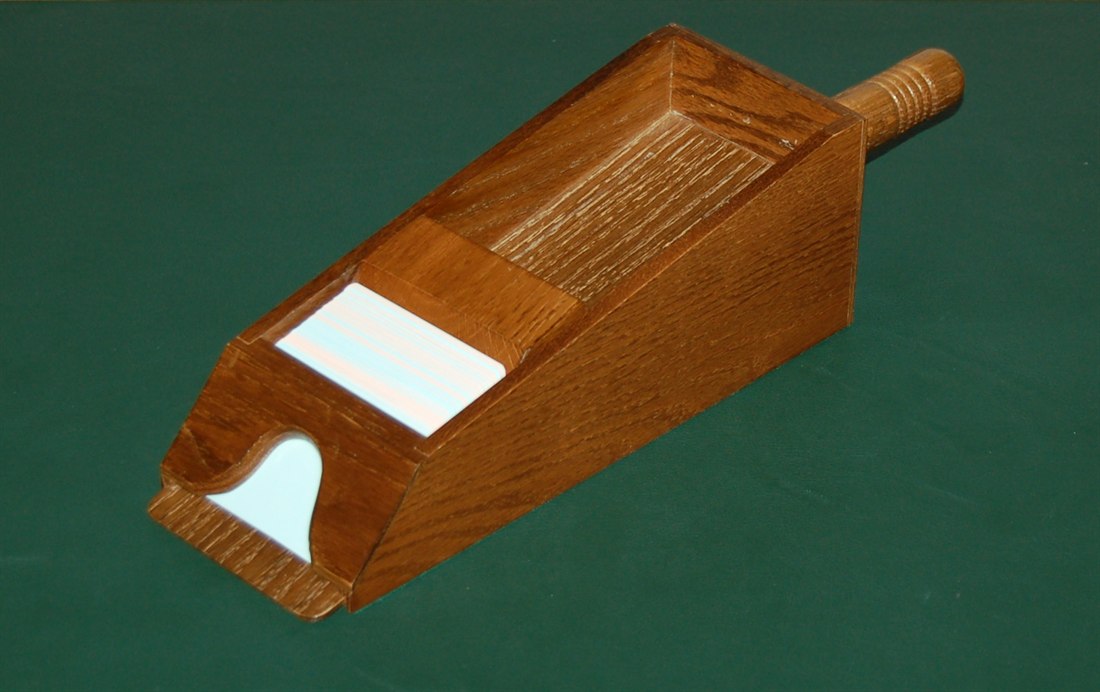
Yes, mostly. Per Wikipedia, continuous shuffling machines, or CSMs, return used cards to the shoe so play never stops. They force minimal penetration and greatly reduce the advantage of counting, which is bad news for blackjack card counting Canada players.
LiveScore says CSMs are common in Canadian casinos, so look for the machine before you sit down. If used cards go back into a machine instead of a discard tray, skip that table.
A regular shoe still lets blackjack card counting Canada players build a count as the cards come out. Pick a table where the discard tray fills up, since penetration decides how useful that count becomes.
Why can’t Atlantic City casinos ban counters?
Because of a court ruling. Per Wikipedia, Ken Uston sued an Atlantic City casino in the late seventies. He argued that casinos had no right to ban skilled players, a case worth knowing for blackjack card counting Canada players who travel.
The New Jersey Supreme Court ruled that the state controls Atlantic City’s casinos completely. So only the New Jersey Casino Control Commission can make rules to exclude skillful players. The Commission has made no such rule.
Atlantic City casinos therefore cannot ban counters, and blackjack card counting Canada visitors face countermeasures there instead. One video says Tommy Hyland’s chance encounter with a New Jersey politician led to protections that still exist.
What does cover mean for a counter?
Cover is behaviour that hides the count. Per Wikipedia, for successful counters, cover can be just as important as playing skill. Perfect play still stands out when the bets of blackjack card counting Canada players follow the count.
In practice, cover means playing in a way that does not match the warning signs casinos track. Keep bet changes smooth, stay at a table through the shoe when you can, and agree to play rated.
As bj21’s Alberta counter puts it, Canada is now “mostly a paranoid wasteland” where casinos back off or bar first and ask questions later. The same writer adds: “Casinos simply can’t offer a heat-free, great pen, high-limit game without that game eventually being blown out of the water.”
Is counting legal outside Canada?
Yes, in Britain and the US. Per Wikipedia, card counting is not illegal under British law or US federal, state or local law, provided no device or outside person helps. Every blackjack card counting Canada player who travels has to respect that condition.
A Nevada Supreme Court case, Chen v. State, Gaming Control Board, states that counting is not illegal under Nevada law. Macau does not technically prohibit counting, but casinos there can expel anyone. Electronic aids are strictly banned in Macau and can lead to arrest.
Casinos still object to counting and ban players they believe are counters, so legal does not mean welcome. Abroad, the safe habit for blackjack card counting Canada players is to keep the count in their heads, with no app or device.
Which blackjack rules do Canadian casinos deal?
It depends on the province. A BlackjackInfo forum poster says Canadian games always hit 17, allow double after split and offer early surrender except against an ace. For blackjack card counting Canada tables, treat that as a claim, not an official rule.
The poster adds that no hole card is taken, and he believed doubles and splits against a dealer blackjack lose only the original bet. Check the rule card at the table, and learn how to play blackjack if these terms are new.
Another poster replied that Canada is a big country. Those rules sound like parts of western Canada, the reply says, and things differ elsewhere. Treat blackjack card counting Canada tables province by province.
How does no-hole-card dealing work in western Canada?
The dealer takes no hole card. A BlackjackInfo poster says these Canadian games are OBO, which works the same as a peek game. Regina and Moose Jaw are the exceptions, so blackjack card counting Canada players there ask the dealer first.
Viewer comments say no-hole-card dealing applies only in western casinos. In Ontario, the dealer has both cards, and in Quebec the dealer takes the hole card. These are viewer claims, not posted rules.
The same comments say casinos in Winnipeg deal like the US, with both dealer cards at the start. Check the rule card before you double or split against a 10 or ace at blackjack card counting Canada tables.
What do OBO, ES10, DAS and H17 mean?
Rule codes every blackjack card counting Canada player meets. BlackjackInfo posters decode OBO as only the original bet lost on doubles and splits against a dealer blackjack. ES10 is early surrender against a 10, DAS is double after split and H17 means the dealer hits 17.
The same posters decode DA2 as double on any two cards, RSA as resplit aces and LS10 as late surrender against a 10. Learn all seven before your first blackjack card counting Canada session.
With OBO, a double against a dealer ace costs only your first bet if the dealer has blackjack. In a no-hole-card game without OBO, the whole doubled stake is gone.
How do Alberta tables compare with other provinces?
Fairly uniform, says a BlackjackInfo poster. Alberta tables deal OBO, ES10, DAS, DA2, RSA and H17. Saskatchewan matches Alberta except it offers no surrender, so blackjack card counting Canada players find close rules in both provinces.
The poster adds that a casino in Edmonton offered both early surrender against a 10 and late surrender. Montreal deals 8-deck games with H17, DAS and DA2, while Moncton has an LS10 “hide” game.
A Vancouver shoe game does not let blackjack card counting Canada players surrender and insure at the same time. In Halifax, the poster believed, a double-deck game years ago allowed no double after split and doubles only on 9 to 11.
What did old Canadian table listings show?
Four to eight decks. BlackjackReview’s Canada table, last updated in the late nineties, lists Ontario casinos near Niagara and Orillia with 74 and 76 tables of 8 decks. Windsor had 50 such tables. It is history for blackjack card counting Canada players.
Calgary casinos had 30, 21 and 20 tables of 4-deck H17 games, two with a $25 maximum. Edmonton casinos had 18, 20 and 23 tables of 4 decks. British Columbia listed only 6-deck H17 games with a $25 maximum.
Saskatchewan had 4-deck games and a Regina casino with 32 tables of 5 decks. Six-deck shoes ran at a Manitoba casino with 18 tables, plus Montreal with 50, Halifax with 26 and Yukon with 15. The table adds that casinos had raised maximum bets.
How did one Alberta counter fare?
Eight years under local tolerance levels. JackVegas, an Alberta-based counter writing on bj21 in the early twenty-twenties, says he lasted that long and played backoff-free for five years. His posts show blackjack card counting Canada play up close.
At his most-played casino he was known as “Jack the Counter”, and a pit boss called him “a good friend of the casino”. Treat that as one player’s claim.
Certain younger dealers dealt him half-deck penetration or better, he writes. At one point, Alberta high-limit rooms held far more blackjack card counting Canada players than regular customers.
What did counters earn in Alberta?
Over $200 an hour in expected value at low stakes. The Alberta counter on bj21 writes that this was possible heads-up or at a table that was not full. That is his estimate, and blackjack card counting Canada players today face tougher rooms.
Expected value is the average hourly win over the long run. At blackjack card counting Canada tables, heads-up play means more hands per hour and more big bets when the count rises.
He writes that one summer a skilled, well-bankrolled player took six figures from Alberta casinos in under a month. A team also profited. He estimates at least seven figures, probably multiple millions, in damage to casinos from counters in high-limit rooms.
Why did Alberta high-limit rooms turn hostile?
$1,000 maximums. JackVegas writes that most Alberta casinos revamped their high-limit rooms with that limit, and he calls it his “eventual doom”. Every blackjack card counting Canada player in those rooms now plays under closer eyes.
Until the years just before the early twenty-twenties, he writes, Alberta games were four decks with great penetration and early surrender. Table maximums were often only $200. Those games are mostly gone.
In Canadian high-limit rooms, he adds, a bet spread now earns reduced penetration on day one and a half-shoe by day two. About half the casinos he played now sweat any bet spread.
Which basic strategy plays fit Alberta rules?
Hit hard 5 to 8, stand on 17 or more and always double 11, says a BlackjackInfo poster’s chart for Alberta rules. It doubles 9 against 3 to 6 and 10 against 2 to 9 at blackjack card counting Canada tables.
Stand on 12 against 4 to 6 and on 13 to 16 against 2 to 6. Hard 14 and 15 hit against 7 to 9 or an ace and surrender against a 10. Hard 16 hits against 7, 8 or an ace and surrenders against 9 or 10.
A reply says the chart works for OBO games. Where you lose everything to a dealer blackjack, never double or split against a 10 or ace, except split aces against a 10. Because OBO games play like peek games, split aces and eights against a dealer ace.
How do soft hands and pairs play under Alberta rules?
Soft doubles happen only against a dealer 2 to 6, an easy pattern for blackjack card counting Canada players. The chart doubles A2 and A3 against 5 or 6, A4 and A5 against 4 to 6, and A6 against 3 to 6.
A7 doubles against 2 to 6, stands against 7 or 8 and hits otherwise. A8 doubles against a 6, and A9 and A10 stand. Split 2s and 3s against 2 to 7, 4s against 5 or 6 and 6s against 2 to 6. Double 5s against 2 to 9.
Split 7s against 2 to 7, hit them against 8, 9 or an ace and surrender against a 10. Surrender 8s against a 10 and split them otherwise. Split 9s except against 7, 10 or an ace, where you stand. Stand on 10s and always split aces.
Is a Canadian low-limit game still worth counting?
Yes, for a hobbyist. bj21’s Alberta counter writes that blackjack card counting Canada players with a top bet under $300 can last a while at low-limit six-deck games. Results generally trail the States, he adds.
A viewer comment says a casino in Regina gives the dealer the last card and has horrible deck penetration. Shallow penetration hurts every blackjack card counting Canada player, since the shuffle comes before the count builds.
The same viewer says two betting spots sit behind every player, so you can play three to five hands off other players. Treat that as a viewer claim. A Canadian beginner on BlackjackInfo reports memorizing full basic strategy in about an hour.
Does an RNG blackjack table leave anything to count?
No. Wikipedia notes that in most online casinos the deck is shuffled at the start of each new round, so the house keeps the advantage. That leaves blackjack card counting Canada online players with nothing to track at RNG tables.
A running count works only when used cards stay out of play. When every round starts from a full deck, your count resets each hand and a bigger bet gains nothing.
Wikipedia adds that continuous shuffling machines give very shallow penetration and greatly reduce counting’s effectiveness. Penetration means how far into the cards the dealer gets before a reshuffle. If cards return to a machine after each hand, skip blackjack card counting Canada tactics there.
Does counting work at live dealer blackjack?
Partly. Live dealer blackjack uses a physical shoe, so cards that leave it stay gone until the next shuffle. That gives blackjack card counting Canada players a real count to follow. We found no published figures on how deep online live shoes are dealt.
Live studios use three camera angles as standard: a wide table shot, a close view of the shoe and a card view. Optical character recognition reads each card as it lands. Watching a card leave the shoe gives blackjack card counting Canada fans evidence an RNG cannot offer.
Infinite Blackjack from Evolution deals from eight decks, or 416 cards, with 32 Aces and 128 cards worth ten. The dealer stands on soft 17, and one operator lists the RTP at 99.47%. Unlimited seats share one starting hand. Compare tables on our page of live blackjack casinos.
Which live tables shuffle after every round?
Quantum Blackjack does. Live Casino Comparer says this Playtech Live game uses an auto shuffler that reshuffles after every round. That leaves every blackjack card counting Canada fan nothing to build on at this table.
Quantum Blackjack uses six decks, but deck count matters little when every card goes back after each hand. Play Quantum Blackjack live for fun, not as a counting table.
Live Casino Comparer says Easy Blackjack live changes its eight-deck shoe once half the cards are used. For Infinite Blackjack, another operator says the decks are shuffled by hand at intervals. Longer gaps give your count room to grow.
How do altered shoes change what you track?
They change the card mix your count assumes. Power Blackjack from Evolution removes every 9 and 10 from eight decks. That takes out 64 cards, so the shoe holds 352 instead of 416. A standard blackjack card counting Canada system misreads that shoe.
With nines and tens gone, the shoe starts poorer in high cards before a hand is dealt. Unless you adjust for the missing cards, every raised bet rests on a false reading.
Always 6 Blackjack from Evolution uses six decks, and its main bet RTP is 99.34% with optimal strategy. Lightning Blackjack, also from Evolution, is standard eight-deck blackjack where the dealer stands on soft 17, with no surrender.
Which casinos on our list run live blackjack?
LolaJack and Vegazone show it most clearly for blackjack card counting Canada players. LolaJack’s live lobby had its own Blackjack section when we loaded it. Vegazone’s lobby has separate Live Casino and Blackjack tiles, and PlayCasino names Mega Fire Blaze Blackjack Live.
GamblingSites counts 314+ live options at LolaJack, mostly from Evolution. Our LolaJack review covers its lobby. PlayCasino names VIP Blackjack and GGBET Blackjack at GGBet. Bookmakers.bet lists VIP blackjack maximum stakes of 2,000 to 4,000 EUR at Drakaris, which leaves room to spread bets.
SiGMA counts 20 blackjack titles at Melbet, including Blackjack Single Deck and Speed Blackjack. See our Melbet review. Online Casino Groups names Super 7 Blackjack and Aquamarine Blackjack at Spinaconda, and casinos.com notes Blackjack Surrender and Blackjack Lucky Ladies at AzurSlot. For blackjack card counting Canada play, check which tables are live.
How little do blackjack hands add to bonus wagering?
Barely, at Gamblezen. Wizard of Odds says blackjack and other table games count only 5% toward bonus wagering there. That rate hits every blackjack card counting Canada player who takes a bonus.
In practice, a 30x requirement becomes 600x on blackjack, and 40x becomes 800x. All that extra volume exposes you to the house edge on every low-count hand. Turn the bonus down if you plan to play blackjack.
LiveScore says all casinos run checks to confirm players are of age, and you submit ID to sign up and claim winnings. Have your documents ready before your first withdrawal.
Why learn basic strategy before counting?
Because counting builds on it. LiveScore says basic strategy aims to cut the house edge “to the barest minimum” through the right decision for each hand from a strategy chart. Every blackjack card counting Canada method adds bet sizing on top.
LiveScore calls charts one of the safest methods for beginners. On the chart, H means hit, S means stand, P means split, D means double down and R means surrender. Surrender returns half the bet and is not offered everywhere.
Wikipedia notes that spotters who play only basic strategy, without the count, lose money long term. Learn the chart until every play is automatic, then move on to blackjack card counting Canada drills.
How do you practise counting at home?
Follow LiveScore’s six steps. Understand the goal, learn the card values, keep the running count, convert to the true count, adjust your bet and act natural. Acting natural means counting fast and silently while chatting at the table, a core blackjack card counting Canada skill.
One video viewer practises while walking. A man counts as zero, a woman as minus one and a child as plus one, which simulates casino pressure.
Blackjack Apprenticeship points aspiring pros to its video course. For blackjack card counting Canada practice at home, deal a shuffled deck one card at a time and keep the count in your head. Speed up only once you finish without errors.
Which books teach card counting?
Start with the books Wikipedia cites. They include Peter Griffin’s The Theory of Blackjack, Don Schlesinger’s Blackjack Attack, and Arnold Snyder’s Blackbelt in Blackjack and The Big Book of Blackjack. Together they give blackjack card counting Canada readers a solid base.
Wikipedia also cites Josh Axelrad’s Repeat until Rich, Rick Blaine’s Blackjack Blueprint and James Grosjean’s Exhibit CAA. D.V. Cellini’s book on casino surveillance and Bob Nersesian’s The Law for Gamblers round out the list.
Tales from the Felt describes the grind of pro play, including doubt, sadness and loneliness. Its proceeds go to a charity that helps people affected by problem gambling. Read it before you picture blackjack card counting Canada work as an easy living.
What myths surround card counting?
The myth of a sure win tops the list. LiveScore says counting does not guarantee winning. The house holds the edge in every game, and counting is one way to reduce it. Treat blackjack card counting Canada methods as a discipline, not a money machine.
Another myth is that counting breaks the law. Counting is legal, but LiveScore does not recommend it, because you can be banned. LiveScore also lists Fibonacci, Martingale and d’Alembert as betting systems, and none of them tracks cards.
One viewer ran $50 up to $950 on a $15 table on beginner’s luck, and staff assumed he was counting. Another refused 6:5 tables and chose $25 tables paying 3:2, the better blackjack payout.
How do you keep counting from becoming a problem?
Set limits before you play. LiveScore advises deposit and time limits, and says your bankroll is only money you can afford to lose. Every blackjack card counting Canada player hits losing runs, so avoid chasing losses or betting on emotion.
LiveScore also says to work out whether comps are worth your expected losses. A free meal means little if you lose more to earn it. If limits stop working, read about casino self-exclusion in Canada.
Players with problems can contact ConnexOntario, Gamblers Anonymous and Alberta Health Services, according to LiveScore. Reach out early, before a missed limit turns into a habit. The discipline behind blackjack card counting Canada play includes knowing when to stop.