
Learning how to play blackjack takes one hand at a table, because the entire game is a race to get closer to twenty-one than the dealer without going past it. This guide covers the mechanics rather than the strategy: card values, the order of play, every action available to you, what each outcome pays and which table rules to check before sitting down. For the wider market picture, start at our online Canada casinos hub.
The table below summarises every action available to a blackjack player and when it applies. Read it first, then work through the detail beneath.
| Action | When it is available | What happens |
|---|---|---|
| Hit | Any hand under twenty-one | One more card, repeatable |
| Stand | Any hand | Turn ends, hand is final |
| Double down | First two cards | Stake doubled, exactly one card |
| Split | First two cards of equal rank | Two hands, second stake matched |
| Surrender | First two cards, where offered | Half the stake returned, hand ends |
| Insurance | Dealer shows an ace | Side bet paying two to one |
How do you play blackjack in one paragraph?
Place a bet, receive two cards, add them up, and take more cards until you are satisfied or exceed twenty-one, after which the dealer plays a fixed pattern and the higher hand wins.
Going over twenty-one loses immediately. That is the only way to lose before the dealer has acted, and it is the single rule that shapes every decision at the table.
Everything else is a variation on that exchange. Doubling, splitting, surrendering and insurance are optional extras layered on a game that works perfectly well without any of them.
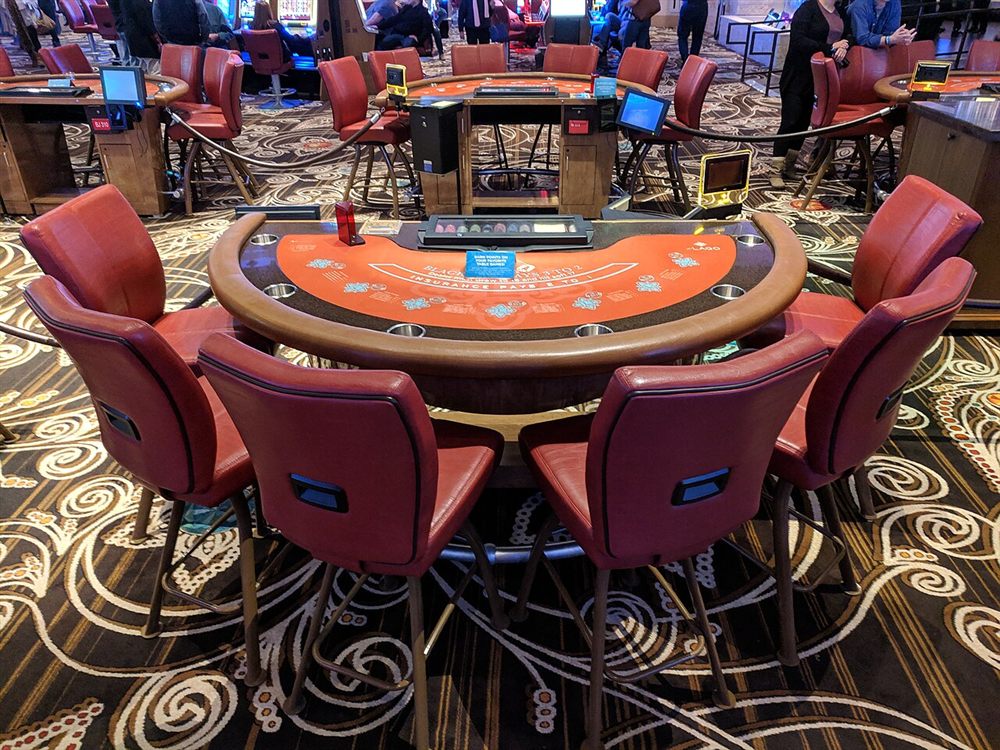
Anybody learning how to play blackjack can sit down knowing only hit and stand. Those two actions cover every hand, and the remaining choices can be added over later sessions.
The dealer has no choices at all. They follow a printed rule, which means the only decisions at the table belong to the players.
That absence of dealer judgement is why the game is measurable. Every situation has a mathematically correct response, which our guide to blackjack strategy covers in full.
The reason the game rewards learning is that the decisions are genuinely yours. Slots and roulette settle themselves once a bet is placed, while a blackjack hand asks the player a question on almost every round.
Played accurately, the house edge sits near half a percent, which is the lowest price on any casino floor. Played by instinct, the same table costs two or three percent for an identical experience.
That gap is why how to play blackjack and how to play it correctly are separate questions. This page answers the first completely, and the second belongs to the strategy chart.
Set expectations before the first hand. Knowing how to play blackjack means knowing the actions, and knowing how to play blackjack profitably means pairing those actions with a chart, and the two are learned in that order rather than together. Nobody memorises a strategy table before they have felt what a sixteen against a ten does to a session. The mechanics come first, the chart comes second, and the discipline to follow the chart when a hand feels wrong comes third and takes the longest to build.
Two sentences close the topic. How to play blackjack is hit, stand and count to twenty-one, and how to play blackjack well is the same three things plus a published chart nobody has to invent.
What is the object of the game?
The object is to finish with a hand total closer to twenty-one than the dealer’s without exceeding it, and beating the other players at the table forms no part of the game.
Each player competes against the house separately. Two players sitting side by side have entirely independent outcomes, and one winning has no effect on the other.
Twenty-one is a ceiling rather than a target. A hand of seventeen wins against a dealer sixteen, and reaching exactly twenty-one is unnecessary.
The dealer bust is the second way to win. Where the dealer exceeds twenty-one, every player still holding a hand wins regardless of their own total.
That double route to a win is central to how to play blackjack sensibly. Standing on a weak hand can win because the dealer breaks, which is why not every hand needs improving.
The house advantage comes from order rather than from cards. Players act first, so a player who busts loses immediately even when the dealer would have busted afterwards.
Beating the dealer rather than reaching a number is the mental adjustment most beginners have to make. A hand of eighteen is excellent against a dealer six and poor against a dealer ten, and the cards in your hand did not change.
The dealer upcard therefore carries most of the information at the table. It is the one visible clue about the hand you are competing against, and every strategy chart is organised around it.
A round has four possible endings: you bust, the dealer busts, one total beats the other, or the two tie. Knowing all four is the whole of how to play blackjack at the conceptual level.
The dealer upcard deserves a second mention because everything hinges on it. A player who learns how to play blackjack by watching only their own cards is playing half the game, and a player who reads the upcard first is already ahead of most of the table. Two through six is a weak dealer and seven through ace is a strong one, and that single division explains the shape of every chart ever published. Reading it takes no skill and remembering to read it takes two or three sessions.
Beat the dealer, not the number. How to play blackjack is that sentence, and how to play blackjack badly is chasing twenty-one.
What are the card values in blackjack?
Cards two through ten count their face value, jacks, queens and kings all count ten, and an ace counts either one or eleven, whichever gives the better total at that moment.
Suits are irrelevant. Hearts, spades, clubs and diamonds carry identical value, and no suit combination produces a bonus outside of a side bet.
A hand containing an ace counted as eleven is called soft. Soft seventeen is an ace and a six, and it cannot bust with one more card because the ace can drop to one.
A hand with no ace, or an ace forced to count one, is called hard. Hard seventeen is a ten and a seven, and one more card busts it more often than not.
That soft and hard distinction is the piece of vocabulary a beginner learning how to play blackjack actually needs, because tables and charts label every hand one way or the other.
The ace switches automatically. No declaration is required, and both live dealers and software always count it in the way that favours the hand.
Counting a hand is quicker than it first appears because tens are so common. Sixteen of the fifty-two cards in a deck count ten, which is why hands cluster around the high teens and twenty.
That density also explains the dealer bust rate. A dealer showing a five or six is holding a likely fifteen or sixteen and drawing into a deck full of tens.
Recognising totals instantly is the first fluency a new player gains. After thirty or forty hands nobody adds the cards consciously, and how to play blackjack stops feeling like arithmetic.
Soft hands confuse beginners more than any other part of the game. A soft seventeen is an ace and a six, it cannot bust on the next card, and it is played entirely differently from a hard seventeen made of a ten and a seven. Learning how to play blackjack properly means spotting the ace and asking whether it is still counting eleven. Once it has been forced down to one the hand behaves like any other hard total, and the soft label no longer applies.
Values never change anywhere. How to play blackjack in Toronto, in a Vegas pit and in a Canadian online lobby uses the identical count, and how to play blackjack across variants changes the rules around the cards rather than the cards themselves.
How does a round actually run?
Players place bets, the dealer deals two cards to each player and two to themselves, players act in turn from the dealer’s left, then the dealer completes their hand and all bets are settled.
Player cards are dealt face up at almost every modern table. That removes any need to handle cards and speeds the round considerably.
The dealer shows one card face up and, in the American game, keeps one face down. That upcard is the only information a player has about the dealer’s hand.
Each player finishes their hand completely before the next player acts. A player may take five cards or none, and the turn passes only when they stand, bust or double.
Settlement happens in the same order after the dealer finishes. Winning hands are paid, losing hands are collected and ties return the stake untouched.
Understanding that sequence is most of how to play blackjack at a live table, because the etiquette and the hand signals all follow the order of play.
The betting window opens before any card is dealt. Once cards are on the table the stake is locked, and no additional money enters the round except through doubling, splitting or insurance.
Multiple hands are permitted at certain tables. A player betting two boxes plays each hand separately in order, and the dealer resolves both against the same dealer hand.
Online the sequence is identical and compressed into two or three seconds. Anybody learning how to play blackjack through software sees the same order of play the live table follows, minus the waiting.
Round structure is identical everywhere, which is what makes the game portable. A player who learns how to play blackjack at a software table walks into a live casino and recognises every step, and a player who learns at a live table finds the software version familiar within one hand. Bets first, cards second, player decisions third, dealer last, settlement after. Nothing in that sequence changes between formats, between operators or between the European and American variants, and only the pace and the interface differ.
Bets, cards, decisions, dealer, settlement. How to play blackjack anywhere follows that order, and how to play blackjack online compresses it.
What does the dealer do?
The dealer follows a fixed rule with no discretion whatsoever: draw cards until reaching seventeen or more, then stop, and bust if the total passes twenty-one.
Two versions of that rule exist. Stand on all seventeen means the dealer stops on any seventeen, and hit soft seventeen means they take one more card on an ace and a six.
The difference matters more than it looks. A table where the dealer hits soft seventeen costs the player roughly two tenths of a percent more, and the rule is printed on the felt.
The dealer never doubles, never splits and never surrenders. Those actions belong to players alone, which is one of the few structural advantages the player holds.
Nothing the dealer does responds to the players. The rule is identical whether every player stands on twelve or every player holds twenty.
For somebody learning how to play blackjack that predictability is the useful part. The dealer’s behaviour is entirely known in advance, and only their hidden card is uncertain.
The fixed rule cuts both ways. It removes any possibility of a dealer playing better against a large bet, and it also removes any chance of the dealer making a mistake in the player’s favour.
Dealer bust rates follow directly from the rule. Upcards of two through six bust roughly forty percent of the time, and upcards of seven through ace bust closer to a quarter.
Those two bands are the whole reason strategy charts split at six and seven. Understanding why is optional, and knowing the split exists is part of how to play blackjack sensibly.
The published dealer rule is the reason blackjack can be solved at all. Because the dealer has no choices, every player decision has one mathematically correct answer, which is not true of poker and not true of any game with a thinking opponent. Learning how to play blackjack therefore has a definite endpoint rather than an open horizon. The chart exists, it is complete, and once it is followed the remaining variance is luck rather than skill. That finality is unusual among casino games and worth appreciating.
Fix the dealer rule in mind and the rest follows. How to play blackjack against a dealer standing on all seventeen differs slightly from how to play blackjack against one hitting soft seventeen, and the felt states which table you are at.
What does hit mean?
Hitting means taking one more card, and a player may hit repeatedly until they either choose to stop or exceed twenty-one and lose the hand immediately.
At a live table the signal is a tap on the felt or a beckoning motion with the hand. Cameras record every round, so the physical signal matters rather than the spoken word.
Online, hit is a button. The card appears instantly and the running total updates, which removes any possibility of miscounting a hand.
A hand of eleven or less can always be hit safely. No single card can push it past twenty-one, which makes the decision automatic in that range.
Hands of twelve through sixteen are where the game gets uncomfortable. Any of those can bust, and the correct choice depends on the dealer upcard rather than on the hand alone.
That dependency is where how to play blackjack becomes a matter of charts rather than instinct, and our guide to blackjack strategy sets out the full table.
There is no limit on the number of cards a hand may take. A hand can reach five or six cards, and certain tables pay a bonus for a five card hand that has not busted.
Each card is dealt one at a time with a decision between them. A player is never committed to a second card by asking for a first.
Misclicking is the one online hazard. The hit button sits beside the stand button, and a player learning how to play blackjack quickly develops the habit of pausing before clicking.
Hitting is the action beginners overuse. The instinct to improve a weak total is strong, and how to play blackjack well means resisting it against a weak dealer upcard. Twelve against a four feels like a hand that needs help, and it is a hand that wins by standing still while the dealer draws into a deck full of tens. Every chart says stand, the hand still feels wrong, and the gap between the two is exactly where a new player loses money without noticing it happening.
Hit is the first verb anybody learns. How to play blackjack starts with it, how to play blackjack badly is using it too often, and the whole distance between the two is one printed chart.
What does stand mean?
Standing means keeping the current total and ending your turn, after which the hand is final and its fate rests entirely on what the dealer draws.
The live signal is a flat horizontal wave of the hand over the cards. Online it is a button, and both end the turn irreversibly.
Standing on a weak total is a legitimate move rather than a surrender. A hand of thirteen against a dealer six wins whenever the dealer breaks, which happens often enough to justify it.
Any total of seventeen or higher is normally a stand. Drawing to those hands busts more often than it improves them, and the arithmetic is not close.
Once standing, the player takes no further part in the round. There is no way to change the decision, add a card or withdraw the bet.
Hit and stand together cover every hand in the game. A person who knows only these two actions knows how to play blackjack completely, and everything else is refinement.
Standing is the correct move far more often than beginners expect. Roughly a third of all hands are stands on totals below seventeen, played entirely on the strength of the dealer upcard.
The instinct to improve a weak hand is what costs money. A hand of fourteen busts on any card above seven, and the seven remaining useful cards rarely justify the risk against a weak dealer.
Accepting that a hand is finished at fourteen is the emotional hurdle in how to play blackjack. The arithmetic is settled, and the discomfort is the part that takes practice.
Standing is irreversible and that is worth internalising before it happens by accident. Online the button sits beside hit, the round moves fast, and a misclick ends a hand that was worth improving. Anybody learning how to play blackjack develops a half-second pause before committing, which costs nothing and prevents the single most annoying error in the game. Live tables have the same hazard in reverse, where a hand signal made too casually is read as a stand by a dealer watching three boxes at once.
Stand is the harder discipline. How to play blackjack correctly means standing on totals that feel unfinished, and how to play blackjack expensively means drawing to them because the number looks too small to keep.
What does double down mean?
Doubling down doubles your stake in exchange for exactly one more card, after which the hand ends automatically whatever total it reached.
The option exists only on the first two cards. Once a third card is taken by hitting, doubling is no longer available on that hand at any table.
Certain tables restrict it further. Double on any two cards is the most generous rule, while double on nine, ten and eleven only is a meaningfully worse table.
The single card is the trade. A doubled nine that receives a two finishes on eleven and cannot be improved, which is the risk the extra stake pays for.
Doubling after splitting is a separate rule worth checking. Where it is permitted the player gains slightly, and where it is barred the table is a little more expensive.
Anybody learning how to play blackjack meets doubling early because it appears constantly on totals of ten and eleven, and the software offers it automatically.
Doubling is the player’s principal offensive weapon. It is the only action that puts extra money on the table in a favourable spot, and declining it entirely costs a meaningful share of the edge.
The classic case is eleven against a small dealer upcard. Any ten completes twenty-one, sixteen cards in the deck do it, and the dealer is drawing from a weak position.
Certain tables cap the doubled amount. Doubling for less is permitted at most, which is a defensive habit rather than part of how to play blackjack correctly.
Doubling is where a bankroll and a chart meet. The chart says double, the stake doubles, and a player who sized their session for flat betting suddenly has twice the money at risk on a hand they expected to cost one unit. Knowing how to play blackjack includes budgeting for that, because declining correct doubles to protect a small bankroll quietly gives back a chunk of the edge the chart was built to capture. Size the session for the doubles rather than for the base bet.
Doubling is where the edge is won back. How to play blackjack without doubling costs a real share of the return, and how to play blackjack with a bankroll too small to double costs the same amount by a different route.
What does splitting a pair mean?
Splitting separates two cards of equal rank into two independent hands, with a second stake matching the first, and each hand then plays out on its own.
Only pairs qualify. Two eights split, and a ten and a king split at most tables because both count ten, though the rule varies and is printed on the felt.
Split aces are treated differently almost everywhere. Each ace receives exactly one card and the hand ends, and a ten landing on it counts as twenty-one rather than as a blackjack.
Resplitting is a table rule rather than a right. Certain tables allow a hand to be split up to four times and others permit one split only.
The second stake is a real commitment. Splitting doubles the money at risk on that round, which matters to bankroll planning more than to the mathematics of the hand.
Knowing when to split is strategy rather than mechanics, and knowing how it works is part of how to play blackjack. Our blackjack strategy guide covers which pairs to split.
Splitting turns one bad hand into two workable ones in the standard cases. A pair of eights is a sixteen, which is the worst total in the game, and two hands starting at eight are both improvable.
It also turns one good hand into two better ones. A pair of aces played as a single hand is a twelve, and split it becomes two hands each a ten away from twenty-one.
The cost is exposure. Doubling the money on the table is part of how to play blackjack correctly, and a bankroll sized for flat betting feels it immediately.
Splitting compounds the same bankroll problem further. A pair split into two hands, each of which then doubles, puts four stakes on the table for one round, and that is a normal outcome rather than an exotic one. Learning how to play blackjack with a realistic budget means treating the table minimum as a quarter of the true exposure per round. Players who discover this mid-session end up declining correct splits, which is the expensive way to learn a lesson a minute of arithmetic would have taught.
Pairs come round more often than beginners expect. How to play blackjack with eights and aces is decided before the hand arrives, and how to play blackjack with tens is a question the chart answers with a firm no.
What is surrender and where is it offered?
Surrender forfeits half the stake and ends the hand immediately, and it exists at a minority of tables as an escape from the worst situations in the game.
Late surrender is the common version. It becomes available after the dealer has checked for blackjack, and it applies to the first two cards only.
Early surrender is far rarer and far better for the player, because it may be taken before the dealer checks, including against an ace.
The move looks defeatist and is arithmetically sound in a handful of spots. Losing half a stake beats losing a whole one on hands that lose more than three quarters of the time.
Most online tables omit it entirely. Where a lobby offers a surrender variant, that table is cheaper than its neighbours for a player who uses the option correctly.
Anyone learning how to play blackjack can safely ignore surrender at first. It appears rarely, and using it wrongly costs more than never using it at all.
The classic surrender spot is sixteen against a dealer ten. That hand loses close to four times out of five, which makes handing back half the stake the cheaper outcome.
A table offering it is genuinely better priced. Late surrender is worth roughly a tenth of a percent to a player who uses it in the two or three correct situations.
Using it more widely destroys the benefit. Surrendering hands that lose only sixty percent of the time costs money, and that is the trap in how to play blackjack with the option available.
Surrender is the one action that looks like giving up and is not. Handing back half a stake on a hand that loses four times in five is arithmetic rather than defeatism, and how to play blackjack correctly includes recognising the two or three hands where it applies. The trap is enthusiasm. A player who surrenders every uncomfortable hand loses more than one who never surrenders at all, because most uncomfortable hands still win often enough to be worth playing out.
What is insurance and how is it offered?
Insurance is a side bet offered whenever the dealer shows an ace, costing half the original stake and paying two to one if the dealer turns over a blackjack.
The mechanics are simple. Take insurance, the dealer checks their hole card, and a ten underneath pays the insurance while the main hand loses, leaving the round roughly even.
Even money is the same bet in disguise. A player holding a blackjack against a dealer ace who accepts even money has taken insurance under a friendlier name.
The bet is priced against the player at every standard table. Roughly four cards in thirteen are ten-valued, and the two to one payout does not cover that gap.
Software offers it automatically whenever the ace appears, which makes it the most frequently taken bad bet in the game.
Learning how to play blackjack includes learning to decline it. Our guide to blackjack strategy sets out the arithmetic behind that refusal.
The name is the problem. Insurance sounds protective and is a separate wager on the dealer holding a ten, unrelated to the quality of the hand it appears to protect.
The pricing is straightforward. Sixteen ten-valued cards sit among fifty-two, which is worse than one in three, and a two to one payout requires better than one in three to break even.
Declining it every time is correct for every player who is not counting cards. That single rule removes the most common leak in how to play blackjack at an ordinary table.
Insurance deserves its own warning because the software asks so often. Every dealer ace triggers the prompt, the countdown adds pressure, and accepting it feels responsible. Learning how to play blackjack includes learning that the prompt is a sales pitch rather than a service. The correct answer is no, it is no every time for anybody not tracking the deck, and the fastest improvement most casual players can make is to stop accepting a bet that has been priced against them since the game was invented.
Say no and move on. How to play blackjack profitably has one non-negotiable rule, and how to play blackjack at a loss usually begins with accepting the prompt that appears every time an ace shows.
What does a blackjack pay?
A blackjack is an ace with any ten-valued card on the first two cards, and it pays three to two at a fair table, returning fifteen dollars on a ten dollar bet.
The hand beats any other twenty-one. A player reaching twenty-one with three cards wins normally but is paid even money rather than the blackjack premium.
Certain tables pay six to five instead. That single change raises the house edge by roughly 1.4 percent, which is more than every other rule on the felt combined.
Spotting it takes one glance. The payout is printed on the table and stated in the game information panel, and a six to five table is worth walking away from.
A dealer blackjack beats every player hand except another blackjack, which ties. There is no way to improve a hand once the dealer turns over the ace and ten.
Checking that payout is the single most valuable habit in how to play blackjack, because no amount of correct play recovers what a six to five table takes.
The three to two payout is the reason the game is cheap. Roughly one hand in twenty-one is a blackjack, and the premium on those hands funds most of the player’s return.
Cutting it to six to five removes about a third of that premium. The change is invisible during play and shows up clearly across two hundred hands.
Checking the payout before the first bet is therefore the highest-value habit in how to play blackjack, because no decision made afterwards recovers what the rule takes.
Payout checking deserves repeating because it is so easily skipped. A player who knows how to play blackjack perfectly at a six to five table loses more than a mediocre player at a three to two table, which is an uncomfortable fact and a true one. The rule sits in the information panel, it takes five seconds to read, and it outweighs every decision made across the following two hours. Check it once per table, every time, before the first bet rather than after the first blackjack.
Three to two or walk away. How to play blackjack at a fair price starts and ends with that payout, and how to play blackjack at a six to five table is losing before the first card is dealt.
What is a push?
A push is a tie between the player and the dealer on the same total, and the player’s stake is returned with nothing won and nothing lost.
Pushes happen frequently. Both hands finishing on twenty is common, and roughly eight percent of hands end this way at a standard table.
Blackjack against blackjack is also a push. The player is not paid the three to two premium, and the stake simply comes back.
A push is neutral rather than a small win. The round is voided for that hand, and the next hand begins with the bankroll unchanged.
One variant removes them. No push twenty-two rules in certain games convert a dealer twenty-two into a tie against every player hand, which sounds harmless and is expensive.
That rule is worth checking before playing a variant. Anyone learning how to play blackjack on an unfamiliar table reads the rules panel before the first bet rather than after.
Pushes are worth understanding because they change how a session feels. A run of ties reads as a losing streak that never arrived, and the bankroll simply holds steady through it.
They also explain why blackjack sessions swing less than roulette sessions at the same stake. A meaningful share of hands settle at neutral, which flattens the ride considerably.
No action is available on a push and none is needed. The stake returns automatically, and how to play blackjack involves no decision at that point at all.
Pushes also matter to bonus arithmetic. A tied hand contributes nothing to a wagering requirement at certain operators and counts the full stake at others, which changes how long a bonus takes to clear on a blackjack table. Anybody learning how to play blackjack with promotional money reads that clause alongside the game weighting. The combination of low contribution and frequent pushes makes blackjack among the slowest games to clear a bonus on, which is worth knowing before accepting the offer rather than after.
What happens when you bust?
Busting means exceeding twenty-one, and the hand loses immediately, with the stake collected before the dealer has played a single card.
That immediacy is the whole house advantage. A player who busts loses even in rounds where the dealer would go on to bust as well.
The arithmetic behind it is straightforward. Both parties bust at similar rates, and the player acting first means simultaneous busts are counted as player losses.
Split hands bust individually. One hand exceeding twenty-one loses its own stake, and the other continues untouched.
A doubled hand that busts loses the doubled amount. The extra stake carries the same risk as the original one and is collected in the same way.
Avoiding unnecessary busts is why how to play blackjack involves standing on totals that feel too low. Twelve against a dealer four wins by not busting rather than by improving.
Player bust rate is the number worth internalising. Roughly one hand in six busts under correct play, and hands played on instinct bust considerably more often.
The busts that hurt most are avoidable ones. Hitting a hard sixteen against a dealer six turns a hand that wins by waiting into a hand that loses immediately.
That is the single most expensive habit a beginner carries into the game, and unlearning it is most of the distance between knowing how to play blackjack and playing it well.
The bust rule is the entire house advantage stated in one sentence, and it is worth sitting with. Both parties bust at similar rates, and the player acts first, so every simultaneous bust is a player loss. Nothing else in the rules favours the house at all. Learning how to play blackjack means learning to work around that single structural disadvantage using the tools the player has and the dealer does not: doubling, splitting, surrender and the freedom to stand on any total at any time.
What are the standard table rules to check?
Check five rules before sitting down: the blackjack payout, whether the dealer hits soft seventeen, the number of decks, the doubling restrictions and whether surrender exists.
The blackjack payout dominates all of them. Three to two is standard and six to five costs more than the other four rules combined.
Dealer behaviour on soft seventeen is next. Standing on all seventeen favours the player by roughly two tenths of a percent.
Deck count follows. Fewer decks favour the player slightly, and single deck games with six to five payouts are worse than eight deck games paying three to two.
Doubling and splitting freedoms are the smallest of the five and still worth reading. Double on any two cards and resplitting up to four hands are the generous settings.
Those five fields describe the price of a blackjack table completely, and reading them is a genuine part of how to play blackjack rather than an optional extra.
The five rules appear in one panel at every online table. Opening it takes five seconds and settles the price of the table before any money moves.
Rule sets vary within a single lobby. Two blackjack tables side by side at the same operator frequently carry different payouts and different dealer rules.
Comparing them is therefore worth doing once per operator. That comparison is the practical half of how to play blackjack profitably in a Canadian online casino.
Write the five fields down once and the check becomes automatic. Payout, dealer rule on soft seventeen, deck count, doubling freedom and surrender availability fit on a single line, and running through them takes less time than deciding a stake. Knowing how to play blackjack includes knowing that two tables in the same lobby at the same minimum can differ by a full percent in price. The one with the better numbers is not harder to play and is not harder to find, and it simply requires the check.
Five fields, thirty seconds. How to play blackjack cheaply is mostly table selection, and how to play blackjack expensively is sitting at the first open seat without reading the panel above it.
How many decks does a table use?
Online blackjack tables commonly use between one and eight decks, and the count affects both the house edge slightly and the practicality of tracking cards considerably.
Fewer decks favour the player marginally. A single deck game is worth roughly half a percent more than an eight deck game with otherwise identical rules.
Operators know this. Single deck tables frequently carry a six to five blackjack payout, which more than cancels the advantage the deck count offers.
Software tables shuffle after every hand regardless of deck count. That makes the number nearly cosmetic, because no card ever carries information into the next round.
Live dealer tables use a shoe and a cut card. Cards do carry forward there, though continuous shuffling machines are increasingly common and remove the effect.
For someone learning how to play blackjack the practical guidance is short: read the payout first and the deck count second, because the order of importance is not close.
Deck count also shapes how often pairs and blackjacks appear. Fewer decks produce marginally more blackjacks, which is where most of the small advantage comes from.
Continuous shuffling machines matter more than the count at live tables. A machine returning cards to the shoe after every round removes any carry-over entirely.
None of it changes the actions available. The mechanics of how to play blackjack are identical at one deck and at eight, and only the pricing shifts.
Deck count is the rule most often oversold in casino marketing. A single deck table advertised as player-friendly and paying six to five is considerably worse than an eight deck table paying three to two, and the difference is not close. Anybody learning how to play blackjack meets this trap early because single deck games are promoted heavily. Read the payout first and treat the deck count as a tiebreaker between tables that already pay properly, rather than as a headline worth chasing on its own.
What is the difference between European and American blackjack?
American blackjack deals the dealer a face-down hole card immediately and checks it for blackjack before players act, while European blackjack gives the dealer only one card until every player has finished.
The consequence falls on doubled and split hands. In the European game a player who doubles against a dealer ten and then meets a dealer blackjack loses both stakes rather than one.
That single difference costs the player roughly a tenth of a percent. It is small, it is real, and it is invisible unless the rule is read in advance.
The American version is friendlier for exactly that reason. Knowing immediately that the dealer holds no blackjack protects the extra money a double or split puts at risk.
Both versions share every other rule. Card values, actions, payouts and dealer behaviour are identical, and the games feel the same to play.
Anyone learning how to play blackjack in a Canadian lobby will meet both, frequently side by side, and the game information panel names which one is running.
The hole card also changes the rhythm of a round. American tables pause briefly while the dealer peeks at an ace or ten, and European tables run straight through to the players.
Doubling decisions are where the difference bites. A player who avoids doubling against a dealer ten in the European game is responding correctly to the extra risk.
Both are labelled clearly in the lobby. Anyone learning how to play blackjack reads the variant name before sitting down, because the strategy chart differs slightly between them.
The two variants also differ in how a strategy chart is applied. European charts adjust the doubling and splitting recommendations against a dealer ten and ace to account for the missing hole card, and using an American chart at a European table costs a little on those hands. Learning how to play blackjack across both means keeping the variant in mind when the chart is opened. Most published charts state which game they cover, and the ones that do not are usually American by default.
How does online blackjack differ from a live table?
Online blackjack uses identical rules and pays identical amounts, with three practical differences: the pace is set by the player, the minimums are far lower, and no other players share the table.
Pace is the significant one. A software table deals as fast as a player clicks, which multiplies hands per hour and therefore multiplies the expected loss.
Low minimums genuinely help a beginner. A table accepting a dollar a hand allows a hundred hands of practice for the cost of two hands at a live casino.
Playing alone removes the social pressure. Nobody is waiting, nobody comments on a decision, and a chart can sit open beside the screen without anybody objecting.
Software shuffles after every hand at most tables. That makes each round fully independent and removes any carry-over between hands.
For a player learning how to play blackjack, the software table is the better classroom and the live table is the better experience, and most players use both.
Return figures are published for software blackjack in the same way they are for slots. A table listing 99.5 percent is stating the return under correct play rather than under any play.
That distinction catches players out. The figure assumes a strategy chart, and a player guessing their way through the hands receives considerably less than the number advertises.
Reading the figure as a ceiling rather than a promise is the honest interpretation, and it is part of how to play blackjack with clear expectations.
Pace deserves a second warning because it is the largest practical difference. A live table deals perhaps sixty hands an hour and a software table can exceed four hundred, which multiplies the expected loss by the same factor at the same stake and the same skill level. Learning how to play blackjack online means setting a hand budget rather than a time budget. Two hundred hands is a session, an hour is not, and the distinction protects a bankroll far better than any staking rule does.
Count hands rather than minutes. How to play blackjack online without surprises means a hand budget, and how to play blackjack online at four hundred hands an hour empties a bankroll built for sixty.
How does live dealer blackjack run?
Live dealer blackjack streams a real dealer at a real table, with players betting through the interface and the dealer handling physical cards on camera in real time.
The pace is set by the table rather than the player. Betting windows last a fixed number of seconds, and a player who misses one sits out the round.
Seats are limited at classic tables. Bet behind features let extra players back a seated player’s hand, which shares the outcome without the seat.
Certain formats remove the seat limit entirely. Infinite blackjack style tables deal one dealer hand against unlimited players, each making their own decisions.
Minimums run higher than software tables. Five dollars a hand is common at the low end, which changes the bankroll arithmetic for a beginner.
Our guide to live dealer casinos covers the formats and streaming quality, and knowing them is part of how to play blackjack across both worlds.
Side bets appear far more prominently at live tables than at software ones. The interface pushes them, they resolve quickly and they cost several times what the main hand costs.
Chat with the dealer is available and entirely optional. Nothing said in the chat affects any card, and dealers are not permitted to advise on decisions.
The format suits a player who wants the atmosphere without the travel, and how to play blackjack there is identical to the software game in every mechanical respect.
Bet behind is worth understanding before it is used. Backing another player means accepting their decisions entirely, including the ones a chart would reject, and the outcome is theirs rather than yours. Anybody learning how to play blackjack is better served by their own seat at a lower stake than by backing a stranger at a higher one. The feature exists because seats are scarce at classic tables, and the modern unlimited formats have largely removed the problem it was invented to solve.
What are blackjack side bets?
Side bets are optional wagers placed alongside the main hand on outcomes like a pair in the first two cards or a poker hand formed with the dealer upcard.
Perfect Pairs pays when the first two cards match, at rates rising from mixed colours to an identical suited pair.
Twenty-one plus three combines the player’s two cards with the dealer upcard and pays on poker combinations, from a flush upward.
Both are priced well above the main game. Side bet house edges typically run from four to over ten percent against a main game near half a percent.
The appeal is the payout rather than the value. A large multiple on a small stake is entertaining, and it is bought at several times the price of the hand it sits beside.
A player learning how to play blackjack for value declines them all. A player treating them as a lottery ticket keeps them small and separate from the main stake.
Certain tables add a bonus payout on the main hand rather than a separate wager. A five card twenty-one bonus or a suited blackjack bonus is funded from somewhere, usually the base payout.
Reading the return figure exposes it. A variant carrying an eye-catching bonus and a return below 99 percent is charging for the bonus through the standard hands.
Declining every extra and playing the base game is the cheapest version of how to play blackjack available in any lobby.
The pricing gap is worth stating plainly one more time. A main blackjack hand played correctly costs around half a percent and a side bet beside it costs between four and ten percent, on the same table, at the same moment, from the same deck. Learning how to play blackjack for value means treating the two as unrelated products. The side bet is a lottery ticket sold at a table that happens to offer the best odds in the building, and mixing the two blurs a very clear distinction.
What table etiquette applies at a live game?
Live blackjack has a short list of conventions: use hand signals rather than words, keep cards on the table, place chips in the box rather than passing them, and never touch a bet once cards are dealt.
Hand signals exist for the cameras. Every round is recorded, and a spoken instruction leaves no record if a dispute arises later.
Buying in happens between hands. Cash is placed on the felt rather than handed to the dealer, and the dealer converts it to chips at a natural break.
Advice at the table is optional and frequently wrong. Other players have no obligation to play a chart, and their decisions do not affect anybody else’s outcome.
Phones are restricted at most physical casinos. Checking a strategy chart on screen is fine online and often discouraged at a live table.
None of this applies online. Somebody learning how to play blackjack through software never meets a hand signal, a buy-in or a fellow player.
Joining mid-shoe is normally permitted and occasionally discouraged by other players. No rule prevents it, and the superstition that it changes the cards has no basis.
Tipping the dealer is customary at physical tables and unnecessary online. A bet placed for the dealer is the usual form where it is done at all.
None of these conventions affect the odds. They affect the experience, and knowing them removes the main barrier to how to play blackjack in a room full of strangers.
Etiquette anxiety keeps more beginners away from live tables than the rules ever do. Dealers deal to new players constantly, they explain signals without complaint, and nobody at a working casino expects a first-time player to know the conventions. Learning how to play blackjack in a room is mostly learning that the room does not care. Sit at the lowest minimum table, say it is your first time, and the dealer will walk through the signals during the first hand without any of it costing money.
What bankroll and table minimum suit a beginner?
Plan for roughly forty times the table minimum, because blackjack decisions frequently double or split a stake and a bankroll sized for flat betting runs out faster than expected.
A one dollar online table therefore suits a forty dollar session comfortably. The same forty dollars at a five dollar live table covers eight hands and no doubles.
Doubling and splitting are the reason for the multiplier. A hand that splits twice and doubles both halves puts four stakes at risk on a single round.
Session length follows from the same arithmetic. Software tables deal hundreds of hands an hour, so a small bankroll at a fast table disappears in minutes rather than hours.
Set the stake as a fraction of the bankroll rather than as a round number. One or two percent per hand survives ordinary swings and keeps the session going.
Our guide to minimum deposit casinos covers which Canadian-facing operators support genuinely small stakes, which matters while learning how to play blackjack.
Session length is the variable most beginners underestimate. Two hundred hands at a software table takes under an hour, and a bankroll of forty units meets real variance in that time.
Stopping rules help more than staking systems. A decision to leave at a set loss or a set time removes the worst outcomes without changing a single card.
Bonus terms deserve the same check. Blackjack usually contributes ten percent or less toward wagering requirements, which makes clearing a bonus on it slow and expensive.
Match the table to the bankroll rather than the other way round. A forty dollar session belongs at a one dollar table where doubles and splits are affordable, and the same forty dollars at a five dollar table forces declining correct plays within three hands. Knowing how to play blackjack and being unable to afford the plays the chart requires is the worst of both positions. Canadian-facing lobbies carry tables from a dollar upward, so the low minimum is available whenever it is wanted.
Size the session for the doubles. How to play blackjack on forty units means a table minimum small enough to split and double freely, and how to play blackjack on a stretched bankroll means declining the plays that pay.
What is the fastest way to learn blackjack?
Play a hundred hands at the lowest available stake with a basic strategy chart open beside the screen, and the mechanics become automatic long before the chart is memorised.
Demo tables remove the money entirely. Most Canadian-facing lobbies offer free play on software blackjack, and a hundred practice hands cost nothing at all.
Learning order matters. Hit and stand first, then doubling, then splitting, then the rules panel, and insurance last because the correct answer there is almost always no.
Keeping a chart open is not cheating. Basic strategy is published, the casino knows it, and using it changes nothing about how the table operates.
Speed comes from repetition rather than study. Recognising a soft eighteen instantly is a pattern-matching skill built by seeing it fifty times.
Everything above is how to play blackjack in the mechanical sense, and the decisions themselves live in our blackjack strategy guide, which pairs directly with this page.
Learning from a chart beats learning from experience because the sample size required is enormous. A pattern that looks reliable across two hundred hands frequently reverses across twenty thousand.
The chart already contains that work. It is the output of simulations covering millions of hands, and copying it is faster than rediscovering any part of it.
Ten minutes with a chart and a hundred demo hands is realistically the whole curriculum. That is how to play blackjack competently, and the rest is repetition.
A chart and a hundred demo hands. How to play blackjack is learned that way faster than any other, and how to play blackjack well needs nothing else.
Gambling is entertainment rather than income, and correct play lowers the house edge without removing it. Set a deposit limit, decide the session length in advance, and stop when it stops being enjoyable. For independent help with gambling in Canada, the Responsible Gambling Council publishes free resources and support contacts.
Site optimisation by SEO.