
Quebec runs its own online casino through Loto-Québec, licenses no private operator to compete with it, and simultaneously hosts the Kahnawake Gaming Commission, a licensing authority inside the province that regulates offshore operators serving the rest of the world. That combination makes Quebec the most unusual gambling jurisdiction in Canada. This page covers the provincial site, the failed attempt to block offshore competitors, the Kahnawake anomaly, the age rule, payments, responsible gambling and what a player gives up offshore. For the wider market picture, start at our online Canada casinos hub.
The table below sets out the position in Quebec. Read it first, then work through the detail beneath.
| Aspect | Online casino in Quebec |
|---|---|
| Regulated operator | Loto-Québec, one site |
| Online brand | Espacejeux, now folded into lotoquebec.com |
| Private operators licensed | None |
| Minimum age | Eighteen |
| Offshore blocking attempt | Bill 74, struck down by the courts |
| Kahnawake Gaming Commission | Licenses offshore operators from inside Quebec |
| Languages | French and English |
| Responsible gambling | Mise sur toi and provincial programmes |
| Winnings tax | None for recreational players |
| Land-based casinos | Four, all operated by Loto-Québec |
What is the online casino situation in Quebec?
Quebec licenses one online casino, operated by Loto-Québec, and permits no private operator to serve residents legally, which places it in the same monopoly category as every Canadian province except Ontario.
What separates Quebec from the others is the presence of the Kahnawake Gaming Commission inside its borders, licensing operators that serve players worldwide including Quebec residents.
A player here therefore chooses between a provincial site and an offshore field, part of which is licensed by an authority located a short drive from Montreal.

That arrangement produces a genuinely strange regulatory picture with no equivalent anywhere else in Canada.
Everything below unpacks it.
Holding one distinction through the rest of this page makes every claim easy to sort. One operator answers to a Quebec regulator and every other operator answers to somebody else.
That division says nothing about game quality, payout speed or bonus size. It describes what happens when a player and an operator disagree about money.
Most sessions never test it, and the players who do test it discover the difference at the worst possible moment.
A player searching from a Quebec address meets a results page dominated by operators the province does not license, because those operators advertise hard and the provincial site does not need to.
The province is unusual on two counts at once. It runs a monopoly like most of Canada, and it hosts a licensing authority for the offshore market inside its own borders.
No other Canadian jurisdiction combines those two facts, which is why Quebec deserves a page rather than a paragraph.
Readers arriving from a search result deserve that stated before any recommendation follows.
One licensed operator, one provincial regulator, an open offshore field and a Mohawk licensing authority inside the borders describes the structure completely.
Every practical question on this page resolves against it, and the structure survives every change in operators, games and bonuses.
A player who holds that structure can classify any operator instantly and choose deliberately rather than by accident.
Quebec licenses one site, and every other name reaching a resident here sits outside the provincial system.
Nothing on the rest of this page contradicts that opening summary, and every section below simply adds detail to one of its four parts.
Readers who take only one thing from this page take that four part structure, because it settles questions the marketing never answers.
Is online gambling legal in Quebec?
Online gambling is legal in Quebec through Loto-Québec, and provincial law governs who may offer gambling rather than restricting where a Quebec resident chooses to play.
The Criminal Code delegates gambling regulation to the provinces, and Quebec exercised that authority by conducting gaming through its own corporation.
Offshore operators serving Quebec residents hold no provincial licence. Players face no legal exposure for using them.
Quebec attempted to change that with legislation requiring internet providers to block offshore gambling sites, which the courts subsequently struck down.
The practical position is therefore an open field with one licensed participant.
The Criminal Code prohibits gambling except where a province conducts and manages it, which is the clause every Canadian provincial monopoly rests on.
Offshore operators argue they conduct gaming outside Canada and merely accept Canadian customers, an argument no court has settled definitively.
What is settled is that no individual player in Quebec has faced a charge for depositing at an offshore site.
Enforcement attention falls on advertising, on payment processing and on operators establishing a physical presence, none of which touches the player.
Two separate questions hide inside the word legal and separating them removes most of the confusion.
Can a Quebec resident play offshore without breaking the law? Yes. Is the operator authorised to serve them? No.
Both answers are true at once and each carries a different consequence for the player.
Neither payment blocking nor a workable advertising ban operates here, and the site blocking attempt failed in court.
The unlicensed option is consequently as accessible as the licensed one and considerably more visible in search results.
Provincial enforcement has never pursued an individual player and no mechanism exists that would make such a case practical.
The useful question is which operator will answer a complaint rather than whether playing is permitted.
Legality and supervision are separate questions in Quebec, and confusing them is the single commonest error a player makes before a first deposit.
No player here has faced a charge for depositing offshore, and the enforcement record supports that plainly.
Who regulates gambling in Quebec?
The Régie des alcools, des courses et des jeux regulates gambling in Quebec, while Loto-Québec conducts and manages it, which separates the regulatory and commercial roles more cleanly than several other provinces manage.
The Régie licenses venues, oversees conduct and handles complaints within its remit. Loto-Québec operates the lottery, the casinos and the online site.
That separation is closer to the Ontario model than to the Alberta arrangement, where one agency holds both roles.
Neither body has any authority over an offshore operator serving Quebec residents.
The Kahnawake Gaming Commission is separate again and answers to the Mohawk Council of Kahnawake rather than to Quebec.
Separating the regulator from the operator matters because a province conducting gaming has an obvious commercial interest in the activity it supervises.
Quebec handles that more cleanly than Alberta, where one agency holds both roles, and less independently than Ontario, which built a dedicated regulator.
The Régie also licenses alcohol, horse racing and other regulated activities alongside gambling.
Neither the Régie nor Loto-Québec has any authority over an offshore operator, which is the practical limit of provincial protection.
A regulator with authority over an operator is the only thing that converts a published term into an enforceable obligation.
Quebec has that relationship with one online operator and none with the rest of the market.
Everything marketed as regulated by an offshore brand refers to a foreign authority or to Kahnawake instead.
The word regulated appears throughout gambling marketing and refers to whichever authority happened to issue a licence.
Only one operator serving the province is regulated by a provincial body, and it is rarely the one advertising hardest.
Game testing standards are set provincially and applied to every title the corporation offers on its own site.
Offshore certification depends entirely on which authority issued the licence.
Two provincial bodies and no federal one describes the supervisory picture, and neither provincial body reaches an operator licensed abroad.
A licence badge tells a reader which authority issued it and nothing whatever about provincial oversight.
What is Espacejeux and what does it offer?
Espacejeux was the online gambling brand Loto-Québec launched, carrying casino games, poker, bingo and sports betting, and its functions have since been folded into the main Loto-Québec site.
The library runs to several hundred titles rather than several thousand, sourced under agreements the corporation negotiates directly with studios.
Live dealer coverage includes blackjack, roulette and baccarat from the major providers, putting our live baccarat coverage in scope for a Quebec player.
Poker runs on a shared liquidity arrangement with other Canadian provincial corporations.
Revenue returns to the province rather than to a private shareholder.
Comparing libraries fairly means comparing what a player would actually use rather than raw title counts.
A few hundred well chosen slots covers the mechanics most players want, and several thousand titles includes a long tail nobody opens twice.
Where the gap bites is on new releases and formats the provincial site has not adopted, which reach offshore lobbies first.
Table games, video poker and bingo are all present at the Quebec site and broadly comparable to what an offshore lobby carries.
Public ownership shapes the product in ways a player feels without necessarily attributing them correctly.
Verification before funding, bilingual service and a curated library all follow from the mandate rather than from a commercial choice.
Loto-Quebec built a gambling site that behaves like a public service because that is exactly what it is.
Slots dominate the library as they do everywhere, with table games, live dealer and video poker filling the remainder.
Sports betting, bingo and lottery products share the same account and the same wallet as the casino section.
One set of limits covers every product under a single account rather than each being tracked separately.
Poker liquidity shared with other provincial corporations produces larger tables than one province could sustain.
A curated library under provincial ownership is the whole proposition, and a player wanting scale rather than curation will find the offering narrow.
Provincial ownership explains the curation, the verification order and the bilingual service in a single sentence.
What happened with Bill 74 and offshore blocking?
Quebec passed legislation requiring internet service providers to block access to offshore gambling sites on a list Loto-Québec would maintain, and the courts struck it down as unconstitutional.
The ruling held that regulating internet content falls under federal telecommunications jurisdiction rather than provincial gambling authority.
Industry groups and civil liberties organisations both opposed the measure, for commercial and free expression reasons respectively.
Quebec is the only Canadian province to have attempted site blocking, which is the clearest signal available of how seriously it takes offshore competition.
The attempt failing left the offshore market entirely open here.
The measure would have required internet providers to block a list of sites maintained by the same corporation that competes with them, which was the conflict opponents highlighted.
Telecommunications regulation falls under federal jurisdiction, and the court applied that division of powers directly.
Civil liberties groups objected on free expression grounds independent of the gambling question.
Quebec is the only Canadian province to have attempted site blocking, and its failure shaped how every other province approached the same problem.
The legislation is worth understanding because it tells a reader how the province views the offshore market.
A government does not attempt internet blocking over a problem it considers small.
Quebec judged offshore leakage serious enough to justify an unprecedented measure, and the courts removed the tool.
The court decision turned on the division of powers rather than on any view about gambling itself.
Telecommunications is federal, which meant a province could not compel providers to block sites whatever the policy argument.
No Canadian province has attempted site blocking since, and the ruling is the reason why.
Ontario chose licensing instead and produced a working market rather than a court defeat.
The attempt and its failure together explain why the offshore market operates openly in Quebec today rather than behind a filter.
Quebec remains the only province to have tried blocking, and the outcome discouraged every other legislature from repeating it.
What is the Kahnawake Gaming Commission?
The Kahnawake Gaming Commission is a gambling regulator established by the Mohawk Council of Kahnawake, operating from Mohawk territory inside Quebec and licensing online operators serving players internationally.
It has issued licences to hundreds of gambling sites over its history and hosts server infrastructure on the territory.
The commission asserts jurisdiction under Mohawk sovereignty rather than under Quebec or Canadian authority, a position neither government has resolved definitively.
Operators licensed there appear across the offshore market Canadian players use.
A Quebec resident playing at a Kahnawake licensed site is dealing with a regulator located inside their own province and outside their provincial system.
The commission predates most modern online gambling regulation and was among the earliest authorities anywhere to license internet casinos.
Server hosting on the territory was a significant part of the offering during the industry’s early years.
Licensing standards, complaint handling and dispute resolution are all published, which places it above several offshore authorities on transparency.
Its physical location inside Quebec produces the anomaly this page keeps returning to.
Players encounter the commission most often as a licence badge in the footer of an offshore casino.
Very few of them realise the authority behind that badge sits inside Quebec rather than in the Caribbean or the Mediterranean.
The commission publishes its licensee list, which makes verification straightforward for anybody who checks.
Checking a licensee against the published list takes a minute and is more than most players ever do.
A badge linking nowhere is doing no work, and a badge linking to a searchable register is doing real work.
Server hosting on the territory was a significant part of the early offering and remains part of the business.
The commission has operated continuously for decades.
A licence issued from inside Quebec that Quebec declines to recognise is the oddity, and it has stood unchallenged for a very long time.
The published licensee register makes verification a one minute exercise for any player willing to run it.
Why does a Quebec territory license offshore casinos?
Kahnawake built a gambling licensing and hosting industry as an economic development strategy, asserting the right to regulate commerce on its own territory under treaty and inherent rights.
The commission publishes licensing standards, handles player complaints and maintains a dispute resolution process, which places it above several offshore authorities on transparency.
Neither Quebec nor Canada recognises the licence as authorising service to Canadian residents, and neither has moved decisively to stop it.
That unresolved status has persisted for decades.
For a Quebec player it means an offshore complaint may reach a body inside the province that the province itself does not recognise.
Economic development on the territory is the stated purpose, and the industry has produced employment and revenue for decades.
The jurisdictional claim rests on Mohawk sovereignty rather than on any delegation from Quebec or Canada.
Neither government has moved decisively to challenge it, and neither recognises the licence as authorising service to Canadians.
That unresolved status is stable rather than contested in any active sense.
The arrangement has persisted for decades without resolution, which is itself informative about how seriously either government treats it.
Kahnawake has continued licensing throughout, and Quebec has continued not recognising the licences.
Neither position has changed materially in that time.
The jurisdictional question is genuinely unresolved rather than merely ignored, which is unusual in Canadian regulation.
Both positions have been held consistently for decades without either side forcing a conclusion.
Employment and revenue on the territory are the stated purpose and the arrangement has delivered both.
Neither government has forced the jurisdictional question to a conclusion.
Sovereignty rather than delegation is the basis of the claim, which is exactly why the province has never been able to withdraw the authority.
Decades of continuous operation without resolution is the stable state rather than an active dispute.
Can Quebec players use offshore casinos?
Quebec residents register at offshore operators without any legal barrier, because the provincial framework regulates operators rather than players and offshore sites accept Canadians openly.
Those operators hold licences from Curaçao, Malta, Kahnawake or similar authorities, none of which answers to a Quebec regulator.
What a player gains is library size, larger bonuses and a wider payment set including cryptocurrency.
What a player loses is the ability to escalate a dispute to any Quebec body with authority over the operator.
The failed blocking legislation exists precisely because the province understood the scale of that traffic.
Describing the offshore experience honestly means acknowledging what works about it rather than warning abstractly.
Registration is fast, the library is enormous, the bonuses are large and the payment methods are varied.
The costs appear at the edges: a declined card, a document request during a withdrawal, a bonus term that voided a balance.
A Quebec player choosing offshore knowingly is making a defensible trade rather than a mistake.
Offshore play by Canadians runs into the billions annually and Quebec contributes a substantial share of it.
None of that money is supervised by any Quebec body or contributes anything to provincial revenue.
That leakage is what the blocking legislation was written to address.
Offshore operators geoblock nobody in Canada except where a specific licence condition requires it, which is rare.
Registration takes minutes and asks for an address that will not be verified until a withdrawal is requested.
The advantages of the offshore market are real and the costs appear only at the edges of the experience.
Understanding both before depositing turns it into a choice rather than an accident.
Access is trivially easy and recourse is the part that disappears, which is the trade every offshore depositor here makes whether knowingly or not.
Nothing prevents access, and knowing what is being given up turns the decision into a considered one.
How does Quebec compare with Ontario’s open market?
Ontario licenses dozens of private operators under an independent regulator, while Quebec licenses none and operates a single site, which produces very different experiences on choice, bonuses and recourse.
An Ontario player picks among licensed brands and keeps regulatory protection. A Quebec player picks between one protected site and an unprotected field.
Our Ontario online gambling laws page covers that framework in detail.
Quebec responded to offshore competition by attempting to block it. Ontario responded by licensing it.
Only one of those approaches survived contact with the courts.
Ontario registered millions of accounts within its first years, drawn substantially from players who had been offshore.
No equivalent conversion is possible in Quebec because no licensed alternative exists to convert them to.
The same brand can therefore be supervised for a player in Toronto and unsupervised for a player in Montreal.
Nothing about the operator changes across that boundary except the accountability attached to it.
Two provinces faced the same offshore competition and answered in opposite directions.
Ontario licensed it and brought it inside a perimeter. Quebec tried to block it and then left it alone.
Only one of those approaches produced supervised choice for players.
An identical brand can be supervised in one province and unsupervised in the other at the same moment.
Nothing about the operator changes across that line except the accountability attached to it.
Choice under supervision is what a licensed market delivers and it is what players here currently lack.
Blocking was attempted and licensing was not.
One province built a licensed market and the other attempted a firewall, and the results across the Ottawa River differ accordingly.
Players in Montreal and Toronto meeting the same brand meet entirely different levels of accountability behind it.
Will Quebec open its market to private operators?
No announced plan exists to license private operators in Quebec, and the province has watched both the Ontario market and its own failed blocking legislation without signalling a change of direction.
Alberta legislated toward a licensed market and is building one. Quebec has made no equivalent move.
The political context differs because Loto-Québec is an established institution with deep provincial support.
Pressure would build if offshore leakage continued growing and the province concluded it was losing revenue it could capture.
Planning around the present arrangement is more sensible than waiting for a change nobody has scheduled.
Loto-Québec is an established institution with deep provincial support, which raises the political cost of licensing competitors to it.
Alberta’s progress is the development most likely to shift the national picture, and Quebec has responded to nothing so far.
The failed blocking legislation suggests a preference for protecting the monopoly rather than opening the market.
Nothing published indicates a change of approach.
Forecasting policy is not this site business and describing the signals is.
No consultation, no legislation and no ministerial commitment exist in Quebec today.
A player planning around a hypothetical future market will be planning for a long time.
Revenue certainty argues for the current model and captured leakage argues against it.
Neither argument has been settled publicly with figures, which is part of why the debate stays quiet here.
Loto-Quebec is an established institution with deep public support, which raises the political cost of licensing competitors.
Nothing published indicates a change of approach.
Planning around a market that has produced no consultation and no draft legislation means planning around nothing at all.
Alberta is the province worth watching, because a second open market would change the national argument.
What is the legal gambling age in Quebec?
The minimum gambling age in Quebec is eighteen, which is lower than the nineteen applying in Ontario, British Columbia and most of the rest of Canada.
Quebec shares eighteen with Alberta and Manitoba. The threshold follows the provincial drinking age in each case.
Loto-Québec verifies age against identity documents at registration rather than at first withdrawal.
Offshore operators frequently verify only when a withdrawal is requested, which allows underage deposits to occur first.
That enforcement gap is one of the clearest arguments for the regulated route.
Eighteen aligns with the provincial drinking age, which is how most Canadian provinces set the threshold.
Alberta and Manitoba use the same figure and the rest of the country uses nineteen.
Age verification at the Quebec site uses identity documents rather than a stated date of birth entered at signup.
That distinction is the practical difference between a rule and an enforced rule.
Enforcement timing rather than the number is what differs most between the two markets.
Eighteen at the Quebec site is checked against documents before an account can be funded at all.
Offshore operators frequently check only when a withdrawal is requested, which allows an underage player to lose money first.
An eighteen year old here can play legally where a nineteen year old in Toronto or Vancouver cannot.
The provincial site enforces the local figure against documents supplied at registration.
Eighteen applies uniformly across every gambling product the province offers.
Verification before funding is what turns the rule into an enforced one at the provincial site.
Eighteen is the figure across every provincial gambling product here, and it is verified against documents before an account can be funded.
Alberta and Manitoba match the figure and the remaining provinces sit a year higher.
Which payment methods work at a Quebec online casino?
Loto-Québec accepts Interac Online, Visa and Mastercard and direct bank transfers, with withdrawals returning to the same method or to a linked bank account.
The list is short and reliable. A Quebec player at the provincial site never encounters the declined card problem common offshore.
Canadian banks decline gambling merchant codes from foreign acquirers regularly, which pushes offshore players toward e-wallets and cryptocurrency.
Our Interac casino page covers the method most Canadians use in both markets.
Payment reliability is an underrated advantage of playing inside the province.
Card declines on gambling merchants are the friction a player meets offshore and never meets at the provincial site.
The reason is structural. The merchant is a provincial corporation rather than a foreign gambling company using a foreign acquirer.
Workarounds offshore involve e-wallets, prepaid vouchers or cryptocurrency, each adding a conversion step and a cost.
Cryptocurrency is absent from the Quebec provincial site entirely.
Reliability rather than variety is what the provincial route offers on payments.
Three methods that always work beat a dozen that sometimes do for most recreational players.
Anybody who specifically wants cryptocurrency has already ruled out the Quebec provincial site.
Withdrawals return to the originating method or to a linked bank account at the provincial site.
Card refund limits apply as they do everywhere, which occasionally splits a large payout across two routes.
Interac, cards and direct bank transfer cover the licensed route completely.
Declines on gambling merchants are an offshore problem rather than a provincial one.
Bank rails that never decline beat exotic options that sometimes do, which is the practical payment advantage of staying inside the province.
Anybody who specifically wants cryptocurrency has already ruled out the licensed route here.
How fast are payouts at Loto-Québec?
Loto-Québec withdrawals typically reach a linked bank account within one to three business days, with identity verified at registration so no document request interrupts a first payout.
That timing is unremarkable by offshore standards and highly predictable by them.
Offshore payouts range from minutes on a crypto rail to weeks on a first card withdrawal awaiting documents.
Front-loaded verification is what removes the variance for a Quebec player using the regulated site.
Predictability rather than speed is what the provincial route offers.
The one to three day window reflects bank settlement rather than any internal review, because identity was verified before the account was funded.
Weekend requests settle on the next banking day rather than waiting for a human to approve a release.
Offshore first withdrawals frequently stall precisely because verification begins when money attempts to leave.
Averages mislead in that comparison because the offshore distribution has a long tail the provincial one does not.
Payout experience divides into two questions: how long it takes and how confidently that figure can be predicted.
The provincial site scores modestly on the first and very well on the second.
A Quebec player who values knowing when money arrives is better served inside the province.
Large wins trigger additional verification as they do everywhere, and the documents were supplied at registration rather than being requested afterwards.
That ordering is the whole reason the timing stays predictable.
Consistency is the product rather than speed, and consistency is what most recreational players actually want.
Nothing stalls for weeks and nothing arrives in minutes either.
Predictability rather than raw speed is what the provincial route delivers, and the reason is that verification happened before the account was ever funded.
The offshore distribution carries a long tail of delayed first withdrawals that the provincial one lacks entirely.
Does the Quebec site work in French and English?
Loto-Québec operates fully in French and English, with the French version the primary interface and the English version complete rather than partial.
That bilingual requirement is a genuine differentiator. Offshore operators serving Quebec frequently offer English only or a poor French translation.
Live dealer tables streamed in French exist at some studios and reach Quebec players through both markets.
Customer support at the provincial site operates in both languages during published hours.
A francophone player is served considerably better by the regulated site than by most offshore alternatives.
Language service is a genuine competitive advantage the provincial site holds and rarely gets credit for.
Offshore operators translate marketing copy into French and frequently leave terms, support and dispute processes in English only.
A francophone player reading bonus terms in a second language is at a real disadvantage when a dispute arises.
Quebec is the only Canadian province where that consideration carries weight.
Terms and conditions are where language matters most and where offshore operators invest least.
A dispute argued over a clause read in a second language starts from a worse position.
Quebec players reading bonus terms in French at the provincial site avoid that disadvantage entirely.
Customer support in French during published hours is a service level most offshore operators do not attempt.
Live chat in a second language during a payout dispute is a materially worse experience than one in your own.
Bilingual service is a genuine competitive advantage the provincial site holds and rarely gets credit for.
Most offshore operators translate marketing and leave the terms in English.
Full French service across terms, support and disputes is a distinction that carries weight here and nowhere else in the country.
Terms read in a second language put a player at a disadvantage the moment a dispute begins.
What responsible gambling tools exist in Quebec?
Deposit limits, time limits, reality checks and self-exclusion are all available at Loto-Québec, alongside the province’s own public awareness programmes.
Mise sur toi is the responsible gambling brand Loto-Québec operates, providing information and support alongside the gambling products themselves.
Our responsible gambling practices page covers the wider framework.
Offshore operators provide similar tools where their licences require them and rarely make any of them compulsory.
These tools are the strongest argument the provincial model makes anywhere in Canada.
Tools a player must engage with work and tools buried in a settings menu do not, which is the design point that matters.
Limits lower instantly and raise only after a delay, which stops a losing session from removing its own constraint.
Deposit limits apply across casino, sports and lottery products under one account rather than per product.
Replicating that unified view across several offshore accounts held at once is impossible in practice.
The distinction between offering a tool and requiring engagement with it is the whole substance here.
Most operators worldwide offer deposit limits in a settings menu almost nobody visits.
Nothing offshore is guaranteed to include any of it for a Quebec player.
Limits lower instantly and raise only after a delay, which is the design that makes them meaningful.
A player using several offshore accounts at once has no consolidated limit at all.
A losing session removes judgement long before it removes money, which is why limits set in advance matter.
Mise sur toi sits alongside the account tools as a public awareness programme.
Tools built into the account rather than buried in a menu are the ones that actually change behaviour during a losing session.
Limits spanning casino, sports and lottery under one account cannot be reproduced across scattered offshore logins.
How do you self-exclude in Quebec?
Quebec’s self-exclusion programme covers Loto-Québec’s online site and its land-based casinos, with enrolment through the corporation and reinstatement requiring a formal process.
Single point coverage across the provincial products is the significant feature.
Offshore self-exclusion covers one operator at a time and cannot reach the rest of the market.
Our casino self-exclusion page covers the national picture.
Anybody who needs the tool is served far better inside the regulated system.
Coverage across the online site and the four provincial casinos from a single enrolment is the significant feature.
Breaching an exclusion means removal from a venue and forfeiting winnings accumulated during the excluded period.
Reinstatement is not automatic at the end of a term and requires a formal process.
Nothing offshore approaches that coverage because no offshore operator shares exclusion data with any other.
Anybody considering self-exclusion should understand what the provincial programme covers before choosing where to play.
One enrolment closes the online site and the four provincial casinos at once.
Players using several offshore operators simultaneously have no consolidated exclusion available at any price.
Enrolment happens through the corporation and applies across the online site and the venues together.
Reinstatement requires a formal process rather than simply waiting for a term to expire.
One enrolment covering the online site and every provincial casino cannot be replicated offshore at any price.
Anybody who may need the tool should establish their play inside the system first.
Single enrolment covering the online site and four venues at once has no offshore equivalent, and that gap decides the question for anybody who needs it.
Anybody who may need exclusion later benefits from establishing their play inside the provincial system now.
Are casino winnings taxable in Quebec?
Recreational gambling winnings are not taxable in Quebec or anywhere else in Canada, because gambling taxation is federal and treats recreational play as outside the income tax system.
A win at Loto-Québec and a win at an offshore operator receive identical treatment.
Professional gambling is treated as business income, a status assessed on conduct rather than on choice.
Our are casino winnings taxable in Canada page covers the position and its exceptions.
Quebec files a separate provincial return and the gambling treatment is unchanged by it.
The windfall principle keeps recreational winnings outside the tax system in every Canadian province.
Losses are correspondingly not deductible, which is the symmetrical consequence people forget.
Interest earned on a large win becomes ordinary taxable income once the money sits in an account.
Quebec residents file both a federal and a provincial return and the gambling treatment is identical in each.
The question arrives constantly and the answer is simpler than most people expect.
Recreational gambling winnings are not income in Canada and are not reported on either return a Quebec resident files.
The exceptions are professional gambling, assessed on conduct, and investment income earned on winnings once banked.
The windfall principle keeps recreational winnings outside the income tax system entirely.
Losses are correspondingly not deductible, which is the symmetry most people overlook.
Gambling taxation is federal, which means no province offers any advantage over another on winnings.
Residents here file two returns and the treatment is identical in each.
Recreational winnings stay outside both returns a resident here files, and the only complications arrive with professional play or with interest earned afterwards.
Losses stay non deductible in exchange, which is the symmetry behind the windfall treatment.
What land-based casinos operate in Quebec?
Four casinos operate in Quebec, all owned and run by Loto-Québec directly rather than by private service providers, which differs from every other Canadian province.
Casino de Montréal is the largest in Canada by floor space. Casino du Lac-Leamy serves the Ottawa region from Gatineau.
Casino de Charlevoix and Casino de Mont-Tremblant serve resort regions and are considerably smaller.
Direct state ownership of the venues is unusual and gives Quebec unusually tight control of its physical gambling sector.
Every venue participates in the provincial responsible gambling framework.
Direct state ownership of casino venues is unique in Canada and gives the province unusually tight control of its physical gambling sector.
Every other province contracts operation to private service providers under agreements with a lottery corporation.
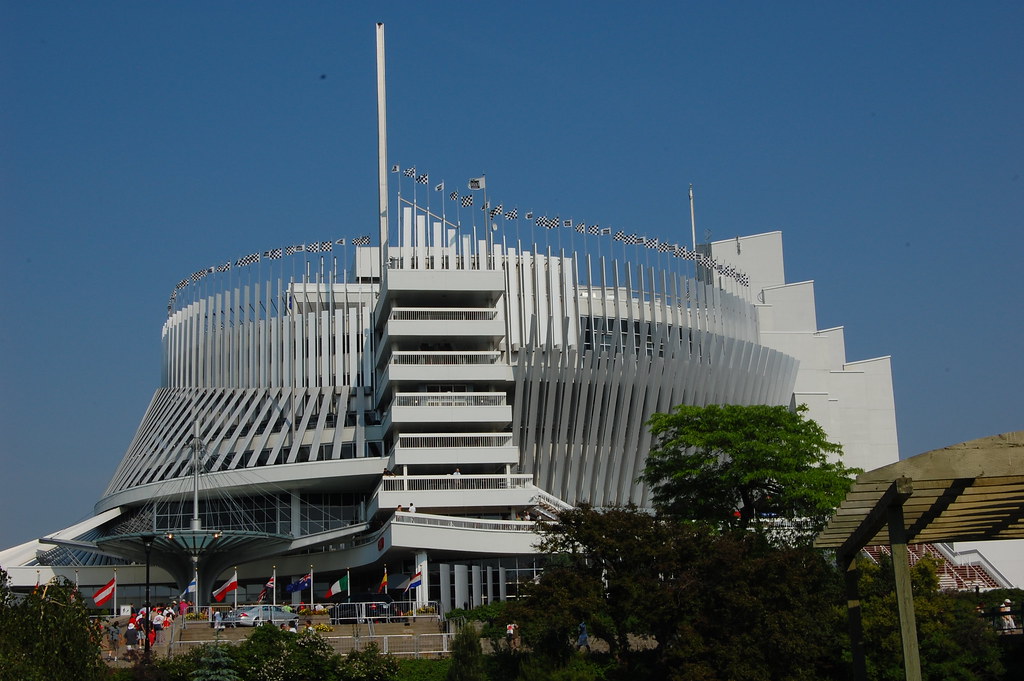
Casino de Montréal occupies pavilions built for a world exposition, which makes it architecturally distinctive as well as large.
All four venues participate in the provincial responsible gambling framework the online site sits inside.
Physical venues matter to an online reader because the responsible gambling framework spans both.
Quebec self-exclusion reaches the four casinos and the online site together.
An offshore account sits outside that continuity entirely.
Casino de Montreal occupies pavilions built for a world exposition, which makes it architecturally distinctive as well as the largest in the country.
Casino du Lac-Leamy draws heavily from the Ottawa side of the river.
Direct state ownership of the venues is unique in Canada and gives the province unusually tight control.
Every other province contracts operation to private service providers.
Four venues owned outright by the province, all inside the same responsible gambling framework as the online site, describes the physical sector completely.
State ownership of the venues themselves sets the province apart from every other Canadian market.
What protections does a Quebec player lose offshore?
Dispute escalation, payout enforcement, mandatory responsible gambling tools, provincial self-exclusion, provincially set game certification and French language service all disappear offshore.
Dispute escalation is the largest single loss. A complaint about Loto-Québec reaches a provincial body with authority.
Kahnawake licensed operators are a partial exception because the commission does publish a complaint process.
Verifying the licensing authority on its own register is the minimum diligence before depositing offshore.
None of that verification is necessary at the provincial site.
Ranking the losses by practical importance puts dispute escalation first and segregated player funds second.
An operator that fails while holding unsegregated balances leaves players as unsecured creditors in a foreign jurisdiction.
Game certification offshore depends entirely on the licence, and licences range from rigorous to nominal.
French language service disappears almost entirely, which matters more in Quebec than anywhere else in the country.
Naming the losses individually is more useful than describing offshore play as risky in general.
Some offshore licences replace some of them and none replaces all.
Kahnawake replaces more than most, which is a genuine point in its favour and still not provincial protection.
Segregated player funds is the protection nobody considers until an operator collapses holding balances.
Provincial site balances sit with a crown corporation rather than a private company registered abroad.
Escalation, enforcement, mandatory tools, provincial exclusion, certification and French service are the six.
No offshore licence replaces all of them and several replace none.
Naming the six losses individually is more useful than a general warning, because each one has a different weight for a different player.
Kahnawake replaces more of them than most offshore authorities and still replaces none of the provincial ones.
Who should play at Loto-Québec and who should not?
Loto-Québec suits a player who values recourse, French language service and predictable payouts over library size and bonus value, which describes a considerable share of recreational players here.
Somebody who wants thousands of titles, large welcome packages and crypto payments finds the provincial site limiting.
Francophone players in particular are served better by the regulated site than by most offshore alternatives.
Somebody who has struggled with control is served far better by the provincial framework.
The trade is genuine and knowable in advance.
Frequency and stake size shape the answer alongside preference and language.
An occasional player loses little by accepting a smaller library and gains the full provincial framework in exchange.
A high volume player feels the game selection gap constantly and weighs it against recourse differently.
Anybody with a history of losing control belongs inside the Quebec system by a wide margin.
Answering honestly means accepting that the provincial site is not right for everybody in Quebec.
A player who wants a large library, big bonuses and crypto payments will find it limiting and will go offshore regardless.
What matters is that the choice is made knowingly rather than by default.
Withdrawing promptly rather than leaving a balance standing reduces exposure at any offshore operator.
The provincial site removes that consideration because the counterparty is the province itself.
Recourse, language and control against library breadth and bonus size is the trade.
Knowing which side matters more settles the question in a minute.
Honest advice here means telling a large share of readers that the provincial site will not suit them, and telling them why before they leave.
The worst outcome is drifting offshore by default without ever weighing the two options against each other.
Which checks come before a first deposit in Quebec?
Four checks settle it: whether the site is Loto-Québec or offshore, which authority licenses it if offshore, what the withdrawal terms say, and whether French language support exists if you need it.
Identifying the regulated option takes seconds because there is exactly one. Anything other than Loto-Québec is offshore by definition here.
Licence verification for an offshore operator means opening the named authority’s own register, which for Kahnawake licensed sites is published and searchable.
Withdrawal terms decide what a win is worth. Caps, schedules and verification triggers all belong in the terms.
Language support matters more in Quebec than anywhere else in Canada and is worth confirming before depositing.
Recording the answers once removes any need to repeat the exercise at the same operator.
Only a change of ownership or licence invalidates the record.
Support responsiveness deserves a test before the money does at any offshore site, and in French if that is the language you need.
Complaint histories are public and worth twenty minutes of reading before a first deposit anywhere unfamiliar.
Running the checks in a fixed order converts a vague unease into a short procedure.
Regulated or offshore, licence authority, withdrawal terms, language support, and only then a deposit.
Each step removes a category of avoidable problem before any money moves.
Recording the answers once removes the need to repeat the exercise at the same operator.
Only a change of licence or ownership invalidates the record.
Four checks and fifteen minutes remove nearly every avoidable problem before any money moves.
The first check takes no research because exactly one operator is licensed here.
Fifteen minutes of checking beats a month of disputing, and the sequence above is short enough to run before any first deposit anywhere.
Recording the answers once means the exercise never has to be repeated at that operator again.
The checklist is short because the market is simple in structure and strange in detail. One provincial operator, one provincial regulator, a failed attempt at blocking everybody else, and a Mohawk licensing authority inside the province regulating a slice of the offshore field. Anybody in Quebec who understands that picture can choose deliberately rather than by accident.
Nothing in the Quebec market is likely to shift quickly. The monopoly is politically secure, the blocking route is closed by the courts, and the Kahnawake arrangement has outlasted every government that declined to challenge it. A reader returning to this page in a year will find the same four part structure waiting, with different operator names filling the offshore column and the same single name filling the licensed one.