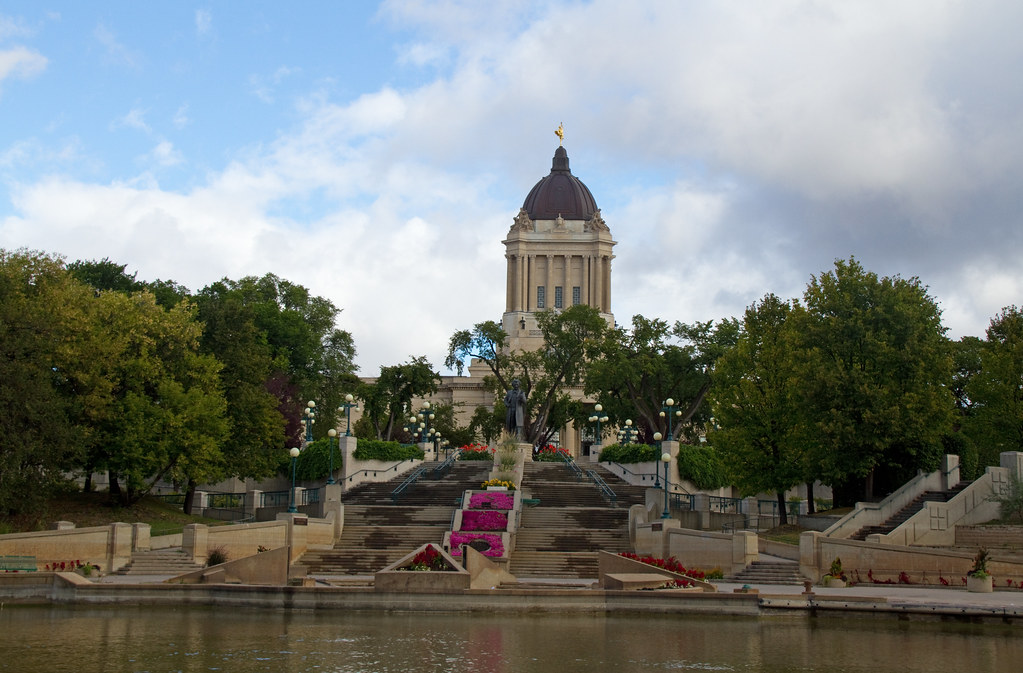
Manitoba runs its online casino on a platform it does not own. PlayNow.com serves Manitoba players under an agreement with British Columbia Lottery Corporation, which built and operates the site, while Manitoba Liquor and Lotteries conducts the gaming and the Liquor, Gaming and Cannabis Authority regulates it. That shared arrangement is unusual in Canada and it shapes everything a Manitoba player experiences. This page covers the licensed route, the regulator, the age rule, the First Nations casinos, payments, payouts and what a player gives up offshore. For the wider market picture, start at our online Canada casinos hub.
The table below sets out the position in Manitoba. Read it first, then work through the detail beneath.
| Aspect | Online casino in Manitoba |
|---|---|
| Licensed online site | PlayNow.com, one site |
| Conducts the gaming | Manitoba Liquor and Lotteries |
| Operates the platform | British Columbia Lottery Corporation |
| Regulator | Liquor, Gaming and Cannabis Authority of Manitoba |
| Private operators licensed | None |
| Minimum age | Eighteen |
| Provincial casinos | Club Regent and McPhillips Station in Winnipeg |
| First Nations casinos | Three, licensed separately |
| Winnings tax | None for recreational players |
| Offshore sites | Accessible, unlicensed, unsupervised here |
What is the online casino situation in Manitoba?
Manitoba has one licensed online casino, PlayNow.com, conducted by Manitoba Liquor and Lotteries on a platform built and run by British Columbia Lottery Corporation under an interprovincial agreement.
No private operator holds a Manitoba licence, which places the province alongside every Canadian jurisdiction except Ontario and, in a different way, Alberta.
Offshore casinos reach Manitoba players freely and answer to no authority inside the province.
The choice facing a resident here is therefore between one supervised site and an unsupervised field.
Holding one distinction through the rest of this page makes every claim easy to sort. One site answers to a provincial regulator and every other site answers to somebody else.
That division says nothing about game quality, payout speed or bonus size. It describes what happens when a player and an operator disagree about money.
Most sessions never test it, and the players who do test it discover the difference at the worst possible moment.
A search from a Winnipeg address returns a results page dominated by operators the province does not license, because those operators advertise hard and the provincial site does not need to.
One licensed site on a borrowed platform, one provincial regulator and an open unlicensed field describes the structure completely, and every section below adds detail to one of those three parts.
Readers who take one thing from this page take that three part structure, because it settles questions the marketing never answers.
Is online gambling legal in Manitoba?
Online gambling is legal in Manitoba through PlayNow.com, and provincial law governs who may offer gambling rather than restricting where a Manitoba resident chooses to place a bet.
The Criminal Code reserves the conduct and management of gaming to the provinces, and Manitoba exercises that authority through its crown corporation.
Offshore operators serving Manitoba residents hold no provincial licence and no provincial obligation.
Players themselves face no legal exposure for depositing at those sites.
Two separate questions hide inside the word legal, and separating them removes most of the confusion.
Can a resident play offshore without breaking the law? Yes. Is the operator authorised to serve them? No.
Both answers are true at once and each carries a different consequence.
Enforcement attention in Canada falls on advertising, on payment processing and on operators establishing a physical presence, none of which touches the player.
No individual in this province has faced a charge for depositing at an offshore site.
Legality and supervision are separate questions here, and confusing them is the commonest error a player makes before a first deposit.
Who regulates gambling in Manitoba?
The Liquor, Gaming and Cannabis Authority of Manitoba regulates gambling in the province, while Manitoba Liquor and Lotteries conducts and manages it, which separates the supervisory role from the commercial one.
That split matters because a corporation selling gambling has an obvious interest in the activity being supervised.
The authority licenses charitable gaming, regulates the First Nations casinos and audits the provincial operations.
Neither body holds any power over an operator licensed in Malta or Curacao.
The word regulated appears throughout gambling marketing and refers to whichever authority happened to issue a licence.
Only one site serving this province is regulated by a provincial body, and it is rarely the one advertising hardest.
The authority also handles liquor and cannabis licensing, which is how several western provinces organise the function.
Game testing standards are set inside that system and applied to the titles the licensed site carries.
Offshore certification depends entirely on the issuing jurisdiction, and those range from rigorous to nominal.
A licence badge in a footer tells a reader which authority issued it and nothing whatever about provincial oversight in this province.
Checking which authority stands behind a badge takes a minute and is more than most players ever do.
What is PlayNow.com and how does Manitoba use it?
PlayNow.com is the online gambling platform built by British Columbia Lottery Corporation, and Manitoba Liquor and Lotteries offers it to Manitoba residents under a service agreement rather than building a site of its own.
The player experience is close to identical across the two provinces, with provincial differences applied to responsible gambling settings and to certain products.
Casino games, sports betting, lottery and poker sit under one account and one wallet.
Building a competitive gambling platform costs a great deal, and sharing one is a rational answer for a province of this size.
The arrangement is a service agreement rather than a merger, and each province keeps its own conduct and management authority.
Player funds, licensing responsibility and regulatory oversight stay provincial even though the software is shared.
Practically, a Winnipeg player and a Vancouver player see nearly the same lobby with different provincial settings applied behind it.
Poker liquidity pooled across the participating provinces produces larger tables than one province could sustain alone.
That pooling is one of the clearest player benefits of the shared model.
Shared software with separate provincial accountability is the model, and it delivers a mature product without surrendering local control.
Why does Manitoba share a platform with British Columbia?
Manitoba chose a shared platform because building and maintaining an online casino for roughly a million adults would cost more than the revenue it returns, and British Columbia had already absorbed that cost.
The agreement gives Manitoba a mature product immediately and gives British Columbia a larger user base to spread development against.
Saskatchewan later joined the same platform through its own arrangement.
Three provinces on one codebase is now the pattern in western Canada.
Development, security, payment integration, game licensing and regulatory compliance all carry fixed costs that barely move with population.
Spreading those costs across three provinces rather than one is straightforward arithmetic.
The alternative was a smaller, weaker site built from scratch, or no licensed site at all.
Neither outcome would have served players here better than the shared platform does.
Atlantic Lottery took a different route and built its own, which is worth noting as the counterexample.
Three provinces on one codebase is now the western Canadian pattern, and the arithmetic behind it is unlikely to reverse.
Atlantic Lottery built its own site instead, which is the counterexample worth knowing about.
What games does the Manitoba site offer?
The Manitoba site carries slots, table games, live dealer tables, video poker, bingo, lottery products and sports betting, drawn from a curated set of studios rather than from the entire market.
Title counts run in the hundreds rather than the thousands an offshore lobby advertises.
Curation removes the long tail almost nobody opens, and it also removes new releases that reach offshore lobbies first.
Players who care most about breadth feel that gap and players who care about recourse do not.
Comparing libraries fairly means comparing what a player would actually use rather than raw title counts.
Several hundred well chosen slots covers the mechanics most players want, and thousands of titles includes a long tail nobody opens twice.
Where the gap bites is on new releases and on formats the licensed platform has not adopted.
Live dealer tables, table games and video poker are all present and broadly comparable to an offshore lobby.
Sports betting and lottery share the same wallet, which offshore casinos rarely offer.
Curation under provincial ownership is the whole proposition, and a player wanting scale rather than curation will find the catalogue narrow.
What is the legal gambling age in Manitoba?
The legal gambling age in Manitoba is eighteen, which matches Alberta and Quebec and sits a year below the threshold in Ontario, British Columbia and the Atlantic provinces.
The figure applies to the online site, the provincial casinos and lottery products alike.
Age is verified against identity documents before an account can be funded on the licensed route.
Offshore operators frequently verify only when a withdrawal is requested, which lets an underage player lose money first.
Eighteen aligns with the provincial drinking age, which is how most Canadian provinces set the gambling threshold.
Alberta and Quebec use the same figure and the rest of the country uses nineteen.
An eighteen year old here can play legally where a nineteen year old in Vancouver or Toronto cannot.
Verification before funding rather than at withdrawal is the practical difference between a rule and an enforced rule.
That single design choice removes an entire category of harm.
Eighteen applies uniformly across every gambling product the province offers, online and in the venues alike.
Verification before funding is what turns the figure into an enforced rule rather than a stated one.
Which payment methods work at a Manitoba online casino?
The licensed Manitoba site accepts Interac Online, Interac e-Transfer, Visa, Mastercard and direct bank transfer, and it returns withdrawals to the originating method or to a linked bank account.
Cards decline on gambling merchants far less often here than offshore, because the merchant is a provincial crown corporation rather than a foreign gambling company.
Cryptocurrency is absent from the licensed route entirely.
Anybody who specifically wants crypto payments has already ruled out the Manitoba site.
Reliability rather than variety is what the licensed route offers on payments.
Three methods that always work beat a dozen that sometimes do for most recreational players.
Card declines on gambling merchants are an offshore problem, and the workarounds involve e-wallets, vouchers or crypto, each adding a step and a cost.
Withdrawals return to the originating method or to a linked bank account, with card refund limits occasionally splitting a large payout across two routes.
None of that friction appears on a bank transfer.
Bank rails that never decline beat exotic options that sometimes do, which is the practical payment advantage of the licensed route.
How fast are payouts on the licensed Manitoba site?
Withdrawals from the licensed Manitoba site typically settle within one to three banking days, because identity verification happened before the account was funded rather than when money attempted to leave.
That ordering is the whole reason the timing stays predictable.
Offshore first withdrawals frequently stall precisely because verification begins at the withdrawal.
Predictability rather than raw speed is what the licensed route delivers.
Payout experience divides into two questions: how long it takes and how confidently the figure can be predicted.
The licensed site scores modestly on the first and very well on the second.
Large wins trigger additional review as they do everywhere, and the documents were already supplied at registration.
Weekend requests settle on the next banking day rather than waiting for a human to approve a release.
The offshore distribution carries a long tail of stalled first withdrawals that the licensed one lacks entirely.
Nothing stalls for weeks and nothing arrives in minutes either, which is what most recreational players actually want.
Consistency is the product, and consistency is what a recreational player values once the novelty fades.
What casinos operate in Manitoba?
Manitoba Liquor and Lotteries operates Club Regent Casino and McPhillips Station Casino in Winnipeg, and three First Nations casinos operate under separate licences elsewhere in the province.
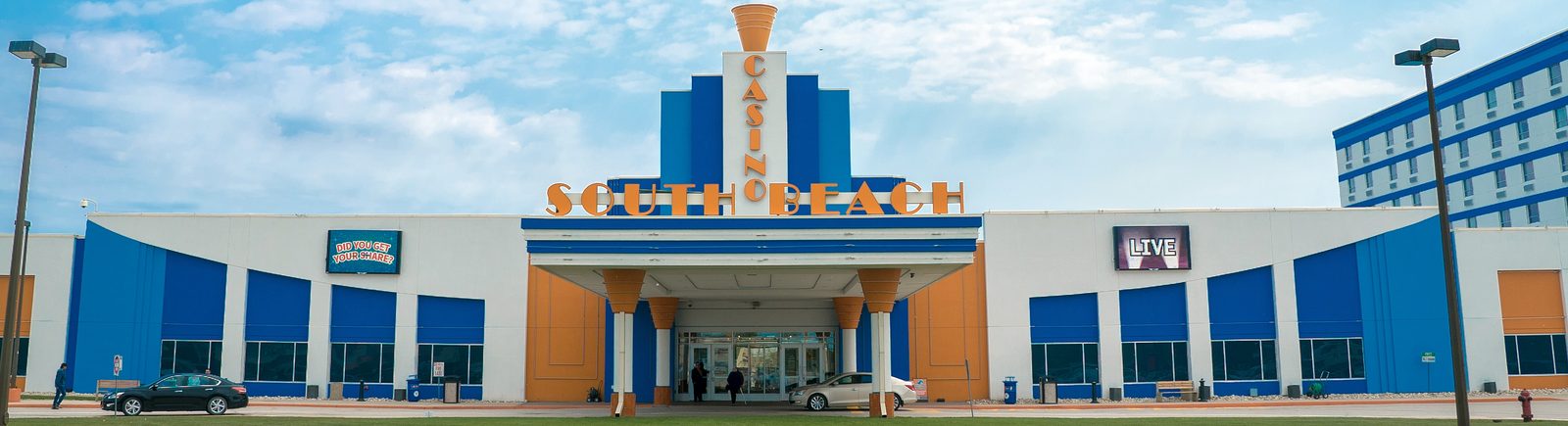
South Beach Casino, Aseneskak Casino and Sand Hills Casino make up the First Nations group.
All five venues sit inside the provincial responsible gambling framework.
The online site connects to that framework through the shared self-exclusion programme.
Physical venues matter to an online reader because the responsible gambling framework spans both.
Provincial self exclusion reaches the licensed online site and the provincial casinos together from a single enrolment.
Club Regent and McPhillips Station both sit in Winnipeg and both are owned outright by the crown corporation.
Direct ownership of venues rather than contracted operation is the western pattern and it gives the province tight control.
An offshore account sits outside that continuity completely.
Two crown owned venues and three independently licensed ones make up the physical sector, all inside the same supervisory system.
How do First Nations casinos fit the Manitoba framework?
First Nations casinos in Manitoba operate under licences issued by the provincial regulator rather than under the crown corporation, which makes them independent businesses inside the same supervisory system.
Revenue stays with the operating communities rather than flowing to the province.
The licensing authority still sets the standards those venues answer to.
No equivalent online licence exists, so none of them runs a Manitoba facing internet casino.
The model here differs from Saskatchewan, where a single authority operates the First Nations venues collectively.
Manitoba issues licences to individual operations instead.
South Beach sits north of Winnipeg, Aseneskak serves the Opaskwayak area and Sand Hills operates near Carberry.
Each returns revenue to its own community rather than to provincial general revenue.
Anybody expecting a First Nations online casino here will find none, because the province licenses no additional internet operator.
Independent operation under provincial licensing is the arrangement, and it keeps revenue with the communities running the venues.
No First Nations online casino serves this province, because the licensing regime covers venues rather than internet operators.
What responsible gambling tools exist in Manitoba?
The licensed Manitoba site requires deposit limits at registration, applies them across casino, sports and lottery under one account, and lowers a limit instantly while delaying any increase.
That delay is the design detail that makes a limit meaningful during a losing session.
Session reminders, loss tracking and time-outs sit alongside it.
A player spreading action across several offshore accounts has no consolidated limit at all.
The distinction between offering a tool and requiring engagement with it is the whole substance here.
Most operators worldwide offer deposit limits in a settings menu almost nobody visits.
A limit set before a session and locked against same day increases survives the judgement a losing run destroys.
Unified tracking across casino, sports and lottery under one account is impossible to reproduce across scattered offshore logins.
Nothing offshore is guaranteed to include any of it for a player here.
Tools built into the account rather than buried in a menu are the ones that actually change behaviour during a losing session.
How do you self-exclude in Manitoba?
Manitoba runs a voluntary self-exclusion programme through Manitoba Liquor and Lotteries that covers the provincial casinos and the online site from one enrolment, with terms a player selects at signup.
Breaching an exclusion means removal from a venue and forfeiture of winnings accumulated during the excluded period.
Reinstatement follows a formal process rather than the simple expiry of a term.
Nothing offshore approaches that coverage, because no offshore operator shares exclusion data with another.
Anybody considering self exclusion benefits from understanding what the provincial programme covers before choosing where to play.
One enrolment closes the licensed online site and both provincial casinos at once.
Support referrals to provincial problem gambling services accompany the enrolment rather than being left to the player to find.
Players using several offshore operators simultaneously have no consolidated exclusion available at any price.
That gap decides the question for anybody who expects to need the tool.
Single enrolment covering the licensed site and both provincial casinos has no offshore equivalent at any price.
Anybody who may need the tool later benefits from establishing their play inside the provincial system now.
Are casino winnings taxable in Manitoba?
Casino winnings are not taxable in Manitoba for recreational players, because Canadian tax law treats gambling wins as a windfall rather than as income from a source.
Losses are correspondingly not deductible, which is the symmetry most people overlook.
Professional gambling assessed on conduct is the exception, and it is rare.
Interest earned on a banked win becomes ordinary taxable income.
The question arrives constantly and the answer is simpler than most people expect.
Recreational gambling winnings are not income anywhere in Canada and are not reported on a return.
Gambling taxation is federal, which means no province offers an advantage over another on winnings.
The professional gambling exception turns on conduct rather than on amounts won, and the bar is high.
Anybody whose play looks like a business rather than a pastime deserves proper advice rather than a page like this one.
Recreational winnings stay outside the return entirely, and losses stay non deductible in exchange.
Can Manitoba players use offshore casinos?
Manitoba players can and do use offshore casinos, which geoblock nobody here, advertise heavily and offer libraries and bonuses the licensed site does not attempt to match.
Registration takes minutes and asks for an address nobody verifies until a withdrawal is requested.
The costs appear at the edges: a declined card, a document request, a bonus term that voided a balance.
A player choosing offshore knowingly is making a defensible trade rather than a mistake.
Describing the offshore experience honestly means acknowledging what works about it rather than warning abstractly.
Registration is fast, the library is enormous, the bonuses are large and the payment options are varied.
Access is trivially easy and recourse is the part that disappears.
Understanding both sides before depositing turns the decision into a choice rather than an accident.
Withdrawing promptly rather than leaving a balance standing reduces exposure at any offshore operator.
Nothing prevents access, and knowing what is given up turns the decision into a considered one rather than a default.
The advantages are real and the costs appear only at the edges of the experience.
What protections does a Manitoba player lose offshore?
A Manitoba player leaving the licensed route loses provincial dispute escalation, enforceable regulator oversight, mandatory account limits, provincial self-exclusion coverage and locally audited game certification.
Dispute escalation is the one that matters most and the one nobody thinks about before a first deposit.
Segregated player funds is the one that matters when an operator fails holding balances.
Some offshore licences replace some of those protections and none replaces all of them.
Naming the losses individually is more useful than describing offshore play as risky in general.
An operator that fails while holding unsegregated balances leaves players as unsecured creditors in a foreign jurisdiction.
Complaint escalation to a body with authority over the operator is the protection nobody values until they need it.
Game certification offshore depends entirely on the licence, and licences vary enormously in what they require.
Each loss carries a different weight for a different player, which is why listing them beats generalising.
Five protections disappear together, and no offshore licence replaces all of them while several replace none.
How does Manitoba compare with Ontario and Alberta?
Ontario licenses dozens of private operators under a dedicated regulator, Alberta has legislated toward opening a similar market, and Manitoba has published nothing indicating a change from its single site model.
The same brand can be supervised for a player in Toronto and unsupervised for a player in Winnipeg.
Nothing about that operator changes across the boundary except the accountability attached to it.
Alberta is the province worth watching, because a second open market would change the national argument.
Choice under supervision is what a licensed market delivers, and it is what players here currently lack.
Ontario registered millions of accounts within its first years, drawn substantially from players who had been offshore.
No equivalent conversion is possible here because no licensed alternative exists to convert them to.
Alberta legislated a framework without yet licensing operators under it, which places it between the two positions.
Watching Alberta is the most useful thing a player here can do to predict the next change.
Players in Winnipeg and Toronto meeting the same brand meet entirely different levels of accountability behind it.
Nothing about an operator changes across a provincial boundary except the accountability attached to it.
Will Manitoba license private operators?
No consultation, no draft legislation and no ministerial commitment currently exists in Manitoba, which makes an open market a distant prospect rather than a planned one.
The shared platform arrangement makes the status quo cheap to maintain, which lowers the pressure to change it.
A small population also lowers the revenue a licensed market would return.
Planning around a market that has produced no documents means planning around nothing.
Forecasting policy is not this site business and describing the signals is.
Revenue certainty argues for the current model and captured offshore leakage argues against it.
Neither argument has been settled publicly with figures in this province.
A player planning around a hypothetical future market will be planning for a long time.
The shared platform lowers the cost of doing nothing, which is itself an argument for the status quo persisting.
No consultation and no draft legislation means no timetable, and a reader planning around one is planning around nothing.
Who should play on the licensed Manitoba site?
The licensed Manitoba site suits players who value recourse, predictable payouts and enforced limits above library size, and it will frustrate anybody hunting new releases, large bonuses or cryptocurrency payments.
An occasional player loses little by accepting a smaller catalogue.
Anybody with a history of losing control belongs inside the provincial system by a wide margin.
The worst outcome is drifting offshore by default without ever weighing the two options.
Answering honestly means accepting that the licensed site is not right for everybody here.
A player who wants a huge library, big bonuses and crypto payments will find it limiting and will go offshore regardless.
Recourse, predictable payouts and enforced limits against library breadth and bonus size is the trade.
Knowing which side matters more settles the question in a minute.
What matters is that the choice is made knowingly rather than by default.
Honest advice here means telling a share of readers that the licensed site will not suit them, and telling them why before they leave.
Drifting offshore without weighing the two options is the outcome this page exists to prevent.
Which checks come before a first deposit in Manitoba?
Run four checks before depositing anywhere in Manitoba: confirm whether the site is the licensed provincial one, identify the licensing authority, read the withdrawal terms, and test support responsiveness.
Each step removes a category of avoidable problem before any money moves.
The first check takes no research, because exactly one site is licensed here.
Recording the answers once means the exercise never has to be repeated at that operator.
Running the checks in a fixed order converts a vague unease into a short procedure.
Licensed or offshore, licensing authority, withdrawal terms, support responsiveness, and only then a deposit.
Complaint histories are public and worth twenty minutes of reading before a first deposit anywhere unfamiliar.
Only a change of ownership or licence invalidates a record already made.
Fifteen minutes of checking beats a month of disputing.
Four checks and fifteen minutes remove nearly every avoidable problem before any money moves.
The checklist is short because the market is simple. One licensed site running on another province’s platform, one regulator, two provincial casinos, three First Nations venues and an unlicensed field reaching every player here. Anybody in Manitoba who understands that picture can choose deliberately rather than by accident.
Nothing in the Manitoba market is likely to shift quickly. The shared platform keeps the licensed site cheap to run, the population is small enough to weaken the case for licensing competitors, and no government document points toward a change. A reader returning to this page in a year will find the same three part structure waiting, with different operator names filling the unlicensed column and the same single name filling the licensed one.