

Paylines are the fixed routes across a slot grid that decide which symbol combinations pay. A win registers only when matching symbols land on one of those routes, usually starting from the leftmost reel. Modern titles increasingly replace them with ways to win or cluster rules, which is why understanding both matters in a Canadian lobby. For the wider market picture, start at our online Canada casinos hub.
The table below sets out what paylines do and what has replaced them. Read it first, then work through the detail beneath.
| Aspect | Position |
|---|---|
| Definition | Fixed routes across the reels that register wins |
| Typical counts | 1, 5, 9, 10, 20, 25, 40 or 243 on older titles |
| Direction | Usually left to right from reel one |
| Fixed or adjustable | Most modern titles fix the count |
| Alternatives | Ways to win, cluster pays, Megaways |
| Effect on return | None, the figure covers the whole design |
What are paylines in slots?
Paylines are predefined routes across the reel grid that a slot checks for matching symbols. A combination pays only when the matching symbols sit on one of those routes in the required order.
The paytable lists every route as a diagram. Most titles show them on a dedicated screen.
The routes are drawn rather than random.
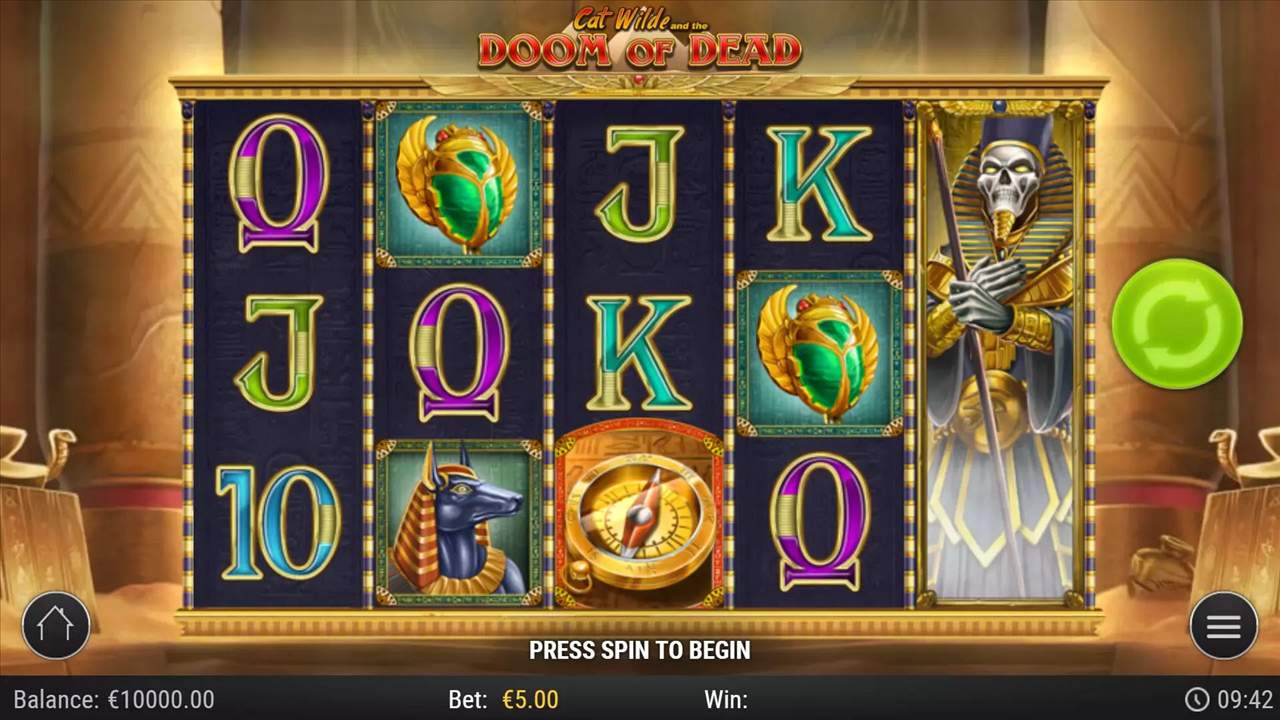
A studio defines each path across the grid when the title is built, and the certified mathematics tests every one of them.
Line one is almost always the straight centre row.
Later lines zigzag, run along the top or bottom, or form V shapes across the reels.
The paytable shows each route as a numbered diagram.
Reading that screen once tells a player exactly where the game is looking.
Symbols landing off every payline pay nothing regardless of how many match.
That single fact explains most of the confusion new players have with slots.
The diagram screen is the fastest introduction to any title.
Numbered routes drawn across the grid show exactly where paylines sit before a stake is placed.
Reading it once removes the guesswork permanently.
Line one is the centre row on almost every title ever built.
That convention survived from the earliest mechanical machines into current video releases.
Symbols landing off every route pay nothing however many match.
That single fact accounts for most early confusion with slots.
The diagram screen makes it visible in one look.
How many paylines does a slot have?
Anything from one to several hundred. Classic three reel titles run a single line across the centre, while video slots commonly carry ten, twenty, twenty-five or forty, and older ways to win designs advertise 243.
The count appears on the game interface. It never changes mid session on a fixed line title.
Line counts cluster around a handful of conventions.
One line is the classic three reel standard.
Nine, ten and twenty-five dominate the older video slot era.
Forty and fifty appear on titles built for frequent small wins.
Counts above a hundred are rare because the stake per line becomes impractically small.
What matters is that paylines and stake move together.
A twenty-five line slot at ten cents per line costs two dollars fifty per spin.
The interface shows the total rather than the per line figure.
Total bet is the number that matters at the table.
Paylines multiplied by coin value produces it, and the interface displays the result rather than the components.
That field is the real price of a spin.
Counts above a hundred exist and stay rare.
Dividing a stake that finely leaves each route worth almost nothing.
The count sits on the game interface rather than in a menu on most titles.
It never moves during a session on a fixed line release.
Do paylines only run left to right?
On most titles, yes. A combination has to start on reel one and run consecutively rightward, which is why matching symbols on reels two through four pay nothing on a standard slot.
Some titles pay in both directions. The rules screen states it in one line.
Both ways titles change the arithmetic noticeably.
Paying in either direction roughly doubles the chance of any given route completing.
Studios compensate by lowering the symbol awards.
The published figure stays in the same band either way.
What changes is hit frequency, which rises sharply on both ways paylines.
Players reading a both ways title as more generous are reading the frequency rather than the return.
The rules screen names the direction in one line.
It sits near the top of the information screen on most titles.
Direction sits in the first few lines of the rules screen.
Both ways paylines raise hit frequency and leave the published percentage where it was.
Frequency and return are separate measures.
Right to left titles are rarer still.
Those pay from reel five inward and announce it prominently in the rules.
What is the difference between fixed and adjustable paylines?
Fixed lines are always active and the stake covers all of them. Adjustable lines let a player switch some off, which lowers the cost per spin and reduces the chance of any given combination paying.
Modern titles overwhelmingly fix the count. Adjustable lines appear mostly on older releases.
The distinction mattered more on older releases.
Adjustable paylines let a player cover nine routes instead of twenty-five and pay proportionally less per spin.
That sounds economical and usually costs the player access to features.
Scatters and bonus triggers frequently require every route active.
Studios removed the option on most modern titles for exactly that reason.
Fixed counts remove the decision and protect the feature mathematics.
The bet selector then adjusts the coin value alone.
That is the control the design intends.
Fixed counts are now the default across the market.
Studios removed adjustable paylines because switching routes off broke the feature mathematics they had certified.
Coin value became the only control.
Older releases kept the choice and newer ones removed it.
Release date predicts which version a title runs better than anything else.
Checking which version a title runs takes one glance at the bet panel.
A line selector beside the coin value means adjustable.
Should you play all paylines?
On almost every title, yes. Features, scatters and jackpot tiers usually require every line active, so switching lines off removes access to the part of the paytable that carries the return.
Lowering the coin value is the correct way to reduce a stake. Cutting lines is not.
The practical instruction is short.
Leave every route active and lower the coin value until the total bet suits the bankroll.
If the minimum total is still too high, the title is the wrong one rather than the setting.
A Canadian lobby holds thousands of alternatives at every price point.
Cutting paylines to reach an affordable stake breaks the feature mathematics.
Switching titles does not.
Scrolling one screen finds a cheaper game.
That takes seconds and preserves the whole paytable.
Switching titles beats switching off routes.
Every Canadian lobby holds cheaper games with all paylines active, which preserves the whole paytable.
One scroll finds one.
The coin value selector sits beside the spin button on every certified game.
That is the control the design intends a player to use.
Do more paylines mean better odds?
No, because the stake scales with them. Twenty-five lines cost twenty-five times what one line costs at the same coin value, and the return figure holds across the whole configuration.
More lines change how often wins arrive. They never change the percentage.
The arithmetic settles it cleanly.
Twenty-five paylines at ten cents costs two dollars fifty and covers twenty-five routes.
One line at two dollars fifty covers one route at twenty-five times the value.
Both cost the same and both return the same percentage.
The first produces frequent small wins and the second produces rare large ones.
That is a variance choice rather than an odds choice.
Certified mathematics holds the percentage constant across configurations.
Only the distribution moves.
Cost scales with coverage exactly.
More paylines buy more routes at proportionally more money, and the certified percentage never moves.
Variance is what changes.
Hit frequency and expected return are separate measures entirely.
Confusing the two is the most common error in slot selection.
Certified mathematics holds the percentage steady across every configuration.
Only the shape of the distribution responds to the count.
What is a ways to win slot?
A slot that pays for matching symbols on adjacent reels regardless of their vertical position. Three rows across five reels produces 243 ways, because any of the three positions on each reel counts.
The leftmost rule still applies. Adjacency from reel one is required.
The count comes from multiplication.
Three symbol positions on each of five reels produces three to the fifth power, which equals 243.
Four rows produces 1,024 and five rows produces 3,125.
Those familiar numbers all come from the same calculation.
Ways to win dropped the requirement to define routes while keeping the leftmost adjacency rule from paylines.
It sits between the payline era and the grid formats that followed.
Hit frequency rises and individual awards fall.
The published figure stays in the same band.
Ways to win kept one rule from the payline era.
Adjacency from the leftmost reel still applies, which is why the format sits between paylines and cluster grids.
Only the route definition disappeared.
The familiar counts all come from raising three, four or five to the fifth power.
Nothing mysterious sits behind those numbers.
How is cluster pays different again?
Cluster pays removes the reel structure entirely. Wins come from groups of touching symbols anywhere on the grid, with no leftmost rule and no route to follow.
Paylines, ways to win and cluster pays are three separate scoring systems. The rules screen names which applies.
Three scoring systems now share Canadian lobbies.
Paylines check defined routes, ways to win checks adjacency from the left, and cluster pays checks contact anywhere on the grid.
A player who knows which applies reads any slot instantly.
A player who assumes paylines everywhere misreads grid formats constantly.
The rules screen names the system in a single sentence.
That sentence is the most useful line in the whole information screen.
Reading it takes seconds.
It never needs rereading for the same title.
Three systems, one lobby, one line of reading.
Paylines, ways to win and cluster pays each resolve wins differently and the rules screen names which is running.
That sentence settles it.
Contact replaces routes and adjacency alike.
Position on the grid stops mattering completely under that rule.
How do Megaways slots handle paylines?
They carry none at all. The engine varies how many symbols each reel shows and counts ways across those reels, producing a figure that changes every spin.
A live ways counter above the grid is the visual signature. Payline slots never show one.
The variable grid is why routes became impossible.
A reel showing two symbols on one spin and seven on the next cannot carry a fixed route across it.
So the engine counts ways instead and recalculates every spin.
That is a direct descendant of ways to win rather than of paylines.
The live counter above the grid reports the current figure.
Payline slots have no equivalent display because their count never changes.
Spotting the counter is the fastest way to identify the format.
It sits above the reels on every Megaways title.
A live counter above the grid is the tell.
Titles with paylines never display one because their count is fixed at build time.
Spotting it identifies the format instantly.
Variable reel heights make fixed routes impossible to define.
Counting ways was the only workable answer.
Do paylines affect the RTP?
Not on their own. The certified mathematics accounts for the whole configuration including the line count, so two titles with very different counts can publish identical figures.
The panel inside the game states the deployed number. Nothing about the line count predicts it.
The certified build covers the whole configuration.
A laboratory simulates millions of spins across every active route before a title reaches an operator.
The published figure is the output of that simulation.
Changing the paylines count would require a new certification rather than a setting change.
So no in game adjustment moves the percentage.
Titles with adjustable routes publish one figure that assumes all routes active.
Playing fewer usually lowers the effective return below the published number.
That is another reason to leave them all on.
Certification covers the whole configuration.
Changing the paylines count would require recertification rather than a setting change.
The panel states the deployed figure.
Two titles with wildly different counts regularly publish identical figures.
The configuration is an input and the percentage is the output.
How do paylines affect volatility?
Fewer lines usually mean higher variance. Concentrating the same return across ten routes rather than forty produces rarer, larger wins, which is why low line count titles frequently carry high volatility ratings.
The rating states it directly. Counting lines is a rough proxy at best.
Concentration is the mechanism.
The same return distributed across ten routes produces larger individual awards than the same return across forty.
Larger awards arriving less often is the definition of higher variance.
So low paylines counts correlate with high volatility ratings across the market.
The correlation is a tendency rather than a rule.
Feature structures override it regularly.
The rating in the information panel is the reliable source.
It takes one look and needs no inference.
Concentration raises variance reliably.
Fewer paylines carrying the same return produce larger rarer awards.
The rating in the panel confirms it without inference.
Feature structures override the correlation regularly.
A low count title with a gentle feature runs lower variance than the pattern suggests.
The rating in the information panel needs no inference at all.
It states the variance band the certified build produces.
Why do modern slots use fewer paylines?
Because concentration produces bigger results. Ten lines with a powerful feature generates the large outcomes players share, where forty lines spreads the same return into smaller frequent awards.
Book style titles built their reputation on ten lines. The design choice is deliberate.
Player behaviour drove the shift.
Clips of enormous wins travel and clips of steady small wins do not.
Studios responded by concentrating returns into rarer larger outcomes.
Ten paylines with a powerful free spins feature produces exactly that shape.
Forty routes with modest awards produces the opposite.
Both remain available in every Canadian lobby.
A player who wants a long steady session looks for the higher counts.
They receive far less promotion than the volatile titles.
Shareable outcomes drove the design shift.
Ten paylines with a strong feature produce the clips that travel, and forty produce a steady grind nobody films.
Both remain available.
Players wanting a long steady evening find them at the higher counts.
Those titles receive a fraction of the promotion the volatile ones get.
Do scatters need to be on a payline?
Almost never. Scatter symbols pay and trigger features from anywhere on the grid, which is precisely what separates them from regular symbols.
That independence is why wilds rarely substitute for them. The paytable states both rules.
The independence is the point of the symbol.
A scatter pays and triggers from anywhere, which is why three of them scattered across reels one, three and five still count.
Regular symbols in those positions pay nothing on a payline title.
That difference is what makes scatters the feature key.
It is also why wilds almost never substitute for them.
Allowing it would break the certified trigger frequency.
The paytable states both rules on a single screen.
Reading them together removes most feature confusion.
Scatters ignore the routes entirely.
Three of them anywhere on the grid trigger a feature that no combination of paylines would have reached.
The paytable states both rules together.
That independence is exactly why scatters unlock features.
Regular symbols in the same positions would pay nothing at all.
Wilds almost never substitute for scatters for the same reason.
Allowing it would break the certified trigger frequency.
How do you read a paytable for paylines?
Open the information screen and find the line diagram. Each route appears as a numbered path across the grid, and the symbol awards list what each combination pays on a single line.
Awards shown are usually per line rather than per spin. Multiply by the coin value to get the money figure.
The diagram screen is the part worth finding.
Each route appears as a highlighted path with a number beside it.
Comparing the diagrams shows how much of the grid the title actually covers.
Ten paylines on a five by three grid leave plenty of positions unused.
Forty routes cover nearly everything.
Symbol awards listed beside the diagrams are per line rather than per spin.
Multiplying by the coin value converts them to money.
That conversion catches out players comparing awards across different stakes.
Awards are quoted per line rather than per spin.
Multiplying a paylines award by the coin value converts it into money.
That conversion catches out comparisons across stakes.
Comparing diagrams shows how much of the grid a title actually uses.
Plenty of positions stay uncovered on a low count game.
Are payline slots still worth playing?
Yes, and they suit a specific preference. A payline title makes every win visible and verifiable, which grid formats cannot match once a cascade chain starts resolving.
Return figures span the same band as every other format. Clarity is the differentiator.
Verifiability is the underrated advantage.
A player watching a payline title can trace exactly which route paid and check the award against the paytable.
A cascading grid resolving six times in sequence offers no equivalent.
Neither format is more honest, because both sit inside the same certification.
One is simply easier to follow.
Players who value that clarity find paylines titles throughout every Canadian lobby.
Return figures span the same band as the grid formats.
The choice costs nothing either way.
Traceability is the differentiator.
A player can follow exactly which of the paylines paid and check it against the diagram screen.
Grid formats offer no equivalent once a chain starts.
Both formats sit inside identical certification.
One is simply easier for a player to follow in real time.
Return figures across formats sit in the same band.
Clarity is what separates them rather than value.
Do Canadian licensed sites carry payline slots?
Extensively. Provincial crown corporations stock classic and video payline titles heavily, and Ontario registered operators carry them alongside every newer format.
Both routes attach a complaints process to the account. Offshore carries the same games without one.
Both licensed routes stock them heavily.
Provincial crown corporations favour familiar formats, and paylines are the most familiar of all.
Ontario registered operators carry the same titles alongside every newer mechanic.
Offshore sites carry them too and answer to no Canadian authority.
Age rules apply on every licensed route.
Nineteen is the minimum outside Alberta, Manitoba and Quebec, where it is eighteen.
Verification happens once when the account opens.
The provincial register names which operators are permitted.
Both licensed routes stock them heavily.
Crown corporations favour familiar formats and paylines are the most familiar design in any lobby.
Ontario carries them alongside everything newer.
The provincial register lists which operators are permitted to serve Canadians.
Checking it takes one search and settles every recourse question.
What should you check about paylines before playing?
Three things in the rules screen. The line count, whether it is fixed or adjustable, and whether wins pay in one direction or both.
All three take one read. The return figure and volatility rating still matter more.
Recording the answers saves repeating the work.
Noting the line count, the direction and whether the count is fixed takes seconds per title.
Those rules belong to the certified build and never change.
Only the return figure moves, and only when an operator switches build.
Twenty titles noted this way covers a year of play.
Demo mode at a licensed Canadian operator makes the exercise free.
Two minutes per title is the whole cost.
Nothing else about paylines requires research.
Three lines of reading, once per title.
Count, direction and whether the paylines are fixed describe the scoring completely.
The return figure and rating still matter more.
Those rules belong to the certified build and never move.
Only the deployed return figure changes between operators.
Demo mode at a licensed Canadian operator makes the whole check free.
Two minutes per title covers it permanently.
Which slot pages are worth reading next?
A scoring rule is one layer of a slot that also has a return figure, a volatility rating and a symbol set. The pages below cover the rest.
- How to judge any slot on three measures
- Touching symbols instead of routes
- The engine that recounts the ways on every spin
- How substitutions change a session
- Three reel titles built on a single line
Reading across scoring systems sharpens judgement on all of them.
A payline title and a cluster grid at the same figure produce completely different evenings.
Each link below narrows a Canadian lobby by a different property.
Together they cover how a slot is scored, priced and paced.
Paylines describe where a slot looks for a win rather than what it pays. Read the count to understand the rhythm, then read the panel to understand the price.
1 thought on “Slot Paylines Canada: How Routes, Ways and Clusters Differ”