
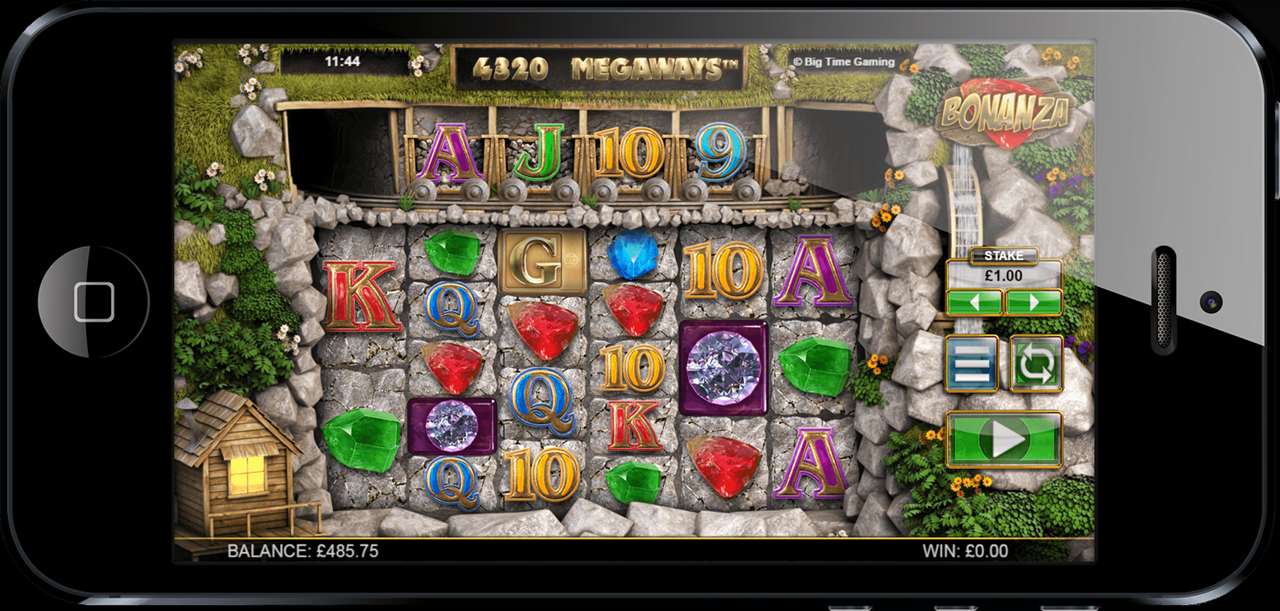
Megaways is a slot engine that changes the symbol count on every reel with each spin, producing anywhere from two hundred to over a hundred thousand ways to win on a single press. Big Time Gaming built it and licenses it to studios across the market, which is why Canadian lobbies carry hundreds of titles under the name. This page covers how the mechanic works, what it returns and where Canadians reach it legally. For the wider market picture, start at our online Canada casinos hub.
The table below sets out what Megaways is and what it does to a session. Read it first, then work through the detail beneath.
| Aspect | Position |
|---|---|
| Owner | Big Time Gaming, licensed to other studios |
| Ways to win | Recalculated every spin, commonly up to 117,649 |
| Return band | Roughly 94 to 96.8 percent by title and build |
| Volatility | High on almost every title in the range |
| Cascades | Standard on most Megaways releases |
| Canadian routes | Ontario registered operators, selective on crown sites |
What are Megaways slots?
Megaways slots in Canada are games built on a licensed engine that varies the symbol count each reel shows on every spin. The number of ways to win recalculates each time, so the same title can offer two hundred ways on one press and tens of thousands on the next.
The mechanic replaces fixed paylines entirely. Adjacent matching symbols pay from the leftmost reel regardless of position.
The shift away from paylines is the part worth understanding first.
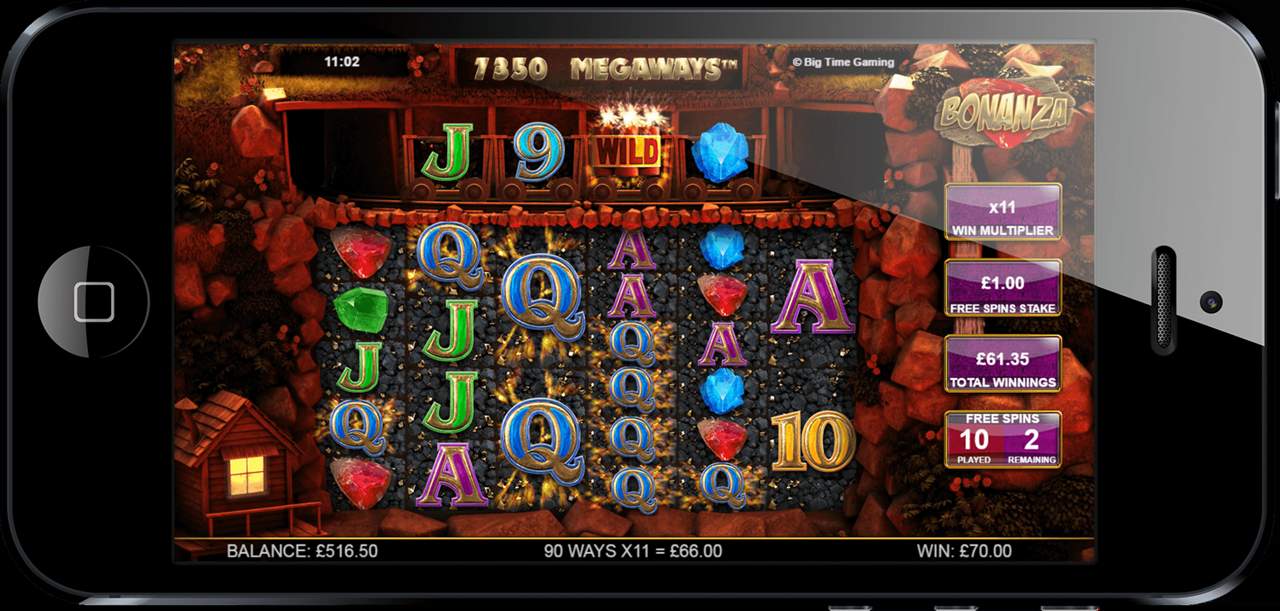
A traditional slot defines fixed lines across the grid and pays only when matching symbols land on one of them.
Megaways abandons that entirely and pays for adjacent matching symbols starting from the leftmost reel, wherever they sit vertically.
Three matching symbols on reels one, two and three pay whether they are top, middle or bottom.
That rule alone would produce a ways to win format rather than a payline one.
The licensed engine adds the variable reel height on top of it.
Combining the two is what generates the enormous ways counts the format advertises.
A player reading the grid for lines will find none.
Reading it for adjacency from the left is the correct habit.
Every Megaways title works this way without exception.
The rules screen states it in one line.
Learning it once covers hundreds of games across every Canadian lobby.
Comparing the format against a ways to win slot clarifies what the licence actually adds.
A standard ways to win title fixes the grid at three rows and pays for adjacency, producing 243 ways on five reels every single spin.
That number never moves.
Megaways takes the same adjacency rule and lets the row count float, so the ways figure becomes a variable rather than a constant.
Everything else about how wins are read is identical.
A player already comfortable with ways to win slots needs no further explanation.
A player coming from paylines has two ideas to absorb rather than one.
The rules screen covers both in a short paragraph.
Neither idea affects the return figure, which the studio sets independently.
The engine describes how wins are counted and never how much they are worth.
Holding that distinction prevents most of the confusion around the format.
Two Megaways titles at the same ways count can pay two percentage points apart.
Reading a grid takes a different habit on this format.
Start at the leftmost reel and look right, counting how far a matching symbol runs across adjacent reels.
A run of three pays, a run of four pays more and a run of six pays most.
Position within each reel is irrelevant.
That single instruction covers every Megaways title ever built.
Players trained on paylines instinctively look for diagonal patterns and find none.
Ten minutes of demo play retrains the eye permanently.
The ways counter above the grid confirms how many combinations the current shape allows.
It never tells a player what the spin will pay.
The paytable does that and it lists awards by symbol and run length.
Reading it once per title is enough.
Awards scale with run length far more steeply than with ways count.
A short summary helps before the detail continues.
Megaways slots pay for adjacency from the left, count ways rather than lines, and vary the grid on every spin.
Those three rules define every Megaways title in a Canadian lobby.
Nothing in them sets a price, which is why two Megaways games can cost a player very differently.
The engine standardises the counting and the studio sets the mathematics.
A player holding that split reads the format correctly from the first spin.
The lobby tile carries the licensed name and no financial information at all.
The panel carries the deployed percentage and the volatility rating.
Ten seconds separates the two.
Three sentences cover the definition for good.
Megaways slots vary the grid, Megaways slots pay on adjacency from the left, and Megaways slots set no price of their own.
The studio behind a given Megaways title sets the paytable, the ceiling and the certified build range.
Two Megaways games sharing a name and a counting rule can cost a Canadian player two points apart.
That is the whole reason this page runs long.
The format arrived as a genuine departure and became a default.
Players who started on paylines had to relearn how a grid reads.
Players starting now meet Megaways titles as the ordinary case in any Canadian lobby.
Neither group gains anything from the ways counter beyond entertainment.
The panel is where a Megaways title states what it costs.
The name has become a shorthand players use loosely.
Any slot with a big variable grid gets called a Megaways title in conversation, and only licensed ones carry the engine.
Checking the provider and the rules screen confirms whether a game really runs it.
Who invented Megaways?
Big Time Gaming, the Australian studio behind Megaways, built the engine and holds the intellectual property. It licenses the mechanic to other suppliers rather than keeping it exclusive, which is why titles carrying the name come from across the industry.
The studio was later acquired by the Evolution group. The licensing model continued unchanged.
The licensing decision shaped the whole market.
A studio holding a mechanic this distinctive had the option of keeping it exclusive and building a modest catalogue around it.
Big Time Gaming licensed it outward instead, taking a fee from every studio that shipped a title on the engine.
Hundreds of releases followed from dozens of suppliers.
The result is that Megaways became a category rather than a product line.
Canadian players now meet the name across studios that compete with each other in every other respect.
That breadth is why the format needs judging title by title.
The engine is common and nothing else is.
The Evolution group acquisition changed ownership without changing the licensing model.
Existing agreements continued and new ones kept being signed.
For a player nothing about the games changed at any point.
The Australian origin shows in the early titles.
Big Time Gaming built a reputation on unconventional grids before the engine existed, and the format was the culmination of that work rather than a departure from it.
Bonanza launched the mechanic and set the template every licensee followed.
Six reels, a horizontal reel above the middle four, cascades and an unlimited free spins multiplier.
Studios adopting Megaways rarely changed that structure because players recognised it.
The consistency helped the format spread quickly and produced the sameness critics point at now.
Both outcomes trace to the same decision.
Licensing widely made the mechanic ubiquitous and made individual titles hard to tell apart.
The studio behind a given release is what differentiates it.
Reading the provider name on a tile is more informative than reading the mechanic name.
Canadian lobbies list both.
The template Bonanza set is worth listing because it recurs everywhere.
Six main reels with variable height, a horizontal reel above the middle four, cascading wins and free spins with an unlimited multiplier.
Almost every Megaways title since carries at least three of those four.
Studios that dropped one usually dropped the horizontal reel.
Studios that added layers put multiplier symbols, symbol upgrades or secondary grids on top.
None of them changed the core counting rule because the licence defines it.
That stability is why a player who learns one title can read any of them.
It is also why hundreds of releases feel interchangeable.
Differentiation lives in the paytable and the volatility rating rather than in the structure.
Both sit in the panel and neither appears on the lobby tile.
Checking them is the only way to tell two Megaways games apart financially.
The ownership chain is worth stating once.
Big Time Gaming created the engine, licensed it broadly, and was later acquired by the Evolution group alongside NetEnt and Red Tiger.
Megaways licensing continued through that change without interruption.
Canadian operators licensing the group frequently carry Megaways titles from several of those brands together.
A provider filter in an Ontario lobby usually shows all of them in one list.
Crown catalogues curate the same bundle down.
None of the corporate structure reaches the certified builds.
Every Megaways title still passes independent laboratory testing before deployment.
The tile, the rules and the mathematics are unaffected.
The licence is what turned one mechanic into a category.
Big Time Gaming could have kept Megaways in house and shipped a small catalogue.
Licensing Megaways outward produced hundreds of titles from dozens of studios instead.
Canadian lobbies now carry Megaways games from suppliers that compete on everything else.
The breadth is the reason every Megaways title needs judging on its own panel.
The original studio still ships releases on its own engine.
Those sit alongside licensee titles in the same lobby rows without any visual distinction.
A Megaways game from the originator carries no automatic advantage.
Its figures need reading exactly like everybody else.
The provider name on the tile is the only reliable signal of who built it.
How does the Megaways mechanic work?
On a Megaways grid each reel is a scrolling strip that stops showing between two and seven symbols. The ways to win figure is the product of those symbol counts multiplied together across all reels, recalculated fresh on every spin.
Six reels showing seven symbols each produces 117,649 ways. That figure is where the familiar maximum comes from.
Working through a single spin makes the arithmetic clear.
The engine picks a symbol count for each reel independently, drawing from the permitted range.
A spin producing four, six, three, five, seven and two symbols across six reels multiplies out to 5,040 ways.
The next spin produces seven on every reel, which multiplies to 117,649.
The spin after that produces two on every reel, which multiplies to 64.
All three outcomes come from the same certified build at the same stake.
The ways figure displays on screen and updates before the reels settle.
Players sometimes read a low count as the game being tight.
It is neither tight nor generous, because the return figure already accounts for the whole distribution of grid shapes.
A Megaways title with 64 ways on one spin has not shortchanged anybody.
The average across thousands of spins is what the published percentage describes.
One consequence of variable grids deserves attention.
Hit frequency moves with the ways count, so a spin with two symbols per reel has far fewer chances to produce an adjacent run than one with seven.
Across a session that averages out exactly as the certified mathematics predicts.
Within a session it produces stretches that feel completely different from each other.
Twenty spins with small grids feel dead and twenty with large grids feel alive.
Neither stretch means anything about what comes next.
Each spin draws its grid shape independently, with no memory of the last one.
Players reading a run of small grids as the game tightening are pattern matching on noise.
The Megaways engine has no state carried between spins.
Certification tests exactly that property before a title reaches a licensed operator.
The generator output is independent by design and verified by laboratory.
Two numbers on screen do different jobs and players conflate them.
The ways counter reports the current grid shape and updates every spin.
The return figure in the panel reports the long run percentage and never changes during play.
A high ways count on one spin says nothing about the return.
A low ways count says nothing either.
The certified mathematics already includes the frequency of every possible shape.
Players who treat a large grid as a better spin are reading a display rather than an outcome.
Megaways titles produce their return across the whole distribution rather than in the visually impressive spins.
Some of the largest results land on modest grids with a long cascade chain.
Watching the balance rather than the counter is the habit that reflects reality.
Fifty spins with the sound off makes the point faster than any explanation.
One practical instruction follows from the arithmetic.
Ignore the ways counter entirely while deciding whether to keep playing.
It reports grid shape and nothing about value.
The balance and the deployed percentage are the two numbers that describe a Megaways session in financial terms.
Everything else on screen is presentation built around a certified result.
Players who track the counter develop expectations the mathematics never promised.
Players who track the balance see what the format actually does.
Both numbers sit within a glance of each other.
Choosing which to watch is a habit rather than a skill.
The counting rule never varies across the format.
Every Megaways title multiplies the symbol counts across its reels to produce the current ways figure.
Every Megaways title redraws those counts on the next spin.
Nothing in that process is influenced by the previous spin or by the stake.
Certification tests exactly that independence before any Megaways build reaches a Canadian operator.
Reading the grid takes one habit and holds forever.
Start at the left, count adjacent matches rightward, ignore vertical position.
Every Megaways title works that way and none deviates.
The paytable lists awards by symbol and run length rather than by ways count.
Longer runs pay far more than larger grids do.
Symbol counts per reel are drawn before the stop positions are chosen.
That ordering is what makes each Megaways grid independent of the last.
Laboratories verify the independence directly during certification.
How many ways can a Megaways slot pay?
Megaways titles pay from under a hundred ways to 117,649 on the standard six reel layout. Rarer configurations push higher, with a handful of titles reaching into the millions by adding reels or extra symbol positions above the grid.
The current ways count displays on screen during play. It changes with every spin.
The familiar number has a specific origin.
Seven symbols on each of six reels is seven to the sixth power, which equals 117,649.
That configuration is the maximum on the standard layout and it appears rarely.
Most spins land far below it.
Studios have since pushed beyond the standard by adding reels, extra rows or secondary grids.
Titles advertising a million ways or more exist and use those extensions.
The headline number tells a player how the grid can look at its largest rather than how it usually looks.
Treating it as a quality measure is a mistake.
A Megaways title with 117,649 maximum ways and a poor return figure pays worse than a modest one with a strong figure.
The ways count is presentation and the percentage is money.
Both appear on screen and only one of them matters to a bankroll.
The distribution of ways counts matters more than the maximum.
Most spins on a standard six reel title produce somewhere between a few thousand and thirty thousand ways.
The extremes at both ends are rare by construction.
A player watching for 117,649 will see it occasionally across a long session and almost never at a moment that matters.
Marketing leads with the maximum because it is a memorable number.
The typical grid is what a session actually consists of.
Extended layouts advertising a million ways or more work the same way, with an impressive ceiling and an ordinary middle.
None of it changes what the title returns.
Two Megaways games with wildly different maximum ways counts can publish identical figures.
The panel is where that comparison happens.
The ways counter above the reels is entertainment.
Extended layouts deserve a note because they confuse comparisons.
Adding a seventh reel, extra rows or a secondary grid multiplies the ceiling far beyond 117,649.
Titles advertising a million ways or more use one of those extensions.
The typical grid on those games is proportionally larger and the return figure sits in the same band as everything else.
So a million way title and a 117,649 way title can cost a player identically per spin.
The larger number is a marketing differentiator rather than a value one.
Comparing two Megaways titles on maximum ways is comparing packaging.
Comparing them on the deployed percentage is comparing price.
The panel carries the second number and the tile carries the first.
Only one of them survives contact with a bankroll.
Reading the right one takes the same amount of time.
The number in the title is marketing rather than measurement.
A Megaways release advertising 117,649 ways and one advertising a million ways can publish identical return figures.
They can also publish figures two points apart in either direction.
The ways ceiling correlates with nothing a bankroll cares about.
What correlates is the deployed percentage, the volatility rating and the maximum win multiple.
Those three appear in the panel and the paytable.
The ways ceiling appears on the tile and in the advertising.
Reading the first three and ignoring the fourth is the correct priority.
It takes the same amount of time either way.
The ceiling figure sells the tile and describes nothing financial.
A Megaways title advertising 117,649 ways can publish a weaker figure than one advertising far fewer.
Extended Megaways layouts reaching a million ways sit in the same return band as the standard six reel builds.
Comparing Megaways titles on maximum ways compares packaging rather than price.
The panel carries the number that matters.
Typical grids matter more than maximum ones.
Most Megaways spins land in the middle of the range rather than at either extreme.
A session consists almost entirely of those ordinary shapes.
The advertised ceiling appears occasionally and rarely at a useful moment.
Judging a Megaways title on the headline number judges the rarest case.
Comparing two Megaways titles on ways count is comparing box sizes.
One Megaways release at 117,649 ways and another at 200,704 ways cost the same per spin at matched figures.
The panel is where the price sits and the tile is where the packaging sits.
Why does the ways count change every spin?
Because Megaways reel strips are variable height. The engine draws a random symbol count for each reel independently before the stop position is chosen, so the grid shape differs from spin to spin.
That variability is the whole point of the mechanic. Fixed grids cannot produce it.
The engineering behind it is simple and the effect is not.
Each reel is a long strip of symbols scrolled behind a window whose height varies, so a short window shows two symbols and a tall one shows seven.
The engine sets each window independently before the strips stop.
Nothing about that process favours or disfavours the player.
The certified mathematics accounts for every possible grid shape and its frequency.
What the variability does is make the session feel unpredictable in a way fixed grids never do.
A player watching the ways counter climb toward a large figure feels something is about to happen.
Usually nothing does, because the count and the outcome are drawn together rather than one causing the other.
That feeling is the format working as designed.
Megaways sells anticipation and the anticipation is genuine even when the result is not.
Understanding the order of operations removes most of the frustration.
The design solves a specific problem older formats had.
A fixed grid slot delivers the same visual every spin, so studios added animation and sound to create variety the mathematics did not provide.
Variable grids create genuine visual variety from the mechanics themselves.
Every spin looks different because it is structurally different.
That is why the format felt fresh when it arrived and why it spread so fast.
It also explains the fatigue players report after playing dozens of Megaways titles.
The novelty was structural and structure is exactly what the licence standardises.
Once the shape is familiar, only theme and mathematics differentiate one title from the next.
Theme is a preference and mathematics is measurable.
Choosing on the second beats choosing on the first for anybody tracking cost.
The rating and the figure sit in the same panel.
The independence of each reel is the property worth trusting.
Reel one showing two symbols has no influence on what reel two shows.
Each draw happens separately from the certified distribution.
That means a grid building toward a large shape from left to right is not building toward anything.
The reels stop in sequence for presentation and resolve as a set.
Players watching reels one through four land tall and hoping reels five and six follow are watching theatre.
The outcome was fixed before the first reel stopped.
Megaways presents that sequence more dramatically than fixed grid slots because the shape genuinely varies.
The drama is real and the causation is not.
Understanding the order removes a persistent source of frustration.
Certification tests exactly this independence before release.
The variability serves the studio as much as the player.
A format where every spin looks different needs less animation budget to stay engaging.
That is part of why Megaways titles ship quickly and why so many exist.
Structural novelty replaced production novelty for a whole generation of releases.
Players benefit from the variety and pay nothing extra for it.
The return figure is unaffected by how interesting the grid looks.
What the variety does affect is how long a losing run feels tolerable.
A Megaways session with visible change holds attention longer than a static one.
Longer attention at a fixed stake means more turnover.
Independence between reels is the property that makes the format honest.
A Megaways grid building tall from left to right is not building toward anything.
The whole result was fixed before the first reel stopped moving.
Megaways presents that sequence dramatically because the shape genuinely varies each time.
Understanding the order of operations removes the frustration entirely.
Variety is the product being sold here.
Fixed grid slots buy variety with animation budgets and Megaways titles get it structurally.
That is why the format shipped so fast and spread so widely.
It costs a player nothing extra and it holds attention longer.
Longer attention at a fixed stake means more turnover across an evening.
What is the horizontal reel for?
Most Megaways titles add a horizontal Megaways reel running above the main grid. Symbols landing there act as extra positions on the four middle reels, raising the ways count and creating the largest grids the engine produces.
It is optional in the licence. A minority of titles leave it out.
Its effect on the grid is worth spelling out.
The horizontal reel sits above the four middle reels and shows one symbol per position when active.
Each symbol landing there adds a position to the reel beneath it, pushing that reel from six symbols to seven.
Filling the horizontal reel across all four positions is what produces the maximum ways count.
It also increases the chance of a long adjacent run, because the extra symbols sit in the middle of the grid where runs are built.
Titles omitting the horizontal reel cap out lower.
Neither version pays better by default.
A Megaways title without the top reel simply reaches its own maximum differently.
The return figure describes what each actually does.
Reading the layout description in the rules screen shows which version is running.
Its behaviour during free spins is worth knowing separately.
Many titles lock the horizontal reel fully active for the whole bonus round, which fixes the grid at or near maximum ways.
That guarantees the densest possible layout for every spin of the feature.
Combined with an unlimited climbing multiplier it produces the sequences the format is famous for.
Titles that leave the horizontal reel variable during free spins pay less spectacularly and more often.
Both approaches appear across the Megaways range.
The rules screen states which applies before a stake is placed.
Reading it explains why two apparently similar titles feel entirely different inside the bonus.
The base game rarely reveals that difference.
Demo mode reaching one feature round shows it immediately.
Licensed Canadian operators offer demo play across most of the catalogue.
Counting the positions makes its contribution concrete.
Without the horizontal reel, six reels at seven symbols each is 117,649 ways.
The horizontal reel does not add reels, it adds one symbol position to each of four middle reels.
On a grid already at maximum height it cannot add more.
On a typical mid sized grid it raises the count substantially by lifting four of the six multipliers.
That is why a fully active top reel feels significant during play.
It converts an ordinary shape into a large one.
Megaways titles that lock it active during free spins are guaranteeing large shapes throughout the round.
Titles that leave it variable produce a mix.
The rules screen states which behaviour applies.
Both are certified identically and they produce different session shapes.
Players sometimes ask whether the top reel is worth having.
It raises the ways count and it does not raise the return figure.
A Megaways title with the horizontal reel and one without can publish the same percentage.
What the top reel changes is the shape of the distribution, pushing more weight into rare large grids.
That makes the title feel more volatile even when the rating is similar.
Titles omitting it feel steadier and reach lower ceilings.
Neither is better and both are certified identically.
The layout description in the rules screen names which is present.
Demo mode shows it in one spin.
The top reel raises ways and never raises return.
A Megaways title with the horizontal reel feels more volatile because more weight sits in rare large grids.
A Megaways title without it feels steadier and caps lower.
Both are certified identically and both publish their own figures.
The layout description in the rules screen names which version is running.
Its presence changes feel rather than value.
A Megaways grid with the top reel active reaches its largest shapes and its rarest outcomes.
Locking it active through free spins is what several titles do to guarantee density.
The rules screen states whether that applies.
Return figures are unaffected either way.
Do Megaways slots use cascading reels?
Almost every Megaways title cascades. Winning symbols are removed, replacements drop into the gaps, and any new combination pays again inside the same spin, frequently with a multiplier climbing through the chain.
The cascade is not part of the licensed engine. Studios add it because the two combine well.
Separating the two mechanics keeps the thinking straight.
The licensed engine governs the symbol count that appears and how ways are counted.
The cascade governs what happens after a win resolves.
They are independent and studios pair them because a chain of cascades on a grid with tens of thousands of ways produces spectacular sequences.
A multiplier climbing through that chain concentrates the return into rare, very long runs.
That structure is why Megaways titles feel like nothing happens for hundreds of spins and then everything happens at once.
The published figure already accounts for it.
Players counting individual cascade wins rather than watching the balance consistently misread how a session is going.
A five step cascade returning less than the spin cost is a loss dressed as an event.
The balance below the reels is the only honest scoreboard.
Watching it for fifty spins tells the truth faster than any review.
A minority of titles skip the cascade entirely.
Those spin conventionally, resolve once and pay on adjacency without removing symbols.
They feel closer to a traditional ways to win slot with a variable grid.
Hit frequency reads more honestly because a win is a win rather than a link in a chain.
Players frustrated by loss disguised as win sequences find those titles considerably clearer.
They are harder to find because the cascade sells better.
Filtering is not possible in most lobbies, so the rules screen is the only way to identify them.
A Megaways title without cascades usually says so in the first line of its description.
Return figures across both groups overlap completely.
Neither structure pays better and one of them is easier to read.
Preference decides which suits a given player.
Multiplier behaviour during cascades is the detail that separates titles.
Some increment the multiplier by one on each successive cascade within a spin.
Others use a ladder that jumps in larger steps.
Others apply no multiplier in the base game at all and reserve it for free spins.
All three appear across the Megaways range and all three are disclosed in the rules screen.
The difference materially changes how a base game session feels.
A title with a base game multiplier produces occasional large base wins.
A title without one produces almost nothing outside the feature.
Players who dislike long featureless stretches should filter toward the first group.
Nothing on the tile communicates which is which.
Two minutes in demo mode does.
Cascades change how a session reads rather than what it costs.
A Megaways title with cascades produces more on screen events per spin than one without.
Event count and money are unrelated.
A cascade chain of six that returns less than the stake is a losing spin with six animations.
Players counting events conclude the game pays constantly.
The balance disagrees.
Watching the balance across fifty spins with the sound off is the cheapest correction available.
It costs nothing in demo mode and it recalibrates expectations permanently.
Every Megaways title benefits from that test before real money is staked.
Cascades multiply on screen events rather than money.
A Megaways chain of six that returns under the stake is a losing spin with six animations attached.
Players counting cascade wins on Megaways titles consistently overestimate how a session is going.
The balance below the reels is the only honest scoreboard.
Fifty silent spins in demo mode recalibrates that permanently.
A minority of titles skip cascades entirely.
Those resolve once per spin and read far more honestly than a chained Megaways release.
Hit frequency means what it appears to mean on them.
They are harder to find because the cascade sells better in a lobby.
The rules screen is the only reliable way to identify them.
What RTP do Megaways slots pay?
Megaways titles pay roughly between ninety-four and ninety-six point eight percent depending on the title and the deployed build. The mechanic itself sets no return figure, so the number belongs to the individual game rather than to the format.
The panel inside the game states the deployed figure. Nothing else does reliably.
The spread across the format is what matters here.
A strong title in its headline build reaches ninety-six point eight percent, which is competitive with anything in the market.
A weak title in a reduced build sits near ninety-four, which is poor.
Both carry the same licensed name on the tile.
A Canadian choosing a Megaways title on the name alone is choosing at random within that spread.
Across ten thousand spins at fifty cents, three percentage points is a hundred and fifty dollars.
The information button inside the game reveals the deployed figure in seconds.
Licensed Canadian operators are required to make it reachable.
Review sites quote the studio default, which is usually the highest certified version.
Almost nobody deploys the highest version everywhere.
Reading the panel is the only method that survives that fact.
Comparing the format against the wider market puts the band in context.
Video slots average near ninety-six percent and three reel classics run slightly higher.
Megaways titles sit inside that same band rather than below it, which surprises players who assume an elaborate format costs return.
The elaborate part is the counting method and it costs nothing.
What does cost return is an enormous advertised ceiling, and this format carries those more often than most.
So the correlation between the name and a weaker figure is real and indirect.
Titles with modest ceilings inside the range publish figures at the top of the band.
Finding them means reading panels rather than filtering on the mechanic.
Ten minutes of that produces a shortlist that lasts a year.
Only an operator switching build invalidates an entry.
Switches are infrequent once a title is live.
A worked example shows why the check pays for itself.
A player staking twenty cents for an hour at five hundred spins turns over a hundred dollars.
At ninety-six point five percent the expected cost is three dollars fifty.
At ninety-four percent it is six dollars.
Across a hundred hours that gap is two hundred and fifty dollars.
Reading the panel once per Megaways title takes ten seconds.
Doing it for twenty titles takes under four minutes total.
No other four minutes available to a slot player returns as much.
The figure sits behind the information button inside every certified game.
Licensed Canadian operators are required to make it reachable.
An operator that buries it is still required to carry it.
Two habits together cover the whole issue.
Read the panel on any Megaways title the first time you open it at a given operator.
Write the number down beside the title name.
Twenty entries take under four minutes to compile and answer every future question.
Only an operator switching build invalidates an entry, which happens rarely.
The record reflects the site you actually play at rather than a market average.
Published rankings quote studio defaults that almost nobody deploys everywhere.
A personal record beats them on accuracy every time.
Demo mode makes the compilation free.
The band is the same one every video slot occupies.
Megaways titles sit between roughly ninety-four and ninety-six point eight percent depending on the deployed build.
Nothing about the Megaways engine costs return.
What costs return is a large advertised ceiling, and Megaways titles carry those more often than most formats.
The correlation is real and entirely indirect.
Four minutes of reading covers twenty titles.
That is the entire cost of knowing what every Megaways game on a shortlist actually pays.
No other four minutes available to a slot player returns as much across a year.
The figure sits behind the information button in each certified build.
Licensed Canadian operators are required to make it reachable.
Operators deploy from a certified list rather than inventing figures.
Every deployed Megaways build has passed testing at the number it shows.
The disclosure is real and it only helps a player who reads it.
Why do Megaways RTP figures vary so widely?
Because dozens of studios build Megaways titles on the same engine. Each sets its own paytable, feature structure and certified build range, so two titles sharing the name can differ by nearly three percentage points.
The licence covers the ways calculation only. Everything financial belongs to the studio.
The licensing structure explains the variation completely.
Big Time Gaming supplies the ways counting engine and nothing else.
Each licensee designs its own symbols, paytable, feature structure, maximum win and certified build range.
A studio wanting an enormous ceiling funds it from the base game, which lowers the return.
A studio wanting a strong figure keeps the ceiling modest.
Both ship under the same Megaways name and both are certified independently.
Comparing two titles on the name tells a player nothing about either.
Comparing them on the panel tells them everything that matters.
Studio identity is a useful shortcut because build policies are consistent within a supplier.
Learning which studios ship tight figures narrows the search before any panel is opened.
The panel then confirms it for the specific deployed build.
Build policy differs by studio in a way worth tracking.
Volume studios certify wide ranges and let operators choose, which produces the largest gap between advertised and deployed figures.
Tighter studios certify two or three versions and narrow that gap by design.
Both ship Megaways titles and both are equally certified.
A player who learns which studios do which can predict the exposure before opening a panel.
The panel then confirms the specific deployed number.
This is the single most useful habit available on a format this broad.
Hundreds of titles share a name and nothing else financial.
Judging any of them on the name alone is judging at random.
Judging on the studio narrows it and judging on the panel settles it.
Both take seconds once the habit exists.
The variation is not evidence of anything dishonest.
Studios certify multiple builds openly and regulators require the deployed figure to be visible.
Operators choose from the certified list based on their own commercial position.
All of that is disclosed and none of it is hidden.
What it does mean is that a Megaways title cannot be evaluated as a single product.
It is a family of certified builds sharing artwork and a name.
A player evaluating the family rather than the specific deployed build is evaluating an abstraction.
The panel names the concrete version in front of them.
Two operators, two panels, two different answers about the same tile.
Checking both is what turns the disclosure into a decision.
Ignoring both leaves the choice to whoever set the deployment.
One clarification prevents a common misreading.
The variation between Megaways titles is not the same thing as the variation between builds of one title.
The first comes from different studios making different design choices.
The second comes from one studio certifying multiple versions and operators choosing among them.
Both exist and they compound.
A player can meet a weak title in a weak build, which is the worst combination available.
Studio filtering addresses the first source and panel reading addresses the second.
Doing both narrows hundreds of Megaways tiles to a handful worth playing.
Neither step takes more than a minute.
Two separate sources of variation stack on this format.
Different studios build different Megaways mathematics under the same licence.
Different operators deploy different certified builds of the same Megaways title.
A player can meet a weak game in a weak build, which is the worst available combination.
Studio filtering handles the first and panel reading handles the second.
Nothing about the variation is concealed.
Studios certify build ranges openly and regulators require the deployed figure to be visible in every Megaways title.
Operators choose from the certified list for their own reasons.
A player who reads the panel gets the full benefit of that rule.
A player who trusts a review figure forfeits it.
Studio filtering narrows the field before any panel opens.
Learning which suppliers ship tight Megaways mathematics removes most of the searching.
The panel then confirms the deployed Megaways build in front of you.
What volatility do Megaways slots run?
High on almost every Megaways title in the range. The ways count swinging between two hundred and tens of thousands produces enormous variance by design, and the big wins concentrate in the rare spins with the largest grids.
A handful of medium volatility exceptions exist. The rating in the panel names them.
The variance comes from two sources stacked together.
The changing ways count means the chance of a large adjacent run differs enormously from spin to spin.
The cascade with a climbing multiplier means the largest results require a long chain that rarely occurs.
Multiply those two and the outcome distribution becomes extremely long tailed.
Most spins return nothing and a tiny fraction return hundreds of times the stake.
That is the defining property of Megaways as a category rather than of any individual title.
A player who understands the shape stops reading a losing run as bad luck.
It is the expected experience between the events the format is built around.
Medium volatility exceptions exist and receive almost no promotion.
The rating in the panel identifies them in one look.
Anybody wanting a gentler session filters on that rather than on the format.
Session shape follows directly from the variance.
A hundred spins on a high volatility Megaways title commonly ends with the balance down and nothing memorable having happened.
The same hundred spins occasionally ends with a feature round paying hundreds of times the stake.
Both are ordinary outcomes for the format.
Players who expect the second and meet the first repeatedly conclude the game is broken.
It is behaving exactly as the rating describes.
Setting the expectation before starting is what makes the format enjoyable rather than frustrating.
The rating sits one tap away inside every certified game.
Reading it costs nothing and changes how a losing run feels.
Nothing about the artwork or the ways counter communicates variance.
Only the rating does.
Comparing the format against low variance slots quantifies the difference.
A low variance title might return something on a third of spins and rarely pay more than twenty times the stake.
A high variance Megaways title returns something less often and occasionally pays hundreds of times.
Both can publish ninety-six percent.
The long run cost is identical and the experience is nothing alike.
Bankroll requirements differ by a factor of five or more.
Session length at a fixed deposit differs just as sharply.
Emotional experience differs most of all.
Choosing between them is choosing what kind of evening to have rather than what the evening costs.
The rating states which is which before a stake is placed.
Nothing else on screen does.
The rating deserves more attention than it usually gets.
Canadian licensed operators show it in the same panel as the return figure on every certified game.
On Megaways titles it is the single most predictive number available about how a session will feel.
High means long silences and rare large events.
Medium means a mix.
Low is rare in this format and worth seeking out for anybody with a small bankroll.
Sorting or filtering on volatility is not offered by most lobbies.
Reading it per title is the only route.
Ten seconds per game builds a usable shortlist.
High is the default and the rating still needs reading.
Medium volatility Megaways titles exist and receive almost no promotion.
Low volatility Megaways titles are rare and worth seeking out on a small bankroll.
Nothing on a Megaways lobby tile communicates which band a title occupies.
Ten seconds in the panel does.
Expectation setting is what the rating buys.
A four hundred spin losing run on a high volatility Megaways title is the ordinary case rather than misfortune.
Knowing that in advance changes how the run feels.
It also stops a player concluding the game is broken.
The rating sits one tap from the spin button.
Two titles at the same published figure can feel nothing alike.
Variance is what separates them and the rating is where it is stated.
On Megaways games that gap between titles is unusually wide.
One more comparison sharpens the point.
A low variance slot and a Megaways title at the same published figure cost a player the same across a hundred thousand spins.
Across five hundred spins they behave nothing alike.
Almost every real session is closer to five hundred spins than to a hundred thousand.
How big a bankroll do Megaways slots need?
Megaways titles want five hundred spins as a working minimum. High volatility titles can run three hundred spins without a meaningful award, so a bankroll that funds fifty spins rarely reaches the feature carrying the return.
At twenty cents per spin that is a hundred dollars. Lower stakes stretch the same deposit further.
Putting real numbers on the requirement makes it concrete.
Five hundred spins at twenty cents is a hundred dollars, which is a fair test of a high volatility title.
The same five hundred spins at a dollar is five hundred dollars.
A player with fifty dollars can fund two hundred and fifty spins at twenty cents, which is thin but workable.
The same fifty dollars at a dollar per spin funds fifty spins and reaches essentially nothing.
Stake control is therefore the lever that decides whether a Megaways session is a fair test or a formality.
Most titles start around twenty cents because the format has no payline count to multiply.
That low floor is what makes the variance survivable on a modest deposit.
Choosing a lower stake beats choosing a shorter session every time.
The arithmetic favours patience on this format more than on any other.
Demo mode shows the pattern before any money moves.
The relationship between stake and session length is worth stating as a rule.
Bankroll divided by stake equals spins, and spins is what determines whether the feature arrives.
A player wanting five hundred spins from fifty dollars needs a ten cent stake.
A player wanting five hundred spins from two hundred dollars can stake forty cents.
Neither changes the expected percentage loss, which stays identical at every stake.
What changes is whether the session reaches the part of the game that carries the return.
On a high volatility Megaways title that part is the free spins round.
A session ending before it arrives has tested nothing and lost money to the base game alone.
Choosing the stake from the bankroll rather than from habit is the whole discipline.
Deposit and loss limits at a licensed Canadian operator enforce it independently.
Both sit in the account settings.
Working from the feature backwards gives the cleanest rule.
Find the average spins between free spins triggers, which demo play reveals roughly across a few hundred presses.
Multiply that by three to allow for variance.
That number of spins is the minimum a bankroll should fund for a fair test.
On most high variance Megaways titles it lands between four hundred and six hundred spins.
Divide the intended deposit by that figure and the correct stake appears.
Fifty dollars across five hundred spins is ten cents.
Two hundred dollars across five hundred spins is forty cents.
Playing above that stake shortens the session without improving anything.
Playing below it stretches the session at the same expected percentage.
The arithmetic never favours the larger stake on a volatile format.
The rule generalises beyond this format.
Spins available equals bankroll divided by stake, and spins available is what determines whether a feature arrives.
High variance games need more spins, so they need either a bigger bankroll or a smaller stake.
Megaways titles sit at the high variance end almost universally.
A player unwilling to drop the stake needs a deeper deposit.
A player unwilling to deposit more needs a lower stake.
Doing neither produces a short session that tests nothing.
The expected percentage loss is identical across all three choices.
Only the session length changes.
The rule is arithmetic rather than judgement.
Bankroll divided by stake equals spins, and spins decide whether a Megaways feature round arrives at all.
Four hundred spins is a fair minimum on most Megaways titles.
Fifty dollars across four hundred spins means a twelve cent stake.
Playing above that shortens the session without changing the expected percentage.
Stake is the lever, not the deposit.
A player unwilling to deposit more can still reach four hundred Megaways spins by dropping the stake.
Expected percentage loss is identical at every stake the paytable allows.
Only the session length moves.
Choosing the stake from the bankroll rather than from habit is the whole discipline.
Demo mode reveals the trigger frequency without spending anything.
A few hundred free spins on a Megaways title shows roughly how often the feature arrives.
Multiplying that gap by three gives the working bankroll in spins.
What are the best known Megaways slots?
Bonanza is the original Megaways title and remains the reference point. Extra Chilli, White Rabbit, Gonzo Quest Megaways and Buffalo King Megaways all appear widely in Canadian lobbies alongside it.
Each comes from a different studio. Return figures across them vary considerably.
Each of the headline titles illustrates something different.
Bonanza is the original, a mining theme with the classic six reel layout and the top horizontal reel.
Extra Chilli added a gamble feature on the free spins round that let players risk spins for more spins.
White Rabbit introduced the feature drop that later became the standard bonus buy.
Gonzo Quest Megaways took an existing avalanche title and rebuilt it on the engine.
Buffalo King Megaways shows how a volume studio applies the format to a familiar theme.
Between them those five cover most of what Megaways does structurally.
Return figures across the five vary by more than two percentage points.
Familiarity tracks how widely each was licensed rather than how well any pays.
A player testing all five in demo mode understands the category properly.
An hour covers it and costs nothing at a licensed Canadian operator.
Testing the originals teaches the format faster than reading about it.
Bonanza shows the base template with no complications.
Extra Chilli shows how a gamble layer changes decision making inside a bonus.
White Rabbit shows the feature drop that became the industry standard bonus buy.
Two hours in demo mode across those three covers the structural range.
Everything else in the Megaways catalogue is a variation on one of them.
Newer releases add multiplier layers, symbol upgrades and secondary grids on top.
None of those change how ways are counted.
A player who understands the three originals reads any new release in seconds.
The rules screen then only needs checking for the specific feature structure.
Licensed Canadian operators offer demo play on all three.
Return figures across the famous titles diverge more than reputation suggests.
Bonanza publishes toward the top of the band in its headline build.
Some later licensee releases sit two full points lower.
Players assuming the famous names pay best are frequently wrong.
Fame tracks how widely a Megaways title was licensed and how long it has been in lobbies.
Neither correlates with the deployed percentage at a particular Canadian operator.
Sorting a provider filter by release date surfaces newer titles with stronger figures regularly.
Testing five unfamiliar releases alongside the famous ones takes an hour in demo mode.
The resulting shortlist reflects numbers rather than recognition.
That shortlist is what a year of play should run on.
Rechecking it occasionally keeps it accurate.
Reputation and current value diverge in a predictable way.
The famous Megaways titles are the oldest, and the oldest have had the longest to accumulate players.
Newer releases from the same licensee studios frequently publish stronger figures with a fraction of the recognition.
Sorting a provider filter by release date surfaces them immediately.
Testing five unfamiliar titles alongside the famous ones costs an hour in demo mode.
The resulting shortlist reflects numbers rather than name recognition.
That distinction matters more in this format than in most because the range is so wide.
Hundreds of Megaways titles compete and only a handful publish top band figures.
Finding them requires looking past the familiar tiles.
Fame and figures diverge across this range.
The famous Megaways titles are the oldest and the most widely licensed.
Newer Megaways releases from the same studios frequently publish stronger numbers with far less recognition.
A release date sort inside a provider filter surfaces them in one click.
Testing five of those alongside the classics costs an hour in demo mode.
Testing beats reading on this question.
An hour of demo play across five Megaways titles teaches more than any ranking article.
The resulting shortlist reflects the operator actually being used.
Published lists average across sites nobody plays at.
Licensed Canadian operators offer demo play across most of the catalogue.
A shortlist built from testing outlives any article.
Megaways titles stay in Canadian lobbies for years once licensed.
Rechecking the deployed figures occasionally keeps the list accurate.
The classics stay in Canadian lobbies for a reason.
Operators keep licensing them because players search for them by name.
That longevity makes them a stable reference point rather than a recommendation.
Which studios license Megaways?
Most of the major names license Megaways. Pragmatic Play, Red Tiger, Blueprint, iSoftBet, Relax and NetEnt all ship titles on the engine, alongside Big Time Gaming releases.
Studio identity predicts the volatility and the ceiling. The engine predicts neither.
Studio identity predicts more than the engine does.
Pragmatic Play applies the format to familiar themes at high volatility with large ceilings.
Red Tiger ships shorter, punchier titles with tighter mathematics.
Blueprint holds a long standing licence and built the best known releases in the range.
Relax and iSoftBet occupy the middle ground.
NetEnt rebuilt existing classics on the engine rather than designing new ones.
Knowing which studio built a Megaways title narrows the expected volatility and ceiling before the panel is opened.
The panel then confirms the deployed figure precisely.
Filtering a Canadian lobby by provider rather than by mechanic produces a far more useful list.
Most licensed operators offer that filter without an account.
Checking it takes one visit.
The licensee list keeps growing and the pattern within it holds.
Studios known for tight mathematics ship Megaways titles with tight mathematics.
Studios known for enormous ceilings ship Megaways titles with enormous ceilings.
The engine does not change house style.
That makes studio filtering the most efficient way to narrow hundreds of titles down to a handful worth testing.
Most licensed Canadian lobbies offer a provider filter without requiring an account.
Selecting a studio and sorting by release date produces a readable list in two clicks.
Filtering on the mechanic instead returns everything and sorts nothing.
The difference in usefulness is enormous.
Neither filter substitutes for reading the panel on a specific title.
They narrow the field rather than settling it.
Licensee behaviour clusters into three recognisable groups.
Volume studios ship many Megaways titles quickly with wide build ranges and enormous ceilings.
Boutique studios ship few with tighter mathematics and modest ceilings.
Legacy studios rebuild existing classics on the engine rather than designing new games.
Knowing which group a provider belongs to predicts the volatility and the figure before any panel is opened.
That shortcut turns a filter returning hundreds of tiles into a list of a dozen worth checking.
The panel then confirms each one specifically.
Most licensed Canadian lobbies expose the provider filter without an account.
Using it costs one visit and no signup.
Filtering on the mechanic alone returns everything and ranks nothing.
The difference in efficiency is the whole point.
The licensee roster keeps expanding and the shortcut keeps working.
House style survives the licence, so a studio known for tight mathematics ships tight Megaways titles.
A studio known for enormous ceilings ships enormous ceilings on the engine too.
Learning six or seven provider names covers most of what a Canadian lobby carries.
Combining a provider filter with a release date sort turns hundreds of tiles into a readable list in two clicks.
Filtering on the mechanic name alone returns everything and ranks nothing.
Most licensed Canadian operators expose the provider filter without an account.
Using it before registering costs one visit.
The panel still settles each individual title.
House style survives the licence intact.
A studio known for tight mathematics ships tight Megaways titles.
A studio known for enormous ceilings ships enormous Megaways ceilings too.
Learning six provider names covers most Megaways games a Canadian lobby carries.
The provider filter then does the work a mechanic filter cannot.
Two clicks replace an hour of browsing.
Filter a lobby by provider, sort by release date, and the Megaways range becomes a readable list.
Filtering on the mechanic alone returns hundreds of tiles in no useful order.
Most licensed Canadian operators expose the provider filter without an account.
The panel still settles each individual title.
Provider names appear on every lobby tile in a licensed Canadian site.
Reading the provider on a Megaways tile is faster than reading the title itself.
It predicts volatility and ceiling before the panel is opened.
Can Canadians play Megaways slots legally?
Yes, Megaways is legal on both licensed routes. Ontario registered operators license the studios that build on the engine, and provincial crown corporations carry a narrower selection of the established titles.
Offshore sites carry everything and answer to no Canadian authority. The catalogue gap is real but modest.
Route decides breadth rather than legality.
Provincial crown corporations curate toward established studios and moderate volatility, which limits the share of the format they carry.
Ontario registered operators license studio catalogues in full and carry the range properly.
Both attach a complaints process to the account.
Offshore sites carry every Megaways title and answer to no Canadian authority when a withdrawal stalls.
Age rules apply on every licensed route.
Nineteen is the minimum outside Alberta, Manitoba and Quebec, where it is eighteen.
Provincial sites restrict play to residents of the province operating them.
Ontario registered operators restrict play to people physically inside Ontario.
Neither restriction changes which titles appear in the lobby.
Verification happens once when the account opens.
Payment routing separates the licensed routes from the rest.
Licensed Canadian operators settle to a Canadian bank account through Interac and standard cards.
Offshore sites frequently see card transactions declined and push players toward cryptocurrency or third party processors.
Each additional step adds a place for a withdrawal to stall.
On a format this volatile, the rare large win is exactly the withdrawal a player most wants to arrive cleanly.
Megaways sessions produce infrequent large results by design.
Having that result land in an account with no complaints route behind it is the worst possible position.
The licensed routes remove that risk entirely.
Withdrawals generally return by the deposit method.
Choosing Interac at deposit speeds up the exit as well.
Responsible gambling tooling matters more on this format than on most.
Long losing runs punctuated by rare large wins is exactly the pattern that encourages chasing.
A player who has sat through four hundred spins feels owed a result and no result is owed.
Deposit and loss limits set before a session cap what that feeling can cost.
Licensed Canadian operators build both into the account and the province runs a self exclusion programme.
Limits usually take effect immediately when lowered and require a waiting period when raised.
A limit chosen calmly before opening a Megaways title holds during the session.
Offshore sites frequently offer nothing comparable.
That gap costs nothing until it costs a great deal.
Setting the limits takes under a minute.
They sit in the account settings rather than in the game.
The licensed routes differ in breadth and match on protection.
Ontario registered operators carry the full Megaways range under a regulator that hears complaints.
Provincial crown corporations carry a curated selection with the strongest responsible gambling tooling in the country.
Both settle payments to a Canadian bank account and both answer a dispute.
Offshore sites carry the same games with neither.
For a format producing rare large wins, having somewhere to escalate a stalled withdrawal is worth more than a handful of extra titles.
The catalogue gap between licensed and offshore is narrow.
The accountability gap is total.
The provincial register names which operators are permitted.
Both licensed routes carry the format.
Ontario registered operators hold the widest Megaways range in the country.
Provincial crown corporations carry a curated Megaways selection with the strongest player protection.
Offshore sites carry every Megaways title and answer no complaint.
Nobody in Canada needs an unlicensed account to reach the format.
The licensed routes lose almost nothing on this format.
Ontario carries the full Megaways range and crown sites carry the established part of it.
Both settle payments to a Canadian bank account and both answer a dispute.
Offshore adds unfamiliar titles and removes every protection.
The trade is one sided for anybody who plays regularly.
Age and residence rules apply on both licensed routes.
Nineteen is the minimum outside Alberta, Manitoba and Quebec.
Verification happens once and lasts for the life of the account.
Do crown corporation sites carry Megaways?
Crown sites carry Megaways selectively. Crown catalogues favour established studios and moderate volatility, and the extreme variance typical of the format sits outside that preference across the range.
The best known releases usually make the cut. Newer extreme entries frequently do not.
What crown catalogues screen for explains the pattern.
Selection favours studios with a long track record, mechanics players already understand and volatility in the low to medium range.
The format fails the third test on most titles.
It passes the first two comfortably, because the licensees are established suppliers and the ways to win idea is easy to explain.
So crown sites carry a selection rather than the full range.
Bonanza and the best known Megaways releases usually make the cut.
Newer extreme volatility entries frequently do not.
A player wanting the harsh end of the format needs an Ontario registered operator.
A player wanting the classics finds them everywhere in Canada.
Both routes carry the same certification behind whatever they stock.
The curation policy is defensible even when it frustrates.
A crown corporation serves an entire province including recreational players with no interest in extreme variance.
Stocking the harshest titles in the market would expose that audience to a product most of them do not want.
So the catalogue leans toward the established Megaways releases and away from the newest extremes.
Players who want the full range have a licensed alternative in Ontario and no alternative elsewhere.
That gap is real and it is narrower than it looks.
The titles missing from crown catalogues are mostly newer entries with poor figures.
The classics with the strongest numbers are usually present.
Checking the provider filter on a crown site takes one visit.
It settles what is available before any account is opened.
Checking availability before opening an account avoids disappointment.
Every provincial crown site publishes a game list, usually searchable by provider or by mechanic.
Searching for the format name returns exactly what that province carries.
A player whose shortlist is missing from the list has an answer before depositing.
Ontario residents have the alternative of a registered operator carrying the full range.
Residents elsewhere choose between the curated list and an unsupervised offshore account.
For most recreational bankrolls the curated list is sufficient.
The Megaways titles absent from it are largely newer entries with unremarkable figures.
The classics with the strongest numbers are usually stocked.
One visit to the game list settles the question.
No account is required to browse it.
The answer varies by province and the method for checking does not.
Every crown site publishes a searchable game list.
Searching the format name returns exactly what that province stocks.
A player whose shortlist is present has no reason to look further.
A player whose shortlist is missing has an answer before depositing anywhere.
Ontario residents can register with a private operator carrying the full Megaways range instead.
Residents elsewhere weigh a curated licensed catalogue against an unsupervised offshore one.
For most recreational bankrolls the curated catalogue is sufficient.
The check takes one visit and no account.
Selectively, and the check is trivial.
Every crown site publishes a searchable game list that names its Megaways titles.
A player whose shortlist appears has no reason to look further.
The Megaways games usually missing are newer extremes with unremarkable figures.
The classics with the strongest numbers are generally stocked.
Curation explains what is present and what is missing.
Crown catalogues favour moderate volatility, which excludes the harshest Megaways entries.
The classics with the strongest figures generally survive that filter.
A searchable game list on each provincial site confirms it in one visit.
No account is needed to browse it.
What does Ontario add to Megaways availability?
Depth and speed on Megaways. Ontario registered operators license studio catalogues in full, so new Megaways releases appear within weeks and the extreme volatility end of the range is present.
The regulator supervises every registered site. Ontario is the only province with both breadth and recourse.
Three things follow from an open licensed market.
Catalogue depth rises because each operator licenses studio catalogues in full rather than curating a provincial house list.
Release speed rises because new titles arrive as studios ship them rather than after a procurement cycle.
Competition improves bonus terms, though the format suits bonus clearing poorly regardless.
Ontario is the only province where the full Megaways range sits behind a regulator that hears complaints.
Every other province offers a curated selection through its crown site.
Offshore offers the same range with no recourse at all.
For this format specifically the Ontario advantage is larger than for most categories.
Extreme volatility titles are exactly what crown catalogues leave out.
The register of permitted operators is published and searchable.
Comparing the routes on this format specifically is worth doing.
An Ontario registered operator carries hundreds of Megaways titles across every licensee studio.
A crown site carries a curated selection weighted toward the familiar names.
An offshore site carries the same range as Ontario with no recourse attached.
Only two of the three answer a complaint.
For a player who wants breadth inside this format, Ontario is the only province that delivers it under supervision.
Everybody else chooses between a curated licensed catalogue and an unsupervised full one.
The curated catalogue is the better trade for most recreational bankrolls.
The full range matters to players hunting specific new releases.
The provincial register names which operators are permitted.
Checking it takes one search.
Operator competition produces one further benefit worth naming.
Registered operators differ in which studios they license, so two Ontario sites can carry very different Megaways selections.
A player attached to a specific licensee studio should check the provider list before registering.
That check takes one visit and no account at most sites.
Choosing the operator that carries your shortlist beats choosing the one with the largest welcome offer.
A bonus applies once and the catalogue applies every session.
Withdrawal speed and payment method matter on the same recurring basis.
Ranking those three above the offer amount is the correct order for anybody who plays regularly.
The provincial register lists which operators are permitted.
The game list on each names what it carries.
Both are public and both take minutes to check.
Two operators in the same province can differ substantially.
Registered sites license different studio catalogues, so the Megaways selection varies between them.
Checking the provider list before registering avoids picking a site missing the titles you want.
That check matters more than the welcome offer for anybody who plays regularly.
A bonus applies once and the catalogue applies every session.
Withdrawal method and stated timeframe apply just as often.
Ranking catalogue, payments and terms above the offer amount is the correct order.
The provincial register lists permitted operators and each site publishes its game list.
Both are public and take minutes to check.
Breadth under supervision is the whole answer.
Ontario is the only province where the full Megaways range sits behind a regulator that hears complaints.
Two Ontario operators can still carry different Megaways selections.
Checking the provider list before registering matters more than the welcome offer.
The catalogue applies every session and the bonus applies once.
Two registered operators can differ substantially.
Each licenses its own studio catalogue, so the Megaways selection varies between Ontario sites.
Checking the provider list before registering avoids the wrong choice.
The catalogue matters every session and the welcome offer matters once.
Both lists are public.
Do Megaways slots have bonus buys?
Megaways bonus buys appear frequently, subject to the market. A purchase costs a fixed multiple of the stake, commonly around a hundred times, and drops the player into the free spins round without waiting for a natural trigger.
Crown sites generally leave the feature out. Ontario operators carry it selectively.
The feature originated in this format.
White Rabbit shipped a feature drop that let a player pay a fixed multiple to enter the bonus round directly, and the idea spread across the industry from there.
Most Megaways titles now offer a version of it where the market permits.
A purchase typically costs between fifty and a hundred times the stake.
The published return on the purchase says whether the price is fair, and anything at or above the base figure is priced correctly.
Buying into a high volatility bonus round does not reduce the variance.
It removes the wait and concentrates the same distribution into fewer, larger bets.
Players treating a buy as a shortcut to a guaranteed result have misunderstood it.
Crown sites generally leave the feature out entirely.
Ontario operators carry it depending on the title and the studio.
The economics of a purchase deserve a closer look.
A buy costing a hundred times the stake converts a long wait into a single large bet on one feature round.
The published return on that purchase describes what the round pays across thousands of purchases.
Individual purchases swing enormously because the feature itself is high variance.
Buying ten rounds in a row on a Megaways title can return almost nothing.
That is the expected experience rather than bad luck.
A player treating a buy as a way to shorten variance has it backwards.
It concentrates the same variance into fewer, larger bets.
Bankroll requirements go up rather than down.
Most operators void an active bonus if a purchase is made while wagering is live.
The terms page names that restriction and the game does not.
Where the feature is permitted differs by market and by route.
Offshore lobbies carry it almost universally.
Ontario registered operators carry it on part of the catalogue depending on the studio build.
Provincial crown sites generally leave it out entirely.
So a Megaways title showing a buy button at one Canadian site and not another is running two different market builds.
Neither version is more or less certified than the other.
The rules screen names which one is present.
Players who specifically want the feature need an Ontario account or an offshore one.
Only the first carries recourse.
The catalogue difference on this point is real and narrow.
Most titles play identically without the button.
One caution applies to every purchase on this format.
A buy converts a wait into a single large bet on one high variance round.
Ten consecutive purchases on a Megaways title returning almost nothing is an ordinary outcome rather than bad luck.
Bankroll requirements rise rather than fall when buying features.
The published purchase return describes thousands of buys and not the next one.
Players treating a buy as a shortcut to a result have inverted what it does.
It removes the base game grind and keeps the entire variance of the feature.
Where the feature exists, both return figures are published.
Comparing them takes one read of the rules screen.
The feature started in this format and spread from it.
Most Megaways titles now offer a purchase where the market permits one.
Buying into a Megaways feature keeps the whole variance and removes only the wait.
Bankroll requirements rise rather than fall.
Crown sites generally leave the button out entirely.
Two published figures settle whether a buy is fair.
Megaways titles offering the feature state the base return and the purchase return separately.
Anything at or above the base figure is priced correctly.
Anything below it is a premium for skipping the wait.
The rules screen carries both numbers.
Buying while a bonus is active voids the balance at most operators.
That clause applies to Megaways purchases exactly as it does elsewhere.
The terms page names it and the game never mentions it.
How do free spins work on Megaways slots?
Megaways free spins usually run an unlimited multiplier. Scatters trigger the round, and a win multiplier climbs with each cascade without resetting between spins, which is where the enormous results come from.
Extra scatters during the round add spins. That structure is close to standard across the format.
The unlimited multiplier is the structural signature.
In the base game a cascade multiplier resets at the end of each spin.
During free spins it carries forward, climbing across every cascade in the whole round without resetting.
A round with a long cascade chain therefore ends at a multiplier the base game can never reach.
That single rule is where almost all of the maximum win potential lives.
Extra scatters landing during the round add more spins and more chances to climb.
A Megaways free spins round that ends early with a low multiplier returns very little.
One that runs long returns amounts that make the format famous.
The distribution between those two outcomes is heavily weighted toward the first.
The published figure accounts for both.
Reading the rules screen shows exactly how the multiplier behaves on a given title.
Retriggers change the arithmetic of the round substantially.
Landing extra scatters during free spins adds more spins, and every added spin is a further chance for the multiplier to climb.
A round that retriggers twice can run far longer than the base award suggests.
Because the multiplier never resets, those later spins are worth many times the early ones.
Almost all of the maximum win potential on a Megaways title lives in long retriggered rounds.
Rounds that end at the base award return modestly.
The distribution between those outcomes is heavily weighted toward the short round.
Players judging the format on a handful of short rounds have seen the common case.
The published figure accounts for every case including the rare long ones.
Reading the rules screen shows the retrigger rules for a specific title.
They vary more than the multiplier rules do.
Comparing two multiplier structures shows the size of the effect.
A round with a resetting multiplier pays each spin independently, so ten spins produce ten ordinary results.
A round with a carrying multiplier compounds, so the tenth spin might pay at fifteen times what the first paid.
The same total spins produce wildly different distributions.
Almost every famous Megaways result came from the second structure.
Almost every disappointing feature round came from a short version of it.
The published figure averages both.
A player entering a feature expecting the famous outcome will usually be disappointed.
A player entering expecting the average will occasionally be delighted.
The rules screen states which structure a title runs.
Reading that line sets the expectation correctly.
The multiplier rule is the single most important line in the rules screen.
Carrying multipliers compound across the whole round and produce the results the format is known for.
Resetting multipliers pay each spin independently and cap far lower.
Both structures appear across Megaways titles and neither is disclosed on the lobby tile.
A player who reads that line knows in advance whether a feature round can escalate.
It also predicts the volatility better than almost anything else about the game.
Titles with carrying multipliers and retriggers sit at the extreme end of the range.
Titles without them are considerably gentler.
One line of reading separates the two.
One line in the rules screen predicts the whole round.
Megaways titles with a carrying multiplier compound across the feature and reach the famous ceilings.
Megaways titles resetting the multiplier pay each spin independently and cap far lower.
Nothing on the lobby tile distinguishes the two.
Reading that line sets the expectation correctly before a stake is placed.
Retriggers are where the famous results come from.
Extra scatters extend a Megaways round and every added spin lets the multiplier climb further.
Short rounds return modestly and long ones return spectacularly.
The distribution favours the short round heavily.
The published figure accounts for both.
What is the maximum win on a Megaways slot?
Megaways ceilings sit commonly between ten thousand and fifty thousand times the stake. The unlimited multiplier during free spins is what makes ceilings that high possible on a format with no fixed payline count.
The figure is stated as a multiple. A small stake shrinks the prize in exact proportion.
Ceilings scale with the multiplier structure rather than with the ways count.
A title with an unlimited free spins multiplier can reach fifty thousand times the stake because nothing caps the climb.
A title resetting the multiplier between spins caps far lower.
Both can advertise 117,649 ways.
So the ways figure and the ceiling are unrelated numbers that marketing frequently presents together.
Maximum wins are stated as a multiple of the stake rather than in dollars.
A twenty cent spin on a fifty thousand times Megaways title tops out at ten thousand dollars.
Reaching it requires a sequence most players never see across a lifetime of play.
Treating the number as a possibility rather than an expectation is the correct framing.
The volatility rating is the honest companion to the ceiling.
Comparing ceilings across the range shows how little the name predicts.
Some titles cap at five thousand times the stake and others reach fifty thousand.
Both count ways identically and both carry the licensed name.
The difference comes from the multiplier structure and the paytable rather than from the engine.
A higher ceiling almost always means a weaker base return, because the money funding it comes from somewhere.
That trade is visible in the panel before the first spin.
A player who wants the strongest figure inside the Megaways range looks for modest ceilings.
A player who wants the ceiling accepts a lower figure knowingly.
Both choices are legitimate and they suit different sessions.
Naming the session first makes the choice immediate.
The panel and the paytable carry both numbers.
Putting the ceiling in perspective is worth the arithmetic.
A fifty thousand times maximum on a twenty cent spin is ten thousand dollars.
Reaching it requires a feature round with a long retrigger chain and a multiplier climbing throughout.
Studios publish the probability rarely and the volatility rating implies it.
Most players across most sessions never approach the ceiling on any Megaways title.
That is true of every high ceiling slot in every category.
What differs here is how prominently the number is advertised.
Treating it as a marketing figure rather than a target is the healthy reading.
The return percentage and the volatility rating describe what actually happens.
Both sit in the same panel as nothing at all about the ceiling.
The paytable carries the ceiling separately.
The ceiling and the return figure move in opposite directions.
Funding a fifty thousand times maximum takes money out of the base game, which lowers the published percentage.
A modest ceiling leaves that money in circulation.
So the strongest figures inside the Megaways range belong to titles with unremarkable ceilings.
Players hunting the number and players hunting the percentage are shopping in different halves of the same catalogue.
Both halves are certified identically and both are legitimate choices.
Naming which you want before opening a lobby makes the filter obvious.
The paytable carries the ceiling and the panel carries the percentage.
Reading both takes twenty seconds.
Ceiling and percentage move in opposite directions.
Funding a fifty thousand times Megaways maximum takes money out of the base game.
The strongest figures inside the Megaways range therefore belong to titles with modest ceilings.
Players hunting the number and players hunting the percentage shop in different halves of the catalogue.
Both halves certify identically.
The number is a multiple rather than a sum.
A fifty thousand times Megaways ceiling on a twenty cent spin is ten thousand dollars.
Reaching it needs a sequence most players never see.
Treating it as marketing rather than a target is the healthy reading.
The volatility rating is the honest companion figure.
Ceilings vary tenfold across the Megaways range.
Five thousand times and fifty thousand times both appear under the same licensed name.
The paytable states which applies before a stake is placed.
Are Megaways slots good for clearing bonuses?
Megaways suits bonus clearing poorly. High volatility means long stretches with no return, which burns a bankroll before the turnover requirement is met, and the return figures sit at or below the market average.
Low volatility titles clear requirements far more reliably. The weighting table still counts slot play fully.
Two properties work against a wagering requirement.
High volatility means long stretches returning nothing, which drains a balance before the turnover target is reached.
Return figures at or below the market average mean each dollar of turnover costs more than it needs to.
A requirement is compulsory turnover, so both properties compound.
A hundred dollar bonus at thirty-five times needs thirty-five hundred dollars of turnover.
Clearing that on a ninety-four percent Megaways title costs two hundred and ten dollars in expectation.
Clearing it on a ninety-seven percent low volatility title costs a hundred and five.
The bonus is worth taking in one case and not the other.
Slot weighting counts both at one hundred percent at most Canadian operators.
Choosing the wrong format is what wastes the offer rather than the weighting.
Time limits compound the problem for this format.
Most offers expire within seven to thirty days, so the turnover has to be completed inside a fixed window.
High volatility means a bankroll can vanish before the target is reached, forcing another deposit or abandoning the bonus.
Low volatility titles grind toward the target predictably.
Pairing a Megaways title with a large requirement on a short clock is the worst combination available.
Clearing on a strong low variance title and then switching to the format afterwards is the sensible sequence.
The cleared balance can then go anywhere the player wants.
Licensed Canadian operators publish the weighting, the expiry and the maximum bet clause in full.
Reading all three takes five minutes.
It settles whether the offer works with the games you actually want to play.
An alternative approach works better for players who want both.
Clear the requirement on a high return low variance title where the turnover grinds down predictably.
Then move the cleared balance to whichever Megaways title appeals.
The bonus arithmetic and the entertainment choice stay separate that way.
Mixing them means accepting a worse clearing rate to play the game you wanted, or accepting a game you did not want to clear efficiently.
Neither compromise is necessary.
Licensed Canadian operators publish game weighting tables that show which titles count fully.
Slot play usually counts at one hundred percent across the board.
So the choice of slot inside that category belongs entirely to the player.
Choosing on return and variance while wagering is live is the efficient path.
Choosing on preference afterwards costs nothing.
The efficient sequence separates two decisions that do not belong together.
Clear the wagering requirement on a high return low variance title where the grind is predictable.
Play whatever Megaways title appeals afterwards with the cleared balance.
Mixing the two forces a compromise that is never necessary.
Slot weighting counts both categories at one hundred percent at most Canadian operators.
So nothing in the terms pushes a player toward the volatile choice.
The expiry date and the maximum bet clause are the constraints that matter.
Both appear on the terms page in full at licensed Canadian sites.
Reading them takes five minutes.
Poorly, and the fix is a sequence rather than a compromise.
Clear the requirement on a high return low variance title where the grind is predictable.
Move to whichever Megaways title appeals afterwards with the cleared balance.
Slot weighting counts both at one hundred percent at most Canadian operators.
Nothing in the terms forces the volatile choice.
The arithmetic decides it rather than preference.
Compulsory turnover on a volatile Megaways title costs more and finishes less often than on a steady one.
Expiry dates make that worse by adding time pressure.
Clearing elsewhere and switching afterwards avoids the compromise entirely.
Licensed Canadian operators publish every relevant clause.
Do Megaways slots work on mobile?
Megaways runs on mobile with a caveat about screen size. Six reels showing up to seven symbols each produces a dense grid, and reading symbol positions on a small phone takes more attention than a three by five layout.
Current releases ship portrait layouts built for it. Older conversions vary.
Grid density is the practical constraint on a phone.
Six reels showing up to seven symbols each produces forty-two positions plus the horizontal reel.
On a desktop monitor that reads easily and on a small phone it becomes crowded.
Studios respond with portrait layouts that stack the grid vertically and enlarge the symbols.
Current Megaways releases handle it well and older conversions frequently do not.
Frame rate matters more here than on simpler formats because cascades animate constantly.
A phone from the last three or four years handles anything in the range.
Data consumption runs moderate to high across a long session.
Testing a title in demo mode on the actual device settles all of it in two minutes.
Licensed Canadian operators offer demo play across most of the catalogue.
Symbol legibility is the specific issue on a small screen.
A grid showing seven symbols on six reels puts forty-two icons in a space designed for fifteen.
Studios shrink the symbols and simplify the artwork to compensate.
On a phone that works and on a very small phone it strains.
Portrait layouts help by giving the grid the full screen height.
Current Megaways releases ship them and older conversions frequently do not.
Cascades animating constantly also demand more from the device than a single resolution spin does.
A phone from the last three or four years handles it without difficulty.
Older hardware shows dropped frames during long chains rather than outright failure.
Demo mode on the actual device answers all of it in two minutes.
The check costs nothing at a licensed operator.
Portrait implementations differ enough to be worth comparing.
Some studios stack the six reels vertically and scale symbols up substantially.
Others keep the horizontal arrangement and shrink everything to fit the width.
The first reads well on a phone and the second does not.
Opening a Megaways title in demo mode and rotating the phone reveals which approach a studio took.
Five seconds settles it.
Load time on a weak connection is the other thing worth checking, because dense grids carry more assets.
Once cached the title runs at normal speed.
Data consumption across a long session runs moderate to high.
Home broadband removes that consideration entirely.
None of it affects what the title returns.
The test is short and it settles everything.
Open a Megaways title in demo mode on the phone you actually use.
Rotate it, run twenty spins, trigger nothing and watch the grid.
Portrait support, symbol legibility, frame rate and load time all reveal themselves inside two minutes.
Nothing written about a title substitutes for that.
Current releases handle phones well and older conversions vary widely.
Data consumption runs moderate to high because cascades animate constantly.
Home broadband removes that consideration.
Licensed Canadian operators offer demo play across most of the catalogue.
Grid density is the only real constraint.
A Megaways layout puts up to forty-two symbols where a classic slot puts fifteen.
Portrait builds handle it and older Megaways conversions frequently do not.
A phone from the last three or four years runs anything in the range.
Two minutes of demo play on the actual device settles it.
Two minutes of demo play answers everything.
Portrait support, symbol legibility, frame rate and load time all reveal themselves on a Megaways title in that time.
Current releases handle phones properly and older conversions vary.
Data consumption runs moderate to high because cascades animate constantly.
Home broadband removes that consideration.
Older Megaways conversions were built for desktop first.
Those shrink the grid rather than restacking it, which strains a small screen.
Current releases stack vertically and read properly in portrait.
Are Megaways slots fair?
Certified Megaways titles are independently tested. Laboratories examine the random number generator, the variable reel logic, the paytable and the cascade mechanics before a game reaches a licensed operator.
The engine adds complexity rather than opacity. Every element sits inside the certification.
The complexity raises a reasonable question and the answer is straightforward.
Laboratories test the random number generator, the variable reel height logic, the ways calculation, the paytable and the cascade behaviour.
Every element that touches an outcome sits inside the certification boundary.
Artwork, sound and the ways counter animation sit outside it because none can influence a result.
A Megaways title from a certified studio on a licensed Canadian site carries the same assurance as any three reel classic.
Regulators audit ongoing compliance rather than trusting the original certificate indefinitely.
The testing laboratory is named in the operator footer and maintains public records.
Cross checking a title against that record takes one search.
An unlicensed site carries none of that regardless of what its footer claims.
The provincial register is the check that separates the two.
Complexity and opacity are different things and this format has one without the other.
Variable reel heights, ways recalculation, cascades and climbing multipliers are more moving parts than a three reel classic carries.
Every one of them is defined in the certified build and tested before release.
A laboratory runs millions of simulated spins and compares the distribution against the declared paytable.
A mismatch fails certification and the title never reaches an operator.
That process is identical for a Megaways title and for the simplest game in the lobby.
What complexity does affect is how easily a player can verify anything themselves.
Nobody can eyeball whether a ways calculation is correct across thousands of spins.
The laboratory and the regulator exist precisely because individuals cannot.
Choosing a licensed operator is how a player uses that protection.
The register is the check that confirms it.
Verification is available and almost nobody uses it.
Licensed Canadian operators name their testing laboratory in the footer, and those laboratories maintain public records of certified titles.
Cross checking a Megaways release against that record takes one search.
The option existing is what keeps the system honest whether or not individuals exercise it.
What a player genuinely needs to check is the operator rather than the game.
A certified title on an unregistered site carries no complaints route regardless of the certification behind it.
The provincial register is the authoritative list of permitted operators.
Badges, licence logos and footer text are all reproducible on any web page.
The register is not.
One search separates a supervised operator from an unsupervised one.
Everything else follows from that answer.
The check that actually protects a player is about the operator.
Certification covers the mathematics of any Megaways title and says nothing about who holds the balance.
A perfectly certified game on an unregistered site still leaves a stalled withdrawal with nowhere to go.
The provincial register is the authoritative list of operators permitted to serve Canadians.
Searching it takes seconds and the answer is unambiguous.
Footer badges and licence logos are reproducible on any web page.
The register is not.
Everything else about fairness follows from being on the right side of that list.
Both licensed routes qualify.
Complexity is not opacity on a certified build.
Every element of a Megaways title that touches an outcome sits inside the laboratory testing.
The variable reel logic, the ways calculation and the cascade behaviour are all covered.
What a player checks is the operator rather than the Megaways game.
The provincial register settles that in one search.
The operator is the check that protects a balance.
Certification covers the mathematics of a Megaways build and says nothing about who holds the money.
A certified title on an unregistered site leaves a stalled withdrawal nowhere to go.
The provincial register is public and unambiguous.
One search settles it.
Laboratories run millions of simulated spins against the declared paytable.
A mismatch fails certification and the Megaways build never ships.
That process is identical for the simplest game in the lobby.
Nothing about the variable grid creates room for manipulation.
The certified build defines every permitted grid shape and its frequency.
A laboratory verifies the distribution matches before the title ships.
What is the biggest criticism of Megaways?
Megaways draws criticism for sameness and unrealistic expectation setting. Critics point to hundreds of titles running near identical structures, and to marketing that leads with ceilings almost no session reaches.
Both criticisms hold up. The volatility rating is the honest counterweight.
A defence belongs beside each criticism.
Structural sameness across hundreds of titles is a consequence of the licence defining the core mechanic, which is the point of licensing it.
Studios differentiate on theme, feature layers and mathematics rather than on the engine.
The expectation problem is harder to defend.
Marketing leading with a fifty thousand times ceiling sets an expectation the volatility rating quietly contradicts.
Regulators in other markets now restrict how those figures can be presented.
Canadian licensed operators publish the volatility rating alongside the ceiling, which is the honest counterweight.
Reading both together gives an accurate picture of what a session will do.
A third criticism is fatigue, because a lobby filtered on the format returns hundreds of near identical tiles.
Filtering by studio instead cuts through it immediately.
The saturation argument has a measurable side.
A large Canadian lobby carries hundreds of titles on the engine, and browsing them by mechanic returns page after page of near identical tiles.
Finding the good ones inside that volume is genuinely hard work.
Studios shipping a Megaways version of every existing title compounds it.
The counter is that the same volume guarantees strong figures exist somewhere in the range.
A player willing to filter by studio and read panels finds them.
A player browsing the mechanic filter gives up first.
That is a discoverability problem rather than a quality problem.
The format contains excellent titles and buries them.
Studio filtering and release date sorting are the tools that dig them out.
Both are available in most licensed Canadian lobbies without an account.
A fourth criticism comes from players rather than commentators.
Cascade sequences that produce small wins repeatedly feel like progress while the balance declines.
The industry calls it a loss disguised as a win and this format produces more of them than most.
Five cascades returning a total under the spin cost still trigger celebration animation.
That is a presentation choice rather than a mathematical one.
Regulators in some markets now restrict how such outcomes can be presented.
Canadian licensed operators show the balance clearly below the reels throughout.
Watching it rather than the animation is the whole defence.
Fifty spins with the sound off makes the pattern obvious.
Nothing about the practice is hidden and it works on most players anyway.
Awareness is the only remedy.
Weighing the criticisms against the format honestly is worth doing.
Sameness is real and it comes from a licence that standardises the core deliberately.
Expectation setting through ceiling advertising is real and regulators are addressing it.
Loss disguised as win sequences are real and the balance display is the remedy.
None of the three makes Megaways titles worse value than comparable slots at matched figures.
They make the format harder to evaluate and easier to misread.
A player reading the panel and watching the balance neutralises all three.
That takes about a minute per title.
The alternative is choosing on a tile.
Three criticisms hold up and none makes the format poor value.
Structural sameness across Megaways titles comes from a licence that standardises the core deliberately.
Ceiling advertising sets expectations the volatility rating contradicts.
Cascade sequences dress losing spins as events.
Reading the panel and watching the balance neutralises all three in about a minute per title.
Discoverability is the criticism that costs players most.
Hundreds of Megaways titles in a lobby bury the handful worth playing.
Studio filtering and release date sorting dig them out in two clicks.
Browsing the mechanic filter instead produces fatigue and a poor selection.
The tools are available in most licensed Canadian lobbies.
Volume is the root of the discoverability problem.
Hundreds of Megaways tiles compete for the same lobby space.
Two filters cut through it and most players never use them.
Who should play Megaways slots?
Megaways suits players with a deep bankroll and a tolerance for long losing runs. The format rewards patience with rare very large results and punishes anybody expecting steady returns.
Players clearing bonuses or budgeting a small deposit are better served elsewhere. The rating states which case applies.
Naming who the format suits badly closes the question.
Players clearing a wagering requirement want return and steadiness, and this format offers neither.
Players funding fewer than two hundred spins will not reach the feature that carries the return.
Players who find long losing runs stressful are buying stress rather than entertainment.
Everybody else with a bankroll sized for the variance is well served.
Megaways delivers exactly what it advertises, which is rare enormous results separated by long silences.
Nothing about it is hidden and the rating states the shape in advance.
Setting a deposit or loss limit before starting is the correct response to a format this volatile.
Licensed Canadian operators build both into the account settings.
Setting them takes under a minute and caps the worst version of any evening.
One group is worth naming specifically.
Players who enjoy the anticipation of a changing grid get something no other format delivers.
Watching the ways counter climb and a cascade chain build is the entertainment being purchased.
That entertainment is real and it costs the same house edge as any other slot at a matched figure.
Nothing dishonest is happening.
What matters is entering with a bankroll sized for the variance and a limit set in advance.
A Megaways session planned that way is an evening of entertainment with a known ceiling on the downside.
The same session with no limit and a thin bankroll is a short, expensive disappointment.
The difference is entirely in the preparation.
Licensed Canadian operators supply the tools for the first version.
Setting them takes under a minute.
Naming the mismatch cases prevents most disappointment.
A player with fifty dollars wanting three hours of entertainment is mismatched unless the stake drops to ten cents.
A player clearing a wagering requirement on a short clock is mismatched entirely.
A player who finds a four hundred spin losing run distressing is buying distress.
A player who wants a predictable grind is in the wrong category.
Everybody else with a sized bankroll and a limit set in advance is well matched.
Megaways titles deliver exactly what the rating describes and hide nothing.
The format is honest about being volatile and marketing is dishonest about the ceiling.
Reading the rating rather than the ceiling closes that gap.
Both numbers are one tap apart on screen.
Only one of them describes a typical session.
The preparation is what separates a good session from a bad one.
Size the bankroll for four hundred spins minimum, set a loss limit before opening the game, and read the rating so the losing runs are expected.
A Megaways session prepared that way is entertainment with a known ceiling on the downside.
The same session unprepared is a short expensive surprise.
Nothing about the format changes between the two versions.
Only the player does.
Licensed Canadian operators supply deposit limits, loss limits and self exclusion in the account settings.
Setting them takes under a minute.
They apply regardless of which title is open.
Preparation decides the experience more than the title does.
Size the bankroll for four hundred Megaways spins, set a loss limit and read the volatility rating first.
A Megaways session prepared that way is entertainment with a known downside.
The same session unprepared is short and expensive.
Licensed Canadian operators supply the limits in the account settings.
The format is honest about what it is.
Megaways titles advertise volatility in the rating and enormous ceilings in the paytable.
Both statements are true and only one describes a typical session.
Reading the first rather than the second is what matches a player to the format.
Limits set in advance handle the rest.
Matching the format to a purpose closes the question.
Entertainment across an evening with a sized bankroll suits Megaways titles well.
Bonus clearing and thin deposits do not.
What should you check before playing a Megaways slot?
Four numbers and one licence. The deployed return figure, the volatility rating, the total bet and the maximum win, plus confirmation that the operator holds provincial registration.
All five are published. Demo mode at a licensed operator covers the rest for free.
Recording the answers turns four checks into a permanent reference.
A short note per title listing the deployed return, the volatility rating, the maximum win and whether a bonus buy exists covers everything.
Only the return figure changes, and only when an operator switches build.
Twenty Megaways titles logged this way outperform any published ranking.
The record reflects the operator actually being used rather than a market average.
Demo mode makes the exercise free at every licensed Canadian site.
Two minutes per title is the whole cost.
A fifth check applies to the operator rather than the game.
Confirming provincial registration settles every question about recourse before any game question matters.
The register is public and the search takes seconds.
One extra check suits this format specifically.
Find out whether the free spins multiplier resets between spins or carries through the whole round.
That single rule determines almost all of the maximum win potential and most of the variance.
Titles with a carrying multiplier are the volatile ones with enormous ceilings.
Titles resetting it pay more often and cap lower.
Both are Megaways titles and they suit completely different bankrolls.
The rules screen states it in one line inside the free spins description.
Reading that line before the first spin is worth more than any review.
It takes seconds and it explains what the session will feel like.
Nothing on the lobby tile communicates it.
The panel and the rules screen together settle the whole decision.
Building the record is what makes the routine compound.
Five fields per title covering deployed return, volatility, maximum win, multiplier behaviour and bonus buy availability describe everything the game does.
Twenty Megaways titles recorded that way take under an hour to compile.
The record then answers every future selection question instantly.
Only the return figure changes and only when an operator switches build.
Rechecking the titles you play most takes a couple of minutes occasionally.
A personal record reflects the operator you actually use rather than a market average.
Published rankings average across sites nobody plays at.
Demo mode makes the compilation free at every licensed Canadian operator.
Nothing else about the format requires research.
The rest is preference.
The final check is the operator rather than the game.
Confirm the site appears on the provincial register before any deposit reaches it.
A certified Megaways title on an unregistered operator carries no recourse whatsoever.
The register is public, searchable and unambiguous.
Five checks in total cover the whole decision.
Licence, deployed return, volatility rating, multiplier behaviour and maximum win.
Four of them live inside the game and one lives outside it.
Together they take under three minutes per title.
Nothing else about this format requires research.
Five checks, three minutes, once per title.
Licence on the register, deployed return in the panel, volatility beside it, multiplier behaviour in the rules screen and the ceiling in the paytable.
Recording them turns Megaways selection into a lookup rather than a decision.
Twenty Megaways titles logged that way cover a year of play.
Only the return figure ever changes.
Recording the checks compounds their value.
Five fields per Megaways title answer every future selection question instantly.
Twenty titles logged takes under an hour and lasts a year.
Only the deployed figure changes and only when an operator switches build.
Demo mode makes the compilation free.
Which slot pages are worth reading next?
One mechanic is a slice of a Canadian lobby holding thousands of titles across a dozen formats. The pages below cover the neighbouring choices.
- How to judge any slot on three measures
- Grids that clear winners and refill from above
- Titles with the strongest published return figures
- The largest slot catalogue in the Canadian market
- Paying a fixed price straight into the feature
The Megaways range makes more sense read against its neighbours.
Each page below narrows a Canadian lobby by a different property than a Megaways filter does.
Reading across formats sharpens judgement on any single one.
A Megaways title compared against a classic three reel game shows exactly what the extra machinery buys.
The answer is variety rather than value.
The engine changes how a slot counts wins and nothing about what it pays. Read the panel on the individual title, size the bankroll for high variance and the format stops being a lottery ticket with good graphics.
3 thoughts on “Megaways Slots Canada: How the Engine Works and What It Pays”