

Scatter symbols pay and trigger features from anywhere on the grid, without needing to sit on a payline or run from the leftmost reel. That independence is what separates them from every other symbol in a slot, and it is why three scatter symbols spread across reels one, three and five still count. For the wider market picture, start at our online Canada casinos hub.
The table below sets out what scatter symbols do and where they differ. Read it first, then work through the detail beneath.
| Aspect | Position |
|---|---|
| Position rule | Anywhere on the grid, no payline needed |
| Usual trigger | Three or more on one spin |
| Typical reward | Free spins, a pick round or a wheel |
| Direct payout | On part of the market, as a multiple of total bet |
| Wild substitution | Almost never permitted |
| Retriggers | Common during free spins rounds |
What are scatter symbols in slots?
Scatter symbols are the symbols on a slot that pay or trigger a feature regardless of where they land on the reel grid.
Three of them anywhere counts, which is why they sit outside the payline and adjacency rules every other symbol follows.
The name describes the rule exactly. They are scattered rather than lined up.
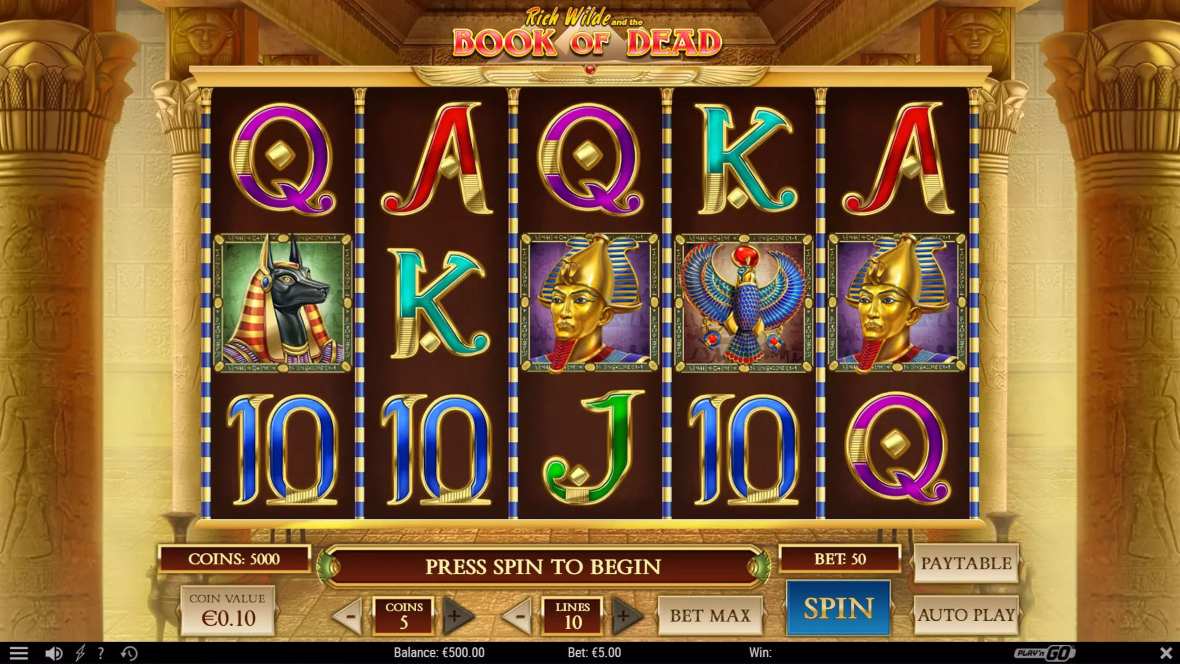
Every other symbol on a reel set answers to a route. Payline symbols have to land on a drawn line, ways symbols have to occupy adjacent reels from the left, and cluster symbols have to touch each other. Scatter symbols answer to none of that. The engine counts the total that landed anywhere in the visible window and compares that total against one number in the rules screen.
That single rule change turns the symbol into a trigger rather than a combination piece. A payline win depends on where symbols sit relative to one another. A scatter symbol award depends only on the count that arrived. Reel one, reel three and reel five in any row produces the same result as three neighbouring positions across the middle row.
The visual treatment reflects the difference. Studios give scatter symbols heavier artwork, a separate animation and usually a sound cue that fires as the second one lands. Canadian players reading a new title for the first time can identify them without opening the paytable, because the presentation marks them out from the standard card royals and themed high symbols around them.
Why do scatter symbols ignore paylines?
Because their job is to unlock features rather than complete combinations. A feature trigger that depended on line placement would fire at a rate the certified mathematics did not test, so studios detach scatter symbols from the routes entirely.
That detachment is the whole point of the symbol. Everything else about it follows.
The reason is mathematical rather than cosmetic. A slot build is certified as one package, and the laboratory simulates billions of spins against the exact symbol distribution and award structure the studio submitted. Feature frequency is part of that simulation. Attaching the trigger to line positions would make it depend on the payline count a player selected, which would move the feature rate away from the tested figure.
Older machines with adjustable line counts made that problem obvious. A player running one line met the feature far less often than a player running twenty, and the return calculation drifted apart between them. Detaching scatter symbols from the line structure fixed it permanently. The trigger rate became a property of the reel strips alone, identical for every player at every stake.
That is why the rule survived every format change since. Fixed line slots, ways titles, cluster grids and Megaways builds all handle scatter symbols the same way, because the reason for the rule has nothing to do with how the winning routes are drawn.
How many scatter symbols trigger a feature?
Three on most titles. A minority require two, which raises the trigger rate sharply, and others require four or more, which lowers it and usually raises what the round pays.
The rules screen states the number in one line. Trigger frequency follows directly from it.
Three is the market standard and has been for decades. The number is not arbitrary. Three sits at a point where the trigger arrives often enough to shape a session without arriving so often that the feature loses weight, and studios tune the reel strips around it rather than around the number itself.
Two scatter triggers appear on low variance titles aimed at long sessions. The feature opens inside thirty or forty spins on average, which keeps the pace high, and the round pays modestly to compensate. Four and five scatter triggers run the opposite way. They appear rarely, sometimes once in five hundred spins, and the round that follows carries a far larger share of the return.
Numerous modern builds scale the reward to the trigger size. Three scatter symbols award eight free spins, four award twelve, and five award twenty with an opening multiplier attached. Reading that scale in the rules screen tells a Canadian player more about the shape of the title than the theme or the artwork ever will.
Do scatter symbols pay money directly?
On roughly half the market, yes. Where scatter symbols carry their own paytable entry, landing three or more awards a multiple of the total bet rather than of a single line stake.
That distinction matters. Scatter awards are usually quoted against the whole spin.
Roughly half the market pays them and half does not. Where scatter symbols carry their own paytable row, the award lands alongside whatever feature the same spin triggered, so a three scatter hit both pays and opens the round. Where they do not, the trigger is the whole reward and the paytable row simply reads as a feature entry.
Direct scatter awards are usually modest on titles that also trigger a feature. Two times the total bet for three, ten times for four and fifty times for five is a common shape. The studio is balancing two rewards against one event, so neither reaches the size it would carry alone.
Titles with paying scatter symbols and no feature attached exist, mostly in the classic fruit machine bracket. There the award is the entire purpose of the symbol, and the top figure climbs far higher because nothing else draws from the same budget. The paytable settles which pattern applies in a single glance.
Why are scatter awards based on total bet?
Because they ignore lines. A payline award multiplies the per line stake, and a scatter has no line to attach to, so the only sensible base is the total amount staked on the spin.
The paytable states which basis applies. Misreading it overstates the award considerably.
A payline award has an obvious base. The line carries a stake, the combination lands on that line, and the award multiplies the amount staked on it. Nothing about a scatter award fits that model. The symbols sat on no line, so no per line stake attaches to the event and the engine has no line stake to multiply.
Total bet is the only coherent alternative. It is the amount the player committed to the spin, it is identical regardless of how the lines were configured, and it scales cleanly across every stake level. Using it keeps the scatter award proportional to the risk taken on the spin that produced it.
The practical effect on a paytable reading is substantial. A ten times award on a payline at twenty cents a line returns two dollars. A ten times scatter award at four dollars total bet returns forty. Canadian players comparing two paytable rows without checking which basis applies routinely understate what scatter symbols are worth by an order of magnitude.
Can wilds substitute for scatter symbols?
Almost never. Allowing it would make feature rounds arrive far more often than the tested build permits, which would change the whole return distribution the laboratory certified.
A handful of titles allow it and compensate elsewhere. The paytable names the exception.
The prohibition is close to universal, and the reasoning follows directly from how wilds are distributed. Wild symbols land far more often than scatter symbols by design, because their job is to complete ordinary combinations across the base game. Letting them stand in for a trigger symbol would multiply the feature rate three or four times over.
The certified mathematics would break immediately. Every free spins round, pick screen and wheel was priced against a tested trigger frequency, and raising that frequency without reducing what the round pays pushes the overall return well past the figure the laboratory signed off. No build survives that, so the rules screen states the restriction plainly.
The rare exceptions compensate elsewhere. A title allowing wild substitution for scatter symbols will carry a higher trigger requirement, a smaller round, or wilds that appear on only two reels. The permission exists because the rest of the build was designed around it, never as a bonus bolted onto a standard structure.
What is the difference between a scatter and a bonus symbol?
scatter symbols usually pay and trigger, where bonus symbols only trigger. A bonus symbol landing three times opens a feature and awards nothing on its own, which is why the paytable lists the two separately.
Plenty of titles use only one of the two. The rules screen names which.
Studios use the two names loosely in marketing, but the paytable keeps them apart. A scatter symbol typically carries a cash value of its own and opens a feature. A bonus symbol carries no value and does nothing except open the feature. Landing three bonus symbols on a spin adds nothing to the balance until the round it triggered resolves.
Plenty of titles carry both at once, and that is where the distinction earns its keep. Scatter symbols trigger the free spins round while a separate bonus symbol triggers a pick screen or a wheel, each with its own trigger count and its own reel restrictions. Reading them as one symbol produces the wrong expectation about both.
The naming varies by studio. A symbol labelled bonus on one title behaves exactly like a scatter on another, and a handful of builds use the words interchangeably across their own catalogue. The paytable row is the only reliable source, because it states whether the symbol pays and what it opens.
Do scatter symbols appear on every reel?
Usually yes, and that is deliberate. A trigger requiring three scatter symbols from anywhere only works if every reel can produce one, so studios place them across the whole strip set.
Certain titles restrict them to specific reels. That restriction lowers the trigger rate directly.
The distribution is a design decision with a direct effect on trigger frequency. A build placing scatter symbols on all five reels can produce three, four or five of them on one spin, which supports a scaled reward structure and a reasonably steady trigger rate. Removing them from two reels caps the maximum at three and lowers the rate sharply.
Reel restriction is common on high variance titles and on jackpot builds. Placing scatter symbols on reels one, three and five only means a trigger requires one from each of the three, a far narrower outcome than three from any five positions. The round that follows is sized accordingly.
The rules screen names the restriction where one exists, usually in a single line beneath the scatter symbol paytable row. Canadian players who check it before the first spin get an accurate sense of how long a session runs between features, which is the single most useful thing to know about a title before committing a bankroll to it.
What is a scatter retrigger?
Landing more scatter symbols during a free spins round to extend it. Three more scatter symbols usually adds the same number of spins as the original trigger, and rounds can extend repeatedly.
Retriggered rounds carry most of the ceiling on titles with climbing multipliers.
A retrigger is the same trigger condition landing again while the feature is already running. Most free spins rounds keep scatter symbols on the reels during the round for exactly this purpose, and landing three more adds a fresh block of spins on top of whatever remains. The round continues without interruption.
The award structure for a retrigger usually matches the original. Three scatter symbols that awarded ten spins at the trigger award ten more inside the round, and a title with a scaled structure scales the retrigger the same way. A minority of builds award a reduced block, and a smaller minority cap the total number of retriggers permitted.
Retriggers matter most on rounds with a climbing multiplier. A round that starts at one time and rises by one with every win reaches a modest level across ten spins and a punishing one across forty. That is where the top end of a high variance title lives, and it arrives only through repeated retriggers.
What is a super scatter?
A branded variant that combines a scatter with a wild or a large fixed award. Studios use the name for symbols that both trigger a feature and pay substantially on their own.
The label is marketing rather than a defined rule. The paytable states the actual behaviour.
The label appeared as studios looked for ways to make a familiar symbol feel new. A super scatter usually combines two behaviours at once. It acts as a wild in the base game and as a trigger when enough of them land, or it triggers the feature and pays a large fixed award on its own rather than a small one.
Other variants sit under the same banner. Certain builds use a scatter symbol that expands to cover a full reel, others use one that collects into a meter across spins, and a third group carries a random multiplier applied to the round it opens. None of these behaviours follow from the name, which is why the rules screen matters more than the branding.
Treat the term as a signal to read the paytable rather than as a defined mechanic. Two titles advertising super scatter symbols routinely run completely different rules, and the only place the actual behaviour is stated is the certified rules screen inside the title itself.
Do scatter symbols affect the RTP?
They are already inside the figure. The certified mathematics simulates every scatter landing and every feature it triggers, so the published percentage covers them fully.
A title with frequent scatter symbols pays for that frequency elsewhere. Usually the base symbol awards fall.
They are a component of the figure rather than an adjustment to it. The certified simulation runs the full build, counts every scatter landing, opens every feature those landings trigger, and totals what the rounds return across billions of spins. The published percentage is the outcome of that whole process.
The consequence is that a title cannot carry both generous scatter symbols and generous base game awards while holding the same return. Raising feature frequency forces the studio to take value back somewhere, and the base symbol paytable is where it usually comes from. Low symbol awards shrink, the top symbol loses a multiple, or the wild stops substituting on one reel.
That trade is why two titles at an identical return figure can feel completely different in play. One pays steadily in the base game and triggers rarely. The other pays almost nothing until scatter symbols arrive. Both hold the same certified percentage across the long run, and both reach it by entirely different routes.
Do more scatter symbols mean better odds?
No, only a different distribution. A title triggering features often pays less per feature, and one triggering rarely pays more, with both landing in the same return band.
The volatility rating reflects which pattern a title runs. Counting scatter symbols does not.
Frequency and value move against each other, which is the part most players read backwards. A title dropping scatter symbols every forty spins looks generous on the surface and pays a small round when they arrive. A title dropping them every three hundred spins looks harsh and pays a round far larger. Neither has an advantage over the other.
The measurable difference is variance rather than return. Frequent small features keep a balance moving in narrow steps, which suits a long session on a modest bankroll. Rare large features produce long flat stretches punctuated by results that can carry an entire session, which suits a player comfortable with the swings.
The return figure and the volatility rating together describe this accurately, and both sit in the rules screen. Counting scatter landings across a short session describes nothing at all, because the sample is far too small to separate the tested rate from ordinary short run noise.
How do scatter symbols work on cluster and ways games?
Identically, because they never depended on structure. A cluster pays grid and a Megaways title both count scatter symbols from anywhere, exactly as a payline slot does.
That consistency is why the symbol survived every format change. The rule needs no adaptation.
The rule survives every format because it never referenced the format. A cluster pays title awards on groups of touching symbols and a ways title awards on adjacent reels from the left, but both count scatter symbols by totalling the number that appeared in the visible window. The winning route logic and the trigger logic run separately.
Grid size changes the arithmetic without changing the rule. A seven by seven cluster grid shows forty nine positions against fifteen on a standard five by three reel set, so studios adjust the scatter density on the strips to keep the trigger rate where the design intends. The player sees the same three scatter requirement in the rules screen.
Megaways builds add one more variable. The number of visible positions changes on every spin, from a handful to seven per reel, so the chance of landing scatter symbols shifts spin to spin. The certified simulation accounts for that distribution, and the published trigger frequency already reflects the average across it.
Can you improve your chance of landing scatter symbols?
No. Each spin draws independently from a certified random number generator, so no stake level, timing or button behaviour changes how often scatter symbols appear.
Longer sessions meet more scatter symbols simply by covering more spins. The rate per spin never moves.
Every spin is an independent draw from a certified random number generator, and independence is the whole point of the certification. The generator holds no memory of previous spins, no awareness of how long a session has run and no connection to the stake selected. A hundred spins without scatter symbols leaves the chance on the next spin exactly where it started.
The familiar strategies all fail on that single fact. Raising the stake after a dry stretch changes the amount at risk and nothing else. Switching titles resets nothing, because nothing was accumulating. Stopping the reels manually only skips an animation the result already settled. Autoplay and manual spinning draw from the same generator in the same way.
Longer sessions meet more scatter symbols only because they cover more spins, which is arithmetic rather than strategy. The rate per spin is fixed by the reel strips, tested by the laboratory and identical for every player on the title anywhere in Canada.
Do scatter symbols behave the same at every Canadian casino?
The rules belong to the certified build. A title deployed at a provincial crown corporation and at an Ontario registered operator counts scatter symbols identically, because the trigger logic sits inside the tested package.
What operators choose is the return build. Scatter behaviour is not adjustable.
The certified build is a sealed package. Symbol distribution, trigger counts, feature rules and award tables all sit inside it, and an operator deploying the title receives that package as tested. Nothing in an operator integration reaches the scatter symbol logic, which is why the same title runs identically at a provincial crown corporation and at an Ontario registered private operator.
What operators genuinely select is the return build. Studios ship multiple certified versions of popular titles at different published percentages, and a regulated operator picks one and states it. That choice changes the symbol distribution the version was tested against, so trigger frequency can differ slightly between two versions of the same title.
The rules screen inside the running title is the authority in every case. It states the return figure for the version actually deployed, the scatter trigger count and the feature rules, and it is the same screen the laboratory certified. Reading it takes seconds and settles every question a comparison table cannot.
What should you check about scatter symbols before playing?
Three things in the rules screen. The count of scatter symbols that triggers the feature, whether they pay on their own, and whether retriggers are permitted during the round.
All three take one read. They predict the rhythm of a session better than the artwork does.
The trigger count comes first because it drives everything else. A three scatter requirement across five reels produces a very different session rhythm from a four scatter requirement restricted to three reels, and the difference shows up within the first fifty spins. The number sits in one line near the top of the scatter symbol paytable row.
Whether scatter symbols pay on their own is the second check. It changes how a trigger feels and it changes how the paytable should be read, because a scatter symbol award quotes against total bet while the rows above it quote against line stake. Conflating the two produces badly wrong expectations in both directions.
Retrigger permission is the third. A round that can extend indefinitely carries a far higher ceiling than one fixed at ten spins, even where both start identically, and the difference concentrates almost entirely in the rare outcomes. Read all three alongside the published return figure and the volatility rating, and the title is fully described before the first spin.
How do you spot scatter symbols on a new slot?
Open the paytable and look for the row that states an award without naming a payline. That row is the scatter symbol entry, and it sits apart from the ordinary symbol rows because the award attaches to a count rather than to a route.
The artwork gives the same answer faster. Studios mark scatter symbols with heavier detail, a distinct colour treatment and an animation that fires as each one lands, because a trigger the player misses is a trigger that fails to build tension. A chest, a coin, a book or a logo carrying more visual weight than the symbols around it is almost always the scatter symbol.
The audio confirms it. Most builds play a rising cue as the second scatter symbol settles and hold the third reel fractionally longer, which is why a near miss feels like an event even though the result was already fixed. None of that presentation changes the outcome, but it does make scatter symbols easy to identify inside a single spin.
Do scatter symbols work the same in demo play?
Yes, because demo mode runs the identical certified build with a play money balance attached. The reel strips, the trigger count and the feature rules all come from the same package, so scatter symbols land at the tested rate in both modes.
That makes demo play a genuinely useful way to read a title before staking anything. Fifty or a hundred spins is enough to see how the trigger presents, whether the round retriggers, and what the scatter symbols pay on their own. None of that requires a deposit, and Ontario registered operators publish demo versions alongside the real money client.
The one thing demo play cannot show is the long run. A hundred spins is far too small a sample to observe the certified trigger frequency, so a demo session that produced four features says nothing about the title beyond that session. Read the rules screen for the rate and use the demo to learn the mechanics.
Which slot symbol pages are worth reading next?
Scatter symbols are one layer of a slot that also has a scoring rule, a feature structure and a published return figure.
The pages below cover the layers around them.
- The symbol that stands in for the others
- The routes an ordinary award has to follow
- What the trigger actually opens
- Symbols that clear and refill on a win
- Three reel titles with nothing to trigger
Scatter symbols are the key to almost every feature a slot carries, and the trigger count is the number worth knowing. Read it alongside the return figure and the volatility rating before the first spin.