
Slot bonus rounds are the separate feature games that open when the trigger condition lands, and they carry a large share of what a modern title returns. Free spins, pick screens, wheels and hold and respin rounds all sit under the same heading, and each one runs on rules the certified build fixes before launch. For the wider market picture, start at our Canadian online casino hub.
The table below sets out the main round types and what separates them. Read it first, then work through the detail beneath.
| Round type | How it works |
|---|---|
| Free spins | A set number of spins at no stake, often with an extra modifier |
| Pick round | Choose from hidden objects for cash or multipliers |
| Wheel | A single spin lands a prize, a multiplier or an upgrade |
| Hold and respin | Locked symbols with a resetting respin counter |
| Gamble | Double or lose the last win on a card or coin call |
| Bonus buy | Pay a fixed multiple of stake to enter the bonus round now |
What are bonus rounds in online slots?
Bonus rounds are separate feature games that open when a trigger condition lands. They run on their own rules for a fixed span, then hand control back to the base game with the total added to the balance.
Nearly every modern title carries at least one. Plenty carry three or four.
The defining trait is separation. A bonus round suspends the base game, loads its own rule set, and runs until a stated end condition arrives. Free spins count down, a pick screen exhausts its picks, a wheel resolves in one turn, and a respin counter reaches zero. Only then does the base game resume with the accumulated total added to the balance.
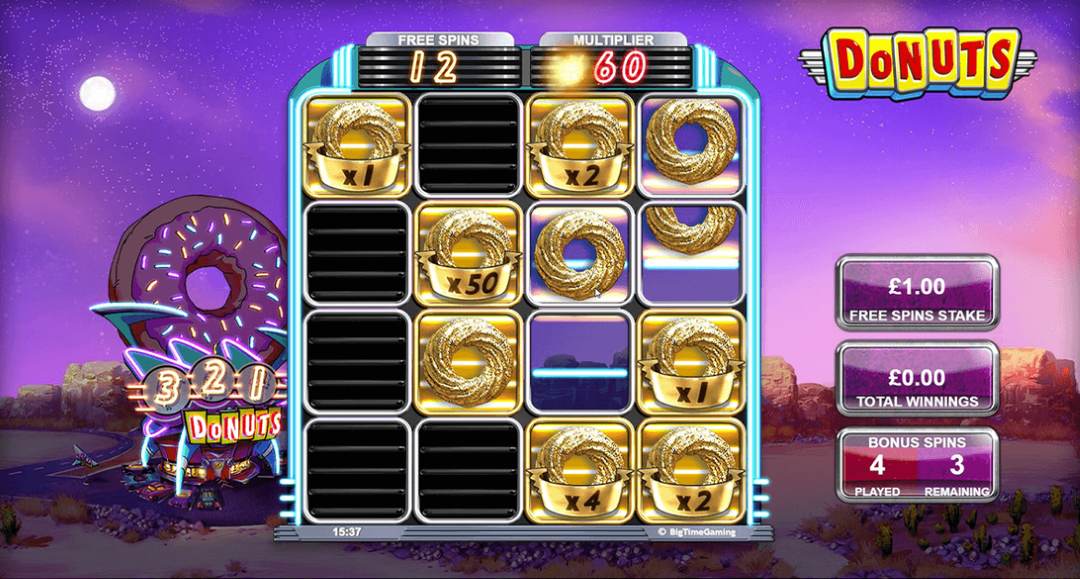
That separation is why bonus rounds carry so heavy a share of the return. The studio is free to break its own base game rules inside the bonus round without touching the certified return, so symbols expand, multipliers climb, reels grow and low value symbols disappear entirely. None of that would balance across a full session, and across a fixed twelve spin round it balances precisely.
Modern Canadian slot catalogues assume the structure. A title arriving at an Ontario registered operator without a feature round reads as a deliberate throwback rather than as a standard build, and it usually carries a flat low variance return to match. Everything else in the market is designed around what its bonus rounds deliver.
How do you trigger a bonus round?
Usually by landing three or more scatter symbols on one spin. Other titles use a collection meter, a random base game trigger or a bonus symbol that only appears on selected reels.
The rules screen names the exact condition. It takes one line to read.
Scatter symbols are the dominant route. Three or more landing anywhere on the grid opens the bonus round, and the count sits in one line of the rules screen. A minority of builds require four or five, which lowers the trigger rate and raises what the bonus round returns when it finally arrives.
Collection meters are the second common route. Special symbols drop into a counter across ordinary spins, and the bonus round opens when the counter fills. The appeal is visible progress, because a player can see how far the meter has travelled rather than waiting on an outcome with no visible state at all.
Random triggers form the third group. A feature fires on any spin with no symbol requirement, which the certified mathematics handles as a straightforward probability per spin. A paid entry option sits alongside all three on titles that carry one, and the pricing behind it is covered in full on our bonus buy slots page.
What is the most common bonus round?
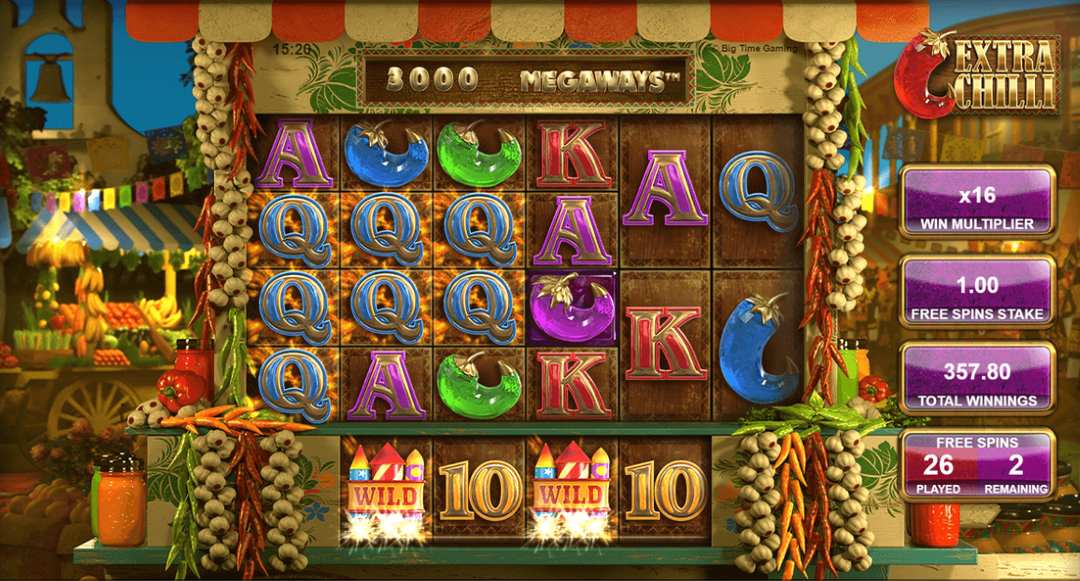
Free spins, by a wide margin. A trigger awards a set number of spins at no further stake, and most builds add a modifier that makes the bonus round behave differently from the base game.
The modifier is what gives the bonus round its character. The free spins alone rarely do.
Free spins hold the position because the format is instantly legible. Nothing has to be explained. The reels keep turning, the stake stops leaving the balance, and the wins accumulate into a running total displayed at the top of the screen. A player who has never seen the title understands the bonus round inside two spins.
The typical award runs between eight and fifteen spins on a three scatter trigger. Titles with a scaled trigger climb from there, and rounds on very high variance builds can open at twenty five or more when five trigger symbols land together.
What separates one free spins round from another is the modifier attached to it. Ten plain spins at base game rules return roughly what ten base game spins return, so studios add a mechanic that lifts the bonus round above that baseline. The modifier, rather than the spin count, is what decides whether a bonus round is worth the wait.
What modifiers appear during free spins?
Climbing multipliers, expanding symbols, sticky wilds, extra reels and removed low symbols. Each one raises what the bonus round can return above what the same number of base game spins would produce.
A round without a modifier is unusual. It signals a low variance build.
Climbing multipliers are the most consequential. The round opens at one time and rises with each win or each spin, so the last spins of a long round carry three or four times the weight of the first. Rounds that extend through retriggers reach levels the base game could never produce, and that is where the top end of a high variance title lives.
Sticky and expanding wilds form the second group. A wild that locks in place for the remainder of the bonus round changes every subsequent spin, and a wild that stretches to fill a full reel guarantees participation in every combination crossing it.
Structural modifiers form the third. Low value symbols are removed from the strips, extra rows unlock, the grid widens to more ways, or a symbol upgrade converts one paying symbol into a higher one for the whole bonus round. Each of these is priced into the certified return, which is why a generous modifier usually sits behind a harder trigger.
What is a pick bonus round?
A screen of hidden objects where each choice reveals a cash award or a multiplier. Picking continues until a collect symbol appears, which ends the bonus round and banks the total.
The outcome is decided before the first pick. The choices only reveal it.
The format is a screen of identical objects hiding different rewards. Chests, coins, doors, fish and cards are the usual dressing. The player selects one, an award is revealed and added to a running total, and selection continues until a collect or end symbol appears behind one of the remaining choices.
Multi level pick rounds extend the idea. Clearing one screen without hitting the end symbol promotes the player to a second screen with larger awards, and a third above that. The structure produces a visible ladder, and the rarity of reaching the top level is what keeps the highest awards affordable inside the certified return.
Pick rounds resolve quickly compared with free spins, which is why studios often pair the two. A title carrying both formats offers a fast bonus round for immediate reward and a longer one for the larger outcomes, and the rules screen states which trigger opens which. Canadian players meet this pairing constantly across Ontario registered catalogues.
Are pick rounds actually skill based?
No. The certified random number generator settles the full result at the moment the bonus round opens, so every arrangement of picks produces the same distribution over time.
The interaction is presentation. Ontario rules require the mathematics behind it to be tested.
The full outcome is drawn before the screen appears. The certified random number generator settles which object hides which award and where the end symbol sits, and the picking sequence only uncovers a result that already exists. Choosing left to right, right to left or at random produces the same distribution across a long run.
Regulators treat the presentation seriously for exactly that reason. Ontario requires the mathematics behind an interactive bonus round to be tested and certified in the same way as the reels, so a bonus round that appears to reward judgement cannot quietly depend on it.
The design intent is engagement rather than deception. Making a player press something during a bonus round raises attention and makes the reward feel earned, which is why the interactive bonus round has survived since the earliest video slots. The award is identical to what a purely automatic round would have paid, delivered through an interface that keeps the player involved.
What is a wheel bonus?
A wheel bonus round is a single wheel spin that lands on a cash prize, a multiplier, a feature entry or an upgrade to a larger wheel holding better awards.
Multi tier wheels stack three or four levels, with the top tier holding the largest awards.
Wheels resolve fast. That makes them a common secondary feature.
A wheel resolves in one action, which makes it the fastest bonus round format in the market. Segments carry cash multiples, feature entries, multipliers or an upgrade to a larger wheel, and the pointer settles on one of them after a single spin. The whole event takes three or four seconds.
Tiered wheels stack the format. A bronze wheel carries modest awards and an upgrade segment leading to silver, silver leads to gold, and gold holds the jackpot entries. Reaching the top tier requires consecutive upgrade landings, which keeps the largest awards rare without making the bonus round itself rare.
Wheels also serve as jackpot delivery on progressive titles. Landing the jackpot trigger opens a wheel bonus round showing four or five prize levels, and where the pointer settles decides which one pays. The format suits the purpose because it presents a large outcome clearly and resolves it immediately, with nothing for the player to interpret.
How does a hold and respin round differ from free spins?
A round where triggering symbols lock in place and a respin counter resets to three each time a new one lands.
It ends when the counter reaches zero or the grid fills completely.
A full grid usually pays the top award outright. That is the structure behind most jackpot slots.
The mechanic reverses the usual structure. Instead of symbols moving, the triggering symbols lock and everything else respins around them. A counter starts at three, resets to three whenever a new symbol locks, and the bonus round ends when it reaches zero without a fresh landing.
Each locked symbol usually carries a printed cash value tied to the stake, so the total climbs visibly as the grid fills. That visible accumulation is the entire appeal. A player watching six positions fill knows exactly what the bonus round has produced and exactly what a seventh would add.
Filling the grid completely triggers the top award on most builds, frequently the grand jackpot. The structure is common across hold and win titles from studios serving the Canadian market, and it has spread far beyond its origins because the bonus round communicates its own state better than any other format. Nothing has to be explained in a rules screen.
How do bonus rounds differ between slot studios?
Each studio builds around a signature structure. One leans on climbing multipliers inside free spins, another on locking symbols, and a third on multi level pick screens, and the preference is visible across an entire catalogue rather than on one title.
Pragmatic Play builds most of its headline titles around free spins with a multiplier that persists across the whole round. Big Time Gaming ties its bonus rounds to the reel engine itself, so the round inherits an expanding grid rather than a separate rule set. Hacksaw favours short volatile rounds with a small spin count and very wide outcomes.
Play n GO and NetEnt sit closer to the traditional model, pairing a modest free spins count with a single strong modifier and a clear retrigger rule. Microgaming catalogues carry the widest variety, because the content arrives from a large group of independent studios rather than one internal team.
Recognising a studio signature is genuinely useful when picking a title. A player who enjoyed one climbing multiplier round will usually enjoy the rest of that catalogue, because the bonus round structure carries across titles far more reliably than the theme or the artwork does.
What does a bonus round pay on average?
Average returns cluster between forty and one hundred times the stake on mainstream free spins rounds, and the figure rises steeply on high variance builds where the feature carries most of the certified return.
The average hides an extremely skewed distribution. A typical round lands well below the average, and a small number of outcomes land far above it, which is why the arithmetic mean describes almost no individual bonus round accurately. Most rounds return less than the wait cost, and rare rounds return a session.
Studios publish the average where a purchase option exists, because the price has to be justified against it. Where no purchase exists the figure is rarely stated, and it can be inferred from the trigger frequency and the published return split when a studio states both.
Treating the average as an expectation for the next bonus round is the common mistake. It is a long run statistic drawn from billions of simulated rounds, and a single round has almost no chance of landing near it in either direction.
What is a gamble feature?
An optional double or nothing offer on a completed win, resolved on a card colour, a suit call or a coin flip.
Declining it banks the win and returns to the base game.
The certified odds make it close to neutral. Variance rises sharply either way.
The classic implementation offers a face down card. Calling the colour correctly doubles the win, calling the suit correctly quadruples it, and calling wrong forfeits the entire amount. A ladder variant steps a win upward one rung at a time with a collect option available at every level.
The certified odds sit close to neutral on a colour call and are priced for the extra reward on a suit call. Repeated gambling neither builds nor erodes value in any systematic way, because each call draws independently from the same generator that settles every other outcome.
What the feature genuinely changes is the shape of the session. A player gambling every win produces far fewer results of far larger size, which is a different experience from the same return delivered steadily. Most Canadian operators cap the number of consecutive gambles and cap the amount that can be carried into one, and both limits appear in the rules screen.
How often do bonus rounds trigger?
Typically once in 100 to 300 spins on a payline slot. High variance titles stretch that considerably, and a handful of low variance builds trigger inside 60 spins on average.
The figure sits in the rules screen on most modern titles. Volatility predicts it well.
Bonus round frequency is a design choice set on the reel strips, and studios publish it on most modern titles as a figure such as one in one hundred and eighty spins. Low variance builds sit near the fast end, mid variance titles cluster between one hundred and two hundred, and high variance builds stretch past four hundred.
The figure is a long run average rather than a schedule. A certified generator holds no memory, so a stretch of six hundred spins without a bonus round is entirely consistent with a stated rate of one in two hundred, and so are two triggers inside ten spins.
Reading the rate alongside the volatility rating gives an accurate picture before the first spin. A title stating one in four hundred with a high variance rating will deliver long flat stretches, and a bankroll sized for one hundred spins will frequently see no bonus round at all. That is the tested behaviour rather than a bad run.
How much of the RTP sits in the bonus round?
Often between 40 and 70 percent on a high variance title. The base game alone returns far less than the headline figure, which is why long stretches without a feature feel flat.
That split explains the rhythm of a session. It is deliberate design.
The split is the single most useful number a rules screen can state, and a growing number of studios now publish it. A high variance title routinely places sixty or seventy percent of its return inside the feature, leaving the base game returning far less than the headline percentage suggests.
That arrangement explains the rhythm players actually experience. Long stretches of small base game wins that fail to hold a balance steady are not a malfunction. They are the designed consequence of concentrating the return inside a bonus round that arrives once in three or four hundred spins.
Low variance titles invert the arrangement. Thirty percent of the return inside the feature and seventy in the base game produces frequent small wins and a modest bonus round, which keeps a balance moving in narrow steps. Both builds can hold an identical certified percentage while producing sessions that feel nothing alike.
Can you influence a bonus round result?
No. Every outcome resolves from a certified random draw at the moment the bonus round begins, so stake level, timing and pick order change nothing about the distribution.
The gamble feature is the one real choice. It changes variance, never return.
Every element resolves from certified random draws made independently of anything a player does. Pick order changes nothing because the awards were assigned before the screen loaded. Stopping a wheel early changes nothing because the landing segment was fixed when the spin began. Stake level changes the size of the award and never its probability.
The persistent strategies all fail against that. Raising the stake after a long dry stretch alters exposure alone. Switching titles resets nothing, because nothing was accumulating. Autoplay and manual spinning draw from the same generator in the same way, and the sequence of button presses carries no information the engine reads.
The gamble feature is the one genuine decision available, and it is a variance choice rather than a value choice. Taking it or declining it leaves the long run return where it was and changes only how the same total is distributed across sessions. Everything else about a bonus round is settled before the player sees it.
Do bonus rounds retrigger?
Most free spins rounds do. Landing the trigger symbols again during the bonus round adds more spins, and certain builds allow it repeatedly with no stated ceiling.
Retriggers carry most of the top end on climbing multiplier rounds.
Free spins rounds retrigger far more often than any other format, and the mechanism is deliberate. Trigger symbols remain on the reels during the bonus round so the same condition can land again, adding a fresh block of spins to whatever remains. Rounds extend repeatedly on builds that permit it.
The additional bonus round award usually matches the original. A three symbol trigger awarding ten spins awards ten more inside the bonus round, and scaled triggers scale the retrigger the same way. A minority of builds award a reduced block, and a minority cap the total number of retriggers a single bonus round can accumulate.
Pick rounds and wheels rarely retrigger because their formats resolve in one pass. Hold and respin rounds achieve the same effect through the counter reset, which functions as a continuous retrigger for as long as new symbols keep landing. Whether a bonus round can extend is stated in the rules screen and worth reading before the trigger arrives.
Are bonus rounds the same at every Canadian casino?
The round belongs to the certified build. A title deployed at a provincial crown corporation and at an Ontario registered operator runs identical feature rules, because the logic sits inside the tested package.
What varies is the return build an operator selects. Feature rules never do.
The feature logic ships inside the certified package. Trigger counts, modifiers, pick structures, wheel segments and retrigger rules were all tested as one unit, and an operator integration has no route into any of them. The same title therefore runs identical bonus rounds wherever it is deployed in Canada.
Return build selection is the genuine variable. Studios certify popular titles at more than one published percentage, and a regulated operator selects one and states it in the rules screen. Different builds carry different symbol distributions, so trigger frequency can differ slightly between two deployments of a title sharing the same name and artwork.
Availability differs as well. Paid feature entry appears on Ontario registered clients for titles certified with it and is absent on platforms that decline the mechanic, and a handful of progressive rounds are restricted to specific jurisdictions. The rules screen inside the running title states what applies, and it is the same screen the laboratory approved.
What should you check before triggering a bonus round?
Three things in the rules screen. What the trigger condition is, what modifier the bonus round carries, and whether retriggers are permitted once it starts.
All three take one read. They predict the shape of a session better than the artwork does.
The trigger condition ranks first because it sets the pace of everything that follows. Three scatter symbols across five reels produces a very different session from a four symbol requirement restricted to three reels, and the difference becomes obvious within the first fifty spins rather than over a long run.
The modifier ranks second. A free spins round with a climbing multiplier that never resets behaves nothing like one paying flat base game rules, even where both award the same twelve spins. The modifier decides whether the bonus round can produce a session defining result or simply returns a portion of what the wait cost.
Retrigger permission ranks third, and it concentrates almost entirely in the rare outcomes. A round that can extend indefinitely carries a far higher ceiling than a fixed one. Read all three alongside the published return figure, the stated trigger frequency and the volatility rating, and a Canadian player has the title fully described before committing anything.
How long does a bonus round last?
A free spins bonus round typically runs eight to fifteen spins, which takes a minute or two at normal pace, while a wheel resolves in seconds.
A wheel resolves in seconds, a pick screen in under a minute, and a hold and respin round continues until its counter reaches zero.
Retriggers break the estimate entirely. A free spins round permitted to extend without a cap can run for dozens of spins, and rounds of that length are where the largest recorded outcomes on high variance titles come from. The rules screen states whether extension is permitted, which is the only reliable indicator of the ceiling.
Length matters less than what the bonus round carries. Twelve spins with a multiplier climbing on every win outperforms thirty spins at flat base game rules by a wide margin, and studios trade the two against each other constantly. A short round advertised with a large modifier is usually the stronger build of the two.
Which feature pages are worth reading next?
A bonus round sits on top of a symbol set, a scoring rule, a trigger condition and a published return figure.
The pages below cover the parts of a slot that decide what the round is built on.
- The symbols that open the feature
- Money symbols that lock while a counter resets
- The engine that recounts the ways on every spin
- How a shared prize pool builds across a network
- How the regulated Ontario market actually works
Bonus rounds are where most of a modern slot’s return lives, and the trigger condition is the number worth knowing before the first spin. Read it alongside the return figure and the volatility rating.