
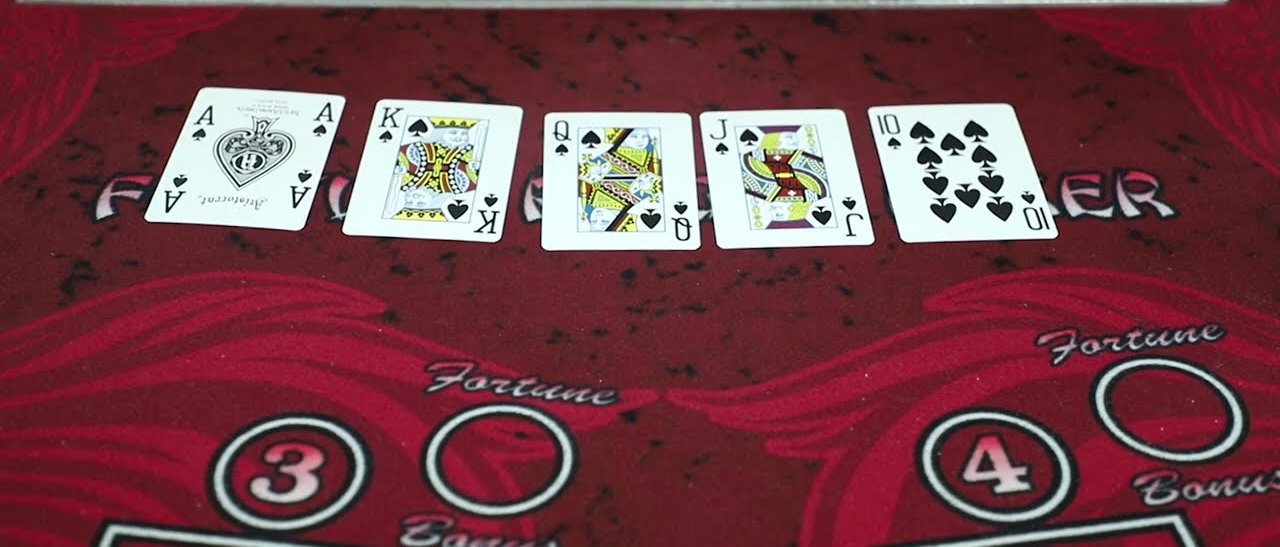
Pai gow poker is the slowest way to lose money on a casino floor, and that is its whole appeal. Seven cards become two hands, both hands have to beat the dealer, and roughly four hands in ten end in a push where nobody wins anything. For the wider market picture, start at our online casino Canada hub.
The table below sets out how the game behaves. Read it first, then work through the detail beneath.
| Trait | Detail |
|---|---|
| Cards | Seven to the player from a deck with one joker |
| Hands set | A five card high hand and a two card low hand |
| Win condition | Both hands must beat the dealer |
| Push rate | Roughly 40 percent of hands |
| Commission | 5 percent on winning hands |
| Canadian supply | British Columbia floors, Ontario lobbies, provincial platforms |
What is pai gow poker?
A house banked card game where the player receives seven cards and splits them into a five card hand and a two card hand. Both hands are then compared against the dealer, who splits their own seven cards the same way.
The player sets the hands. That is the only decision.
The game adapts an old Chinese domino game to a standard deck. Pai gow poker keeps the domino structure of two hands and a push outcome, and replaces the tiles with ordinary poker rankings a Canadian already knows.
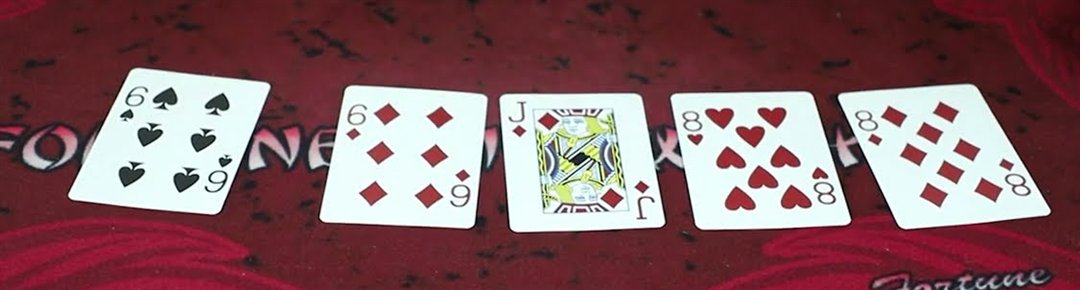
A Canadian meeting the game for the first time usually finds it on a British Columbia floor or in the table filter of an Ontario lobby. The layout looks quiet beside blackjack, and the pace of pai gow poker matches that impression exactly.
Table minimums on British Columbia floors usually start around ten dollars. Online pai gow poker tables open far lower, which makes software the cheaper place to learn the splits.
How do the two hands work?
The five card hand is called the high hand and the two card hand is called the low hand. The high hand must always outrank the low hand, and a set that breaks that rule is fouled and lost.
Two pair in five cards beats a pair in two. That order is fixed.
The low hand can only be a pair or high cards, because two cards cannot make anything else. Pai gow poker therefore rewards splitting a strong seven card holding so that the small hand is not left empty.
Setting the hands happens before anything is revealed. Once the cards are placed in their two positions nothing can be moved, and a pai gow poker hand with the low hand stronger than the high hand is fouled on the spot.
Interfaces block a fouled set before it is submitted on most clients. Online pai gow poker protects a player from the most expensive mistake at the table.
The two card hand ranks only pairs and high cards. A pai gow poker low hand of ace and king is the strongest non pair holding available.
What does it take to win a hand?
Both hands must beat the dealer’s matching hands. A player who wins the high hand and loses the low hand pushes, and the stake is returned without any payment or loss attached.
Winning one of two is a push. Losing both is a loss.
Ties on an individual hand go to the dealer. A copy hand, where the player and dealer hold identical rankings, counts as a dealer win on that half of the pai gow poker contest.
The all or nothing condition is what makes the game gentle. A player needs a clean sweep to collect, the dealer needs a clean sweep to take the stake, and everything in between returns the money on a pai gow poker table.
A clean sweep pays even money less commission. Nothing on the main pai gow poker wager pays more than that.
Why do four hands in ten push?
Because splitting one hand into two makes a clean sweep unusual. The player takes one hand and the dealer takes the other roughly four times in ten, and nothing changes hands on those deals.
Pushes are the defining feature. They slow everything down.
A session built on pushes loses money very gradually. Pai gow poker is often chosen by players who want a long evening at a table on a fixed budget rather than a fast result.
The push rate varies slightly with how well both sides set their hands. A dealer using the house way and a player using it too produce the standard figure, and a player setting badly pushes less and loses more.
Pushes also make the game sociable at a land based table. A pai gow poker seat spends long stretches neither winning nor losing.
What is the commission?
The house takes five percent of every winning payment. A player staking ten dollars and winning collects nine dollars fifty rather than ten, and the difference funds the house edge.
Even money minus five percent. That is the price of winning.
Certain online versions remove the commission and adjust the rules instead. A no commission pai gow poker table usually pushes a specific dealer hand, and the edge ends up in the same region.
The five percent applies only to winning payments. Pushes cost nothing and losses cost the stake, so the commission on pai gow poker is charged on the hands where money actually moves toward the player.
The five percent is deducted automatically online. A pai gow poker client shows the net payment after the commission is taken.
Commission free tables publish their replacement rule clearly. Reading it takes one glance before a pai gow poker session starts.
What is the joker for?
One joker is added to a fifty two card deck. It can complete a straight or a flush, and otherwise it counts only as an ace, which makes it a restricted wild rather than a free one.
It cannot make a pair of kings. Only aces, straights and flushes.
Five aces is the top hand because of it. That combination beats a royal flush in pai gow poker, and it is the only ranking change from standard poker order.
Reading the joker rule once removes most confusion at the table. A pai gow poker player holding a joker and a lone king has an ace and a king rather than a pair of kings, which changes how the low hand is set.
Software tables apply the joker rule automatically when hands are set the house way. A pai gow poker client never lets the joker act as a free wild.
Five aces sits above a royal flush on every table. That ranking is unique to pai gow poker among Canadian table games.
What is the house way?
The fixed set of rules the dealer uses to split their own seven cards. Every casino publishes one, and the dealer follows it exactly on every hand without any judgement involved.
Players can ask the dealer to set hands the house way too.
That option is genuinely useful for a newcomer. The house way is close to optimal, so a player handing their seven cards to the dealer at a pai gow poker table gives up very little.
House ways differ slightly between casinos and between software suppliers. The differences sit in marginal splits, and a Canadian using any published pai gow poker house way plays within a fraction of a percent of optimal.
Most online clients carry a house way button. One tap sets both pai gow poker hands exactly as the dealer would.
Asking for it costs nothing at a land based table. A dealer sets the hand in seconds and the pai gow poker player loses no value against their own attempt.
How do you set a single pair?
A single pair stays in the high hand, and the two highest remaining cards go in the low hand. Splitting a single pair leaves the high hand empty and fouls nothing but wastes it.
One pair means low hand gets the best singles.
The low hand then carries whatever height is left. Pai gow poker rewards putting an ace or a king in the two card hand whenever the pair stays behind.
The rule is the simplest in the game and the one most often broken. Moving a single pair into the low hand leaves a five card hand of high cards, which loses to a dealer holding anything at all.
The low hand should carry the two highest cards left. An ace and a king in the two card pai gow poker hand win often.
How do you set two pair?
It depends on the rank of the pairs and whether an ace is held. Low pairs usually stay together, high pairs are usually split with the smaller pair moving to the low hand.
Splitting two pair wins both hands more often. Most house ways do it.
Holding an ace changes the call. A pai gow poker player with two small pairs and an ace often keeps both pairs high and puts the ace low.
House ways publish exact thresholds for the split. Most pai gow poker tables split two pair whenever the higher pair is jacks or better, and keep them together below that unless the hand lacks an ace.
Reading the house way table settles every two pair decision. The split is the most studied choice in pai gow poker.
How do you set three pair?
The highest pair always goes to the low hand. The remaining two pairs stay in the high hand, which gives both halves a genuine chance against the dealer.
That rule has no exceptions. Three pair is the easiest set.
Players new to the game often keep the top pair high by instinct. Pai gow poker punishes that because the low hand ends up with singles that rarely beat a dealer pair.
The low hand then holds a pair, which beats most dealer low hands. That single change turns an ordinary seven card holding into one of the more reliable winning sets in pai gow poker.
Three pair appears in a small share of hands. When it does, the highest pair goes low every time in pai gow poker.
What about straights and flushes?
They stay in the high hand if the two leftover cards still make a reasonable low hand. A straight or flush that leaves the low hand nearly empty is often better broken into pairs.
The low hand matters exactly as the high hand does. Both must win.
Seven cards sometimes offer a straight and a pair together. The pai gow poker house way usually plays the pair low and the straight high when the cards allow both.
Holding both a straight and a flush in seven cards happens more often than players expect. The pai gow poker house way plays whichever one leaves the stronger two card hand behind it.
The low hand decides these more than the high hand does. A strong pai gow poker straight is worth breaking when the two card hand is empty.
What is the house edge?
Roughly two point five percent to the banker with house way play, measured per hand. Because pushes cost nothing, the edge per hour is among the lowest on a casino floor.
Slow hands and frequent pushes keep hourly cost down.
Per hand the figure resembles other table games. Pai gow poker becomes cheap when measured by time, which is how most players actually experience a session.
Hands per hour on a pai gow poker table run far below blackjack. A slow deal, a long setting phase and frequent pushes combine into one of the cheapest hourly costs on a Canadian casino floor.
Measuring cost per hour rather than per hand is the useful habit. Pai gow poker wins that comparison against almost every table game.
Banker advantage on ties is where the edge lives. Pai gow poker gives every copy hand to the dealer.
Can a player bank the game?
Yes, on most land based tables. A player acting as banker takes the dealer’s position against the rest of the table and gains the tie advantage, and pays the commission on winnings.
Online versions rarely offer this. It is a floor feature.
Banking requires enough money to cover every other seat. On a Canadian pai gow poker floor that usually limits the option to regulars with a deep bankroll.
Banking reduces the house edge for that player to close to zero on the hands they bank. The trade is exposure, because a banker covering five seats can lose five stakes on a single strong round.
Online clients almost never offer it. Banking remains a land based pai gow poker feature.
Casinos limit how often one player can bank. Rotation keeps pai gow poker tables fair across every seat.
What side bets exist?
Fortune and bonus side bets pay on the player’s seven card total, starting at trips or a straight. They carry considerably higher house edges than the main game, often above seven percent.
The main game is the value. Side bets are not.
Envy bonuses exist on certain tables and pay a player when another seat hits a big hand. They add a social element to pai gow poker and do nothing for the edge.
Progressive side bets appear on linked pai gow poker tables across British Columbia. The pool pays on a seven card straight flush or better and carries an edge far above the main game.
Skipping every side bet keeps the edge at its lowest. The main pai gow poker wager is the value on the table.
What is Face Up pai gow poker?
A variant where the dealer’s cards are revealed before the player sets hands. To pay for that information, winning hands pay even money without commission only in limited cases, and certain dealer hands push everything.
Seeing the dealer hand changes the strategy entirely.
British Columbia floors carry this version. Face Up pai gow poker removes the guessing from setting hands and prices that certainty into the payout rules.
The strategy shifts from setting against an unknown hand to setting against a known one. A Face Up pai gow poker player can play to beat the exact dealer hand on the table rather than the average one.
Payout rules differ from the standard game and are printed on the felt. Reading them before playing Face Up pai gow poker is essential.
The variant suits players who find setting hands stressful. Face Up pai gow poker removes the uncertainty about what the dealer holds.
Where can Canadians play pai gow poker?
British Columbia floors deal it widely, Ontario registered operators carry software and live versions, and the provincial platforms list it among their table games.
Western Canada has the deepest land based presence.
Online availability is narrower than blackjack or baccarat. Searching by name is the fastest route to a pai gow poker table on an Ontario lobby.
Provincial platforms carry software versions, and several British Columbia properties deal both standard and Face Up tables. Pai gow poker is one of the few table games with deeper roots in the west than in Ontario.
Search by name rather than browsing the table filter. Pai gow poker surfaces immediately on any lobby that carries it.
Live dealer studios carry it less often than blackjack. Software pai gow poker tables fill the gap on Ontario lobbies.
Is pai gow poker certified in Ontario?
Yes. Every table on a registered Ontario lobby has passed independent laboratory testing of the shuffle, the paytable and the published return before deployment.
Live tables are audited separately. Both routes are covered.
The tested build is the deployed build. An operator changes nothing inside a certified pai gow poker table, including the house way the dealer follows.
Live tables sit under separate audit arrangements. Both routes into pai gow poker are regulated identically.
Does pai gow poker count toward wagering?
Usually at a reduced rate or not at all. The push rate alone makes the game an efficient way to cycle a bonus, and operators restrict it for exactly that reason.
Check the contribution table. It is rarely full.
Rates differ per operator rather than per game. One Ontario site may count pai gow poker at ten percent and another may exclude it from the offer entirely.
Excluded games sometimes void an entire bonus. That clause matters more than the rate beside pai gow poker.
Is pai gow poker good for a small bankroll?
Better than almost any table game. Four hands in ten cost nothing, the commission is modest, and a session at the table minimum lasts far longer than the same balance at blackjack.
Skip the side bets and it stretches further.
Deposit limits sit inside every registered Ontario account. Setting one before the first pai gow poker hand is the practical step, and the game itself does most of the rest.
A session lasts because money moves rarely. That is the whole pai gow poker proposition.
What does a Canadian check before playing pai gow poker?
Three things before the first hand. The commission rate, whether the table is Face Up or standard, and the bonus contribution rate in the terms.
Then use the house way until the splits feel natural.
None of it requires a deposit. Demo tables publish the same rules, and pai gow poker states its commission and house way in the client before any money moves.
The habit transfers to every table in the lobby. Pai gow poker is simply a gentle place to build it.
Which game pages are worth reading next?
Four pages sit closest to this one. Each covers a game or a place that touches the subject above, and each stands on its own.
Pai gow poker sells time rather than excitement, and a player who wants a long session on a modest budget will not find a cheaper chair on the floor. Set both hands to win.
2 thoughts on “Pai Gow Poker Canada: Two Hands, Four Pushes in Ten, One House Way”