
Learning how to play baccarat takes one hand, because the player makes a single decision before any card is dealt and the rest of the round follows a fixed rule nobody at the table controls. This guide covers the card values, the three bets, the third card rule, the house edge on each wager and how the online versions differ. For the wider market picture, start at our online Canada casinos hub.
The table below sets out the three standard baccarat bets with their odds and cost. Read it first, then work through the detail beneath.
| Bet | Chance of winning | Pays | House edge | Verdict |
|---|---|---|---|---|
| Banker | 45.86% | 1 to 1 less 5% commission | 1.06% | Best bet on the table |
| Player | 44.62% | 1 to 1 | 1.24% | Excellent, no commission |
| Tie | 9.52% | 8 to 1 | 14.36% | Avoid |
| Tie paying 9 to 1 | 9.52% | 9 to 1 | 4.84% | Still poor |
| Player pair | 7.47% | 11 to 1 | 10.36% | Avoid |
| Banker pair | 7.47% | 11 to 1 | 10.36% | Avoid |
How do you play baccarat in one paragraph?
Bet on Banker, Player or Tie, then watch two hands of two cards each be dealt, and whichever hand totals closer to nine wins, with a fixed rule deciding whether either hand receives a third card.
The names describe the two hands rather than the participants. Betting on Player does not mean betting on yourself, and betting on Banker does not mean betting on the casino.
Nothing is decided by the person holding the chips. The cards are dealt, the rule is applied, and the round settles without any decision after the bet is placed.
That is the whole of how to play baccarat. One bet, two hands, a fixed drawing rule, and a comparison of totals against a target of nine.
The complexity people associate with the game lives entirely in the third card rule, and that rule is executed by the dealer or the software rather than by the player.
A player who never learns the rule loses nothing. Every hand plays out identically whether the rule is understood or not, which is unusual among casino games.
The game has a reputation for exclusivity that the rules do not support. High limit baccarat pits behind velvet ropes created an impression of complexity, and the actual game is simpler than roulette and far simpler than blackjack.
That gap between reputation and reality keeps players away from the cheapest bets on the floor. Nothing about how to play baccarat requires study, and the two main wagers cost less than half what a roulette spin costs.
Online has largely dissolved the barrier. A one dollar software table offers the identical odds the high limit room offers, and the entire learning curve fits in a single paragraph.
Compare the learning cost against the other table games for a moment. Blackjack asks for a strategy chart, craps asks for a layout full of optional wagers, and this game asks for one chip on one of two boxes before the deal.
Everything after that chip is mechanical. The cards come out, the drawing rule applies itself, the totals are compared, and the round settles without any further involvement from anybody holding a bet.
That is the whole syllabus. How to play baccarat is one bet, how to play baccarat cheaply is choosing Banker or Player, and how to play baccarat badly is putting money on the Tie.
Baccarat rewards a particular kind of player. Somebody who wants low cost, low effort and a long session gets exactly that, and somebody who wants decisions and skill expression will find the game thin within an hour.
Knowing which of those you are before depositing saves a wasted evening. How to play baccarat is quickly learned, and whether you enjoy it is a separate question the rules cannot answer.
Read the rest of this page as detail behind that paragraph rather than as further instruction. Nothing below adds a decision, because the game contains only one, and how to play baccarat is settled the moment a chip lands in a box.
What are the card values in baccarat?
Aces count one, cards two through nine count their face value, and tens, jacks, queens and kings all count zero, which is the single most important difference from every other card game.
Totals drop the tens digit. A hand of seven and eight totals fifteen and counts as five, and a hand of nine and nine totals eighteen and counts as eight.
That rule means no hand can exceed nine. There is no bust in baccarat, and every total sits between zero and nine inclusive.
A total of zero is called baccarat, which is where the game takes its name. It is the worst hand rather than a special one.
Suits are irrelevant to the outcome. Hearts, spades, clubs and diamonds carry identical value, and no flush or sequence produces anything outside a side bet.
Understanding the count is most of how to play baccarat, because the drawing rule and the comparison both operate on these single-digit totals.
The zero value on tens and face cards is the rule that catches everybody first. A king and a queen is a hand of zero, which is the worst possible total and looks like the strongest hand at any other table.
Dropping the tens digit is the second adjustment. Nine and seven is sixteen, which counts as six, and the discarded ten is simply not part of the total.
After ten hands both rules become automatic. Nothing else about how to play baccarat requires any mental arithmetic at all, and the dealer or software announces every total anyway.
Ace counting one rather than eleven is the third small adjustment. An ace and an eight is nine, which is the best possible two card total and is called a natural.
Nothing else about the count varies. There are no wild cards, no suit bonuses and no ranking of hands beyond the single digit total, which is why the game resolves so quickly.
Values are the whole vocabulary. How to play baccarat starts with tens counting zero, how to play baccarat continues with dropping the tens digit, and how to play baccarat ends with comparing two numbers under ten.
Card counting the values is unnecessary because every table announces the totals. Live dealers call them aloud and software displays them beside each hand, so no arithmetic falls to the player at any point.
Learning the values still helps the experience. Following the deal rather than waiting for an announcement is most of what makes how to play baccarat feel like playing rather than watching.
Two rules and no exceptions. Face cards and tens count zero, totals drop the tens digit, and how to play baccarat needs no arithmetic beyond that pair once they become familiar.
What are the three main bets?
Baccarat offers three bets on every hand: Banker, Player and Tie, and a single chip placed on one of them is the only decision available before the cards arrive.
Banker wins slightly more often than Player because it acts second under the drawing rule, which gives it information the Player hand does not have.
That advantage is why Banker carries a commission. A five percent charge on winning Banker bets removes the edge the drawing rule would otherwise hand the player.
Player pays even money with no commission and wins marginally less often. The two bets end up within two tenths of a percent of each other in cost.
Tie pays eight to one and occurs less than one hand in ten, which produces a house edge above fourteen percent at standard payouts.
Anybody learning how to play baccarat well uses two of the three bets and ignores the third entirely, which is the shortest strategy in any casino game.
The naming is the single largest source of confusion for new players. Player and Banker are labels for two hands on the table, and either bet is available to anybody regardless of where they sit.
Nobody is playing against anybody. Every person at the table is betting on the same two hands and the same outcome, which is why baccarat tables cheer together rather than compete.
That shared position is part of the appeal at live tables. Twenty players backing the same hand produces a room-wide reaction that blackjack and roulette never generate.
The betting layout in front of each seat shows the same three boxes repeated. Chips go in one of them before the deal, and the boxes are labelled identically at every table in the world.
Minimums often differ between the main bets and the side bets. A table taking five dollars on Banker sometimes accepts one dollar on a pair bet, which is how the expensive wagers attract volume.
Two boxes and one to avoid. How to play baccarat well is Banker or Player every hand, how to play baccarat expensively is the Tie, and how to play baccarat carelessly is the pair side bets beside them.
Bet sizing between the two main options can vary hand to hand without penalty. Nothing in the rules rewards consistency of choice, and switching costs a fraction of a percent at most.
The only choice with a real price attached is the third box. Everything about how to play baccarat efficiently reduces to using two of the three available bets and leaving the Tie alone.
Three boxes, two worth using. That sentence is the practical core of how to play baccarat, and every further consideration on this page adjusts it at the margins rather than replacing it.
What is the third card rule?
The third card rule is a fixed table deciding whether each hand draws one more card, applied automatically by the dealer or the software with no input from anybody at the table.
A natural ends the hand immediately. Where either hand totals eight or nine on the first two cards, both hands stand and the round is settled at once.
Otherwise the Player hand acts first. It draws on a total of zero through five and stands on six or seven, with no exceptions.
The Banker hand then acts using the Player third card. Banker draws on zero through two always, and on three through six depending on which card the Player drew.
Banker stands on seven regardless. Those conditions are the entirety of the rule, and they are identical at every table in every casino.
Memorising it is optional and understanding it explains the game. The reason Banker wins more often is precisely that it decides after seeing what Player received.
The rule exists to remove judgement entirely. Written into the game rather than left to the dealer, it produces the same outcome at every table in every country with no discretion anywhere in the process.
Its asymmetry is deliberate. Player acts on a simple threshold and Banker acts with knowledge of the Player third card, which is the structural reason Banker wins slightly more often.
Nobody needs to memorise the Banker conditions. Understanding that Banker decides second explains the entire commission structure, and that is the only practical consequence of the rule.
Printed versions of the rule appear on cards at most live tables and in the help panel of every software version. Reading one takes a minute and changes nothing about how a hand plays.
The reason it looks complicated on paper is that the Banker conditions branch on the Player third card. In practice the dealer applies it instantly and the player watches.
No memorisation is required at any point. How to play baccarat involves no decisions after the bet, how to play baccarat is settled by the rule rather than by the player, and how to play baccarat well needs only the knowledge that Banker acts last.
One practical consequence deserves stating. Because the rule is fixed, no table anywhere offers a friendlier version of it, which means the Banker and Player edges are constant across every casino in the world.
That constancy is unusual. Blackjack rules vary by table and roulette wheels vary by pocket count, while how to play baccarat and what it costs are identical everywhere the standard game is dealt.
The rule works whether or not anybody reads it. Learning it adds understanding rather than advantage, and how to play baccarat competently requires none of it beyond knowing Banker acts second.
Why does the Banker bet carry a commission?
Banker wins 45.86 percent of hands against Player at 44.62 percent, and without a charge on winning Banker bets the wager would favour the player, so the casino takes five percent of Banker wins.
The commission is deducted at settlement rather than from the stake. A ten dollar Banker win pays nine dollars and fifty cents, and the original ten comes back untouched.
At live tables the charge is often tracked and collected at the end of a shoe. Online it is deducted immediately, which is clearer and identical in effect.
Even after the charge, Banker remains the cheapest bet at 1.06 percent against Player at 1.24 percent. The commission reduces the advantage without removing it.
Some tables advertise commission-free baccarat. Those tables pay Banker even money but reduce the payout on a winning Banker total of six to half, which costs more than the commission did.
Reading that clause is part of how to play baccarat sensibly, because a commission-free table is usually a worse table rather than a better one.
Without the charge the Banker bet would return more than it takes. The drawing rule hands it a genuine advantage, and the commission is how the casino converts that advantage into its own margin.
Five percent is the standard rate and a small number of tables charge four. Where a four percent table exists it is meaningfully cheaper, and the rate is printed on the felt.
Online tables deduct it instantly rather than tracking it across a shoe. That is clearer for the player and produces exactly the same cost across a session.
The charge applies only to winning Banker bets. Losing bets take no commission, and Player and Tie wins take none either, which limits the total impact considerably.
Across a hundred hands at ten dollars the commission amounts to roughly twenty-three dollars, which is already included in the 1.06 percent figure rather than sitting on top of it.
The number to remember is the net one. How to play baccarat cheaply means Banker at 1.06 percent after commission, and how to play baccarat on a commission-free table means accepting a worse Banker payout in exchange.
A four percent commission table is worth seeking where one exists. It lowers the Banker edge to roughly 0.6 percent, which is among the lowest prices available anywhere in a casino.
They are rare online and appear occasionally at live tables. Checking the rate in the information panel is a five second habit that occasionally finds the cheapest bet in the building.
Net cost is the only figure that matters. After the five percent charge Banker still costs less than Player, and how to play baccarat cheaply means ignoring how visible the deduction feels.
What is the house edge on each baccarat bet?
Banker costs 1.06 percent, Player costs 1.24 percent and Tie costs 14.36 percent at an eight to one payout, which makes baccarat one of the cheapest games in a casino and one of the most expensive at the same table.
Those Banker and Player figures beat every roulette bet. European roulette charges 2.70 percent, and both main baccarat bets sit at less than half that.
Tie is the outlier by an enormous margin. At fourteen percent it costs more than almost any slot, and it sits directly between the two cheapest wagers on the felt.
Where a table pays nine to one on the Tie the figure improves to 4.84 percent, which is better and still far worse than the two main bets.
Side bets on pairs cost above ten percent. They pay eleven to one on an event occurring roughly once in thirteen hands, which is priced against the player heavily.
The practical version of how to play baccarat is therefore three words: bet Banker or Player, and the rest of the layout is decoration.
Deck count moves these figures marginally. Most tables use six or eight decks, and a single deck game shifts the Banker and Player edges by hundredths of a percent in opposite directions.
The Tie behaves differently on deck count. Fewer decks improve it slightly, and it remains among the most expensive standard wagers in a casino at any deck count.
Return to player figures follow directly from the edge. Banker returns 98.94 percent, Player returns 98.76 percent, and the Tie returns 85.64 percent at an eight to one payout.
Set the figures beside the rest of a Canadian casino lobby for scale. Slots run from three to twelve percent, roulette charges 2.70 percent on a single-zero wheel, and both main baccarat bets sit near one.
Only blackjack played with a full strategy chart competes, and that requires memorising a table of decisions. Baccarat reaches a comparable price with no study at all.
Three numbers cover the table. How to play baccarat at 1.06 percent is Banker, how to play baccarat at 1.24 percent is Player, and how to play baccarat at fourteen percent is the Tie box between them.
Edge figures describe cost per dollar staked rather than per hand played, which matters because baccarat resolves quickly. A player staking ten dollars across two hundred hands has wagered two thousand dollars.
Multiplying turnover by the rate gives the honest expected cost. Two thousand dollars at 1.06 percent is twenty-one dollars, which is the real price of an evening at the cheapest bet available.
One percent against fourteen, on the same felt, decided by which box a chip sits in. That contrast is the single most useful fact in how to play baccarat and takes a moment to act on.
One further comparison is worth making because it decides where a bankroll goes. An evening of two hundred hands at ten dollars costs about twenty-one dollars on Banker and about two hundred and eighty-seven on the Tie, from the same seat at the same table over the same period. Nothing else in a casino offers that spread within arm reach of a single chip.
Should you always bet on Banker?
Banker is mathematically the best bet in the game at 1.06 percent, and betting it on every hand is the cheapest possible way to play baccarat over any length of session.
The margin over Player is small. Eighteen hundredths of a percent means roughly eighteen cents per hundred dollars staked, which is real and modest.
Alternating between the two costs almost nothing. A player who prefers to switch pays a fraction of a percent for the variety and loses no meaningful value.
What does cost money is the Tie. Adding occasional Tie bets to a Banker strategy raises the blended house edge sharply because the Tie is so expensive.
Past results carry no information at all. Cards are dealt from a shuffled shoe, and a run of Player wins makes Banker no more likely on the following hand.
That independence is the point most baccarat systems ignore, and understanding it is part of how to play baccarat without paying for a pattern that does not exist.
Commission handling makes Banker feel worse than it is. Watching a five percent charge deducted from every win is visible in a way the Player bet larger loss rate is not.
The arithmetic settles it regardless. Net of commission, Banker still costs less per dollar staked, and the visibility of the charge is a presentation issue rather than a cost.
Players who dislike the deduction can bet Player without meaningful penalty. The difference across a thousand dollars of turnover is roughly one dollar eighty.
Session length changes nothing about the answer. The edge applies per hand rather than accumulating, so a player who bets Banker for twenty hands and a player who bets it for two thousand face the same rate.
Switching between the two main bets on instinct is harmless. The cost difference is too small to matter across any realistic session, and the entertainment value of choosing is real.
What matters is the exclusion. How to play baccarat sensibly means never adding the Tie, how to play baccarat consistently means flat stakes, and how to play baccarat without a system means accepting that the shoe has no memory.
Streak chasing is the habit that turns a cheap game expensive. Following a run and then jumping to the Tie because a tie feels overdue converts a one percent session into a fourteen percent one.
The shoe produces streaks constantly and means nothing by them. Understanding that is the only genuinely useful insight in how to play baccarat beyond the bet selection itself.
Banker by default, Player by preference, Tie never. Those five words summarise how to play baccarat at the lowest available price across any length of session.
Consistency matters more than the choice itself. A player who settles on Banker and stays there removes every subsequent decision from the session, which eliminates the drift toward expensive bets that long sessions otherwise produce. Deciding once at the start is worth more than deciding well two hundred times.
What are baccarat roads and scoreboards?
Roads are the grids displayed beside a baccarat table recording previous results, with names like the bead plate, the big road, the big eye boy and the cockroach road.
They record history accurately and predict nothing. Each grid is a different visual encoding of the same past outcomes, and none contains information about the next hand.
The bead plate is the simplest. It marks each result in order with a coloured dot for Banker, Player or Tie, read in columns.
The derived roads are patterns built from the big road rather than from the cards. They describe how repetitive the recent sequence has been, which is a fact about the past only.
Their presence at every table is a design choice rather than a mathematical one. They make the game feel readable, and reading them changes no probability.
Anybody learning how to play baccarat can ignore them entirely without losing anything measurable, and many experienced players watch them purely out of habit.
The roads have genuine cultural significance in Asian casinos, where baccarat dominates the floor and pattern reading is part of the ritual of play.
Their mathematical content is zero. Every grid encodes results already settled, and the shoe produces the next hand from the cards remaining rather than from the shape of the display.
Software tables reproduce them faithfully because players expect them. Their presence signals a well-built table rather than a source of information, and how to play baccarat profitably involves ignoring them.
New players frequently assume the roads must mean something because casinos display them so prominently. Prominence reflects player demand rather than predictive value.
Treat them as a scoreboard in a sport where past results genuinely do not affect the next match. Interesting to look at, entirely uninformative about what follows.
Ignoring them costs nothing. How to play baccarat with the roads and how to play baccarat without them produce identical expected results, and how to play baccarat by chasing a pattern in them produces a worse one only if it leads to the Tie.
Some software tables let the roads be hidden entirely. Turning them off is a reasonable choice for a player who finds the patterns distracting, and it changes nothing about the game beneath.
Their persistence is a lesson in how casinos design for expectation rather than information. Nothing about how to play baccarat improves by studying them, and every table displays them anyway.
Watch them or hide them, the cards do not know. How to play baccarat is unaffected by the grids, and the only risk they carry is tempting a player toward the Tie box.
Do baccarat betting systems work?
No baccarat system changes the house edge, because every system is a rule for sizing bets while the cost of each bet is fixed by the payout and the drawing rule.
Martingale doubling meets the same wall it meets everywhere. Table maximums and finite bankrolls end the sequence exactly when it needs one more double.
Pattern systems following the roads rest on a false premise. A shoe has no memory of the pattern it has produced, and the next hand ignores every hand before it.
Flat betting is the honest baseline. Betting the same amount on Banker every hand produces the lowest possible cost per dollar staked, and no arrangement beats it.
What systems genuinely provide is structure. A rule that fixes stake size and session length prevents chasing, which is a behavioural benefit rather than a mathematical one.
Understanding that distinction is the final piece of how to play baccarat competently, and it saves more money than any pattern ever returned.
Card counting is the one technique with any theoretical basis, and it fails here in practice. The edge available from tracking a baccarat shoe is a tiny fraction of what blackjack offers and is destroyed by shuffling.
Software tables remove even that. Shuffling after every hand means no card ever carries information forward, and the shoe is effectively infinite from the player perspective.
What remains is a fixed price per hand. Accepting that and choosing the cheapest bet is the entire optimisation available in the game.
Systems sell well in this game specifically because the roads suggest patterns exist. A grid full of streaks looks like a code, and a system claiming to read it looks plausible.
Testing one costs nothing. A spreadsheet running ten thousand simulated hands reproduces the house edge exactly, whatever staking rule sits on top of it.
The result never changes. How to play baccarat under Martingale returns 1.06 percent, how to play baccarat under a pattern system returns 1.06 percent, and how to play baccarat flat returns 1.06 percent with the smallest swings.
The strongest argument against any system is the simplest one. If a staking pattern could beat a fixed edge, the operator would remove the game rather than advertise it prominently on the lobby front page.
Baccarat is offered enthusiastically everywhere. That alone settles the question of whether how to play baccarat under a system produces anything the casino would rather avoid.
A fixed edge is fixed regardless of stake pattern. Flat betting keeps the swings smallest, and how to play baccarat without a system is both cheaper and calmer than any progression.
What baccarat variants will you meet online?
Canadian lobbies carry four common variants: punto banco, which is the standard game described here, plus speed baccarat, no commission baccarat and dragon tiger, a two card simplification.
Punto banco is the default everywhere. The dealer follows the drawing rule, players bet only, and the version at a software table matches the version at a live one.
Speed baccarat compresses the round to roughly half the time. Identical rules, identical odds, and considerably more hands per hour, which multiplies the expected loss at the same stake.
No commission baccarat pays Banker even money and halves the payout on a winning Banker six. That single change raises the Banker house edge above the standard version.
Dragon tiger deals one card to each side with no drawing rule at all. It is faster, simpler and carries a higher edge than the main baccarat bets.
Chemin de fer and banque appear rarely online. Both let players take the Banker role, which changes how to play baccarat considerably and is largely a land-based experience.
Variant selection matters more here than in most games because the base game is already near optimal. Any change to the standard rules moves the edge upward rather than downward.
Speed baccarat is the clearest example. Identical odds and double the hands per hour means double the expected loss, which is a change to the cost without a change to the rate.
Checking the published return figure settles any variant in one step. Anything below 98.94 percent on the Banker bet is charging for a feature somewhere on the table.
Lobby labelling is inconsistent between operators. A table named baccarat at one site and punto banco at another is frequently the identical game from the identical supplier.
The information panel resolves it in seconds. Deck count, commission rate, Tie payout and any Banker payout reduction are all stated there before a chip is placed.
Standard is best here. How to play baccarat at the lowest price means punto banco with a five percent commission, how to play baccarat on a no commission table costs more, and how to play baccarat on dragon tiger costs more again.
Side bet availability varies by supplier more than the main game does. Perfect pair, either pair, dragon bonus and lucky six appear in different combinations, all priced well above the base bets.
Their presence is not a reason to avoid a table. Declining them entirely is straightforward, and how to play baccarat cheaply at any variant means the two main boxes and nothing else.
Standard punto banco with a five percent commission is the cheapest table in the lobby. Every variant moves the price upward, and how to play baccarat well means checking the panel before sitting down.
How does online baccarat differ from a live table?
Online baccarat uses identical rules and identical odds, with three practical differences: the minimums are far lower, the pace is faster, and no physical cards or shoe are involved at software tables.
Low minimums are the real advantage. A software table accepting a dollar a hand lets a modest bankroll play properly, where live baccarat pits frequently start at twenty-five.
Pace works against the player. A software table resolves hands as fast as a button is pressed, and more hands per hour means more turnover against the same edge.
Software shuffles after every hand at most tables, which removes any carry-over between rounds and makes each hand entirely independent by construction.
Live dealer baccarat restores the shoe and the physical deal. The rules and the odds are unchanged, and the rhythm is slower and considerably more social.
Our guide to live dealer casinos covers streaming quality and table availability, which is where most Canadian baccarat play happens.
Table availability is the practical difference for Canadian players. Live baccarat runs continuously at major studios, and software tables are available instantly with no seat to wait for.
Bet behind features exist at some live tables. Backing a seated player shares their outcome, and in baccarat that matters less than in blackjack because no decisions are involved.
Streaming quality varies between studios. The rules do not, and how to play baccarat at a live table is identical to the software version in every respect that affects money.
Hands per hour is the number worth tracking. A live table deals roughly forty and a speed table can exceed two hundred, which multiplies the hourly cost by five at an identical stake.
Budget in hands rather than in minutes. Two hundred hands is a session, an hour is not, and the distinction protects a bankroll better than any staking rule.
Format changes cost rather than odds. How to play baccarat online is identical in rules to the live game, how to play baccarat on software is faster, and how to play baccarat at a live table costs less per hour for the same bet.
Minimum stakes are where online genuinely wins for Canadian players. Live baccarat in a physical room frequently starts at twenty-five dollars, and a software table starting at one changes who the game is available to.
That accessibility is the reason the game has grown online. How to play baccarat on a small bankroll was impractical in a casino and is entirely routine in a Canadian lobby.
Same rules, same odds, different clock. How to play baccarat online means budgeting in hands rather than in minutes, because the software deals as fast as the button is pressed.
What stakes and bankroll suit baccarat?
Plan for roughly thirty times the table minimum, because baccarat pays close to even money on both main bets and produces long alternating runs rather than large single outcomes.
The low house edge does not remove variance. Runs of eight or ten consecutive Banker or Player results occur regularly, and a bankroll has to survive being on the wrong side of one.
Flat betting suits the game better than progression. Because both main bets pay near even money, doubling after losses escalates the stake quickly against a table maximum.
Pace matters as much as stake. Thirty hands an hour at a live table and two hundred at speed baccarat produce very different hourly costs from identical bets.
Online minimums make the arithmetic manageable. A one dollar table lets a hundred dollar bankroll play for hours at the cheapest odds in the building.
Our guide to minimum deposit casinos covers which Canadian-facing operators genuinely support small stakes.
Runs are the feature of baccarat that surprises new players. Because the two main bets are close to even money, long alternating or repeating sequences appear constantly and mean nothing.
Bankroll planning has to survive them rather than react to them. A stake that withstands ten consecutive losses is a stake that lasts a session, and one that does not is a stake that ends early.
Flat betting through the runs is the cheapest approach available. Every progression system increases exposure precisely when the sequence is running against the player.
Thirty units is the working figure for a flat betting session. It survives the long runs the game produces without forcing a stake increase to recover.
Set the unit from the bankroll rather than from the table. Where the minimum is too high for a comfortable unit, a lower limit table is the answer rather than a larger stake.
Discipline is the whole of it. How to play baccarat for an evening means a unit the bankroll supports, how to play baccarat through a losing run means the same unit, and how to play baccarat badly means raising it to chase.
Bonus terms deserve a check before playing with promotional money. Baccarat typically contributes ten percent or less toward wagering requirements, and live tables sometimes contribute nothing at all.
That weighting makes bonus clearing on this game slow and expensive. How to play baccarat with a bonus is usually a question answered by declining the bonus and playing unrestricted.
Thirty units, flat, at a minimum the bankroll supports. That is the whole of bankroll management here, and how to play baccarat for an evening rather than ten minutes depends on it entirely.
Table selection does most of the work here. Where the minimum forces a unit larger than the bankroll comfortably supports, no staking discipline rescues the session, and moving to a lower limit table solves it entirely. Canadian lobbies carry baccarat from a dollar upward, so the option is always available.
What is the fastest way to learn baccarat?
Play twenty hands at the lowest available stake betting Banker every time, and the game is learned, because there is no decision to practise beyond choosing which of two bets to place.
Demo tables remove the money entirely. Most Canadian-facing lobbies offer free play on software baccarat, and twenty practice hands cost nothing.
The drawing rule learns itself through watching. After a dozen hands the pattern of when a third card appears becomes familiar without any memorisation.
No chart is needed. Unlike blackjack, baccarat has no decision table, because the player makes no decisions once the bet is placed.
That simplicity is the game’s real appeal. How to play baccarat is genuinely a five minute lesson, and the cheapest bets in the casino are available from the first hand.
Our comparison of roulette odds puts the 1.06 percent Banker figure in context against the wheel, which charges more than twice as much.
The absence of decisions is what makes the lesson so short. Blackjack requires a chart, roulette requires understanding the payouts, and baccarat requires choosing between two bets priced within two tenths of a percent of each other.
That simplicity is also the limit of the game. There is nothing to improve at beyond bet selection and bankroll discipline, which suits some players and bores others.
For a player wanting low cost and low effort, nothing in a casino lobby competes. How to play baccarat is a five minute lesson leading to a 1.06 percent bet.
Twenty demo hands is genuinely enough. The card values become automatic, the drawing rule becomes familiar, and the only remaining decision is which of two near-identical bets to place.
Nothing further needs practising. There is no chart to memorise, no signals to learn and no etiquette beyond placing a chip before the deal closes.
That is the appeal in one line. How to play baccarat takes five minutes, how to play baccarat well takes one more sentence about the Tie, and how to play baccarat cheaply is available from the very first hand.
One final comparison puts the effort in context. A blackjack player needs a chart, a craps player needs a bet list, a roulette player needs the payout table, and a baccarat player needs one sentence.
That sentence is the page in miniature. How to play baccarat is to bet Banker or Player, avoid the Tie, keep the stake flat and let the drawing rule do the rest.
Twenty demo hands and one sentence about the Tie. How to play baccarat is genuinely that short, and the reward is a bet priced lower than anything else on the casino floor.
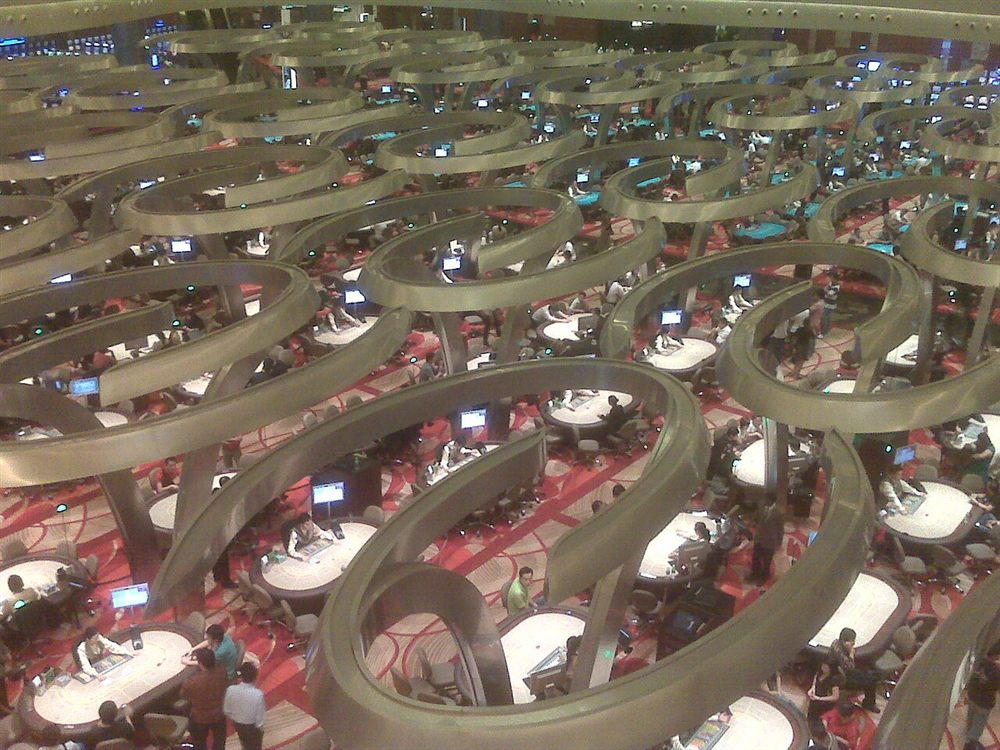
One last practical note about live baccarat pits, because Canadian players meeting the game in a physical room will notice it immediately. Baccarat is usually laid out as a dedicated area rather than as a single table among others, with each table carrying its own screens displaying the roads and its own dealer calling totals aloud. That presentation is why the game feels formal, and none of it changes the arithmetic covered on this page. How to play baccarat in a pit and at a one dollar software table are the same instructions, and the software version is where almost all Canadian play now happens.
Gambling is entertainment rather than income, and a 1.06 percent edge is still an edge. Set a deposit limit, decide the session length in advance, and stop when it stops being enjoyable. For independent help with gambling in Canada, the Responsible Gambling Council publishes free resources and support contacts.
Site optimisation by SEO.