
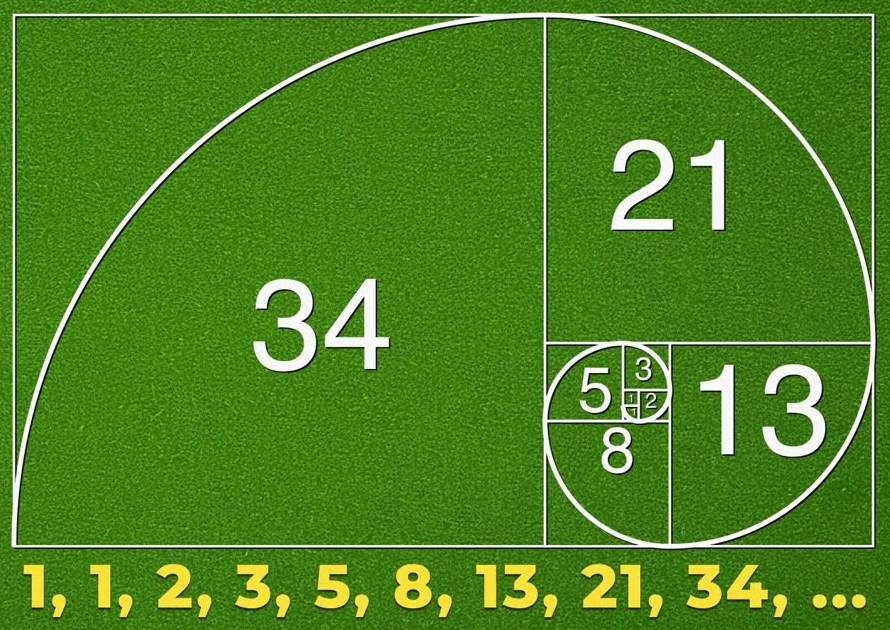
The Fibonacci betting system Canada players try at roulette and baccarat stakes each bet by the famous sequence 1, 1, 2, 3, 5, 8, 13: one step forward after a loss, two steps back after a win. It climbs more slowly than the Martingale, but a long cold run still pushes it into big stakes, and the house edge never moves. Our list of reviewed Canadian online casinos shows where we have tested table games.
The table sets out the Fibonacci betting system Canada facts in units, with odds for European roulette. The video on this page explains the system step by step.
| Item | Value |
|---|---|
| Type | Negative progression |
| Sequence | 1, 1, 2, 3, 5, 8, 13, 21, 34, 55, 89, 144, 233, 377, 610 |
| After a loss | Move one step forward |
| After a win | Move two steps back, never past the first step |
| Total lost in 10 straight losses | 143 units |
| Stake after 10 straight losses | 89 units |
| First stake above a 500-unit table limit | 610 units, on the 15th step |
| House edge | Unchanged: 2.70% European roulette, 5.26% American |
How would you sum up Fibonacci staking?
It is a staking plan for even-money bets that sets each stake from the Fibonacci sequence. You start at the first number, step forward one number after every loss and step back two numbers after every win.
The bet itself never changes: red stays red, banker stays banker.
The sequence does the thinking in the Fibonacci betting system Canada players follow.
What are the two rules of the system?
Rule one: after a loss, bet the next number in the sequence. Rule two: after a win, move back two numbers and bet that amount. OLG’s PlaySmart site gives the same two rules, using a $1 unit as its example.
At the first or second step, a win sends you back to the start.
Two rules are all a Fibonacci betting system Canada session needs.
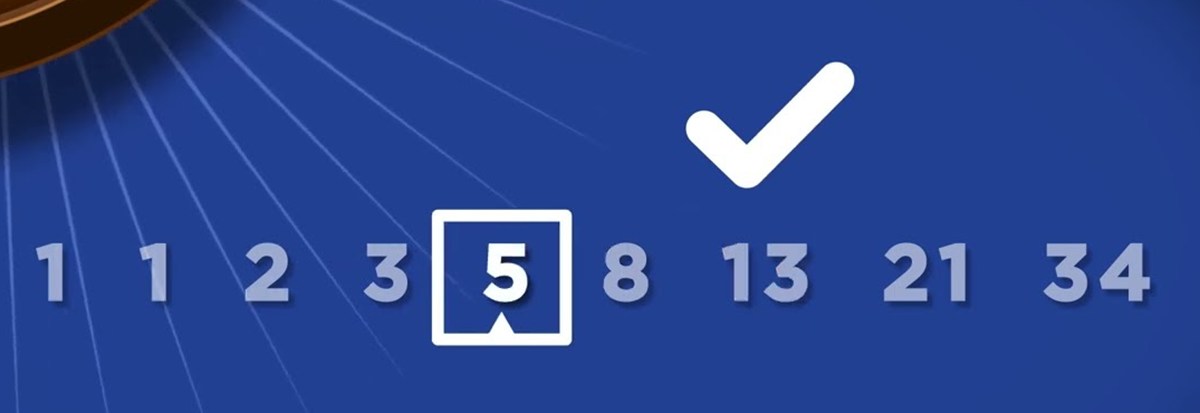
What does the Fibonacci sequence look like?
Each number is the sum of the two before it: 1, 1, 2, 3, 5, 8, 13, 21, 34, 55, 89, 144, 233, 377, 610 and onwards. Every new term is about 1.6 times the one before.
That ratio approaches 1.618, the golden ratio.
Those numbers become the stake ladder of the Fibonacci betting system Canada tables see.
How does the golden ratio connect to the system?
Divide any Fibonacci number by the one before it and the answer settles near 1.618, the golden ratio. In betting terms, each new stake is about 62% bigger than the last after the first five steps.
That steady growth rate is why deep runs get expensive.
The golden ratio is the growth rate hidden inside the Fibonacci betting system Canada players use.
Who was Fibonacci?
Fibonacci was Leonardo of Pisa, a 13th-century Italian mathematician. He presented the sequence in his book Liber Abaci through a puzzle about how fast a pair of rabbits would multiply, and helped spread Hindu-Arabic numerals in Europe.
PlaySmart notes that Fibonacci was a nickname, not his real name.
His name lives on in the Fibonacci betting system Canada players know.
Did Fibonacci invent the sequence?
No. Indian mathematicians described the same numbers centuries earlier in work on poetry and rhythm. Fibonacci made the sequence known in Europe, which is why it carries his name.
Neither source had anything to do with gambling.
The link to betting came centuries later, long after the Fibonacci betting system Canada players use took its name.
Where does the sequence show up in nature?
PlaySmart points to pinecones, pineapples and artichokes, whose spirals follow Fibonacci numbers. Sunflower heads, shells and the branching of plants show similar patterns, counted in Fibonacci numbers.
PlaySmart adds that this does not make the sequence a building block of good gambling.
Pretty patterns in nature add mystique to the Fibonacci betting system Canada players hear about, not an edge.
How did a maths sequence become a betting plan?
Gamblers adapted the sequence because each number equals the sum of the two before it, so a single win can cover the two previous losses. PlaySmart says gamblers hoped it would tip 50/50 bets in their favour.
Fibonacci himself never wrote about betting.
The appeal of the Fibonacci betting system Canada players try is that neat recovery rule.
What does a ten-spin Fibonacci run look like?
This table follows ten bets on red at a European wheel, starting at 1 unit. The run has four wins and six losses, yet it finishes 1 unit ahead after 15 units staked.
| Spin | Step | Stake | Result | Balance |
|---|---|---|---|---|
| 1 | 1st | 1 | Loss | -1 |
| 2 | 2nd | 1 | Loss | -2 |
| 3 | 3rd | 2 | Loss | -4 |
| 4 | 4th | 3 | Win | -1 |
| 5 | 2nd | 1 | Loss | -2 |
| 6 | 3rd | 2 | Win | 0 |
| 7 | 1st | 1 | Win | +1 |
| 8 | 1st | 1 | Loss | 0 |
| 9 | 2nd | 1 | Loss | -1 |
| 10 | 3rd | 2 | Win | +1 |
The win at spin 4 paid back the 1 and 2 units lost on the two spins before it.
This is the Fibonacci betting system Canada players hope for: losses repaid in small, quick steps.
Can the same results end in profit or loss?
Yes, a great deal. Five wins followed by five losses from a 1-unit start end 7 units down, while five losses followed by five wins end 2 units up. The results are identical in count but opposite in outcome.
Late losses hurt most, because they arrive after the ladder has dropped to small stakes.
Order, not luck alone, decides each Fibonacci betting system Canada session.
Why can you finish ahead with more losses than wins?
Because wins land on bigger stakes than the losses they follow. Each win repays the two stakes just below it on the ladder, so a short run that mixes losses and wins can end in profit even when losses outnumber wins.
The run above shows it: six losses, four wins, plus 1 unit.
That feature makes the Fibonacci betting system Canada players use feel stronger than it is.
Why does one win cover two losses?
Every Fibonacci number equals the sum of the two before it. If you lose 5 units and then 8 units, the next stake is 13, and a win at 13 repays exactly those two losses.
Moving back two steps then lines up the next stake with the older losses still outstanding.
The sum rule is the engine of every Fibonacci betting system Canada session.
Where does a Fibonacci cycle end?
A cycle ends with a win at the first or second step, which sends you back to the start. In 200,000 simulated cycles on European red, 61% closed 1 unit ahead and 39% closed level, which is why profits build slowly.
Long cycles that climb high can end well behind if the session stops early.
Small cycle results are the normal rhythm of the Fibonacci betting system Canada players run.
Why move back two steps instead of one?
Two steps back pairs each win with the two stakes it just repaid, so the ladder drops as fast as the losses it has cleared. Moving back only one step keeps stakes higher for longer and adds risk.
The reset variant goes further and drops straight to the start.
Two steps back is the standard rhythm of the Fibonacci betting system Canada players learn.
What happens at the first step after a win?
Nothing changes. Moving back two steps from the first or second number lands on the start again, so the stake stays at 1 unit until the next loss.
Winning streaks at the start pay 1 unit per win.
The floor keeps the Fibonacci betting system Canada players use cheap during good runs.
How fast do Fibonacci stakes climb?
Each step is about 1.6 times the last, compared with 2 times in the Martingale and plus one unit in the D’Alembert. The difference looks small early on but grows fast: step 10 is 55 units and step 15 is 610.
By step 20 the stake passes 6,700 units.
Growth near 1.6 per step is what sets the Fibonacci betting system Canada players use apart.
What does the ladder look like after eight losses?
Eight straight losses from 1 unit run 1, 1, 2, 3, 5, 8, 13 and 21, a total of 54 units lost. The next stake is 34, and a win there repays the last two losses of 13 and 21.
That win leaves 20 units still to recover from the earlier steps.
Eight losses is where the Fibonacci betting system Canada players use starts to feel heavy.
How do the totals compare after a cold run?
After ten straight losses from 1 unit, the Fibonacci has lost 143 units, against 55 for the D’Alembert and 1,023 for the Martingale. The gap widens with every further loss.
| Straight losses | Fibonacci total lost | D’Alembert total lost | Martingale total lost |
|---|---|---|---|
| 5 | 12 | 15 | 31 |
| 8 | 54 | 36 | 255 |
| 10 | 143 | 55 | 1,023 |
| 12 | 376 | 78 | 4,095 |
| 15 | 1,596 | 120 | 32,767 |
The Fibonacci sits in the middle on every row past the fifth.
That middle path is the honest profile of the Fibonacci betting system Canada players choose.
When does a Fibonacci stake reach the table maximum?
With a 1-unit start and a 500-unit table limit, the 15th step asks for 610 units, which the table will not accept. Fourteen straight losses, or a long stretch where losses outnumber wins two to one, take you there.
Once the cap stops you, the recovery rule breaks.
Table limits are the hard wall of the Fibonacci betting system Canada players run.
What are the odds of a long cold run on red or black?
On a European wheel, a red or black bet loses 19 times in 37. Ten losses in a row from a given spin come about 1 in 784 times, twelve about 1 in 2,974 and fourteen about 1 in 11,279.
Those odds apply to any single starting spin, not to a whole night.
Long odds still hit when the Fibonacci betting system Canada players use runs for hours.
How do streak odds differ on an American wheel?
With two zeros, a red or black bet loses 20 times in 38. Ten straight losses then come about 1 in 613 times from a given spin, against 1 in 784 on a European wheel.
Deep runs arrive sooner on the double-zero wheel.
That alone rules out American tables for a Fibonacci betting system Canada session.
How often do long cold runs turn up in a session?
Our calculation for European red shows a run of eight or more losses in about 51% of 300-spin sessions and 70% of 500-spin sessions. A run of twelve or more turns up in about 15% of 1,000-spin sessions.
Long evenings make deep runs likely, not rare.
Session length is the hidden risk in the Fibonacci betting system Canada players run.
How long does a ten-loss hole take to fill?
After ten losses you are 143 units down and betting 89. Five wins in a row at 89, 34, 13, 5 and 2 units bring you back to level, and a sixth win at 1 unit puts you 1 unit ahead.
Six wins in a row on European red come about 1 in 75 times, so most recoveries take longer and pass through more losses.
Recovery takes patience in the Fibonacci betting system Canada players use.
What did a million simulated sessions show?
We simulated one million 100-spin sessions on European red with a 1-unit start and a 500-unit table maximum. The Fibonacci finished ahead 90.75% of the time, yet the average session lost 12.91 units.
| Method | Sessions ahead | Average result | Average units staked | Worst session |
|---|---|---|---|---|
| Flat 1 unit | 35.48% | -2.70 | 100 | -52 |
| Fibonacci | 90.75% | -12.91 | 482 | -18,486 |
| Fibonacci, reset on any win | 60.44% | -5.39 | 201 | -9,479 |
| Reverse Fibonacci | 4.55% | -8.54 | 325 | -56 |
| Martingale | 92.77% | -15.63 | 586 | -11,478 |
Every method lost close to 2.7% of the units it staked, the European house edge.
The test shows what the Fibonacci betting system Canada players use really trades: frequent small wins for rare huge losses.
Why does it win so often yet lose on average?
Most sessions end modestly ahead: the median was plus 16 units. A small share of sessions hit a deep run and lose hundreds or thousands of units, and those losses outweigh all the small wins.
The worst session in our test lost 18,486 units.
Rare disasters are the price of the Fibonacci betting system Canada players enjoy most nights.
What happens when the table limit stops the ladder?
You can only bet the maximum, so a win no longer repays the two losses before it. The debt already built up stays on the books, and the recovery rule stops working.
Most players end the session at that point.
The limit turns a paper recovery into a real loss in the Fibonacci betting system Canada players run.
How often did sessions hit the 500-unit limit?
In 100-spin sessions, the Fibonacci called for a stake above 500 units in 2.27% of sessions. Over 1,000 spins, that rose to 25.09%, one session in four.
Each cap hit means a stake the progression needed but the table refused.
Long play turns the table limit into a regular event for the Fibonacci betting system Canada players run.
What changes over a 1,000-spin night?
In 200,000 simulated 1,000-spin sessions with the same cap, the Fibonacci finished ahead 80.74% of the time, with a median of plus 165 units but an average of minus 152.72. The worst 5% lost 1,827 units or more.
Flat betting lost 27.01 units on average over the same spins.
The longer the night, the heavier the tail in the Fibonacci betting system Canada players use.
Can a sequence shift the house edge?
No. Roulette’s edge is set by the zero: 2.70% on a European wheel and 5.26% on an American one. In our simulation, the Fibonacci lost 2.68% of every unit staked, the same as flat betting.
Order of stakes changes the shape of results, never the edge.
No Fibonacci betting system Canada session can turn roulette into a winning game.
Why does Fibonacci staking cost more on average?
Because it bets more. The Fibonacci put about 482 units into play across 100 spins, against 100 for flat betting, and the expected loss is always total stakes times the house edge.
More units at the same edge means a bigger average loss.
Higher volume is the hidden bill of the Fibonacci betting system Canada players pay.
How does it compare with betting a flat stake?
Flat betting lost only 2.70 units per 100-spin session on average but finished ahead just 35.48% of the time. The Fibonacci won far more sessions but its average loss was nearly five times larger.
Flat stakes keep the cost of entertainment lowest.
The choice is between cheap play and the frequent wins of the Fibonacci betting system Canada players like.
Is it gentler than doubling after losses?
Yes, on the way up. Ten straight losses cost 143 units with the Fibonacci and 1,023 with the Martingale, and the Martingale’s next stake is 1,024 against 89. Our capped Martingale’s worst session lost 11,478 units.
Both systems still chase losses.
Slower doubling is the main selling point of the Fibonacci betting system Canada players pick over the Martingale.
How does it sit next to the D’Alembert?
The D’Alembert betting system adds one unit per loss, so ten straight losses cost 55 units against 143. The Fibonacci recovers faster after two or three losses but grows faster in a deep run.
Both lose the house edge on every unit.
The D’Alembert is the calmer cousin of the Fibonacci betting system Canada players compare it with.
Where does the 1-3-2-6 fit next to the Fibonacci?
The 1-3-2-6 betting system is a positive progression that raises stakes after wins and drops to one unit after any loss, capping each cycle’s loss at 2 units. The Fibonacci does the opposite and climbs after losses.
One rides streaks, the other chases recoveries.
Players wary of loss-chasing often prefer the 1-3-2-6 to the Fibonacci betting system Canada tables also see.
How does the Labouchère differ from the Fibonacci?
The Labouchère uses a written line of numbers: you bet the first plus the last, cross both off after a win and add the lost stake to the end after a loss. Its stakes can climb faster than Fibonacci stakes in a cold run.
It also needs more bookkeeping.
The Fibonacci betting system Canada players use is simpler to track than the Labouchère.
How does the Paroli compare?
The Paroli doubles the stake after each win and resets after three wins or any loss, so it never chases a loss. It sits closer to the reverse Fibonacci than to the standard version.
Its worst case is a single lost unit per cycle.
Players who dislike chasing can swap the Fibonacci betting system Canada players use for the Paroli.
What is the reset-on-win version?
In this version, any win sends you back to the first step instead of two steps back. Each cycle then ends at the first win, and stakes stay lower. In our test it finished ahead 60.44% of the time with an average loss of 5.39 units.
Its worst session still lost 9,479 units.
The reset rule is the cautious form of the Fibonacci betting system Canada players can choose.
What is the reverse Fibonacci?
The reverse version climbs after wins and drops two steps after losses, a positive progression that presses winning streaks. In our test it finished ahead only 4.55% of the time, with a median of minus 20 units but a best session of plus 13,596.
It behaves like a lottery ticket: small steady losses and rare big wins.
The reverse Fibonacci betting system Canada players try suits only those happy to lose small most nights.
What is the Fibonacci dozens system?
Betway describes a Fibonacci dozens plan that bets on a dozen or column, which pays 2 to 1, and resets to the base stake after any win. Betway calls it riskier than the even-money version because each bet covers fewer numbers.
A dozen wins 12 times in 37 on a European wheel, about 32%.
Dozens add a twist to the Fibonacci betting system Canada players know.
How did dozens versions fare in testing?
With a reset after each win, our dozens test finished ahead 90.32% of the time but lost 20.82 units on average and hit the 500-unit limit in 11.35% of 100-spin sessions. The two-steps-back rule on dozens hit the limit in 64% of sessions.
Both still lost about 2.7% of every unit staked.
Dozens make the Fibonacci betting system Canada players use swing harder, not win more.
Why doesn’t the two-back rule suit dozens?
A dozen loses about two spins in three, so losses push the stake forward far more often than wins pull it back. The ladder keeps climbing toward the table limit.
Even-money bets keep forward and backward steps closer to balance.
Stick to even-money bets with the standard Fibonacci betting system Canada players follow.
What does an even-money bet really pay?
An even-money bet pays 1 to 1: win and you get your stake back plus the same again. On a European wheel, red wins 18 times in 37, about 48.65%, because the zero loses every outside bet.
That gap below 50% creates the 2.70% house edge.
Even money is the payout the Fibonacci betting system Canada players run was built around.
Which wagers fit the Fibonacci betting system Canada players run?
Even-money bets with close to a 50% chance fit best: red or black, odd or even and 1-18 or 19-36 at roulette, banker or player at baccarat, and pass or don’t pass at craps.
The recovery rule assumes a win pays the same as the stake.
Bets with other payouts break the maths behind the Fibonacci betting system Canada players trust.
How do you play the Fibonacci on a single-zero wheel?
Pick one outside bet and stay on it. Bet the current step, move forward one after a loss and back two after a win. The zero counts as a loss on a standard European wheel.
Our page on roulette strategies for Canada covers the main systems side by side.
A single-zero wheel is the natural home of the Fibonacci betting system Canada players run online.
Does the Fibonacci suit live roulette?
It works the same way at live dealer tables, where a real wheel is streamed from a studio. Spins come slower than in RNG roulette, which slows the ladder and makes your place in the sequence easier to track.
See our live roulette page for the studio tables open to Canadians.
Check the table maximum before starting any Fibonacci betting system Canada session at a live wheel.
What does the double zero do to Fibonacci results?
It doubles the edge to 5.26%. In our American wheel test, the Fibonacci still finished ahead in 87.67% of 100-spin sessions, but the average session lost 31.27 units.
That average is more than twice the European figure.
Always pick a single-zero wheel for any Fibonacci betting system Canada session.
Do la partage and en prison help the Fibonacci?
Yes. French roulette with la partage returns half of an even-money stake on zero, and en prison holds the bet for the next spin, which cuts the edge on those bets to 1.35%. That halves the cost of every unit you stake.
Decide in advance how to step after a half-loss.
French rules give the Fibonacci betting system Canada players use its best odds.
Is baccarat a good fit for Fibonacci staking?
It is a reasonable one. Banker carries a house edge of about 1.06% and player about 1.24%, and ties return banker and player bets, so leave the step unchanged after a tie.
The 5% banker commission means a banker win repays slightly less than the two losses before it.
Player bets keep the recovery rule exact in a Fibonacci betting system Canada baccarat session.
What about no-commission baccarat tables?
No-commission tables pay banker wins at even money, except a banker win on a total of six, which pays only half. That half-win breaks the sum rule for that hand.
Treat a half-paid banker win as a win and step back two.
Player bets stay the cleanest choice for a Fibonacci betting system Canada baccarat plan.
What complicates the Fibonacci at blackjack?
Doubles, splits and 3-to-2 blackjacks change the size of wins and losses, so the clean sum rule no longer holds. Treat each hand as a single win, loss or push and step accordingly.
Never skip a correct double or split to protect the sequence, since that raises the house edge.
Basic strategy matters more than staking in any Fibonacci betting system Canada blackjack session.
Which craps wagers suit the Fibonacci?
Pass and don’t pass suit it, with house edges of about 1.41% and 1.36%, and both pay even money. A don’t pass bet pushes on 12 on the come-out roll, so stay on the same step after a push.
Proposition bets pay at long odds and break the sequence.
Line bets are the craps home of the Fibonacci betting system Canada players use.
How does the Fibonacci handle -110 sports lines?
Poorly. At -110, a win returns about 0.91 units per unit staked, so a win no longer covers the two previous losses in full, and you have to win 52.38% of bets just to break even.
Sports results also depend on prices and form, not a fixed probability.
Shopping for better prices beats any Fibonacci betting system Canada sports bettors try.
Why doesn’t the Fibonacci suit slot machines?
Slots have no even-money outcome. A spin can pay nothing, a fraction of the stake or hundreds of times it, so stepping through a sequence after losses has no link to what a win returns.
Slot results come from a certified random number generator with a fixed return over very long play.
Keep the Fibonacci betting system Canada players know for two-outcome table bets.
What unit size suits the Fibonacci?
Size the unit so the bankroll covers a deep run. Because totals grow near 1.6 times per step, a unit of 1% of the bankroll covers nine straight losses, and 0.5% covers ten.
Smaller units buy more steps before the money runs out.
A small unit is the best defence in any Fibonacci betting system Canada session.
Which bankroll covers which cold run?
From a 1-unit start, the total lost after a run of losses follows the sequence sums: 1, 2, 4, 7, 12, 20, 33, 54, 88, 143 and onwards. The table shows how far each bankroll stretches.
| Bankroll | Unit as a share | Straight losses covered |
|---|---|---|
| 50 units | 2% | 7 (33 units) |
| 100 units | 1% | 9 (88 units) |
| 200 units | 0.5% | 10 (143 units) |
| 500 units | 0.2% | 12 (376 units) |
| 1,000 units | 0.1% | 14 (986 units) |
Doubling the bankroll adds only one or two steps of cover.
That slow gain is the core risk of the Fibonacci betting system Canada players run.
Does unit size change the shape of results?
No. A $5 unit gives five times the swings of a $1 unit, with the same share of winning sessions and the same edge per dollar. Larger units only reach table limits sooner.
The ladder’s shape stays the same at any unit.
Pick the unit your budget can carry through a deep Fibonacci betting system Canada run.
What is a session-profit reset?
It is a house rule players add on top of the standard system: whenever the session total is in profit, drop back to the first step, even mid-ladder. It locks in small wins and keeps stakes low.
It does not change the edge.
Profit resets make the Fibonacci betting system Canada players run a little gentler.
Which exit rules pair well with the Fibonacci?
Set three exits before you start: a stop-win, such as 10 units, a stop-loss equal to your bankroll and a top step, such as the 8th step at 21 units, after which you end the session instead of climbing.
Write them down and follow them.
Firm exits turn the Fibonacci betting system Canada players use into a planned session.
How did the Fibonacci do when chasing a 10-unit goal?
With a goal of plus 10 units, a 100-unit bankroll and up to 1,000 spins, the Fibonacci reached the goal in 85.71% of one million simulated sessions and ran out of bankroll in 14.29%. Its average result was minus 3.38 units over about 50 spins.
Flat betting reached the same goal only 53.06% of the time but went broke in just 1.52%.
Quick small wins and occasional wipe-outs define the Fibonacci betting system Canada players run with a goal.
Why stop climbing at a fixed step?
A top step limits the worst case. If you stop at the 8th step, the most a single run can cost is 54 units, instead of hundreds when the ladder runs on.
Stopping early also keeps you far from table limits.
A fixed ceiling is the simplest guard in a Fibonacci betting system Canada session.
How do you keep your place in the sequence?
Write the sequence on paper or in a phone note and mark your current step after each bet. Online, your bet history also shows each stake and result.
Losing your place leads to wrong stakes.
A written ladder keeps the Fibonacci betting system Canada players follow accurate.
Which errors trip up Fibonacci players?
Common errors are stepping back one number instead of two after a win, raising the unit to win back losses faster, switching between bets, ignoring the top step and playing on a double-zero wheel.
Each error adds risk without improving the odds.
Discipline matters more than maths in the Fibonacci betting system Canada players use.
What is the safest move after a deep run?
Stop. Do not restart at a higher unit to win the loss back, and do not add money to continue the ladder. Take a break and treat the loss as the cost of the session.
Restarting fresh at the first step another day is safer than chasing.
Walking away is the hardest skill in the Fibonacci betting system Canada players use.
How does Fibonacci staking feel in practice?
Early on it feels easy: small stakes, frequent wins and quick recoveries. Deep in a cold run it feels tense, as each loss lifts the next stake by more than half.
Most nights never reach that tense stage, which is why the system feels safe.
Knowing both moods helps you judge the Fibonacci betting system Canada players try.
Why do system sellers push the Fibonacci?
Because it looks mathematical and wins most short sessions, it is easy to sell as a winning formula. Any product promising guaranteed roulette profits ignores the house edge and the table limit.
Treat paid systems as a red flag.
Free maths shows the truth about the Fibonacci betting system Canada players see advertised.
Do traders use Fibonacci numbers too?
Yes, but for something unrelated. Market traders use Fibonacci ratios such as 61.8% to mark possible price levels on charts, a practice called retracement analysis.
That use has nothing to do with staking bets at a roulette table.
Shared numbers do not give the Fibonacci betting system Canada players use any market magic.
Can you test the Fibonacci with play money?
Yes. Demo roulette and baccarat games at Canadian casinos use play money, so you can step through hundreds of spins and watch the ladder climb during a cold run.
Our free roulette page lists ways to practise without stakes.
A free trial shows the deep runs of the Fibonacci betting system Canada players rarely picture.
Do bonus terms allow Fibonacci staking?
Check them first. Bonuses usually cap the stake while wagering, and table games often count for little or nothing toward the requirement, so a climbing ladder can break the rules.
Our page on wagering requirements shows how those rules work.
Real-money play without a bonus suits the Fibonacci betting system Canada sites allow.
Is Fibonacci staking allowed in Canada?
Yes. Canadian law governs who runs gambling, not how players size their bets, and licensed casinos let you stake as you like within table limits. Bonus rules on irregular play are the only common exception.
Play at a site licensed for your province.
The Fibonacci betting system Canada players use is a personal choice.
What does OLG’s PlaySmart say about the Fibonacci?
PlaySmart, OLG’s responsible gambling site, says “No grazie” to the Fibonacci roulette strategy. It explains that the system can only guarantee a profit for a player with an unlimited budget, since no spin is ever more likely to win.
Read its article, Finding Fault in the Fibonacci.
That Ontario warning is the official view on the Fibonacci betting system Canada players try.
Why does the Fibonacci make chasing losses feel safe?
The recovery rule suggests that one more win will fix things. PlaySmart warns that this can grip a player in a cycle of chasing losses and lead them to dig deeper than intended.
Setting a top step breaks that cycle.
Awareness of loss-chasing is the best protection in the Fibonacci betting system Canada players run.
Do earlier spins change the next one?
No. PlaySmart points out that even after ten blacks in a row, red is no more likely on the next spin. Each RNG or live spin is independent.
Results boards are a record, not a forecast.
No pattern reading improves the Fibonacci betting system Canada players use.
Does the CRA tax Fibonacci roulette wins?
Not for casual players. The Canada Revenue Agency treats recreational gambling wins as windfalls, whatever staking plan produced them. Professional gamblers can be taxed differently.
Keep notes on large wins in case of questions.
Tax rarely touches a Fibonacci betting system Canada hobby session.
What is the minimum age for Fibonacci roulette in Ontario?
PlaySmart states that you must be 19 or older to visit casinos and play online casino games in Ontario. Most provinces set 19, while Alberta, Manitoba and Quebec set 18.
Our page on the gambling age across Canada covers each province.
Age checks apply to every Fibonacci betting system Canada player at a licensed site.
How do you stop a Fibonacci session from running away?
Set deposit, loss and time limits in your casino account, decide your top step and stop-loss in advance, and never add money mid-session to keep the ladder going.
The tools are covered in our page on limits for online gambling.
Ontario residents can contact ConnexOntario for free, confidential help at any hour.
What does a written Fibonacci plan include?
A written plan covers six points: a single-zero or French wheel, one even-money bet, a unit of 1% of the bankroll, a top step at the 8th number, a stop-win of 10 units and a stop-loss equal to the bankroll.
Follow it spin by spin.
A plan on paper is the safest way to run the Fibonacci betting system Canada players use.
Who is the Fibonacci betting system Canada players use best for?
It suits players who enjoy a structured progression, want more winning nights than flat betting gives and accept that rare deep runs make the average result negative.
Anyone hoping to beat the house will be disappointed.
Play it for fun, cap the ladder and keep your limits in place.
2 thoughts on “Fibonacci Betting System Canada: How the Sequence Works and What It Really Costs”