
A random number generator is the software at the heart of every online casino game, producing the unpredictable outcomes that make each spin, card, and roll fair. At a licensed casino, this system is independently tested and certified, so results are genuinely random and cannot be manipulated by the operator or the player. This guide explains how a random number generator works, how it is tested, and why it is the foundation of fair play. Start with the wider picture at our online Canada casinos hub.
The table below summarises the key facts about the casino random number generator. Read it first, then work through the detail underneath.
| Aspect | What it means |
|---|---|
| Purpose | Produces random, independent game outcomes |
| Type | Usually a certified pseudo-random algorithm |
| Testing | Verified by independent labs like eCOGRA and iTech Labs |
| Fairness | Every result is independent of the last |
| Control | Neither casino nor player can predict it |
What is a random number generator?
A random number generator is the certified software that produces the unpredictable numeric sequences behind every card dealt, reel stopped and wheel result in a licensed casino game.
It generates thousands of values per second, and the one selected at the moment you play decides the result, making every spin or hand independent and fair.
In a casino, the random number generator is what turns a slot, roulette wheel, or card deal into a genuine game of chance. Rather than following any pattern, it constantly produces a stream of numbers, and the instant you press a button it takes the current value and maps it to an outcome. Because the numbers are designed to be statistically random, no result can be predicted from the previous one.
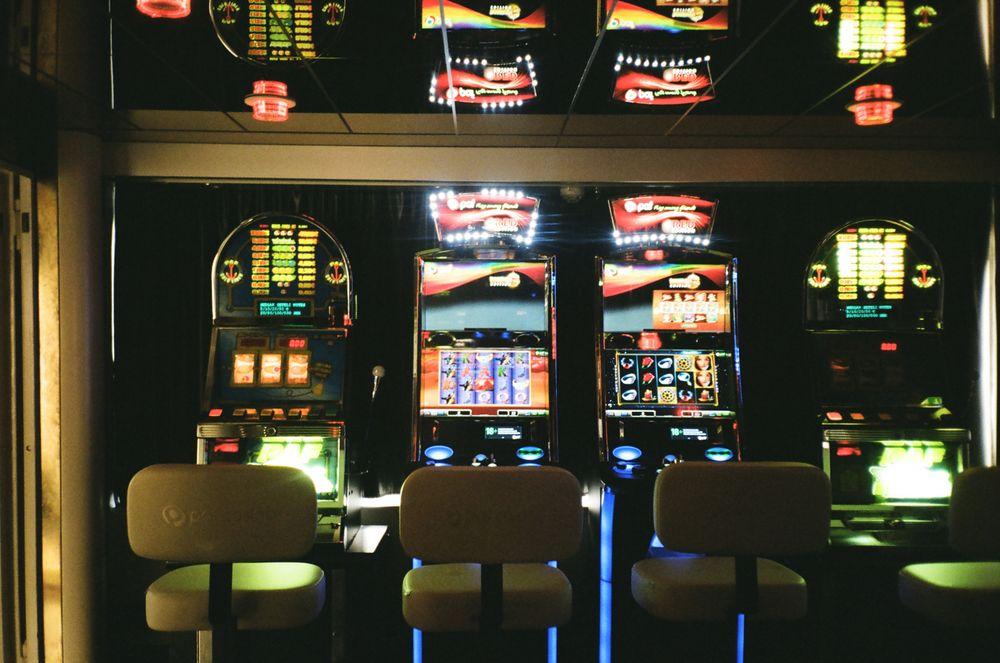
The random number generator is the single most important piece of software for fairness, which is why licensed casinos use certified versions tested by independent laboratories. Understanding it removes the common fear that games are rigged, since the outcomes come from proven mathematics, not a hidden hand. The sections below explain exactly how it works.
How does a random number generator work in casinos?
A random number generator works by producing numbers continuously through a mathematical algorithm running on the studio’s server, cycling thousands of times a second whether or not anybody is playing the game.
When you act, it captures the current number and converts it into a game outcome, such as a set of slot symbols or a card.
The process is instant and constant. The algorithm churns out values non-stop, and your button press simply grabs whichever number exists at that microsecond. That number is then translated by the game’s rules into a visible result, so the reels or cards you see are just an animation of a decision already made. Because the timing of your press is effectively random, the outcome is unpredictable.
This server-side operation is central to how a casino random number generator keeps games fair. The result is decided the moment you play, cannot be changed afterward, and is identical in fairness for every player. Knowing this explains why no strategy can time or influence a slot spin.
Are casino random number generators truly random?
Casino random number generators are effectively random for every practical purpose, producing sequences that pass statistical testing across enormous samples and outcomes neither the player nor the operator can predict.
Most use a pseudo-random algorithm so sophisticated that its results pass rigorous statistical tests for randomness and independence.
Strictly speaking, most casino systems use a pseudo-random number generator, which produces sequences that are deterministic in theory but unpredictable in practice. The algorithms are designed and tested so that their output shows no detectable pattern, no bias toward particular results, and no dependence on previous outcomes. To a player, and to the testing labs, the results are indistinguishable from true randomness.
This is why a certified random number generator is trusted despite not being “true” randomness in the physical sense. The certification confirms the output behaves randomly to strict standards, which is exactly what fair gaming requires. The distinction matters to engineers, but for fairness the tested result is what counts.
What is the difference between a pseudo-RNG and a hardware RNG?
A pseudo-random number generator uses a mathematical algorithm to produce apparently random numbers, while a hardware random number generator derives them from a physical process.
Online casinos mostly use certified pseudo-random generators because they are fast, reliable, and testable.
A pseudo-random number generator, or PRNG, starts from a seed value and applies a complex formula to generate a long, unpredictable sequence. A hardware, or “true,” random number generator instead draws on physical phenomena like electronic noise, which is genuinely unpredictable but slower and harder to audit. For high-volume online gaming, a well-designed PRNG offers the speed and consistency casinos need.
The key point is that both can be fair when properly implemented and tested. A certified casino random number generator, even a pseudo-random one, produces results that pass the same stringent randomness tests, which is why the PRNG approach dominates regulated online gaming without compromising fairness.
What is a seed in a random number generator?
A seed is the starting value a pseudo-random number generator uses to begin producing its sequence, drawn from an unpredictable entropy source so the resulting numbers cannot be reproduced by anybody.
Because the algorithm is deterministic, the seed determines the output, so casinos use constantly changing, unpredictable seeds to keep results random.
A pseudo-random number generator needs an initial input, the seed, from which it calculates every subsequent number. If the same seed were reused, the same sequence would follow, so casinos derive seeds from continuously varying sources and refresh them constantly. This ensures that even though the algorithm is mathematical, its real-world output never repeats predictably.
The seed is why a random number generator can be both deterministic in design and unpredictable in practice. Testing labs examine how seeds are generated and managed, because weak or reused seeding is one of the few ways randomness could be compromised, and certification confirms this is handled correctly.
How is a random number generator tested and certified?
A random number generator is tested by independent laboratories that run millions of outcomes through statistical analysis to confirm they are random, unbiased, and independent.
Passing these tests earns the certification a licensed casino must hold.
Accredited labs subject the random number generator to a battery of recognised statistical tests, checking that numbers are evenly distributed, show no patterns, and do not depend on prior results. They also review the source code, the seeding method, and how the RNG links to each game’s outcomes. Only a system that passes every test is certified, and casinos are periodically re-audited to keep that certification valid.
This independent testing is what transforms a claim of fairness into documented proof. When a casino displays a certification seal for its random number generator, it signals that an external authority has verified the games behave randomly, which is the strongest assurance a player can have.
Who certifies casino random number generators?
Casino random number generators are certified by accredited independent testing houses such as eCOGRA, iTech Labs, Gaming Laboratories International and BMM Testlabs, each named on a provincial regulator accepted list.
These accredited bodies audit the RNG and games to confirm fairness before a licensed casino can use them.
eCOGRA, iTech Labs, Gaming Laboratories International, and BMM Testlabs are the best-known agencies that test gaming software worldwide. They are independent of the casinos and game studios, and their approval is required by most gambling regulators. Their seals, often shown in a casino’s footer, link to reports confirming that the random number generator and the games’ return percentages have been verified.
Because these labs answer to regulators rather than operators, their certification carries real weight. Checking for a recognised testing seal is a simple way to confirm a casino’s random number generator has genuine independent oversight, rather than relying on the operator’s own assurances.
Can a random number generator be predicted or hacked?
A properly implemented and certified random number generator cannot be predicted or hacked in practice, because the seed is unpredictable and the algorithm is verified against statistical testing before release.
Its output shows no usable pattern, and the algorithms and seeding are designed and audited specifically to resist prediction and tampering.
For a player to predict outcomes, they would need to know the exact algorithm, the current seed, and the precise timing of number selection, all of which are protected and constantly changing. Certified systems are stress-tested against exactly these attacks, and reputable casinos secure the random number generator on protected servers. Historic exploits have almost always involved unlicensed software or insider access, not certified systems.
This is why sticking to licensed, tested casinos matters so much. A certified random number generator at a regulated operator is engineered to be practically impossible to predict or manipulate, giving players confidence that no one can game the outcomes in their favour or against them.
Can casinos manipulate the random number generator?
Licensed casinos cannot manipulate a certified random number generator, because the software is provided by independent game studios, sealed, and audited.
Tampering would break certification, breach the licence, and be detected in routine re-testing.
The random number generator is not controlled by the casino directly. It is built into games supplied by specialist developers and verified by external labs. The casino cannot reach into a certified game to change its odds without invalidating the certification and violating its licence, which would risk enormous fines and closure. Regulators and testing houses periodically re-audit live games to confirm nothing has changed.
In any case, casinos have no need to manipulate the random number generator, because the built-in house edge already guarantees long-term profit. Understanding this removes a persistent myth: at a licensed casino, the games are fair precisely because manipulation is both prohibited and unnecessary.
How does the RNG decide a slot outcome?
The random number generator decides a slot outcome by selecting a number the instant you spin, which the game maps to a specific combination of reel symbols.
The reels then animate to display that predetermined result.
Each position on each reel corresponds to a range of values, so when the random number generator produces a number, the game translates it into the exact symbols that land. Wilds, scatters, and bonus triggers are all resolved by the same number, meaning the entire outcome, including any feature, is set the moment you press spin. The spinning animation is purely visual, showing a result already determined.
Because each spin uses a fresh, independent number, past spins have no influence on the next. This is the core of how a slot’s random number generator works, and it is why a machine is never “due” to pay, every spin is a completely separate event decided by its own number.
How does the RNG relate to RTP?
The random number generator produces individual outcomes, while RTP, or return to player, is the long-term average those outcomes create.
Our Roll Dorado Casino review covers an operator that names the supplying studio on every game tile, which makes checking a published return figure a matter of seconds.
The RNG ensures each result is random, and the game’s design ensures they average to the stated RTP over time.
RTP is the percentage of wagers a game returns across millions of plays, such as 96%. The random number generator does not target this figure on any single spin. Instead, the game’s paytable and symbol frequencies are built so that truly random outcomes naturally settle around the RTP over a huge sample. In the short term, results swing widely, which is variance, but the long-run average holds.
So the RNG and RTP work together: randomness governs each spin, and mathematics governs the aggregate. Understanding this shows why a certified random number generator can deliver both genuine unpredictability in the moment and a reliable, published return percentage over the long run.
Does the RNG mean a slot is ever “due” to pay?
No, and the reason matters: because the random number generator makes every spin fully independent of the one before it, a slot is never owed anything by its own history
Because the random number generator makes every spin independent, a slot is never “due” for a win. Past results have no effect on future ones, so a long losing streak does not raise the odds of the next spin paying.
The belief that a machine becomes due after a dry spell is the gambler’s fallacy. The random number generator has no memory. Each spin draws a fresh number unrelated to what came before, so the probability of a win is the same on every spin regardless of history. A slot that has not paid in hours is exactly as likely to pay next spin as one that just did.
Recognising this protects you from chasing losses. Since the random number generator treats every spin as a standalone event, no pattern of past results can signal an incoming win, and betting more to recover losses has no mathematical justification.
Do live dealer games use a random number generator?
Most live dealer games do not use a random number generator, because outcomes come from real physical equipment, real cards, wheels, and dice, handled by a human dealer.
The RNG is used in digital games, while live games rely on genuine physical randomness.
In live blackjack, roulette, or baccarat, a real dealer deals real cards or spins a real wheel, and the physical result determines your outcome, read by cameras and software. This appeals to players who prefer tangible randomness over an algorithm. Some hybrid or automated live formats may use a random number generator for certain elements, but classic live tables are driven by physical events.
So the random number generator and live dealing are two routes to the same goal of fair, unpredictable outcomes. Digital games use certified algorithms, live games use real equipment, and both are trusted formats at licensed casinos, giving players a choice of how their outcomes are generated.
How does the RNG ensure fairness?
The random number generator ensures fairness by making every outcome independent, unbiased, and unpredictable, then proving it through independent certification.
This means no result favours the casino beyond the game’s disclosed house edge.
Fairness has two parts. First, the random number generator produces genuinely random, independent outcomes, so no player or operator can influence or foresee them. Second, independent labs verify this behaviour and confirm the game pays at its stated RTP. Together, these guarantee that wins and losses arise from chance and the disclosed odds, not from manipulation.
This is why a certified random number generator is the bedrock of trustworthy gaming. It does not mean players will win, since the house edge remains, but it does mean the game is honest, the odds are as published, and every player faces the same fair, random process.
What is the difference between the RNG and RTP?
The random number generator decides each individual outcome independently, while RTP describes the long-term percentage a game returns across millions of rounds rather than across any session you play.
The RNG is about randomness per spin; RTP is about averages across millions of spins, and the two are often confused.
Think of the random number generator as the engine of chance for every single result, and RTP as the statistical outcome of running that engine countless times. The RNG guarantees each spin is fair and unpredictable, but it says nothing about how much you will get back in one session. RTP tells you the expected long-run return but nothing about any specific spin.
Both matter when judging a game. A certified random number generator assures fairness, while a high RTP improves your long-term expected value. Understanding that they answer different questions, one about randomness, one about return, helps you evaluate casino games accurately rather than conflating the two.
How can players verify RNG fairness?
Players can verify random number generator fairness by checking for certification seals from recognised testing labs, confirming the casino’s licence, and reviewing published RTP figures.
These steps confirm the RNG has genuine independent oversight.
Look in the casino’s footer for seals from eCOGRA, iTech Labs, GLI, or BMM Testlabs, which usually link to verification reports. Confirm the operator holds a licence you can check on the regulator’s register, since licensing requires certified games. Reputable game studios also publish their titles’ RTP, and independent review sites report on payout reliability, adding another layer of confidence.
You cannot inspect the random number generator’s code yourself, but you can rely on the accredited bodies that do. Using these checks lets any player confirm that a casino’s random number generator is properly tested, turning trust from a hope into a verifiable fact.
What are common myths about random number generators?
Common myths are that a random number generator can be timed, that machines are “due” to pay, and that casinos secretly adjust the RNG.
All are false for certified games, where outcomes are independent, unpredictable, and audited.
The timing myth imagines a player could press spin at the right instant to force a win, but numbers change far too fast to target. The “due” myth assumes past losses raise future odds, which the RNG’s independence disproves. The manipulation myth ignores that certified games are sealed and audited, and that the house edge already ensures profit without any tampering.
These myths persist because randomness is counterintuitive. Understanding how a random number generator actually works, independent, unpredictable, and certified, dispels them and helps players approach games with realistic expectations rather than superstition.
What happens if a random number generator fails testing?
If a random number generator fails testing, the game cannot be certified or offered at a licensed casino until the issue is fixed and it passes a re-test.
Regulators can suspend or remove non-compliant games, protecting players from unfair software.
Testing labs only certify a random number generator that passes every statistical and security check, so a failure means the game is held back. The studio must correct the flaw, whether in the algorithm, the seeding, or how outcomes map to results, and resubmit for a full re-test. A licensed casino cannot legally run an uncertified or failed RNG, and doing so would breach its licence.
Ongoing oversight extends this protection. Certified games are periodically re-audited, and if a live random number generator were found to deviate, regulators could order its immediate removal and penalise the operator. This continuous testing cycle is why players at licensed casinos can trust that every RNG in use has met and continues to meet strict fairness standards.
What entropy source feeds a casino random number generator?
Certified systems draw their seed from a hardware entropy source such as electrical noise or timing jitter, which produces values that cannot be reproduced or anticipated from outside the machine.
The algorithm then expands that seed into the long sequence the games consume.
Testing houses examine both halves, because a strong algorithm fed a predictable seed produces a predictable random number generator.
What statistical tests does a random number generator face?
Laboratories run recognised test batteries measuring distribution uniformity, independence between successive values, absence of repeating cycles and resistance to correlation across enormous samples.
A sequence failing any of them is not certified and never reaches a lobby.
These are the same families of test used for cryptographic randomness rather than anything invented for gambling.
How often is a random number generator re-tested?
Certification attaches to a specific build, so every material change to the generator, the game mathematics or the platform triggers fresh testing before the updated version reaches players.
Operators also face periodic compliance audits covering game integrity.
This is why an operator can name the laboratory and the version string behind any live title on request.
Does a live dealer table use a random number generator?
Live tables produce outcomes physically rather than digitally through calibrated wheels, shuffling machines and real cards, with optical recognition reading the result rather than a random number generator drawing it.
Certification there covers the equipment and the recognition software instead.
Our page on live dealer casinos covers how those tables are audited.
Can an operator adjust a random number generator?
The generator and the game both run on the studio’s own servers under the studio’s certification, so the casino licensing the title has no access to the code producing outcomes.
What an operator does choose is which certified return configuration to license.
That choice is visible in the game information panel and changes the published return rather than the randomness.
What is provably fair and how does it differ?
Provably fair systems publish a hashed seed before a round and reveal it afterwards, letting a player verify the result was fixed in advance rather than trusting a laboratory certificate.
It appears on cryptocurrency sites rather than at provincially licensed Canadian operators.
Both approaches address the same question, with certification relying on an accredited third party and provably fair relying on published cryptography.
What do players ask most about random number generators?
These are the questions Canadian players raise most about the casino random number generator, answered briefly so you can play with understanding and confidence.
Is the RNG the same on every casino game?
The underlying random number generator technology is similar, but each game applies it to its own rules, paytable, and RTP. All certified games use a tested RNG, so fairness is consistent even though outcomes and returns differ by title.
Can I beat the random number generator?
No. A certified random number generator produces independent, unpredictable outcomes, so no system or timing can beat it. You can choose higher-RTP games to improve long-term value, but no strategy overcomes the randomness or the house edge.
Does the casino know what the RNG will do next?
No. The random number generator’s output is unpredictable even to the casino, and the result is only fixed the instant you play. Neither the operator nor the player can know the next outcome in advance.
Are RNGs in online slots regulated?
Yes. At licensed casinos, the random number generator must be tested and certified by accredited labs and meet regulator requirements. This oversight is what distinguishes a regulated casino from an unlicensed one with no verified RNG.
Why do I lose several spins in a row?
Because each spin is independent, losing streaks are normal randomness, not a fault. The random number generator does not balance wins and losses in the short term, so variance produces streaks in both directions around the game’s RTP.
What is the bottom line on the random number generator?
The random number generator is the certified software that makes casino games fair, producing independent, unpredictable outcomes that no operator or player can influence.
At licensed casinos, it is tested by accredited labs, so results are genuinely random and the published RTP holds over time.
Play only at casinos whose games carry recognised certification seals and a verifiable licence, favour higher-RTP titles for better long-term value, and ignore myths about machines being “due” or RNGs being timed. Understand the random number generator this way, and you can enjoy casino games with confidence that the outcomes are honest, the odds are as disclosed, and fairness is independently proven.