
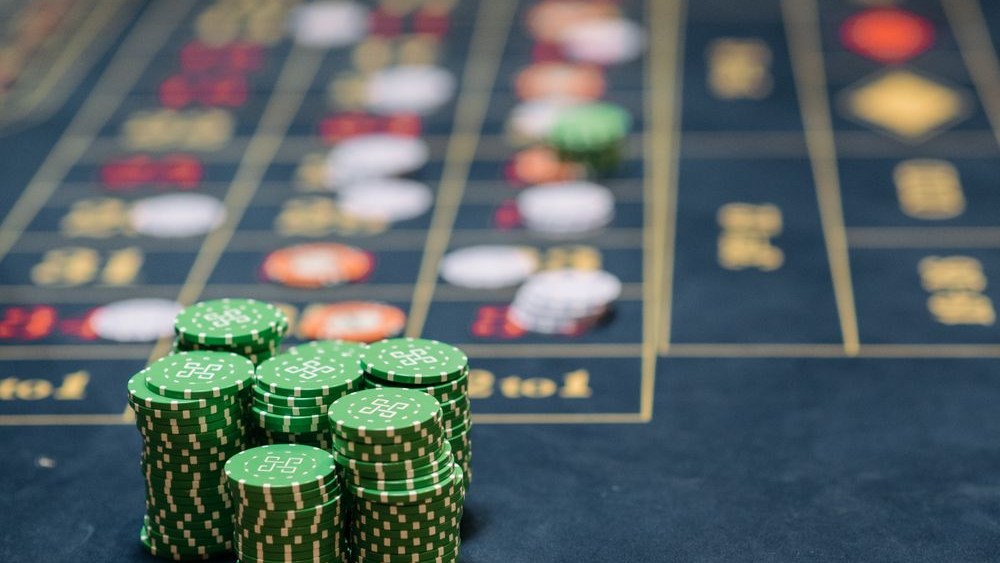
The 1-3-2-6 betting system Canada players use at roulette, baccarat and blackjack tables is a positive progression: you raise the stake after a win and drop back to one unit after a loss. A full cycle of four wins earns 12 units, and the worst cycle loses 2. Our best Canada online casino list shows the sites we have reviewed.
The table sets out the 1-3-2-6 betting system Canada figures in units, with the odds worked out for European roulette. The Wizard of Odds video on this page walks through the same sequence.
| Item | Value |
|---|---|
| Type | Positive progression |
| Stake sequence | 1, 3, 2, 6 units |
| Reset | After any loss, or after the fourth bet |
| Worst cycle | Minus 2 units |
| Best cycle | Plus 12 units |
| Chance of four straight wins | 5.6% on European roulette red or black |
| House edge | Unchanged: 2.70% European roulette, 5.26% American |
| Suited bets | Even-money bets |
What is the 1-3-2-6 betting system?
It is a staking plan for even-money bets. You bet 1 unit, then 3 after a win, then 2 after a second win, then 6 after a third win, and you return to 1 unit after any loss or after the fourth bet.
Casinos.com calls it a positive progression, which means the stake grows when you win and resets when you lose. The plan risks your winnings rather than fresh money.
The 1-3-2-6 betting system Canada players follow changes only the size of each bet. It never changes the odds of the game.
How does a full cycle run, bet by bet?
Start with a 1-unit bet. A win takes you to 3 units, a second win to 2 units and a third win to 6 units. A fourth win completes the cycle with 12 units of profit.
After the first win you hold 1 unit of profit. After the second you hold 4, after the third 6, and after the fourth 12.
Every completed 1-3-2-6 betting system Canada cycle ends with a reset to 1 unit, so the 12 units of profit are banked rather than risked again.
What does a short run on red look like, spin by spin?
Bet 1 unit on red and win, then 3 units and lose: the cycle ends at minus 2 units. Reset, win with 1, win with 3, win with 2, then lose the 6-unit bet: that cycle breaks even.
Reset again and win four in a row with 1, 3, 2 and 6 units. That cycle adds 12 units, so the three cycles together finish 10 units ahead.
Change one result and the picture flips. That sensitivity to order is the defining feature of the 1-3-2-6 betting system Canada players run.
Who uses the 1-3-2-6 system?
Casinos.com describes it as popular with live blackjack, roulette, baccarat and craps players. It also calls the approach unaggressive and suitable for all bankrolls.
That reputation comes from the capped loss per cycle. Players who dislike the risk of loss-chasing systems find it easier to live with.
The 1-3-2-6 betting system Canada players use also suits short sessions, since each cycle lasts four bets at most.
Why is it called 1-3-2-6?
The name is simply the stake sequence in units: 1, then 3, then 2, then 6. Read the name and you know the whole plan.
That makes it easy to remember at a busy table. There is no formula to work out between bets.
In the 1-3-2-6 betting system Canada players learn, the numbers are the instructions.
What counts as one unit in the sequence?
A unit is your base stake, the amount you bet at the start of every cycle. All four bets in the sequence are multiples of that unit.
Thinking in units lets the same plan work at any table. A $1 unit and a $25 unit follow identical steps.
Choose the unit before the session, then keep it fixed. Changing it mid-session breaks the 1-3-2-6 betting system Canada maths described on this page.
What happens after a loss at each step?
A loss on the first bet costs 1 unit. A loss on the second costs 2 units overall, a loss on the third leaves a 2-unit profit, and a loss on the fourth breaks even.
| Result sequence | Net result |
|---|---|
| Loss on bet 1 | Minus 1 unit |
| Win, then loss on bet 2 | Minus 2 units |
| Two wins, then loss on bet 3 | Plus 2 units |
| Three wins, then loss on bet 4 | 0 units |
| Four wins | Plus 12 units |
The table shows the core promise of the 1-3-2-6 betting system Canada bettors like: a cycle never loses more than 2 units.
Why does the third bet drop to two units?
After two wins you hold 4 units of profit. Betting only 2 units on the third step means that even a loss leaves you 2 units ahead for the cycle.
That drop is the clever part of the sequence. It locks in a profit once two wins arrive, before the larger fourth bet.
Without the drop, a loss at step three would wipe out the gain. In the 1-3-2-6 betting system Canada players learn, the 2-unit bet is the safety catch.
Why does the fourth bet jump to six units?
After three wins you hold 6 units of profit. Staking all 6 means a loss returns you to zero, while a win doubles the profit to 12 units.
The fourth bet is the only step that risks the whole cycle’s profit. It is also the only step that produces the big payoff.
Players who dislike that all-or-nothing moment often switch to the 1-3-2-4 variant, covered later in this 1-3-2-6 betting system Canada review.
How likely is each outcome on European roulette?
On a single-zero wheel, red wins 18 times in 37, or 48.6% of spins. Working through the sequence gives the probability of each cycle result.
| Cycle result | Probability |
|---|---|
| Minus 1 unit | 51.4% |
| Minus 2 units | 25.0% |
| Plus 2 units | 12.2% |
| 0 units | 5.9% |
| Plus 12 units | 5.6% |
About three cycles in four end with a loss. The 1-3-2-6 betting system Canada roulette players run depends on the rare full cycle to make up the difference.
How likely is each outcome on American roulette?
A double-zero wheel lowers the win chance on red to 18 in 38, or 47.4%. Every winning path becomes less likely as a result.
| Cycle result | Probability |
|---|---|
| Minus 1 unit | 52.6% |
| Minus 2 units | 24.9% |
| Plus 2 units | 11.8% |
| 0 units | 5.6% |
| Plus 12 units | 5.0% |
The full cycle drops from 5.6% to 5.0%. For the 1-3-2-6 betting system Canada roulette players use, the single-zero wheel is the clear choice.
What does the system return over the long run?
On European roulette, an average cycle loses about 0.098 units while staking about 3.62 units in total. That works out to a loss of 2.70% of everything wagered, which is exactly the wheel’s house edge.
On American roulette, the same calculation gives a loss of about 0.18 units per cycle, or 5.26% of the amount staked.
The maths confirms what GambleInstructor and GamblingSites both state: the 1-3-2-6 betting system Canada players use leaves the house edge unchanged.
What does a 20-cycle session look like on average?
Over 20 cycles on European roulette, the averages work out to about 10 cycles losing 1 unit, 5 losing 2 units, 2 or 3 gaining 2 units, 1 breaking even and 1 completing for 12 units.
Added up, those averages come to a loss of about 2 units across the 20 cycles. That matches the 0.098-unit loss per cycle.
Real sessions scatter widely around that average. One extra full cycle turns a 20-cycle 1-3-2-6 betting system Canada session into a 10-unit profit.
What is the average length of a cycle?
On European roulette, an average cycle lasts about 1.84 bets. Half of all cycles end on the first bet, because the first bet loses 51.4% of the time.
The average stake per bet comes to about 1.97 units. That figure links the unit to the money actually wagered.
It also explains why the 1-3-2-6 betting system Canada players use wagers less per hour than its 6-unit top bet suggests.
Why can’t a progression beat the house edge?
Each bet is independent, and each one carries the same house edge. Changing the size of a bet changes the amount that rides on that edge, not the edge itself.
GamblingSites puts it plainly: you are not changing the rules or the payouts, so you are not changing the house edge.
A progression shapes the pattern of results. In the 1-3-2-6 betting system Canada version, it creates frequent small losses and rare large wins.
How does the system handle pushes and ties?
A push or a tie returns your stake, so it counts as no result. Repeat the same stake on the next bet and stay on the same step.
Ties matter most at baccarat, where they return banker and player bets. At craps, the don’t pass bet pushes on a come-out 12.
Roulette has no pushes on even-money bets, except under the La Partage and En Prison rules covered below. The 1-3-2-6 betting system Canada count stays simplest at roulette.
Why does the system rely on even-money bets?
The sequence assumes each bet wins close to half the time. On a 2-to-1 dozens bet at European roulette, a win comes only 32.4% of the time, and four straight wins drop to about 1.1%.
Payouts change too. A win on a dozens bet pays 2 units per unit staked, which reshapes every cycle result in the tables above.
Keep the 1-3-2-6 betting system Canada sequence on even-money bets, where its numbers hold.
How does En Prison work with the system?
Under En Prison, an even-money bet that loses to zero stays on the table for one more spin instead of being lost. If the next spin wins, the stake comes back.
The rule cuts the house edge on even-money bets to about 1.35%, the same as La Partage. Treat an imprisoned bet as unresolved and keep your step until it settles.
French roulette tables offer one rule or the other. Either one makes the 1-3-2-6 betting system Canada roulette players use cheaper to run.
Which games suit the system?
Casinos.com lists roulette red or black, baccarat player or banker, blackjack hands and craps as the natural homes for the system. All of them offer bets that pay close to even money.
The bets are not exactly 50/50, since the house edge tilts each one. The system works on any bet near that mark.
Side bets and long-odds bets do not fit. The 1-3-2-6 betting system Canada players follow needs a bet that wins close to half the time.
How do you use it on roulette?
Place your units on an even-money bet such as red, black, odd, even, low or high. Follow the 1-3-2-6 sequence on that bet and reset after any loss.
Choose a single-zero wheel, and look for French roulette with the La Partage rule. La Partage returns half of an even-money bet when the ball lands on zero, which cuts the house edge on those bets to 1.35%.
Our page on online roulette strategies for Canada covers the other systems players bring to the wheel.
How do you use it on baccarat?
Bet the banker or the player hand and follow the sequence. The banker bet carries a house edge of about 1.06% after the usual 5% commission, and the player bet about 1.24%.
Ties return your bet on the banker and player hands, so a tie does not move the sequence forward or back. Simply repeat the same stake.
Banker wins pay 0.95 units after commission, so the full cycle earns a little under 12 units. That small trim is part of the 1-3-2-6 betting system Canada baccarat players accept.
How do you use it on blackjack?
Use the sequence for your base bet on each hand. Casinos.com lists blackjack among the games where players apply it, counting each hand as a win or a loss.
Doubles, splits and blackjacks complicate the count. A blackjack pays 3:2, and a double puts more money on the table mid-hand.
A simple rule keeps it workable: treat any net win on a hand as a win, any net loss as a loss, and a push as no step. Our blackjack strategies for Canadians page covers the playing decisions that keep the edge low.
Can you combine the system with basic strategy?
Yes, and you have to for blackjack. Basic strategy decides how you play each hand, while the 1-3-2-6 decides the size of each bet.
Basic strategy brings the house edge down to around 0.5% at tables with good rules. The staking plan then rides on that lower edge.
Without basic strategy, poor decisions raise the edge, and the 1-3-2-6 betting system Canada blackjack players follow loses faster.
How do you use it on craps?
Bet the pass line or the don’t pass line and follow the sequence on each new come-out bet. The pass line carries a house edge of 1.41%, and the don’t pass line 1.36%.
Both bets resolve as a win or a loss, which suits the system’s simple counting. Odds bets behind the line pay true odds, but they change the size of your total action.
Keep the 1-3-2-6 betting system Canada craps sequence on the line bet alone, and treat odds bets as a separate decision.
Can you use it for sports betting in Canada?
Yes, on wagers priced close to even money. Single-event sports betting is legal in Canada, and the system can follow any bet that wins about half the time.
Most point spreads are priced at -110, which pays 0.91 units for each unit staked. A full cycle then earns about 10.9 units rather than 12.
Bookmaker margins on those lines often run near 4.5%, so the 1-3-2-6 betting system Canada sports bettors use faces a higher edge than baccarat or European roulette.
How does the 1-3-2-4 variant work?
The 1-3-2-4 variant replaces the final 6-unit bet with a 4-unit bet. Betway’s baccarat article covers it as a gentler version of the same idea.
Three wins and a loss now leave you 2 units ahead instead of at zero. Four wins earn 10 units instead of 12.
The variant trades a smaller top prize for a profit on every cycle that reaches the fourth bet. It suits players who find the 1-3-2-6 betting system Canada version too sharp at the last step.
Which variant suits a cautious player?
The 1-3-2-4 variant suits caution better. It guarantees a profit once two wins arrive, whatever happens on the third and fourth bets.
The original 1-3-2-6 keeps a bigger reward for the full cycle. It accepts a breakeven result when the last bet loses.
Neither version changes the house edge. Pick the shape of results you prefer, then stick to it for the whole session.
What unit size fits your bankroll?
Casinos.com advises setting aside a bankroll first and then choosing a percentage of it as your base unit. A unit of 2% of the session bankroll gives you 50 units to work with.
The largest single bet is 6 units, or 12% of that bankroll. Make sure the table maximum allows it.
A smaller unit stretches the session. The 1-3-2-6 betting system Canada players use rarely needs a unit above 2% to stay comfortable.
How long can a losing run last?
On European roulette, the first bet loses 51.4% of the time. Five first-bet losses in a row happen about 3.6% of the time, and ten in a row about 0.13% of the time.
Each of those losses costs 1 unit. A run of cycles that each end with a win and a loss costs 2 units per cycle.
Long dry spells are part of any session. A 50-unit bankroll absorbs them far better than a 20-unit one, which is why the 1-3-2-6 betting system Canada players plan the bankroll first.
What does a $5 unit look like at an online table?
With a $5 unit, the four bets are $5, $15, $10 and $30. A full cycle earns $60, and the worst cycle loses $10.
A $250 bankroll gives you 50 units at that size. The $30 fourth bet sits well inside the limits of most online roulette tables.
That sizing is a common starting point for the 1-3-2-6 betting system Canada players try at RNG tables.
What does a $25 unit look like at a live table?
With a $25 unit, the bets are $25, $75, $50 and $150. A full cycle earns $300, and the worst cycle loses $50.
Live tables often carry higher minimums than RNG games, so larger units are common there. The bankroll scales too: 50 units at $25 means $1,250.
Check the table’s maximum before you sit down. The $150 fourth bet must fit inside it for the 1-3-2-6 betting system Canada sequence to run as designed.
How do table limits affect the system?
The table minimum sets your smallest possible unit, and the table maximum caps your fourth bet. A 6-unit fourth bet needs a maximum of at least six times your unit.
Most tables leave plenty of room between those limits. Low-limit tables with tight maximums are the exception.
Read both limits before your first bet, so the 1-3-2-6 betting system Canada cycle never hits a ceiling halfway through.
How does it compare with the Martingale?
The Martingale doubles the stake after every loss, aiming to win back losses with one win. The 1-3-2-6 does the opposite: it raises the stake only after wins.
The Martingale’s danger is the long losing run. Seven straight losses on a $5 base means bets of $5, $10, $20, $40, $80, $160 and $320, a total loss of $635.
The 1-3-2-6 betting system Canada players use caps the loss per cycle at 2 units. It cannot produce a Martingale-style collapse.
How does it compare with the D’Alembert?
The D’Alembert adds one unit after a loss and removes one after a win. It is a gentle negative progression that chases losses slowly.
A long losing run still pushes D’Alembert stakes upward. The 1-3-2-6 never raises the stake after a loss.
Both systems leave the house edge untouched. The difference lies in which result triggers a bigger bet.
How does it compare with the Paroli?
The Paroli is another positive progression. You double the stake after each win, usually for three wins, so the sequence runs 1, 2 and 4 units for a 7-unit profit.
Any loss in a Paroli cycle costs exactly 1 unit. The 1-3-2-6 can lose 2 units, but its full cycle pays 12 units rather than 7.
Players who want the smallest possible loss per cycle lean toward the Paroli. Players who want a bigger top prize lean toward the 1-3-2-6 betting system Canada tables see more often.
What is the main appeal of the system?
It caps the loss on every cycle at 2 units, while a lucky streak can earn 12. That shape feels comfortable: losses stay small and wins can stand out.
The structure also brings discipline. Fixed stakes and fixed resets remove the urge to chase losses with bigger bets.
For the 1-3-2-6 betting system Canada players like, that discipline is the real benefit. It keeps sessions controlled.
What are the main weaknesses?
The system cannot beat the house edge, and most cycles lose. On European roulette, about 76% of cycles end at minus 1 or minus 2 units.
Profit depends on the full cycle, which arrives in about one cycle in eighteen. A session can end before one appears.
The 1-3-2-6 betting system Canada players use also gives back a winning cycle’s gain at the fourth step whenever the last bet loses.
Why do full cycles carry most of the profit?
A full cycle pays 12 units and arrives about 5.6% of the time on European roulette. That single outcome contributes about 0.67 units to the average cycle.
The two losing outcomes take away about 1.01 units on average, and the 2-unit outcome adds about 0.24. The full cycle is what keeps the total close to the house edge.
Without the 12-unit payoff, the 1-3-2-6 betting system Canada cycle would lose far faster than the wheel’s edge.
Does the system work at live dealer tables?
Yes. A live dealer table offers the same even-money bets as an RNG table, and the sequence works the same way.
Live games run slower, with fewer rounds per hour. That slower pace lowers the amount you wager per hour and with it the expected hourly cost.
Our live baccarat in Canada page covers the live tables where the 1-3-2-6 betting system Canada players use runs at a calm pace.
Does the speed of play change the cost?
Yes. The expected cost equals the house edge times the total amount wagered, and faster games put more money through the edge each hour.
An RNG roulette game can run hundreds of spins per hour, while a live wheel runs far fewer. At the same unit, the RNG game costs more per hour.
Slowing down is one of the simplest ways to make a 1-3-2-6 betting system Canada session last longer.
What does the system cost per hour?
Take a $5 unit at a live roulette table running about 50 spins an hour. With an average stake near $9.85 per spin, you wager about $490 an hour.
At the European edge of 2.70%, the expected cost is about $13 an hour. Double the spin rate and the hourly cost doubles too.
That number is the honest price of a 1-3-2-6 betting system Canada session: the entertainment cost of time at the table.
How does the system compare with flat betting?
Flat betting stakes the same unit on every bet. The 1-3-2-6 stakes about 1.97 units per bet on average, so it puts roughly twice the money through the house edge per bet.
Both approaches lose the same share of the money wagered: 2.70% on European roulette. The 1-3-2-6 simply wagers more and spreads results wider.
Flat betting suits players who want the slowest possible loss rate. The 1-3-2-6 betting system Canada players choose adds structure and a bigger top result.
How does the system run at speed baccarat tables?
Speed baccarat deals far more hands per hour than a classic table. The sequence works the same way, but the faster pace multiplies the hourly cost.
The banker edge of about 1.06% still applies to every hand. More hands per hour simply means more money exposed to it.
Pick a classic table when you want a 1-3-2-6 betting system Canada session to last, and a speed table only when you have a strict time limit.
How do bonuses interact with betting systems?
Table games often count for a small share of bonus wagering, and certain casinos exclude them entirely. Read the contribution table before you play a bonus on roulette or baccarat.
Bonus terms at certain casinos also forbid progression systems or low-risk betting patterns during wagering. Breaking those rules can void the bonus.
The safest route is to play the 1-3-2-6 betting system Canada sequence with cash, not bonus funds, unless the terms clearly allow it.
Can a casino stop you from using a progression?
Outside bonus play, a progression is just a way of choosing bet sizes. Casinos accept any stake within the table limits.
Bonus terms are the exception, as the previous section explains. Read them before you combine an offer with a system.
Using the 1-3-2-6 betting system Canada players know is legal; it changes no rule of the game and needs no special device.
How do you keep count during a cycle?
Note the step you are on before each bet: 1, 3, 2 or 6. A scrap of paper or a note on your phone keeps the count honest during a fast game.
Reset the note to step one after any loss or after the fourth bet. Most counting errors come from skipping that reset.
A steady count turns the 1-3-2-6 betting system Canada sequence into routine rather than guesswork.
Which mistakes break the system?
Four mistakes undo the plan: raising the unit after losses, skipping resets, carrying a cycle’s profit into the next cycle, and playing on a double-zero wheel.
- A bigger unit after losses turns a positive progression into loss chasing.
- A skipped reset leaves a 6-unit bet exposed after a loss.
- Carrying profit forward risks banked winnings again.
- A double-zero wheel doubles the house edge.
Avoid all four, and the 1-3-2-6 betting system Canada session behaves as the tables above describe.
How do you practise the system for free?
Play free roulette or free baccarat and run the sequence with demo credits. Practice builds the counting habit before real money is involved.
Our free roulette Canada page lists the versions you can try at no cost.
Demo results follow the same maths as paid games, so a practice session shows the real rhythm of the 1-3-2-6 betting system Canada cycle.
What happens if you stop mid-cycle?
You keep whatever profit or loss the cycle has reached. After two wins, for example, you walk away 4 units ahead.
The system has no penalty for stopping early. Each bet settles on its own, so the cycle is only a plan for the next stake.
Players often end a 1-3-2-6 betting system Canada session at the close of a cycle simply to keep the count clean.
Does the order of wins and losses matter?
Yes. Only consecutive wins build a cycle, so the same number of wins can produce very different results depending on their order.
Alternating wins and losses is the worst pattern. Each win-then-loss pair costs 2 units.
Four wins in a row, by contrast, earn 12 units. The 1-3-2-6 betting system Canada players follow rewards streaks and punishes choppy results.
How does the system behave during a hot streak?
A long winning streak completes a cycle every four wins and then resets. Eight straight wins produce two full cycles and 24 units of profit.
The reset means the system never presses a streak beyond four wins. That caps the gain from any single run.
The trade-off protects banked profit. A hot streak under the 1-3-2-6 betting system Canada players use ends with money in hand rather than on the table.
How does the system behave during a cold streak?
A cold streak costs 1 unit per losing first bet. Ten straight losses cost 10 units, a slow and predictable decline.
The stake never grows during the losses, so the damage stays proportional to the number of bets.
Set a loss limit in units before you start. When the 1-3-2-6 betting system Canada session reaches it, the session ends.
Is the 1-3-2-6 system good for beginners?
It is one of the easiest systems to learn. The sequence has four steps, the reset rule is simple, and the loss per cycle never exceeds 2 units.
Beginners also benefit from the structure. A fixed plan prevents impulsive bets after a loss.
Learn the game’s rules first, then add the 1-3-2-6 betting system Canada sequence on the lowest-edge bet available.
Which records help you judge the system honestly?
Log each cycle’s result: minus 1, minus 2, plus 2, zero or plus 12. After a hundred cycles, compare your full-cycle rate with the expected 5.6% on European roulette.
The log shows whether results match the maths or whether luck ran hot or cold. Either way, the long-run cost stays tied to the house edge.
Honest records stop the 1-3-2-6 betting system Canada player from crediting the system for luck.
What do the top sources agree on?
Casinos.com, GambleInstructor and GamblingSites agree on three points: the system is a positive progression, the house edge stays the same, and a bankroll plan comes first.
GambleInstructor adds that your stake resets to one unit as soon as you lose. GamblingSites stresses that the rules and payouts are untouched.
Those shared points frame every 1-3-2-6 betting system Canada page worth reading: structure, not an edge.
What does a full cycle look like at each unit size?
The table converts the four bets into Canadian dollars at common unit sizes, with the best and the worst cycle results for each.
| Unit | Four bets | Full cycle | Worst cycle |
|---|---|---|---|
| $1 | $1, $3, $2, $6 | +$12 | -$2 |
| $2 | $2, $6, $4, $12 | +$24 | -$4 |
| $5 | $5, $15, $10, $30 | +$60 | -$10 |
| $10 | $10, $30, $20, $60 | +$120 | -$20 |
| $25 | $25, $75, $50, $150 | +$300 | -$50 |
Pick the row whose worst cycle you can lose ten times over without discomfort. That row is the right size for your 1-3-2-6 betting system Canada session.
What does a sensible session plan look like?
A simple plan sets five numbers before the first bet: the bankroll, the unit, a loss limit, a win target and a time limit.
- Bankroll: 50 units.
- Unit: 2% of the bankroll.
- Loss limit: 20 units.
- Win target: 24 units, the value of two full cycles.
- Time limit: 45 minutes.
Stop when any limit is reached. The plan keeps the 1-3-2-6 betting system Canada session inside boundaries you chose in advance.
How do Canadian players fund table sessions?
Canadian casinos commonly offer Interac e-Transfer, cards and e-wallets, and offshore sites often add crypto. Check the deposit minimum, the withdrawal limits and any fees before you pick a method.
Fund the session with the bankroll you planned, not more. A separate gambling budget makes the unit size easy to keep.
Play in Canadian dollars where the casino allows it. Currency conversion fees eat into a 1-3-2-6 betting system Canada bankroll without adding any value.
Does the system work in land-based Canadian casinos?
Yes. The sequence works the same at a physical roulette wheel, baccarat table or craps table as it does online.
Land-based tables usually carry higher minimums, so the unit tends to be larger. The fourth bet, at six units, has to fit under the table maximum.
The 1-3-2-6 betting system Canada players use at home transfers directly to a casino floor, with one difference: fewer bets per hour.
Where can Canadians use the system?
Any licensed casino with even-money table games works. Ontario residents play at operators registered with iGaming Ontario, and players in the other provinces use provincial sites or offshore casinos that accept Canadians.
Players must be 18 or 19, according to their province’s age rule. Confirm the casino’s licence and your province’s access before you register.
Our Cashed Casino review lists the roulette, blackjack and baccarat variants available there, all suited to the 1-3-2-6 betting system Canada players follow.
How do you stay in control with any system?
Set a deposit limit, a loss limit and a session length before you start. A system controls the size of each bet, but only limits control the size of the session.
Our page on managing a casino bankroll online explains how to set those limits.
If play stops feeling like entertainment, take a break. Ontario residents can contact ConnexOntario for free, confidential support.
Who will benefit from the 1-3-2-6 betting system Canada players use?
Players who want structure and small, capped losses per cycle will benefit most. The system turns a session into a series of short, clear cycles.
Players hoping to beat the casino will be disappointed. The house edge stays the same whatever the stake pattern.
Use it on the lowest-edge bets you can find, such as European roulette with La Partage, baccarat banker or the craps pass line, and treat it as a way to pace your play.
1 thought on “1-3-2-6 Betting System Canada: How the Progression Works and Its Real Odds”