

Spanish 21 takes every ten out of the deck and then hands the player almost every rule a blackjack table refuses. Late surrender after doubling, a player 21 that always wins, five card bonuses, and a shoe with 25 percent of the high cards missing. For the wider market picture, start at our online casino Canada hub.
The table below sets out how the game behaves. Read it first, then work through the detail beneath.
| Trait | Detail |
|---|---|
| Deck | 48 cards, all four tens removed |
| Player 21 | Always wins, never pushes |
| Doubling | On any number of cards, with rescue allowed |
| Bonus payouts | Five, six and seven card 21s, plus 6-7-8 and 7-7-7 |
| House edge | Roughly 0.4 percent with a dealer who stands on soft 17 |
| Canadian supply | Ontario lobbies, provincial platforms, land based floors |
What is Spanish 21?
A blackjack variant played with a 48 card Spanish deck, which is a standard deck with all four tens removed. Jacks, queens and kings stay in, and every other blackjack rule is then loosened in the player’s favour.
Fewer tens hurts. The bonus rules pay it back.
The name comes from the deck rather than the country. A Spanish deck is a forty eight card pack used across a range of card games, and Spanish 21 borrows it to change the shape of a blackjack shoe.
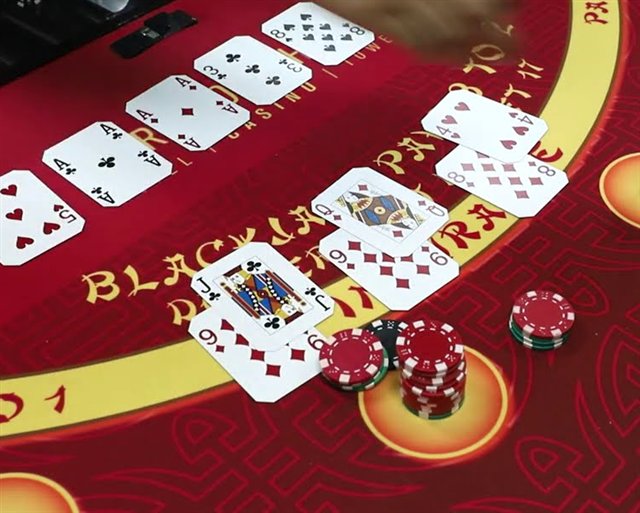
Everything else looks familiar at a glance. The layout, the chip circles and the dealer procedure all match a standard blackjack table.
Canadians usually meet the game beside the standard blackjack tables in a lobby filter. Spanish 21 sits there as a variant rather than as its own category, which is why plenty of players never open it.
The rules screen is where the differences live. Nothing on the tile warns a player that the tens have gone.
Jacks, queens and kings all still count as ten. Only the cards printed with a ten are gone from a Spanish 21 shoe.
Table minimums online start low. A Spanish 21 table opening at one dollar is common on an Ontario lobby, which makes learning the chart cheap.
The variant is sometimes branded Bahama Bonus or similar on individual floors. A Spanish 21 rule set sits underneath whatever name the felt carries.
Reading the rules screen confirms it. The forty eight card deck is the giveaway.
Why are the tens removed?
Because removing them hands the house roughly two percent before anything else happens. Tens are the cards that complete blackjacks and make doubling profitable, and a shoe without them is considerably worse for the player.
Sixteen high cards leave the deck. Sixteen remain.
Every ten valued card in a shoe helps the player twice over. It completes blackjacks that pay three to two and it makes a double down far more likely to land on a strong total.
Removing four of them costs roughly two percent. Spanish 21 starts from that deficit and spends the rest of its rules climbing back out of it.
Sixteen cards leave a single deck and four leave a fifty two card pack. A Spanish 21 shoe therefore carries seventy five percent of the high cards a blackjack shoe holds.
Face cards remain untouched. That is why blackjacks still appear at a reasonable rate.
The deficit is fixed and known before any hand is dealt. Spanish 21 builds its rule set around covering exactly that gap.
The deck is sometimes called a Spanish shoe for this reason. Nothing else about a Spanish 21 pack differs from a standard one.
Four cards from each suit leave the pack. A Spanish 21 shoe of six decks therefore holds twenty four fewer ten value cards than a blackjack shoe.
How does the game pay that back?
Through a stack of liberal rules found nowhere else. A player 21 always beats a dealer 21, doubling is allowed on any number of cards, doubles can be surrendered, and a set of hands pay bonuses regardless of what the dealer holds.
The rules are the compensation. Without them it is unplayable.
The compensation is unusually generous by table game standards. No other blackjack variant offers this number of player favourable rules stacked together on one felt.
Each rule is worth a fraction of a percent. Spanish 21 assembles enough of them to bring the published edge back under half a point.
Adding the concessions together is the only way to judge the game. Spanish 21 is worse than blackjack on the deck and better on almost every rule printed beside it.
The net figure is what matters. It lands under half a percent on a good table.
No single rule carries the load. Spanish 21 depends on the whole stack being present on the felt.
Removing any one concession would break the balance. Spanish 21 depends on the full rule set being offered together.
Counting the concessions is the quickest way to judge a table. A Spanish 21 felt listing all of them is worth sitting at, and one missing several is not.
Does a player 21 always win?
Yes, and this is the single most valuable rule in the game. A player total of 21 beats a dealer 21 rather than pushing, which converts a large number of standard blackjack pushes into wins.
Player blackjack beats dealer blackjack too. Always.
In standard blackjack a player twenty one against a dealer twenty one is a push. Here it is a win, and the same applies to blackjack against blackjack.
That rule alone is worth roughly nine tenths of a percent. It is the largest single concession Spanish 21 makes.
The rule removes the most frustrating outcome in blackjack. A player who draws to twenty one and watches the dealer match it collects here rather than pushing.
It applies to every twenty one. Spanish 21 makes no distinction between a drawn twenty one and a natural.
Dealer blackjack still ends the hand immediately. Spanish 21 simply pays a player blackjack against it.
The same rule covers a drawn twenty one against a dealer natural. A Spanish 21 player collects on both, which blackjack never does.
Nothing about the payout changes. It is an even money win.
What is double down rescue?
The option to surrender a doubled hand after seeing the draw card and lose only the original bet. A player doubling on eleven and catching a two can walk away rather than playing out the hand.
No standard blackjack table offers it anywhere.
The option applies after the double card has been seen rather than before. A player who doubles and draws badly can surrender the hand and recover the doubled portion of the wager.
Nothing in standard blackjack resembles it. Spanish 21 is the only common table game that lets a player unwind a committed double.
Using it correctly is part of the strategy chart rather than a free option. Spanish 21 charts state exactly which doubled hands to rescue against which dealer up cards.
Rescuing everything is a losing habit. The option is valuable on a narrow set of hands.
Rescuing returns the doubled portion only. The original Spanish 21 wager is still lost on that hand.
It applies to any doubled hand, including doubles on three or four cards. Spanish 21 allows the rescue wherever the double was taken.
What bonuses does Spanish 21 pay?
A five card 21 pays three to two, a six card 21 pays two to one, and seven or more cards pays three to one. Those payouts apply regardless of the dealer’s hand.
Long hands become valuable rather than risky.
The bonuses pay whether the dealer beats the hand or not. A five card twenty one collects three to two even against a dealer blackjack, which changes how a marginal total is best played.
Long hands stop being a warning sign. Spanish 21 turns a four card sixteen into a hand with real upside attached to the next draw.
The ladder starts at five cards and climbs through six and seven. A seven card twenty one paying three to one is rare enough to feel like a jackpot and common enough to matter.
None of them require a side bet. Spanish 21 pays the bonuses from the main wager.
Bonus payouts are void after a double or a split on most tables. That condition is printed beside the Spanish 21 ladder.
The bonus is paid before the dealer hand is compared. A Spanish 21 five card twenty one collects immediately.
Every bonus pays from the main wager rather than a side circle. A Spanish 21 player never stakes extra to qualify for one.
What is the 6-7-8 bonus?
Any 6, 7 and 8 totalling 21 pays three to two, a suited version pays two to one, and a spaded version pays three to one. Three sevens pay on the same ladder.
Suit matters here. It never matters in blackjack.
Suit is what separates the three payouts. Mixed suits pay three to two, all one suit pays two to one, and all spades pays three to one on both the 6-7-8 and the three sevens combinations.
Nothing in blackjack cares about suit at all. Spanish 21 uses it to add a second layer to the bonus ladder.
The combination has to total twenty one exactly. Any 6, 7 and 8 does that, and the suits then decide which of the three payouts applies.
Three sevens works the same way. Spanish 21 pays both combinations from the same ladder.
The cards can arrive in any order. A Spanish 21 hand of 8, 6 then 7 pays exactly the same.
Mixed suit versions are by far the most common outcome. A spaded Spanish 21 6-7-8 is rare enough to feel like a jackpot when it lands.
Both bonuses pay from the main wager.
What is the super bonus?
Three suited sevens against a dealer seven pays a fixed amount, typically one thousand for smaller bets and five thousand for bets at or above a stated threshold.
Other players at the table receive an envy bonus.
The payout is fixed rather than proportional to the stake, which is why a threshold exists. Bets under the stated amount collect the smaller figure and bets at or above it collect the larger one.
Other seats collect an envy bonus when it lands. That social payout is a Spanish 21 signature.
The dealer up card has to be a seven as well. Three suited sevens against any other dealer card pays the ordinary three sevens bonus instead.
That extra condition is what makes it so rare. Spanish 21 prices the super bonus accordingly.
Doubling or splitting voids it entirely. A Spanish 21 player has to reach the combination on an unsplit hand.
Threshold amounts differ between casinos. A Spanish 21 felt prints both figures beside the bonus.
How often does the super bonus land?
Roughly once in six hundred and sixty eight thousand hands. It contributes almost nothing to the published return and exists as a headline rather than as value.
Nobody chooses a table for it.
The odds are close to a slot jackpot rather than a table game payout. Roughly one hand in six hundred and sixty eight thousand produces the combination.
Its contribution to the published return is negligible. Choosing a Spanish 21 table for the super bonus is choosing on a number that will not arrive.
Working the frequency out in hands helps. A player dealing one hundred hands an hour would wait roughly six thousand hours to see it once.
Nothing about a session plan should assume it. The Spanish 21 published figure barely moves without it.
The envy bonus is the part other seats notice. Everyone at a Spanish 21 table collects when it lands.
What other rules are liberal?
Late surrender is allowed, doubling after splitting is allowed, aces can be resplit, and a player may hit and double split aces. Each of those is refused at a typical blackjack table.
Almost every restriction is lifted. That is the design.
Late surrender is the most valuable of the remaining set. Being able to fold half a stake after seeing the dealer up card is refused at most Canadian blackjack tables.
Resplitting aces and hitting split aces follow. Spanish 21 removes restrictions that standard blackjack uses to protect its own edge.
Doubling on any number of cards is the rule players underuse most. A Spanish 21 hand of three or four cards can still be doubled, which no blackjack table permits.
Each concession is small on its own. Together they are what makes the game viable.
Every one of them is stated in the rules screen. Spanish 21 hides nothing about what it permits.
Splitting up to four hands is standard. Spanish 21 also permits doubling on each of them.
Late surrender applies after the dealer checks for blackjack on most tables. A Spanish 21 player gives up half the stake and keeps the rest.
Standard blackjack refuses it almost everywhere in Canada.
What is the house edge?
Roughly 0.4 percent with a dealer who stands on soft 17 and around 0.76 percent when the dealer hits it. Both figures assume correct Spanish 21 strategy rather than blackjack strategy.
That is competitive with good blackjack rules.
The dealer soft seventeen rule moves the figure more than anything else on the felt. Standing on soft seventeen produces roughly 0.4 percent and hitting it costs almost double.
Reading that line before sitting is worth more than any strategy adjustment. Spanish 21 prints it in the rules screen.
Both published figures assume a full Spanish 21 chart is followed. A player guessing their way through the hand pays considerably more than either number.
Soft seventeen is the line to read. It is worth more than every other rule difference combined.
Table rules vary between suppliers. Reading them once decides what a Spanish 21 session costs.
Both variants appear on Canadian lobbies. Checking which Spanish 21 rule set a table uses takes one line of reading.
Rule variations move the figure by tenths of a percent each. A Spanish 21 table publishes the full set before the first hand.
Does blackjack strategy work here?
No, and using it is the most expensive mistake available. A shoe without tens changes almost every borderline decision, and applying a blackjack chart costs well over a percentage point.
The charts differ substantially. Use the right one.
Applying a blackjack chart here is the most common and most expensive error. The missing tens change bust probabilities on every draw and the bonus payouts change the value of continuing a hand.
The gap is well over a percentage point. Spanish 21 played on a blackjack chart is a considerably worse game than blackjack itself.
The overlap is close enough to be dangerous. Most decisions match, and the ones that differ are the borderline hands that arise constantly.
Charts are published freely online. A Spanish 21 player with the right one on screen is playing the game the published edge describes.
The chart is longer and freely available. Loading it before the first Spanish 21 hand costs a minute.
The error costs more than a poor table would. A Spanish 21 hand played on a blackjack chart gives back the entire rule advantage.
How does the strategy differ?
Players hit far more often. Sixteen against a dealer ten is a hit rather than a stand, doubling ranges widen, and a group of standing decisions in blackjack become draws here.
Missing tens makes busting less likely on every draw.
Hitting is correct far more often than instinct suggests. With sixteen fewer high cards in the shoe, drawing to a hard fifteen or sixteen busts less frequently than the same draw in blackjack.
Doubling ranges widen for the same reason. Spanish 21 rewards aggression on totals a blackjack player would stand on.
Standing on sixteen against a ten is the clearest example. Blackjack says stand and Spanish 21 says hit, because the missing tens make the draw safer than it looks.
Soft hand play differs too. Doubling ranges widen across the board.
Bust probabilities fall on every draw. That single change drives most of the Spanish 21 chart differences.
Splitting ranges shift as well. Spanish 21 charts differ from blackjack on several pair decisions.
Is it right to keep a five card hand going?
Often yes. Once a hand reaches four cards the five card bonus becomes a live possibility, and correct strategy hits totals it would otherwise stand on.
Bonus chasing is correct here. That is unusual.
The bonus changes the arithmetic once a hand reaches four cards. A player holding four cards and a total in the teens has a live shot at three to two that no blackjack table offers.
Correct charts include those exceptions explicitly. Spanish 21 strategy is the only common chart that factors card count into a standing decision.
Card count becomes part of the decision once a hand reaches four cards. Nothing in blackjack asks a player to track how many cards they are holding.
The five card bonus is why. Spanish 21 charts list the exceptions explicitly by card count.
Four cards is the trigger point. A Spanish 21 chart lists card count exceptions from there onward.
Six and seven card bonuses extend the same logic further. A Spanish 21 player already on five cards has two more rungs to reach.
The chart states when to stop. Instinct is not enough.
What does blackjack pay?
Three to two on every Spanish 21 table worth playing. A table paying six to five removes most of the value the liberal rules restore and is worth avoiding outright.
Check the felt. Six to five is fatal here too.
Three to two is the only acceptable rate. A six to five table strips roughly one and a half percent from the return and removes the entire advantage the liberal rules restore.
Nothing else on the felt matters if that number is wrong. Spanish 21 at six to five is a worse game than a poor blackjack table.
Checking the payout line is the first thing to do at any table. A Spanish 21 felt paying six to five has removed the reason to sit down before a card is dealt.
Three to two is standard on regulated Ontario tables. Land based floors vary more.
The figure sits on the felt and in the rules screen. A Spanish 21 table never hides it.
Two to one appears on some promotional tables. A Spanish 21 felt advertising it is worth finding.
What is the Match the Dealer side bet?
A wager that one or both player cards match the dealer’s up card by rank. A suited match pays considerably more than an unsuited one, and the ladder varies by deck count.
The house edge runs around three percent.
The wager resolves immediately after the deal and before any playing decision. A player sees both their cards and the dealer up card, and the bet is settled on rank matches alone.
Suited matches pay considerably more. Spanish 21 ladders vary with the number of decks in the shoe.
The ladder pays more for a suited match than an unsuited one and more again for two matches. A Spanish 21 player backing it is wagering on rank coincidence rather than on the hand.
It has no effect on the main hand. Both settle independently.
It settles before any playing decision. Nothing about the Spanish 21 hand is affected by the outcome.
Two matching cards pay considerably more than one. A Spanish 21 player holding both cards matching the dealer up card collects the top rung.
The ladder shortens as deck count rises.
Is the side bet worth playing?
Not on value. Three percent against a main game costing under half a percent is a poor trade, even though the side bet resolves quickly and lands often enough to feel live.
The main game is the reason to sit down.
Three percent is not the worst side bet in a Canadian lobby and it is still six times the main game cost. That comparison is the whole answer.
Skipping it costs nothing at all. A Spanish 21 player leaving the circle empty is playing the cheapest version of the table.
Comparing the two numbers is the whole calculation. Three percent against under half a percent means the side bet costs six times as much per dollar staked.
Leaving it empty is free. A Spanish 21 session without it is the cheapest version available.
Six times the cost for a coincidence wager. That is the Spanish 21 side bet in one line.
The circle can be left empty every hand. Nothing about a Spanish 21 table requires it.
How large is the shoe?
Six or eight Spanish decks on most tables. Fewer decks slightly favour the player, and the difference is smaller here than it is in standard blackjack.
Deck count sits in the rules screen.
Six and eight deck shoes are both common. The rules screen states the count, and it is worth a glance because the Match the Dealer ladder changes with it.
Deck count matters less than the soft seventeen rule. Spanish 21 players checking one line check that one instead.
Six and eight deck versions both appear on Canadian lobbies. The difference between them is small compared with the soft seventeen rule.
Deck count sits in the rules screen. A Spanish 21 table states it before the first hand.
Both common shoe sizes publish similar figures. Spanish 21 deck count matters less than the dealer rule.
Cut card placement matters on a land based table. An online Spanish 21 shoe reshuffles every hand regardless.
Deck count is printed before the first deal.
Can you count cards in Spanish 21?
In theory, and the count behaves differently. Removing the tens changes the value of each remaining card, and standard counting systems need adjustment before they mean anything.
Online shoes shuffle every hand. Counting gains nothing there.
Counting systems built for blackjack misvalue a Spanish deck badly. The removal of the tens changes the effect of every remaining rank, and dedicated systems exist for the game.
Online the question is academic. A certified Spanish 21 shoe reshuffles every hand and carries nothing forward.
Dedicated counting systems exist and differ from blackjack systems substantially. Removing the tens changes the effect of every remaining rank on the running count.
Online play makes it moot. A Spanish 21 shoe reshuffles between hands on every certified build.
Land based shoes are cut deep or shallow by the house. Online every Spanish 21 hand starts fresh.
Bonus payouts complicate any count further. A Spanish 21 counter has to value the five card bonus as well as the cards.
How does it compare with blackjack?
The published edges are close when both games use good rules. This one offers more decisions, more bonuses and a considerably more forgiving rule set, and charges for it by removing the tens.
Blackjack is simpler. The edges are similar.
A good blackjack table and a good Spanish 21 table publish similar figures. The difference is the route each one takes to get there.
Blackjack keeps its tens and restricts the rules. Spanish 21 removes the tens and lifts almost every restriction in exchange.
The choice between them comes down to appetite for complexity. Blackjack asks for one chart and Spanish 21 asks for a longer one with card count exceptions.
Published edges land close together. The route each takes is what differs.
Both reach Ontario through the same testing route. Choosing between them is a choice about complexity.
Hand length differs noticeably. Spanish 21 hands run longer because hitting is correct more often.
How does it compare with Pontoon?
Pontoon is the Australian and British relative and uses the same 48 card idea with different terminology. Twist, stick and buy replace hit, stand and double, and dealer cards stay face down.
The mathematics are close. The language is not.
Pontoon uses the same forty eight card idea and hides both dealer cards. A player there has less information and a different vocabulary for the same decisions.
Canadian lobbies carry both. Spanish 21 is the more common of the two on Ontario sites.
Pontoon hides both dealer cards until the player has acted, which removes the up card from every decision. That single change makes its chart different again.
Spanish 21 keeps the up card visible. It is the more approachable of the two for a blackjack player.
Terminology is the largest barrier. Spanish 21 uses the blackjack vocabulary a Canadian already knows.
Where can Canadians play Spanish 21?
Registered Ontario operators carry software versions, the provincial platforms list it under blackjack variants, and a number of land based floors deal it alongside standard tables.
Live dealer versions are uncommon. Software is the route.
Availability is narrower than standard blackjack across the regulated market. A registered Ontario operator carrying a full table catalogue usually lists it, and a smaller catalogue may not.
Searching by name is quicker than browsing. Spanish 21 surfaces immediately where it exists.
Land based floors deal it in several provinces alongside standard blackjack. Online the game appears as a software title rather than a live dealer table on most Ontario lobbies.
Catalogue depth decides it. A Spanish 21 table is a marker of a full table game agreement.
Search by name rather than browsing. Spanish 21 surfaces immediately where an operator carries it.
Catalogue depth varies by operator. A registered Ontario site with a full table agreement usually lists Spanish 21.
Live dealer versions are rare across the market. Most Canadians meet Spanish 21 as a software title in an Ontario lobby.
Is Spanish 21 certified in Ontario?
Yes. Every table on a registered Ontario lobby has passed independent laboratory testing of the shuffle, the paytable and the published return before deployment.
The tested build is the deployed build.
Testing covers the shuffle of the forty eight card shoe as well as the bonus paytables. Certification confirms that the deck composition matches what the rules screen states.
Nothing about the deck is left unchecked. A certified Spanish 21 table deals from the shoe it claims to use.
The regulator publishes its registered supplier list openly. Confirming that a lobby dealing Spanish 21 operates legally takes one search rather than trust in a claim.
Certification is per market as well as per title.
The tested build is the deployed build. An operator changes nothing inside a certified Spanish 21 table.
Does Spanish 21 count toward wagering?
Usually at a reduced rate or not at all. A table game costing under half a percent clears a bonus requirement far too cheaply for an operator to allow at full rate.
Check the contribution table before claiming.
Excluded games sometimes void an entire bonus rather than contributing nothing. That clause matters more than the percentage printed beside the game name.
Rates differ per operator. One Ontario site may count Spanish 21 at ten percent and another may exclude it outright.
Element of risk is why operators restrict table games so heavily. A game costing under half a percent clears a requirement at a fraction of a slot cost.
Reading the rate before claiming is the whole check.
Rates differ per operator rather than per game. One site may count Spanish 21 at ten percent and another at zero.
Is Spanish 21 good for a small bankroll?
Yes, with the correct chart and no side bet. The low house edge stretches a modest balance, and the bonus payouts add occasional larger returns without extra staking.
Doubling rules raise exposure on individual hands.
The low edge does most of the work for a modest balance. A player using the correct chart and skipping the side bet is paying under half a percent per hand.
Doubling rules raise exposure on individual hands. Spanish 21 asks for headroom on the hands where the chart says double.
Setting a hand count before sitting works better than setting a time. Fifty Spanish 21 hands at the table minimum is a measurable session with a known worst case.
Deposit limits sit inside every registered Ontario account.
The published edge does most of the work. Spanish 21 returns more per dollar staked than most tables.
Doubling and splitting raise exposure on individual hands. A Spanish 21 bankroll needs headroom for those.
What does a Canadian check before playing Spanish 21?
Three things before the first hand. Whether blackjack pays three to two, whether the dealer stands on soft 17, and the bonus contribution rate in the terms.
Then use a Spanish 21 chart, never a blackjack one.
All three sit in the rules screen or the account area rather than in a review. The blackjack payout and the soft seventeen rule appear in the game itself.
Reading takes under a minute. That minute decides whether a Spanish 21 table is worth sitting at.
A fourth check helps anyone new to the game. Loading the correct chart before the first hand is worth more than any of the three rule checks.
None of it requires a deposit. Spanish 21 publishes its rules in the client.
The habit transfers to every table in the lobby. Spanish 21 is simply where the chart choice matters most.
Which game pages are worth reading next?
Four pages sit closest to this one. Each covers a game or a rule that touches the subject above, and each stands on its own.
Spanish 21 is the rare casino game that gives a player more than it takes back in rules, and charges the difference in missing tens. Learn the right chart and it is among the cheapest tables online.
2 thoughts on “Spanish 21 Canada: No Tens, and Almost Every Rule in Your Favour”