
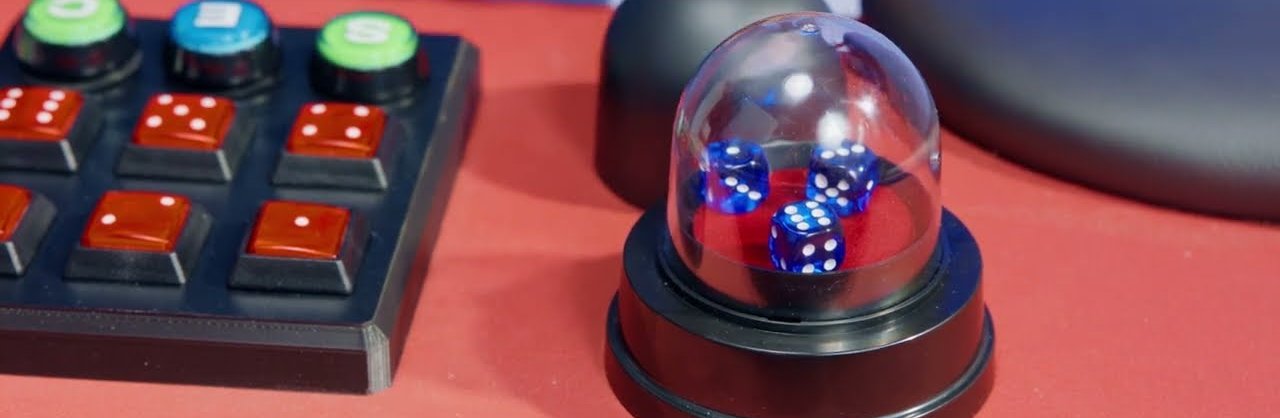
One sic bo layout holds the best bet and the worst bet on any casino floor. Small and Big cost 2.78 percent; a single named triple costs about 30 percent. Both sit on the same felt, both take the same chip, and nothing on the table tells a player which is which. For the wider market picture, start at our online casino Canada hub.
The table below sets out how the game behaves. Read it first, then work through the detail beneath.
| Trait | Detail |
|---|---|
| Equipment | Three dice in a shaker or a dome |
| Bet count | Around fifty distinct wagers on one layout |
| Best bet | Small or Big at 2.78 percent |
| Worst bet | A specific triple at roughly 30 percent |
| Decisions | None after the dice are thrown |
| Canadian supply | Ontario live lobbies and provincial platforms |
What is sic bo?
A dice game where three dice are thrown and players bet on the result. Every wager is placed before the throw and nothing is decided after it.
No skill applies at any point. Only bet selection matters.
The game is centuries old and reached Canadian floors through the same route as baccarat, following Asian casino traffic into western rooms. Its name translates roughly as dice pair, which undersells a game played with three.
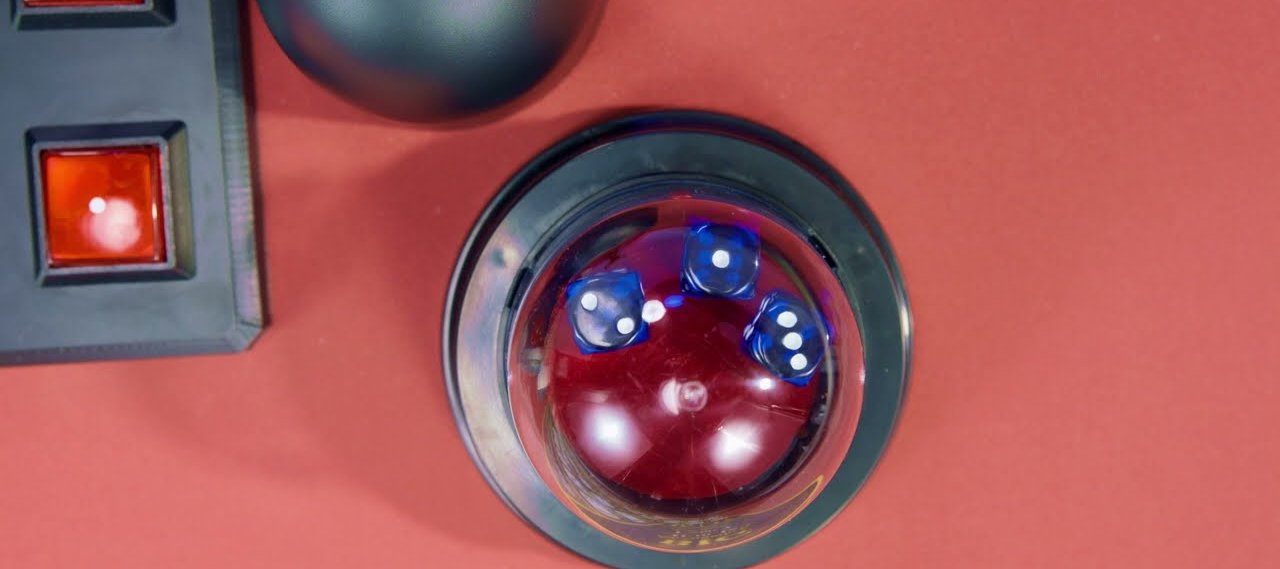
Equipment varies by venue. A land based sic bo table uses a mechanical shaker or a domed cage, and a live dealer studio uses an automated shaker filmed from above.
A Canadian meeting the layout for the first time usually finds it in the live dealer section rather than the table filter. The screen shows a grid of prices with no obvious entry point and no suggested bet anywhere on it.
That density is the first barrier. A sic bo table presents around fifty wagers at once where a roulette layout presents a handful of categories.
Table limits online run from small to substantial depending on the studio. A live sic bo table typically accepts a minimum around one dollar and a maximum well into the thousands on the even money wagers.
Layout language varies slightly between studios. Some call the even money pair Small and Big and others use Under and Over, and the rule underneath is identical.
Three dice produce two hundred and sixteen equally likely combinations. Every sic bo wager is priced against that number.
Canadians usually find the table in the live dealer filter rather than under table games. A sic bo layout sits beside baccarat and roulette in most studio listings.
The shaker does the work in a modern studio. A sic bo dome lifts and drops the dice automatically with no dealer touching them at any point.
Why does bet selection matter so much?
Because the house edge on one sic bo layout runs from under three percent to around thirty. No other casino game spreads its cost that widely across a single table.
The felt gives no warning. Every circle looks alike.
Compare it with roulette, where almost every bet on the layout carries the same 2.7 percent cost. A player there can back a number or a colour and pay the same rate either way.
Nothing like that applies here. Choosing badly on a sic bo layout costs ten times what choosing well does, and the table gives no indication which circle is which.
The spread is the single most important fact about the game and almost nothing on the table communicates it. Payout numbers are printed large and house edges are printed nowhere.
A player reading the layout as a menu of prizes will pick badly. Reading a sic bo table as a menu of costs produces a completely different set of chips.
Understanding the spread is worth more than any other piece of knowledge about the game. A Canadian who learns nothing else but sticks to the cheap corner is playing a genuinely competitive casino game.
The alternative is expensive. A sic bo session spread across the layout by instinct pays an average cost several times higher than a roulette wheel would charge.
The cheap corner and the expensive centre sit inches apart. Nothing on a sic bo felt separates them visually.
One decision covers the entire strategic content of the game. A sic bo player who makes it well has nothing further to learn.
What are the Small and Big bets?
Small wins on a total from four to ten, Big wins on eleven to seventeen, and both lose on any triple. They pay even money and carry the lowest edge on the table.
These are the bets worth making. Everything else costs more.
They sit at the outer edges of the layout and cover the bulk of possible outcomes between them. Small takes totals of four to ten and Big takes eleven to seventeen, splitting the range almost evenly.
Even money is the payout on both. Among sic bo wagers these are the only two that a Canadian playing for session length should be placing at all.
Coverage is what makes them cheap. Each side takes roughly half the possible outcomes, so the payout can sit at even money without the house needing a wide margin.
Consistency follows from that. A Canadian who backs only these two on a sic bo table sees a result on most throws rather than waiting for a rare one.
The probability works out at one hundred and five favourable outcomes each from two hundred and sixteen possible throws. Six triple outcomes are excluded and the remaining split is exactly even.
That symmetry is why both sides cost the same. Neither half of the sic bo even money pair is better value than the other.
They resolve on almost every throw. That frequency is what makes a sic bo session last.
Both sit at opposite ends of the layout and never overlap. A sic bo throw settles one or the other on every non triple result.
They are the two circles worth learning first. Everything else on a sic bo layout can be ignored indefinitely without cost.
Why do Small and Big lose on a triple?
Because the triple exclusion is what creates the house edge. Without it the two bets would be an even proposition, and the thirty five in two hundred and sixteen triple outcomes are what tilt them.
The rule is printed on the layout. It is not hidden.
Three matching dice produce six outcomes out of two hundred and sixteen combinations. Removing those from both even money bets is what converts a fair proposition into a 2.78 percent edge.
The exclusion is printed on every layout. A sic bo table hiding that condition would not clear certification in Ontario.
Certain tables offer Odd and Even as an alternative pair with the same structure and the same exclusion. The edge matches at 2.78 percent and the choice between them is arbitrary.
Both pairs are the cheap corner of the layout. Everything else on a sic bo felt costs at least four times more to play.
A handful of tables pay a reduced amount on triples rather than losing the bet outright. That variant is rare and worth taking where it appears because it lowers the cost further.
Standard rules lose the stake. A Canadian should assume the ordinary sic bo condition applies unless the layout says otherwise.
Six outcomes from two hundred and sixteen are excluded. That exclusion is the entire house edge.
Odd and Even carry the same exclusion where a table offers them. A sic bo player choosing between the two pairs is choosing a preference rather than a price.
What is a total bet?
A wager on the exact sum of the three dice, from four through seventeen. Payouts rise as the total becomes less likely, reaching sixty to one on four or seventeen.
Edges vary by total. None beat Small or Big.
Fourteen separate circles cover the possible sums. Four and seventeen are the rarest at three combinations each, and ten and eleven are the most common at twenty seven each.
Payouts move with rarity and never quite far enough. Every total bet on a sic bo layout costs more than the even money wagers beside it.
Three and eighteen do not appear as total bets because they are triples. The range therefore starts at four and ends at seventeen with fourteen circles in between.
Probability varies enormously across that range. A sic bo total of ten is nine times more likely than a total of four and the payout ladder never reflects that fully.
The distribution across totals is a familiar bell shape. Ten and eleven sit at the peak with twenty seven combinations each, and the tails at four and seventeen carry three combinations each.
Payout ladders flatten that curve unevenly. Every sic bo total bet costs more than the even money wagers and the extremes cost most of all.
Fourteen circles cover the range. Each carries its own probability and its own cost.
The circles run in a row across the middle of the felt. Every sic bo layout arranges them in ascending order from four.
Three and eighteen are absent because triples cover them. A sic bo total row therefore runs from four through seventeen and no further.
Which totals carry the lowest edge?
Ten and eleven, at roughly twelve and a half percent depending on the paytable. That is still four times the cost of an even money bet on the same felt.
Total bets are entertainment. They are not value.
Ten and eleven sit best because their probability is highest and the payout ladder treats them reasonably. Even so the cost is roughly twelve and a half percent depending on the table.
Four and seventeen are considerably worse. A sic bo total bet at the extremes can cost close to thirty percent on an unfavourable paytable.
Working one example through makes the gap visible. Ten appears twenty seven times in two hundred and sixteen combinations, which is odds of seven to one against, and the payout is usually six to one.
Four appears three times, which is seventy one to one against, and the payout is usually sixty to one. Both sic bo wagers look similar on the felt and cost very differently.
Nine and twelve sit close behind ten and eleven in both probability and cost. The four totals in the middle of the range are the least expensive of the fourteen available.
None of them approach the cheap corner. The best sic bo total bet still costs roughly four times what Small or Big does.
The middle of the range is the least bad. None of it competes with the even money pair.
The four central totals are the least expensive of the fourteen. Even so a sic bo total costs four times the even money rate.
Reading the ladder before choosing is the habit. A sic bo total is priced differently at every circle on the row.
What is a single number bet?
A wager that a chosen number appears on at least one die. It pays one to one for a single appearance, two to one for two, and three to one for all three.
The edge sits near seven point nine percent. Middling at best.
It is the closest thing on the layout to a beginner wager. A player names one number and collects if it appears on any of the three dice, with larger payouts for multiple appearances.
The edge sits near seven point nine percent. That places single number sic bo bets in the middle of the layout for cost rather than at the good end.
The multiple appearance payouts are what keep the cost moderate. A number landing twice pays two to one and three times pays three to one, which softens an otherwise poor proposition.
It remains nearly three times the cost of an even money bet. Single number sic bo wagers are approachable rather than good value.
Three of the six numbers appear on an average throw, so the bet lands more often than a newcomer expects. That frequency is exactly why it feels like a reasonable place to put chips.
Frequency and value are different things. A single number sic bo wager pays often and still costs nearly three times the even money rate.
It lands on most throws and pays modestly. A sic bo player mistakes that frequency for value.
Six circles cover it along one edge. A sic bo player backing all six is paying the edge six times over.
What is a double bet?
A wager that a chosen number appears on at least two dice. It typically pays ten to one and carries an edge around eighteen and a half percent.
The payout looks generous. The probability does not support it.
A player names one number and needs it on at least two dice. The probability is roughly one in sixteen and the standard payout of ten to one falls well short of that.
Eighteen and a half percent is a heavy price. Double bets look approachable on a sic bo layout and cost more than twice what a single number does.
Players reach for it because ten to one reads as generous beside an even money payout. The actual probability of a named number appearing twice or more is roughly six percent.
Fifteen to one would be the fair price. A sic bo double bet paying ten is among the more expensive options on the layout.
Six double circles exist, one for each number. Each covers the outcomes where that number lands on two or three dice, which is thirty two combinations from two hundred and sixteen.
The payout does not cover that gap. A sic bo double is one of the two or three most expensive standard wagers on the layout.
Six circles cover it, one per number. All six carry the same heavy cost.
The label sometimes reads Pair rather than Double. A sic bo layout means the same thing by either word.
What is a specific triple?
A wager that all three dice show one named number. It pays around one hundred and eighty to one against true odds of two hundred and fifteen to one.
The edge is roughly thirty percent. Avoid it entirely.
The odds are two hundred and fifteen to one against and the payout is usually one hundred and eighty to one. That gap is the largest on the table and among the largest anywhere in a casino.
Nothing about the wager is hidden. The specific triple circles sit in the middle of a sic bo layout looking exactly like every other option.
Certain tables pay one hundred and fifty to one and others pay two hundred. Even the generous version leaves an edge many times larger than the even money bets on the same felt.
The wager exists for the story rather than the return. A sic bo player chasing it is paying roughly thirty cents on the dollar for the privilege.
One outcome from two hundred and sixteen qualifies for each of the six circles. A player backing all six specific triples is effectively backing the any triple bet at a worse price.
The arithmetic is brutal and the felt says nothing about it. Specific triple sic bo circles sit in the centre of the layout beside far cheaper options.
Two hundred and fifteen to one against is the true price. The felt pays considerably less.
Six circles sit together in the centre of most layouts. Each sic bo triple covers exactly one outcome.
The payout looks enormous beside an even money bet. That contrast is what a sic bo layout is designed to create.
What is the any triple bet?
A wager that all three dice match, without naming which number. It pays around thirty to one and carries an edge near thirty percent as well.
Both triple bets cost the same. Neither is worth taking.
Six outcomes out of two hundred and sixteen qualify, which is one in thirty six. A payout of thirty to one against those odds produces an edge in the same region as the specific version.
Neither triple bet belongs in a session plan. Both exist on a sic bo layout to sell a large number rather than to offer value.
It is sometimes labelled All Triples or Any Triple depending on the studio. The bet covers all six matching outcomes at once and pays a correspondingly smaller multiple.
Neither label changes the arithmetic. Any triple wager on a sic bo layout costs around thirty percent regardless of what the felt calls it.
Thirty to one against odds of thirty five to one is a smaller gap than the specific version in absolute terms. The percentage cost works out in the same region because the base probability is so low.
Neither belongs in a session plan. Both triple wagers on a sic bo layout are priced for the story rather than the return.
Six qualifying outcomes exist in total. The payout never reflects how rare that is.
It is sometimes the last circle a newcomer notices. The any triple wager on a sic bo felt carries one of the two heaviest costs available.
What is a combination bet?
A wager that two named numbers both appear among the three dice. It pays five to one and carries an edge around eleven percent.
It sits mid table for cost. Better than triples, worse than Big.
A player names two different numbers and needs both among the three dice. Thirty of the two hundred and sixteen combinations qualify, giving odds of roughly six to one against.
The standard five to one payout produces an eleven percent edge. That makes combination sic bo bets better than triples and clearly worse than the even money pair.
Fifteen combination circles exist, covering every pair of different numbers from one and two through five and six. Each behaves identically in probability terms.
Eleven percent is a real cost and not the worst on the table. Combination sic bo bets sit above the single number wagers and well below the triples.
The bet is sometimes labelled Domino because the circles are drawn as two dice faces together. Recognising it on an unfamiliar layout takes one look at the pictures rather than the text.
Cost sits in the middle of the range. Combination sic bo wagers are the best of the exotic options and still four times the even money rate.
Fifteen circles cover every pair. Each behaves identically in cost terms.
The circles are drawn as dice faces rather than numbers. Recognising them on a sic bo felt takes one look.
Do payouts vary between tables?
Yes, and considerably. The same bet can pay fifty to one on one Canadian table and sixty on another, which moves the house edge by three or four points.
The paytable is printed on the felt. Read it first.
The variation is larger than most players expect. A total of four paying fifty to one rather than sixty moves that wager by four percentage points in the house favour.
Comparing two Canadian tables takes one look at each. A sic bo paytable is printed on the felt or in the rules screen and never hidden.
Total bets show the widest variation between studios. One table pays fifty to one on a total of four and another pays sixty, which is a difference of four percentage points on that wager.
Comparing two Canadian tables takes a minute. Every sic bo layout publishes its full ladder before a chip is placed.
Even money bets are the exception and almost never vary. Small and Big pay one to one everywhere, which is part of why they are the reliable choice across studios.
Everything else moves. Comparing two sic bo tables means comparing the totals, the doubles and the triples rather than the corners.
Comparing ladders is the useful check. Two sic bo tables can differ meaningfully.
Studio branding tells a player nothing about the ladder. Two sic bo tables from the same supplier can publish different numbers.
The even money pair is the constant. Every sic bo table pays one to one on Small and Big.
What is Super Sic Bo?
A live dealer version that applies random multipliers to selected bets before each throw. Multipliers can reach one thousand times and the base paytable is reduced to fund them.
The edge rises with the multipliers. Nothing is free.
A live dealer format that selects a handful of bets before each throw and applies a random multiplier to them. The largest multipliers reach one thousand times the stake.
Funding comes from the base paytable. A Super sic bo table pays less on standard wins so that the multiplier rounds can exist at all.
The multiplier selection happens before the throw and applies to four or five randomly chosen wagers. A player already holding one of those bets sees the multiplier applied automatically.
Chasing the multipliers is impossible. A Super sic bo player cannot know which bets will be enhanced until after their chips are down.
The format is a live studio product rather than a supplier wide standard. One major studio runs it and the presentation is built around the multiplier reveal before each throw.
Base payouts are reduced across the board to fund it. A Super sic bo table is a different paytable wearing the same layout.
The multipliers are drawn before the throw. Nothing about them can be anticipated.
The format runs alongside the standard table rather than replacing it. A studio offering Super sic bo usually offers the plain version too.
Is Super Sic Bo better value?
No. The multiplier rounds are paid for by cutting the standard payouts, and the resulting edge is higher than a plain table on the same bets.
The spectacle is real. The value is worse.
The honest answer is no. Multipliers apply to a small subset of bets on each throw and the reduced base payouts apply to every one of them.
Entertainment value is genuine. A Canadian choosing Super sic bo for the spectacle is making a fair trade, and one choosing it for value is not.
Comparing the two formats directly settles it. A standard table pays sixty to one on a total of four and the multiplier version pays considerably less before any enhancement applies.
The enhancement arrives rarely. A Super sic bo session mostly consists of reduced payouts with occasional large ones attached.
Running the numbers across a session settles the question. Multipliers land on a small share of wagers and the reduced base payouts apply to every single one.
The overall cost rises rather than falls. A Canadian choosing Super sic bo is buying entertainment and paying for it in expected return.
Reduced base payouts fund the enhancement. That trade favours the house.
The choice between formats is about entertainment rather than return. A Super sic bo table costs more per throw than the plain version.
Can you use a sic bo strategy?
Only through bet selection. No throw carries information about the next one, no pattern exists in the results, and no staking system changes the cost of a wager.
Sticking to Small and Big is the whole strategy.
Every throw is independent and the dice carry no memory. A run of Big results says nothing about the next throw, and no amount of tracking changes that.
Bet selection is the entire lever available. A sic bo player who stays on Small and Big is playing the cheapest version of the game that exists.
Systems sold as strategies usually cover staking rather than selection. Doubling, reversing and flat betting all leave the cost of each wager exactly where it was.
The layout itself is the only decision that matters. A sic bo player choosing Small and Big has already made the entire strategic choice available.
Result boards appear beside most live tables showing recent throws. They exist because players want them and they carry no predictive information whatsoever.
Reading a board changes nothing. Every sic bo throw is independent of every throw before it and the display is a record rather than a signal.
Bet selection is the only lever. Everything else is decoration.
The layout rewards restraint and nothing else. A sic bo session confined to two circles is the disciplined version of the game.
Nothing about the dice can be influenced. A sic bo player controls the chip and nothing beyond it.
Do progression systems work?
No. Doubling after a loss on an even money bet raises the size of the eventual loss rather than the chance of a win, and table limits cap the sequence anyway.
The edge applies to every throw. Sequences change nothing.
The mathematics are the same as on any even money proposition. Doubling after a loss wins back the sequence eventually or hits a table limit, and the expected cost never improves.
Bankroll damage is the real risk. A martingale on a sic bo table produces a rare large loss rather than a reliable small profit.
Table limits are the practical end of any progression. A sequence starting at the minimum reaches the maximum within five or six steps on most Canadian tables.
Reaching that ceiling turns a recoverable run into a fixed loss. A sic bo martingale converts frequent small wins into a rare very large defeat.
Flat betting is the honest alternative. Staking the same amount on the same wager every throw produces the published cost and nothing worse.
No sequence improves on that. A sic bo progression rearranges when the losses arrive without changing how large they are in total.
Table limits end every sequence eventually. The cost of each throw never moves.
Flat staking produces the published cost and nothing worse. No sic bo sequence improves on that figure.
How does sic bo compare with craps?
Craps carries a lower edge on its best bets and asks a player to learn a sequence of rolls. This game resolves every wager on a single throw with no come out phase at all.
Simplicity is the trade. It costs about two points.
Craps best bets run near one point four percent and its worst run near sixteen. The range is narrower at both ends than the dice game beside it.
Learning curve is the other difference. Craps requires understanding a come out roll and a point, and sic bo resolves everything on a single throw.
Craps also carries a long list of poor propositions in the centre of its layout. The difference is that craps offers a genuinely cheap set of bets at the edges and this game offers only two.
Table presence differs in Canada too. Craps appears on more land based floors and sic bo appears more often in live dealer lobbies.
Bet variety is comparable and the cheap end is not. Craps pass line with odds can approach half a percent, which nothing on this layout gets close to.
Speed favours the dice game here. A sic bo throw resolves every wager at once where craps runs a sequence before settling some of them.
Craps reaches lower at its cheapest. This layout resolves faster.
Both are dice games and the similarity stops there. A sic bo throw settles everything at once.
Where can Canadians play sic bo?
Live dealer lobbies on registered Ontario operators carry it, the provincial platforms run live versions, and a handful of land based floors deal it in person.
Software versions are rarer. Live tables dominate.
Live dealer lobbies on registered Ontario operators are the main route, usually through a studio supplying three or four tables. The provincial platforms list live versions as well.
Land based availability is patchier. A handful of Canadian floors deal sic bo in person and most do not carry it at all.
Studio coverage decides availability more than operator choice. A registered Ontario site carrying a major live studio usually carries the table, and one without that studio carries nothing.
Searching by name is quicker than browsing. A sic bo table surfaces immediately in the live dealer filter where it exists at all.
Provincial platforms list live versions alongside blackjack and roulette. That availability puts the game within reach of players outside the private Ontario market.
Private Ontario operators carry more variants. A registered site with a full studio agreement offers standard and multiplier sic bo tables together.
Live dealer lobbies are the main route. Software versions exist and attract little traffic.
Provincial platforms carry live versions too. That widens sic bo access beyond the private Ontario market.
Why is sic bo mostly a live game?
Because the appeal is watching three dice land rather than reading a result. A software version resolves instantly and loses the part players come for.
Live tables suit it. The format is visual.
Watching three dice tumble is the appeal, and a random number generator resolving instantly removes it. The format depends on the moment between the throw and the result.
Software versions exist and attract little traffic. A sic bo table filmed live holds an audience that a static screen does not.
The dice are the product. A studio filming a shaker from above with a result recognised automatically gives a player something to watch for the three seconds a throw takes.
Random number generator versions resolve in an instant. A software sic bo table technically works and removes the reason people play it.
Automated shakers replaced hand thrown dice in most studios. A mechanical dome lifts, the dice settle and a camera reads the result without a dealer touching anything.
That removes a dispute route entirely. A live sic bo result is recorded by equipment rather than called by a person.
The throw is the product. A generated result removes it.
Studio production is the reason the format survives online. A sic bo stream gives a player three seconds of genuine suspense per throw.
Is sic bo certified in Ontario?
Yes. Every table on a registered Ontario lobby has passed independent testing of the equipment, the paytables and the published return before deployment.
Live equipment is audited separately. Both layers apply.
Testing covers the shaker mechanism, the camera and recognition system on a live table, and the paytables offered on the layout. Certification is per table rather than per game.
Nothing about the equipment is left unchecked. A sic bo table on a registered Ontario lobby has been audited before a single bet is accepted.
Live equipment testing covers the shaker, the camera and the recognition software that reads the dice. Any failure in that chain voids the round rather than producing a disputed result.
Paytable accuracy is checked separately. A sic bo table on a registered Ontario lobby pays exactly what its layout prints.
The regulator publishes its registered supplier list openly. Confirming that a lobby offering the table operates legally takes one search rather than trust in a claim.
Studio audits cover the physical equipment separately. A sic bo table reaching an Ontario lobby has cleared both layers before accepting a bet.
Equipment and paytables are both tested. Certification is per table.
The regulator publishes its supplier list openly. Confirming a sic bo table is legal takes one search.
Does sic bo count toward wagering?
Usually at a reduced rate or not at all. Table games clear a bonus requirement more cheaply than slots, so the contribution table restricts them.
Check the rate before claiming. It is rarely full.
Contribution rates reflect expected cost to the operator. An even money bet at 2.78 percent clears a requirement far more cheaply than a slot at four or five percent.
Terms restrict it accordingly. Finding sic bo listed at ten percent or excluded outright is ordinary rather than unusual.
Excluded games sometimes void an entire bonus rather than simply contributing nothing. That clause matters more than the percentage printed beside the game name.
Rates differ per operator. One Ontario site may count sic bo at ten percent and another may exclude it from the offer completely.
Contribution tables sit in the account area rather than in the game. Reading where the table falls before claiming an offer is the whole check.
Assumptions are expensive here. A player clearing a bonus on sic bo without checking may find the wagering has not moved at all.
Rates differ per operator. Reading the clause matters more than the number.
Table games are restricted across the market for the same reason. A sic bo contribution rate of ten percent or zero is ordinary.
Is sic bo good for a small bankroll?
Only on the even money bets. Small and Big at a table minimum produce a long session with modest swings, and everything else on the layout burns a balance quickly.
Discipline is the requirement. The table offers no help.
The even money wagers behave predictably enough for a modest balance. Small and Big at a table minimum produce a long session with swings a player can absorb.
Everything else on the layout does the opposite. A sic bo session spent on totals and triples ends far sooner than the same balance suggests.
Session length is the measure worth protecting. Even money wagers at a table minimum produce enough resolved throws for a modest balance to last an evening.
Wandering onto the totals ends that quickly. A sic bo balance spread across the middle of the layout disappears four times faster than the same money on Small and Big.
Setting a throw count before sitting works better than setting a time. Fifty throws on the even money wagers is a measurable session with a known worst case attached.
Deposit limits sit inside every registered Ontario account. Setting one before opening a sic bo table is worth more than any approach to the layout.
Only on the even money wagers. The rest of the layout is not built for one.
Deposit limits sit inside every registered account. Setting one before opening a sic bo table is the practical step.
Session length comes from the even money pair. A sic bo balance spread wider than that ends early.
What should a Canadian check before playing sic bo?
Three things before the first throw. The paytable printed on the layout, whether the table applies multipliers, and the bonus contribution rate in the terms.
Then stay on Small and Big. That is the game.
All three sit in the client or on the felt rather than in a review. The paytable is printed on the layout, the multiplier format is named in the title, and the contribution rate sits in the bonus terms.
Reading takes under a minute. That minute is the difference between a 2.78 percent sic bo session and a thirty percent one.
A fourth check helps anyone new to the layout. Watching ten throws without betting shows how rarely the expensive circles land, which no written description communicates properly.
Ten throws take three minutes. That is the cheapest education a sic bo table offers and it costs nothing at all.
The routine generalises past one game. Reading the paytable, the format and the bonus terms works on every table in an Ontario lobby.
Bet selection is the part unique to this layout. Nothing else in the live dealer section spreads its cost across a ten to one range on the same felt.
All of it sits on the felt or in the terms. Nothing requires a deposit to read.
Which game pages are worth reading next?
Four pages sit closest to this one. Each covers a game or a rule that touches the subject above, and each stands on its own.
A sic bo layout is fifty wagers wearing the same uniform, and the difference between the cheapest and the dearest is more than ten times over. Read the felt before the chip goes down.
4 thoughts on “Sic Bo Canada: One Layout, Fifty Bets, Ten Times the Cost”