
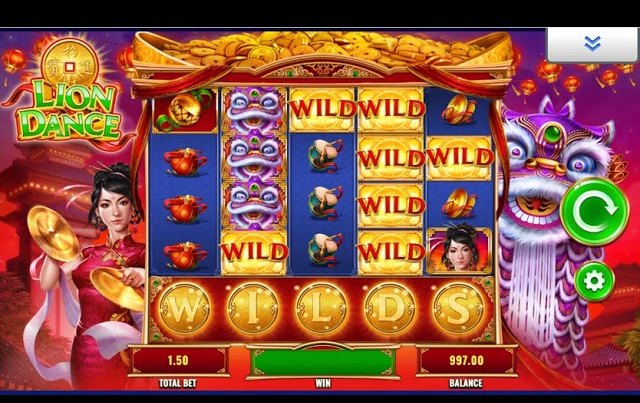
Asian slots are organised around numbers rather than around a feature. Eights, coins and four tier jackpot panels do the work that a book scatter does on the Egyptian shelf, and the result is a theme that reads the same on a casino floor and in a browser. For the wider market picture, start at our Canadian online casino hub.
The table below sets out what the Asian slots shelf delivers. Read it first, then work through the detail beneath.
| Trait | What it means |
|---|---|
| Organising idea | Numerology and coin collection rather than one feature |
| Signature structure | Four tier link and win jackpot panels |
| Colour language | Red and gold on almost every build |
| Return range | Roughly 92 to 96.5 percent across both channels |
| Volatility | Medium on the collection builds, high on the jackpot links |
| Where to play | Canadian casino floors and Ontario registered lobbies |
What are Asian slots?
Asian slots are titles built around East Asian iconography, using gold coins, dragons, paper lanterns, silver ingots and calligraphy characters as their paying symbols.
Asian slots span casino floors and online lobbies in roughly equal depth.
That balance is unusual across Asian slots. Most themes lean one way.

The symbol vocabulary is narrow and unusually disciplined. Gold coins, silver ingots, paper lanterns, koi, dragons and calligraphy characters fill the high paying rows, and the card royals beneath them are rendered in the same red and gold rather than in the studio house style.
What separates Asian slots from every other theme is the balance between channels. Egyptian titles live online, pirate titles live online, and Asian slots carry roughly equal weight on a Canadian casino floor and in a regulated browser lobby.
That balance exists because the mechanics travelled in both directions. A structure that worked on a cabinet was rebuilt for browsers, and browser native studios then built their own versions of the same idea for operators that had never owned a machine.
Canadian players therefore meet the Asian slots shelf twice. A brand recognised from a venue floor appears in an Ontario registered lobby carrying the same panel and a noticeably higher published return figure.
Lobby filters rarely separate the two traditions inside the Asian slots category, which is worth knowing before browsing. Selecting the Asian tag on an Ontario registered site returns cabinet conversions and browser native builds in one list, sorted by popularity rather than by origin, and the return figures across that list span several percentage points.
Why is the Asian theme so heavily represented?
Because it performs on floors and studios follow performance. North American venues found these machines held players longer than the average cabinet, and the online market copied the pattern once it existed.
Nothing about the artwork on Asian slots causes that. The mechanics underneath do.
Floor performance drove it and nothing else did. North American venues tracked how long players stayed on each cabinet, the machines carrying this artwork held attention longer than the floor average, and operators ordered more of them.
Suppliers responded to the orders rather than to any cultural theory. More units meant more sequels, and a category that started with six or seven titles grew into one of the largest categories on any casino floor in the country.
The online market inherited the result rather than repeating the experiment. Studios building for browsers saw which brands players already recognised and built Asian slots that borrowed the structure, the colours and frequently the panel layout outright.
None of that says anything about what the games return. It explains why Asian slots are crowded and nothing else about them.
Sequel density compounds the effect further. A brand that performs gets three or four follow ups within a couple of years, each carrying the same panel and a slightly different base game, and a single successful idea therefore occupies a dozen lobby positions rather than one.
What does the number eight mean on an Asian slot?
Eight is treated as a fortunate number in more than one East Asian tradition, and studios lean on it heavily.
Titles carry eight in the name, eight jackpot symbols or 88 paylines as a deliberate signal.
The number changes nothing mechanically on Asian slots. It is presentation.
Eight carries fortunate associations across more than one East Asian tradition, and studios use it as a signal rather than as a mechanic. A title named for the number, a panel showing eight symbols or a build advertising 88 paylines is communicating theme rather than arithmetic.
The usage is entirely presentational. Reel strips, trigger counts and certified return figures are set by the mathematics submitted to a laboratory, and no number in a title name influences any of them.
Players sometimes read the signal as a claim about odds. It is not one, and no regulator would permit a supplier to imply that a name changes an outcome.
Recognising the convention is still useful. A Canadian player scanning a lobby can identify Asian slots from the numbers in the titles alone, which is exactly the shortcut studios intended.
Regulators take the distinction seriously. A supplier cannot imply that a name, a colour or a number influences an outcome, and the certification process verifies that the mathematics matches the submission regardless of what the title is called.
What is a link and win jackpot family?
A group of titles sharing one four tier jackpot panel displayed above the reels. Coin symbols trigger a hold and respin round, and filling enough positions awards one of the tiers.
The panel is the Asian slots family signature. The base games differ.
The structure is the commercial core of Asian slots. A group of titles shares one panel showing four prize tiers above the reels, and every qualifying spin across the family feeds the same pools.
Entry runs through coin symbols rather than through a scatter. Landing six or more opens a hold and respin round, the coins lock in place, and filling enough positions awards the tier that corresponds to the fill.
Because the panel is shared, the pools grow far faster than a single title could support. That is the same logic behind every progressive network, applied to a theme rather than to a studio catalogue.
The base games underneath vary considerably. Two Asian slots carrying identical panels can run completely different reel sets, which is why the panel is a family marker rather than a description of the game.
Pool scope is the variable players most often misread. A panel on a floor bank shares its tiers among the machines in one room, and an online deployment can share the same tiers across every player on a site, which changes how fast the figures climb and how often they drop.
Family membership is worth checking before a session. Two Asian slots sharing a panel share the pool, so playing either one contributes to the same figure, and a player moving between them is not starting over. The rules screen names the family on most builds, and the panel artwork identifies it on the rest.
Which Asian slots are the best known?
88 Fortunes leads across North America, followed by Dragon Link, 5 Dragons, Lion Dance and Floating Dragon. Each runs a variation on coin collection with a tiered panel above it.
Availability differs by channel. The Asian slots shortlist changes slowly.
88 Fortunes sits at the top of the Asian slots category across North America and has done for years. The all up bet, the coin collection round and the four tier panel became the template that almost everything since has borrowed from.
The Dragon families from Aristocrat occupy the next tier and dominate Canadian casino floors in particular. Their linked banks with overhead jackpot displays are the visual signature of the Asian slots shelf in a physical venue.
Lion Dance, 5 Dragons and Floating Dragon fill out the recognisable set, and Ontario Lottery and Gaming carries Lion Dance in its own catalogue. Each runs coin collection with a tiered panel above it.
Beneath that tier sit hundreds of browser native releases. Return figures across them vary far more than the artwork suggests, which is the usual reason to open the rules screen on anything unfamiliar.
Recognition and value diverge here as they do on every crowded shelf. The titles Canadians name first are the ones promoted hardest on floors and in lobby rows, and the strongest published return figures across Asian slots usually sit on browser native releases most players have never opened.
Working past the promoted names is the practical advice. Filtering a Canadian lobby to the theme and reading three or four unfamiliar rules screens surfaces Asian slots that publish stronger figures than the brands the floor made famous.
What is 88 Fortunes?
The reference build for the whole shelf. A five reel grid with an optional all up bet, a coin symbol collection round and a four tier jackpot panel that the higher bet unlocks in full.
Everything in Asian slots since borrows at least part of it. The panel especially.
The title established the template and remains the reference point. Five reels, a modest base paytable and a coin symbol that carries a printed value scaled to the stake, all sitting beneath a panel showing four prize tiers.
The all up bet is the mechanic most players miss. Raising the stake to the stated level unlocks the full panel, and staking below it leaves the upper tiers unreachable regardless of what lands on the reels.
That rule is the single most important thing to read before playing this title or any of the Asian slots that copied it. A player at a low stake is funding a jackpot they cannot win.
Sequels and variants extended the idea rather than replacing it. Wider grids, extra reels and Megaways conversions all keep the panel and the all up bet in place.
Variants now stretch across several engines. Megaways conversions, hold and win extensions and higher volatility rebuilds all carry the brand, and each publishes its own return figure and its own qualifying stake, so the name alone no longer describes a single game.
What are the four jackpot tiers on these titles?
Mini, minor, major and grand, in ascending order. The lower two arrive regularly enough to feel reachable, and the grand sits far out of ordinary range and funds itself from every qualifying spin.
The tier names vary slightly by studio across Asian slots. The structure does not.
Mini, minor, major and grand describe the standard ladder, and the naming barely changes between suppliers. The lower two are sized to arrive often enough to feel reachable during an ordinary session.
The major tier sits an order of magnitude above them and arrives rarely. The grand tier sits an order of magnitude above that again and is the figure the overhead display or the browser panel advertises.
Funding runs upward from every qualifying spin. A small fraction of each stake feeds the pools, which is why a jackpot linked build publishes a lower base return than an unlinked title of similar design.
Which tier a round awards depends on how many positions fill. Most rounds reach the mini or minor level, and a complete grid fill is what most Asian slots reserve for the grand.
Drop frequency differs enormously between tiers and that is the point of the ladder. The mini tier can land several times in an evening across a busy deployment, and the grand tier on a wide pool may sit unclaimed for weeks, which is exactly what makes the advertised figure large.
What is a coin symbol on an Asian slot?
A special symbol carrying a printed cash value scaled to the stake. Landing enough of them opens a respin round where they lock in place and the grid fills position by position.
Reading an Asian slots coin needs no paytable. The value is printed on the face.
The coin is the engine of Asian slots. It carries a cash value printed on its face rather than a paytable multiple, which means a player reads the round without opening anything.
Values scale with the stake automatically. A coin showing ten times the line bet displays a larger figure at a higher stake, and the proportion stays identical, which keeps the round readable at every level.
Special coins extend the idea on stronger builds. Collector coins that absorb every other value on the grid, multiplier coins that scale the total and jackpot coins that award a tier outright all appear as variations.
Reading which special coins a title carries takes one line of the rules screen. It predicts the ceiling on these Asian slots far better than the advertised jackpot figure does.
Counting the coin positions on the grid is a quick way to read the ceiling. A build with fifteen positions and a grand tier reserved for a complete fill is a far harsher proposition than one awarding the grand at twelve, and both numbers sit in the rules screen.
Why do Asian slots use red and gold?
Both colours carry positive associations in the traditions the artwork draws on, and both read clearly at a distance on a crowded casino floor.
The combination became a shorthand players recognise instantly.
Recognition is the entire purpose across Asian slots. It travels to browsers unchanged.
Both colours carry positive associations in the traditions the artwork draws on, and studios lean on that association openly. The combination signals the theme before a player reads a single symbol.
Floor practicality reinforced it. Red and gold read clearly across a crowded venue under bright lighting, and a bank of machines carrying that palette is visible from further away than a muted cabinet.
The convention travelled to browsers unchanged. A lobby thumbnail in red and gold identifies Asian slots at a glance, which is the entire purpose of a thumbnail on a page listing thousands of titles.
Departing from the palette costs recognition and gains nothing. That is why the Asian slots shelf looks as uniform as it does.
Contrast is the practical reason the palette persists in browsers. Gold symbols on a red field remain legible at thumbnail size on a phone, where a muted or pastel palette becomes indistinguishable from the tile beside it.
Do Asian slots share one mechanic?
Mostly yes, which separates them from several other themes. Coin collection with a tiered panel appears across the majority of the Asian slots shelf, and the variations sit in grid size and trigger rules.
A minority of Asian slots run conventional free spins. The panel is still there.
More than most shelves, which is worth stating plainly. Coin collection with a tiered panel appears across the clear majority of Asian slots, and a player who learns one title has learned the structure of most of the rest.
The variations sit in the details rather than the shape. Grid size, the number of coins needed to trigger, whether the panel is progressive or fixed and whether an all up bet applies all differ between builds.
A minority run conventional free spins instead. Those titles usually keep the panel anyway, triggered separately, because the panel is what players recognise.
That consistency makes Asian slots unusually easy to compare. Two titles can be assessed against each other on four numbers, where a crowded theme like the Irish shelf requires reading the whole rules screen.
That predictability is genuinely useful for a Canadian player comparing options. Four numbers describe almost any title on the Asian slots shelf, and once a player knows which four to read the whole category becomes quick to assess.
What return figures do Asian slots publish?
The range runs wide because the Asian slots shelf spans two channels. Floor configurations sit in the low nineties, and online builds of the same brands publish figures several points higher.
Online Asian slots state the deployed figure in the rules screen. Floors rarely disclose it.
The spread is wide because the Asian slots shelf crosses two channels with different economics. Floor configurations in Canadian venues sit in the low nineties, and online builds of the same brands publish four or five points higher.
Within the online market the range narrows considerably. Most browser native Asian slots ship between 94 and 96 percent, with jackpot linked versions sitting at the lower end to fund the pools.
Multiple certified versions complicate comparison further. Popular titles ship at more than one percentage and the operator selects which to deploy, so an affiliate table quoting one figure describes one deployment.
Reading the running client settles it. On a regulated Canadian site the deployed figure is stated inside the game, and it is the only number describing what a session costs.
Channel is the largest single variable and it dwarfs the differences between studios. A cabinet configuration and a browser build of the same brand can sit four or five percentage points apart, which over a session outweighs every difference in feature design.
How volatile are Asian slots?
The collection builds run medium and the jackpot linked versions run high. A four tier panel funded from ordinary play thins the base game exactly as it does on any linked build.
The panel is the signal across Asian slots. If it is there, expect variance.
The panel is the reliable signal. A title funding four progressive tiers has to take value out of ordinary play, which produces a thinner base game and longer stretches between coin collection rounds.
Unlinked collection builds run medium. Coins arrive often enough to keep a balance moving, the respin round pays modestly on a partial fill, and the outcome distribution stays narrow by comparison.
Grid size shifts it further. A six reel or Megaways conversion of an Asian title runs hotter than the five reel original wearing the same artwork, because the route count adds variance on its own.
The volatility rating in the rules screen resolves any individual case. It reflects the certified distribution rather than a marketing description.
Matching the rating to a balance is the practical response. A balance covering two hundred spins suits an unlinked collection build and will frequently end before a jackpot linked title has opened its respin round even once.
Comparing across the Asian slots category makes the split obvious. Unlinked Asian slots sit where a player expects steady small returns from the coin round, jackpot linked Asian slots sit a full band higher, and Megaways conversions of either sit higher again. Three titles under similar red and gold artwork can therefore occupy three different volatility bands.
Do Asian slots have progressive jackpots?
Most do, and that is the defining commercial feature. The four tiers grow from qualifying spins across a bank of machines or across an operator, and the grand tier is what the marketing sells.
A minority of Asian slots carry fixed tiers instead. The display looks identical.
The majority do and it is the defining commercial feature of the Asian slots shelf. Pools grow from qualifying spins across a linked bank in a venue or across an operator deployment online.
Pool scope varies more than players expect. A floor bank shares its tiers among the machines in one room, and an online deployment can share them across every player on a site or across several sites at once.
A minority carry fixed tiers that look identical on screen. The panel displays four values, they simply do not grow, and the rules screen states which arrangement applies.
The distinction matters for expectation rather than for strategy. A fixed grand tier is reached more often and pays far less than a network pool that has been growing for weeks.
Seeding matters as well and it is rarely explained. A pool resets to a stated seed value after it drops rather than to zero, so a jackpot claimed yesterday is not starting from nothing today, and the panel shows the current figure rather than the seed.
What is a hold and respin round on an Asian slot?
The standard structure across the Asian slots shelf. Coin symbols lock, a counter resets whenever a new one lands, and the round ends when the counter empties or the grid fills completely.
On most Asian slots a full grid awards the grand tier. That is the ceiling.
The round is the same structure the whole market now uses, and Asian slots are one of the places it became standard. Coins lock, everything else respins, and a counter starting at three resets whenever a new coin lands.
The counter shapes the distribution completely. Three respins keeps a partially filled grid alive briefly and makes a complete fill rare, which is why most rounds end with a modest total from the mini or minor tier.
Filling the grid entirely is the ceiling event. On most Asian slots that awards the grand tier outright, and it is the outcome the overhead display or the browser panel has been advertising throughout.
Reading the trigger count and the tier rules takes one line each. Together they describe the round more accurately than any amount of watching it play out.
Special coins are where the strongest builds separate themselves. A collector coin that absorbs every value on the grid can turn a modest fill into a substantial total, and whether a title carries one is stated in a single line of the rules screen.
Where can Canadians play Asian slots?
Both channels carry them. Canadian casino floors list several of the major brands, and Ontario registered operators carry online versions alongside browser native titles that never existed as cabinets.
Online Asian slots publish higher figures. That difference is consistent.
Canadian casino floors carry the deepest physical selection. Provincial venues across Ontario, Quebec, British Columbia and Alberta all list the major brands, frequently on linked banks with overhead jackpot displays.
Ontario registered operators carry the online equivalent. Light and Wonder, Aristocrat, Pragmatic Play and Playtech all hold supplier registration, so browser versions appear as certified builds with the return figure stated inside.
Browser native titles fill out the online shelf further. Studios that never built cabinets ship their own versions of coin collection with a tiered panel, and those frequently publish the strongest figures in the Asian slots category.
The certified package is identical wherever an online title is deployed. What differs is the return version an operator selected and how deep the catalogue runs.
Finding a specific title is an operator question rather than a market question. A player unable to locate a particular brand on one Ontario registered lobby will frequently find it on another without leaving the regulated market at all.
Do provincial crown platforms carry Asian slots?
Selected titles appear. Ontario Lottery and Gaming lists Lion Dance in its own catalogue, and the other provincial operators each carry a curated selection shaped by supplier agreements.
Crown floors carry far more Asian slots. Procurement runs separately.
Crown catalogues are curated rather than comprehensive, which shapes what reaches them. A provincial operator lists a few hundred titles online where a registered private operator lists thousands.
The Asian slots that make that list are the recognisable ones. Ontario Lottery and Gaming carries Lion Dance, and the other provincial operators each run five or six major brands rather than the deeper catalogue.
The same operators carry far more of the Asian slots shelf on their physical floors. Cabinet procurement and digital licensing run through separate processes with separate budgets, which is why the two catalogues diverge.
Where a title does appear online it arrives as a certified build. The return version is selected by the operator and stated inside the game exactly as on a private lobby.
Update pace differs as well. A registered private operator adds releases weekly and a provincial platform reviews its catalogue far less often, so the crown selection reflects earlier decisions rather than the current release schedule.
Which studios build Asian slots?
Light and Wonder holds 88 Fortunes, Aristocrat holds the Dragon families, and Pragmatic Play, Playtech and dozens of smaller studios all ship browser native versions of the same structure.
Studio origin predicts the Asian slots panel design. It predicts little else.
Light and Wonder holds the reference build through 88 Fortunes and continues extending the family. Aristocrat holds the Dragon lines that dominate Canadian floors, and both companies ship online adaptations alongside the cabinets.
Browser native studios fill the rest. Pragmatic Play, Playtech, PG Soft and dozens of smaller teams all publish versions of coin collection with a tiered panel, aimed squarely at players who recognise the structure from a venue.
Studio origin predicts the panel design and the trigger rules reasonably well. It predicts nothing about the certified return figure, which varies more inside a studio catalogue than between studios.
Filtering a Canadian lobby by supplier is the fastest way to separate the traditions. The cabinet adaptations and the browser native builds sit in different parts of the return range.
Filtering by supplier is the fastest way to separate cabinet conversions from browser native builds. The conversions cluster at the lower end of the return range and the native builds cluster at the upper end, which makes the filter a rough value sort on its own.
Do Asian slots use the same symbols every time?
Close to it. Gold coins, ingots, lanterns, koi, dragons and calligraphy characters appear across most Asian slots, above card royals rendered in red and gold.
Departing from the Asian slots vocabulary costs recognition. Studios rarely try.
The core set barely moves across the Asian slots shelf. Gold coins, silver ingots, lanterns, koi, dragons and calligraphy characters appear on the majority of builds, with card royals in red and gold beneath them.
Studios treat that consistency as an asset. A player scanning a lobby recognises the Asian slots category instantly, and departing from the vocabulary would cost more in recognition than any originality could return.
Variation sits in the peripheral symbols and in the panel artwork. Fans, drums, temples, tigers and firecrackers fill out individual builds without changing what the collection round underneath does.
None of it predicts the mechanics. Two Asian slots with near identical symbol sets can run a fixed panel and a network progressive respectively, which is exactly why the artwork is the wrong thing to read.
Panel artwork is where studios do most of their differentiating. The four tier display above the reels carries the brand identity, and a player familiar with one family recognises its panel instantly on a lobby page full of similar thumbnails.
Are Asian slots good for a small bankroll?
The collection builds are reasonable and the jackpot linked versions are not. A title funding four tiers runs a thin base game, and a modest balance frequently ends before the respin round arrives.
Qualifying bet rules matter most on Asian slots. Below them the tiers are unreachable.
The answer splits along the panel. An unlinked collection build pays often enough to stretch a modest balance across a long session, and a jackpot linked title thins the base game to fund four tiers.
Qualifying bet rules make the split sharper than it looks. Many jackpot linked Asian slots require a stated minimum stake before a spin becomes eligible for the upper tiers, and that minimum frequently sits above what a small balance can sustain.
Playing below the qualifying line is the worst of both positions. The base game is still thinned to fund the pools, and the player cannot reach the tiers that the thinning pays for.
Reading that line before the first spin is the single most valuable check on this shelf. It is stated in the rules screen and it is easy to miss.
Choosing an unlinked build is the honest alternative to raising the stake. Collection titles without progressive tiers publish higher base return figures, pay more often and carry no qualifying stake, which suits a modest balance far better than chasing a panel.
How do Asian slots differ from each other?
By grid size, by trigger count and by whether the tiers are progressive or fixed. Those three decide the session shape far more than the artwork or the studio badge does.
The all up bet is the fourth Asian slots variable. It changes eligibility.
Start with the panel. Progressive tiers and fixed tiers look identical on screen and behave completely differently, and the rules screen states which applies in one line.
The trigger count comes second. A round opening on six coins arrives far more often than one requiring eight, and the reward structure is scaled accordingly.
Grid size is the third axis. Five by three originals, six reel extensions and Megaways conversions all wear the same artwork and produce very different base game rhythms.
The all up bet is the fourth and the one players overlook. It decides eligibility rather than reward, and on the titles that carry it nothing else about the session matters as much.
Special coin rules form a fifth variable worth checking. Collector coins, multiplier coins and coins that award a tier outright change the ceiling substantially, and two Asian slots with identical panels can differ entirely on this point.
Do land based and online Asian slots differ?
In the return figure, substantially. A floor cabinet carries venue costs funded from the same return, and the online build of the same brand carries none of them and publishes a higher percentage.
Asian slots mechanics travel intact between channels. The numbers do not.
In the return figure, substantially and consistently. A floor cabinet is funded from the same return as the player payouts, covering the machine, the space, the staff and the venue overhead, and regulators permit a lower percentage as a result.
An online build carries none of those costs. The same brand in a browser publishes a figure several points higher, which is the largest single difference between the two channels and the one least visible to a player.
Mechanics travel intact. The coin collection round, the tier structure and the trigger counts are rebuilt faithfully, so a player who knows the cabinet knows the browser version immediately.
Pool scope is the other difference. A floor bank shares its jackpot among the machines in the room, and an online deployment can share it far more widely, which changes how fast the tiers grow.
Disclosure is the other asymmetry. A regulated Canadian online build has to state its return figure inside the game, and a floor cabinet carries no equivalent requirement at the machine, so a player in a venue is working without the number that matters most.
Pace differs as well and it changes the arithmetic of a session. A cabinet resolves a spin on a fixed cycle and a browser build resolves as fast as a player presses, so the same balance covers the same number of spins in far less time online. On a high variance jackpot linked title that acceleration matters more than it does anywhere else on the Asian slots shelf.
What should you check before playing an Asian slot?
Three things in the rules screen. The published return figure, whether the tiers are progressive or fixed, and what qualifying bet the jackpot panel requires.
The third is the one Asian slots players miss. It decides eligibility entirely.
The return figure comes first because it is the only number describing cost, and on this shelf the channel gap alone can exceed four percentage points between a cabinet and its browser equivalent.
The panel type comes second. Progressive tiers and fixed tiers change the base game, the hit rate and the ceiling together, and they are indistinguishable from the artwork.
The qualifying bet comes third and it is the one most players never read. Below that stake the upper tiers are simply unavailable, regardless of how the round plays out.
Read those three alongside the volatility rating and the coin trigger count, and an Asian slot is fully described before the first spin. The whole check takes under a minute.
One habit covers all of it. Open the rules screen before the first spin, read the four numbers it holds, and treat the panel above the reels as advertising rather than as information. Asian slots reward that order of reading because the panel is designed to be the first thing a player looks at.
Writing the four numbers down before a session is a habit worth forming on this shelf. Return figure, panel type, qualifying bet and coin trigger count describe any of these Asian slots accurately enough to decide, and all four sit in one screen that takes under a minute to read.
Which slot pages are worth reading next?
A theme sits on top of a mechanic, a scoring rule and a published return figure. The pages below cover the parts of a slot that a red and gold thumbnail never tells you anything about.
- The collection round this shelf runs on
- How a four tier pool actually pays
- The supplier behind the Dragon families
- Titles with the strongest published return figures
- The other shelf built on locking symbols
Asian slots sell a jackpot panel rather than a feature, and the qualifying bet is the number that decides whether the panel is even in play. Read it alongside the published return figure before the first spin, and a shelf that looks uniform from a lobby page separates into builds worth a session and builds that are not. The channel gap between a casino floor cabinet and its browser equivalent is the largest single difference across the Asian slots category, and it is invisible until the rules screen is open.