

Everybody in an Aviator round is on the same plane. One curve climbs for every player at once, the bets and the cash-outs scroll down the side of the screen, and the person who left at two times watched the person who held to fifty. For the wider market picture, start at our online casino Canada hub.
The table below sets out how the game behaves. Read it first, then work through the detail beneath.
| Trait | Detail |
|---|---|
| Developer | Spribe |
| Format | A shared multiplayer round rather than a solo spin |
| Published return | 97 percent |
| Bet panel | Two independent bets per round |
| Round length | Usually under thirty seconds |
| Canadian supply | Ontario registered operators |
What is the Aviator game?
The Aviator game is a multiplayer round where a multiplier climbs from one and stops without warning. A player cashes out before the stop or loses the stake, and everybody in the lobby shares the identical curve.
There are no reels and no cards. One number rises.
The format has a name of its own now. Crash games describe any title where a rising figure stops without warning, and the Aviator game is the build that carried the category out of crypto lobbies and into regulated Canadian ones.
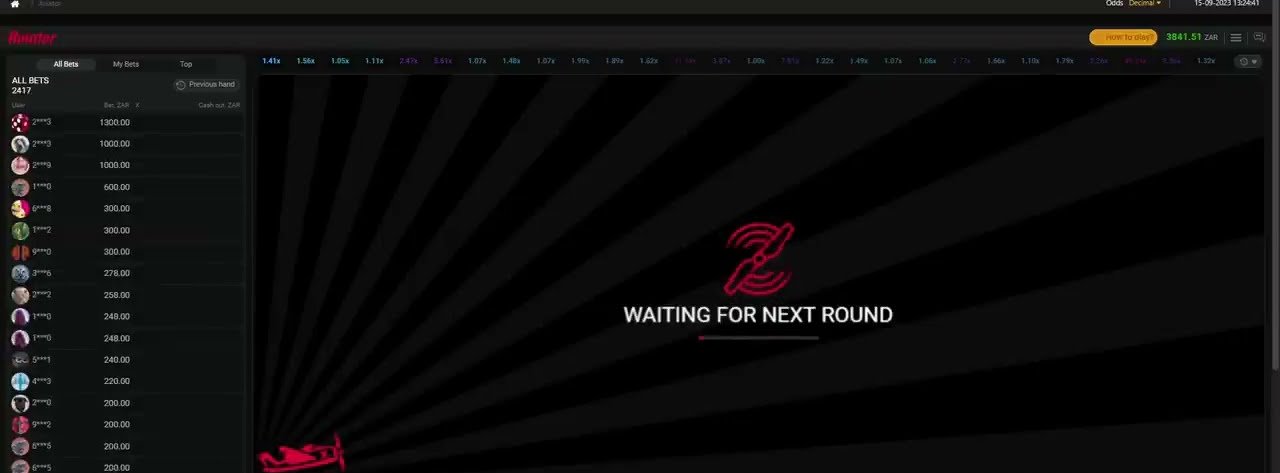
Everything happens on one screen. A curve, a multiplier, a bet panel and a scrolling list of other players cover the entire interface with nothing hidden behind a menu.
A Canadian meeting the format for the first time usually finds it through a lobby category rather than a search. The crash row sits beside the slot rows, and the Aviator game is almost always the first tile in it.
Nothing about the interface needs a tutorial. A curve, a number and two buttons cover the whole game, which is a large part of why it spread as fast as it did.
The name is now used loosely for the whole category. A Canadian searching for it will find a dozen clones alongside the Aviator game itself in an Ontario lobby.
The format arrived in Canada through Ontario rather than through a crown platform. Private registered operators stocked the Aviator game first and the category grew around it from there.
Who makes the Aviator game?
Spribe, a developer that built its business around this single format rather than a catalogue. The studio licenses the game to operators worldwide and the title now appears far beyond its original markets.
Imitations are everywhere. The original carries the Spribe name.
The studio is small by supplier standards and built its distribution on one title. That concentration is unusual in an industry where a catalogue of two hundred games is considered modest.
Clones arrived within a year of launch. Dozens of near identical builds now sit in lobbies under different names, and the Aviator game remains the one Canadians search for by name.
Distribution runs through operators rather than through a storefront. The studio signs supply agreements the same way a slot supplier does, and each market requires its own certification before the title appears.
Telling the original from a clone takes one look at the loading screen. The Aviator game carries the developer name, and the imitations carry somebody else.
The developer also ships a small range of other instant titles. None of them reached the distribution the Aviator game did, and the studio is known for one product.
The developer sits inside a larger group now after an acquisition, and the certification and supply agreements carried across unchanged. Nothing about the Aviator game itself moved when the ownership did.
Why is the Aviator game multiplayer?
Because one curve runs for every player in the lobby at the same moment. That single design decision is what separates it from a slot, where each spin belongs to one account and nobody else sees it.
The shared round creates the atmosphere. It also creates the pressure.
A slot isolates every player deliberately. Nobody sees another account spinning, nobody knows what anybody else staked, and the result belongs to one session alone from start to finish.
This format inverts that completely. The Aviator game runs one round for the whole lobby, which means a player watches other people win and lose the same curve in real time.
The shared round is also what makes the format cheap to run. One outcome serves every player in the lobby at once, so the server calculates a single result rather than thousands of independent ones.
Players experience it as an audience. That is the design working, and it is the part of the Aviator game that separates it from every slot in the same lobby.
Nothing about the shared round changes an individual result. Every player in the Aviator game wins or loses against the same curve on their own terms.
What does the side panel show?
Every other player in the round, their stake and the multiplier they took. The list updates live as people leave the flight, and it stays on screen after the plane departs.
Nothing on that panel is private. That is the whole point.
Two lists run down the side of the screen. One carries the current round with every live bet, and the other carries previous rounds with the multiplier each one stopped at.
Both are visible without opening anything. The Aviator game puts the entire social layer on the main screen rather than behind a tab nobody would click.
Usernames are partially masked and the figures are not. A player sees the stake and the exit multiplier of everybody in the round, which is information no slot lobby has ever exposed.
The effect on behaviour is measurable. Watching a large exit scroll past while holding a small bet is exactly the pressure the Aviator game is built to create.
The panel can be collapsed on most deployments. Playing the Aviator game with it hidden removes the social pressure entirely and changes nothing about the odds.
A separate chat window runs alongside the round on some deployments. It carries no information about the curve and it can be closed the same way the bet list can.
Does watching other players help?
No. Their cash-outs carry no information about when the current round stops, because the stopping point was fixed before the round opened rather than during it.
The panel is entertainment. Treating it as data costs money.
The instinct is powerful and completely wrong. Seeing somebody hold to a high multiplier creates a pull toward doing the same, and the next round has no relationship with the last one whatsoever.
The previous rounds list produces the same illusion. A run of low multipliers on the Aviator game says nothing about whether the next curve climbs or stops immediately.
The previous rounds strip encourages the same error in a different form. A player reads a pattern into a list of numbers that was generated independently round after round.
No sequence carries forward. The Aviator game fixes each stopping point before its betting window opens, and the list behind it is a record rather than a signal.
Chasing a multiplier somebody else took is the most expensive habit in the format. The Aviator game rewards a fixed plan far more reliably than a reactive one.
How does a round work?
Bets are placed during a short window before takeoff. The plane then climbs, the multiplier rises with it, and the round ends the instant the plane leaves the screen.
Anyone still holding a bet loses it. Timing is everything.
The cycle repeats without pause. A betting window opens, the plane takes off, the multiplier climbs, the plane departs, and the next window opens within a few seconds of the last one closing.
Cashing out is one button. A player taps it at whatever figure the multiplier shows, and the stake multiplied by that figure lands in the balance immediately.
Missing the betting window is common early on. Bets placed after takeoff queue for the next round rather than joining the current one, which surprises a player who was watching the curve instead of the panel.
The queue behaviour is stated on the panel. It is one of the few parts of the Aviator game that rewards reading before playing.
Cashing out partially is not available. The Aviator game settles each bet in full at whatever multiplier the button was pressed on.
The betting window is short and clearly marked. A countdown bar runs under the panel, and the Aviator game closes entries the moment it empties rather than at takeoff.
How long is a round?
Usually under thirty seconds, and frequently far shorter. A round can end at one point zero one times before anybody has reacted, which is an ordinary outcome rather than a fault.
Speed is the risk here. Nothing slows a session down.
Round length varies enormously because the stopping point varies. Some rounds end almost instantly at barely above one time the stake, and others climb for a minute past figures nobody expected.
The short rounds are the common case. A Canadian new to the Aviator game usually underestimates how often the plane leaves before anything happens at all.
The pace is the defining risk of the format. A slot at three seconds a spin gives a player time to notice a balance falling, and a cycle this fast removes that pause entirely.
Session length is worth setting in advance. Thirty minutes on the Aviator game covers far more rounds than thirty minutes on a slot ever would.
Counting rounds rather than minutes is the useful habit. An hour on the Aviator game covers several hundred decisions rather than the eighty a slot would deliver.
What return does the Aviator game publish?
Ninety seven percent, which sits above almost every slot in a Canadian lobby. That figure holds regardless of what multiplier a player targets or how early they cash out.
Strategy changes variance and not the percentage. That never moves.
Ninety seven percent is a genuinely strong figure for a Canadian lobby. Most slots on the same site sit between ninety four and ninety six, so the gap is a full point or more in the player favour.
The figure is certified rather than advertised. An Ontario registered operator runs a tested build, and the Aviator game publishes the same percentage across every certified deployment.
A published percentage describes millions of rounds rather than an evening. Ninety seven percent still allows a long run of departures below two times, and the figure remains entirely accurate through it.
Comparing across categories is where it helps. The Aviator game returns more than nearly every slot beside it, and the distribution is the part that differs.
The figure applies to the certified build an Ontario operator deployed. Checking it in the rules panel on the Aviator game takes one glance.
No setting on the panel changes the percentage. A player exiting at one point two and a player holding to twenty receive the same long run return from the Aviator game.
What is the auto cash out setting?
A field where a player enters a multiplier and the game exits automatically when it arrives. The bet leaves the round at that figure without needing a reaction from the player at all.
It removes hesitation from the decision. Discipline improves instantly.
The field sits directly on the bet panel rather than in a settings menu. A player types a multiplier, switches the toggle on, and every subsequent round exits automatically at that figure.
Reaction time stops mattering entirely. That is the single most useful control the Aviator game offers, and a large share of players never switch it on.
The toggle persists between sessions on most deployments. A player returning to the game should check the field rather than assume it reset, because an old target applies immediately on the first round.
Manual play is still available alongside it. The Aviator game allows a player to run one panel automatically and take the second by hand.
Setting it low is the conservative route and setting it high is not. Either way the Aviator game returns the same percentage across a long enough run.
Why does the Aviator game have two bet panels?
Because the design expects a split. Most players stake one bet with an auto cash out low enough to return regularly, and let the second ride toward a figure that rarely arrives.
Both bets run in the same round. Neither affects the other.
The second panel is not a gimmick. Running two stakes with different auto cash out figures is the closest thing the format has to a structure, and the interface was built around that habit.
Both bets are independent. One can exit at one point five while the other rides, and the Aviator game settles each separately against the same curve.
The split is not compulsory and plenty of players use one. Staking a single bet with a fixed target is a perfectly coherent approach and it halves the money at risk per round.
The interface simply allows the other habit. Nothing in the Aviator game rewards using both panels beyond the pattern a player prefers.
Both panels draw from the same balance. Two stakes of a dollar each cost two dollars per round on the Aviator game.
What is a good auto cash out figure?
There is no correct answer, only a trade a player chooses. A low figure returns often and adds little, and a high figure returns rarely and adds a great deal when it lands.
The published percentage is identical either way. Only variance moves.
The arithmetic is worth understanding once. A target of two times has to land roughly half the time to break even, and a target of ten times has to land roughly a tenth of the time.
Neither target beats the other on value. The Aviator game returns ninety seven percent at every setting, and the choice is purely about how a session feels.
A low target produces a long flat session with small movements. A high target produces long stretches of nothing punctuated by a result that recovers a great deal at once.
Both paths return the same percentage over time. Choosing between them on the Aviator game is a question about temperament rather than about value.
Changing the target mid session resets nothing. The Aviator game applies the new figure from the next round onward.
Mixing the two targets across the panels is where most regular players end up. One low figure covers the round cost and one high figure carries whatever the Aviator game gives beyond it.
Is the Aviator game provably fair?
Yes, and the mechanism is unusual for a regulated lobby. The result of each round is generated from seeds contributed by players rather than by the server alone, and anybody can verify it afterwards.
Ontario certification sits on top of that. Both apply here.
The mechanism is genuinely unusual for a regulated market. Three players from the round contribute client seeds, the server contributes its own, and the combination decides where the plane departs.
No single party controls the result. The operator cannot see the outcome in advance, which is a stronger claim than a certified generator alone makes.
The system predates the regulated deployment. It was built for crypto lobbies where a player had no regulator to appeal to, and the mechanism travelled into Ontario unchanged.
Certification answers a different question. A laboratory verifies that the Aviator game returns its published percentage over time, and the seed system verifies one individual round.
Both systems can be verified independently. The seed calculation is public and the laboratory certificate behind the Aviator game is filed with the provincial regulator.
How do you verify a round?
The round history panel exposes the server seed and the client seeds used. Recalculating the hash reproduces the multiplier the round stopped at, which confirms nothing was altered after bets closed.
Most players never open it. The panel exists regardless.
The history panel is the entry point. Selecting any past round opens the seeds used, the resulting hash and the multiplier it produced, with a link to the calculation.
Verification proves the round rather than the game. Confirming one result on the Aviator game says nothing about the long run percentage, which is what the laboratory certificate covers.
The calculation is published rather than proprietary. Anybody with the seeds can reproduce the result using a standard hash function, and independent tools exist for doing exactly that.
Almost nobody bothers. The value of the system on the Aviator game is that verification is possible rather than that players perform it.
Seeds rotate between rounds. Verification on the Aviator game covers the round it belongs to and nothing before or after it.
Do prediction tools work?
No, and every application claiming otherwise is selling something. The stopping multiplier is fixed before the betting window closes, so no pattern in earlier rounds carries into the next one.
Those applications are a scam without exception. Avoid them entirely.
The market for these applications is enormous and entirely fraudulent. They charge for a signal that cannot exist, because the stopping multiplier is fixed before any bet is accepted.
Installing one carries a real cost beyond the fee. Applications demanding account credentials to run alongside the Aviator game are a route to a drained balance rather than a prediction.
The advertising for these applications follows a consistent pattern. Screenshots of large wins, a subscription fee and a claim about an algorithm that reads the server appear in every one of them.
None of it is possible. No external application can see inside a certified Aviator game round, and the ones requesting a login are harvesting accounts.
Operators warn against them openly. Installing one alongside the Aviator game breaches most account terms as well as achieving nothing.
Is the Aviator game a slot?
No. It carries no reels, no symbols, no paylines and no free spins round, and it sits in a separate lobby category on most Canadian sites.
Bonus terms often treat it differently. Read them before depositing.
Lobby categorisation reflects the difference. Canadian operators file it under crash, instant or arcade rather than under slots, and the search filters treat it as its own category.
The distinction matters for bonuses. Terms that read fine for a slot frequently exclude the Aviator game entirely or count it at a fraction of the rate.
The confusion is understandable because both sit in the same lobby and both pay a multiple of a stake. Everything else about the two formats differs, starting with who else is in the round.
Filters make the distinction visible. Searching the slot category on an Ontario lobby returns thousands of titles and none of them is the Aviator game.
Lobby search filters settle the question in one step. The crash or instant category holds the Aviator game and the slot category does not.
Can Canadians play the Aviator game legally?
Yes, on registered Ontario operators that carry the Spribe catalogue. The game is certified for the province exactly as a slot or a live table would be.
Availability outside Ontario is narrower. Crown platforms rarely carry it.
Ontario is the market with a competitive private licensing regime, and registered operators there carry the Spribe catalogue under provincial certification. The regulator publishes its registered supplier list openly.
Players elsewhere depend on a crown platform stocking it. The Aviator game rarely reaches those catalogues, which narrows availability outside the province considerably.
Provincial certification covers the deployed build exactly as it covers a slot. The testing verifies the published percentage, the seed system and the behaviour of the betting window before anything goes live.
Offshore sites carry it too and carry no provincial oversight. Playing the Aviator game on a registered Ontario operator is the difference between a regulated complaint route and none.
Provincial availability is the practical limit rather than legality. Ontario registered operators carry the Aviator game and most crown platforms do not.
Do provincial crown platforms carry the Aviator game?
Rarely. Crown catalogues are built around slots, tables and live dealer content, and a fast multiplayer crash format sits outside that established brief.
Private Ontario lobbies are the realistic route. That gap is structural.
Crown procurement is deliberately conservative. A catalogue aimed at a broad public audience leans toward familiar formats, and a fast multiplayer crash round is neither familiar nor slow.
The gap is wider here than for most categories. Private Ontario lobbies carry the Aviator game routinely, and the provincial platforms largely do not.
The crown catalogues also move slowly by design. A format that arrived recently and grew through streaming and word of mouth has no track record of the kind provincial procurement looks for.
That leaves a clear split. Ontario players reach the Aviator game easily and players elsewhere frequently cannot reach it at all.
Catalogue decisions there are reviewed rarely. A format absent from a crown shelf today is likely absent next year.
Does the Aviator game count toward wagering?
Often at a reduced rate or not at all. A ninety seven percent return makes the game expensive for an operator to allow against a bonus, so the terms frequently exclude it.
The contribution table states the rate. Check it before claiming.
Operators set contribution rates by expected cost. A ninety seven percent game clears a wagering requirement far more cheaply than a ninety four percent slot, which is exactly why the terms restrict it.
Rates vary by site rather than by rule. Reading the contribution table before claiming anything is the only way to know where the Aviator game sits.
Exclusion is not a judgement about the game. It reflects arithmetic, because a player clearing a requirement on a high percentage title costs the operator far less than one clearing it on a slot.
The same logic excludes table games routinely. Finding the Aviator game listed at zero percent contribution is ordinary rather than unusual.
Reading the contribution table before claiming anything is the whole check. A bonus that excludes the Aviator game entirely is common rather than rare.
What stakes does the Aviator game accept?
Low minimums and high ceilings across most Canadian deployments. A player can run two bets of a few cents each or stake considerably more on a single round.
Round speed makes stake size dangerous. Volume compounds quickly.
Minimums are low enough to experiment with. Most Canadian deployments open around twenty cents per bet, and running both panels doubles that without doubling the decision.
Ceilings are high by comparison. The Aviator game accepts stakes that would be unusual on a slot, which is worth knowing before the panel is set carelessly.
Stake selection interacts with round speed in a way that catches people out. A figure that feels small on a slot becomes significant when the cycle repeats three times as often.
Halving the usual stake is a reasonable starting point. The Aviator game will deliver the same number of decisions in a fraction of the time.
Running two panels doubles the exposure per round. A player new to the Aviator game is better served by one panel and a fixed target.
Currency is the local one on a registered Ontario lobby. Canadian dollars appear on both panels, and the Aviator game converts nothing behind the scenes.
Is the Aviator game good for a small bankroll?
Only with an auto cash out set and a loss limit in place. The published percentage is generous, and the round speed will spend a modest balance faster than any slot manages.
The two controls are what make it survivable. Set both first.
Round speed is the problem rather than the percentage. A slot might take three seconds a spin and this format can resolve a full cycle in ten, which compounds far faster than a player expects.
Two controls make it workable. An auto cash out figure and a deposit limit turn the Aviator game into a manageable session rather than a rapid one.
The honest position is that the format asks for discipline rather than a large balance. A modest deposit lasts a long time at a low stake with a target set, and disappears quickly without one.
Deposit limit tooling sits inside every registered Ontario account. Setting it before opening the Aviator game is worth more than any approach to the curve.
Session length matters more than stake size here. Twenty minutes on the Aviator game is a genuine limit and an evening is not.
Starting at the lobby minimum is the sensible first session. The Aviator game delivers enough rounds at twenty cents to show a player exactly how the format behaves.
How does the Aviator game compare with Plinko?
Both are instant games rather than slots and the social element separates them completely. Plinko is a solo drop resolved in a second, and this round is shared with everybody in the lobby at once.
Return figures are close. The experience is nothing alike.
Both sit outside the slot category and both publish strong percentages. A Canadian choosing between them is choosing between a solo instant result and a shared round with an audience.
Pacing differs sharply too. Plinko resolves the moment a ball drops, and the Aviator game asks a player to make a decision while a number climbs.
Both formats also sit outside most bonus terms for the same reason. High published percentages make either one expensive for an operator to allow against a wagering requirement.
Decision load is the real split. Plinko asks for nothing after the drop, and the Aviator game asks for a decision while a number is still climbing.
Both reach Ontario through the same registration and testing route. Choosing between them is a choice about pacing rather than about oversight.
What should a Canadian check before playing the Aviator game?
Three things before the first round. The published return figure in the rules panel, the bonus contribution rate in the terms, and the auto cash out field on the bet panel.
The third one decides the session. Set it before betting.
All three sit in the interface rather than in a review. The rules panel opens from the menu, the terms sit in the account area, and the auto cash out field is on the bet panel itself.
None of it requires a deposit. A demo round answers most of it, and the Aviator game publishes the same figures in demo as in the real money client.
A fourth check helps anyone new to the format. Watching ten rounds without betting shows how often the curve stops early, which no description communicates properly.
Ten rounds take under three minutes. That is the cheapest education the Aviator game offers and it costs nothing at all.
The routine generalises past one title. Reading the percentage, the terms and the controls works on every game in an Ontario lobby.
Which game pages are worth reading next?
Four pages sit closest to this one. Each covers a game or a rule that touches the subject above, and each stands on its own.
The Aviator game pays a better percentage than the slots around it and takes that money back through speed and through the temptation of a shared screen. Set the auto cash out and the rest follows.
3 thoughts on “Aviator Game Canada: The Shared Round, the Curve and the Cash Out”