
Horror slots sell dread and then pay like anything else. The artwork carries coffins, asylums and slasher masks, and underneath it the mathematics answer to the same certified percentages as a fruit machine. For the wider market picture, start at our online casino Canada hub.
The table below sets out what the theme delivers. Read it first, then work through the detail beneath.
| Trait | Detail |
|---|---|
| Theme range | Gothic, slasher, occult and creature builds |
| Signature titles | Blood Suckers, House of Doom, Immortal Romance |
| Return range | Roughly 94 to 98 percent |
| Volatility | Wide, from very low to extreme |
| Seasonal spike | Lobby promotion every October |
| Canadian supply | Ontario registered operators and crown platforms |
What are horror slots?
Horror slots are titles built around fear imagery rather than a shared mechanic. Vampires, haunted houses, occult symbols and creature features all sit under the same theme label in a Canadian lobby.
Nothing mechanical unites them. Only the artwork does.
The label covers a genuinely wide range of imagery. Gothic castles, psychiatric wards, slasher masks, occult ritual symbols and creature features all end up filed together because they produce the same reaction on a tile.
A lobby filter groups them by artwork alone. Two horror slots sitting next to each other can be a three reel classic and a six reel cascading grid.
A Canadian browsing a lobby filter finds the category populated year round rather than seasonally. Operators keep horror slots in the catalogue permanently and simply promote them harder in one month of the year.
Nothing about the classification is official. Studios tag their own titles, so a build with a single skull symbol can end up on the same shelf as a full gothic production.
Treating the shelf as one category is the mistake worth avoiding early. Horror slots span three reel classics and six reel cascading grids, and the label describes the artwork alone.
Studios ship into the category all year. New horror slots arrive on a Canadian lobby every month rather than clustering ahead of one season.
Why does the theme exist at all?
Because fear imagery is instantly readable on a small tile. A coffin or a mask communicates a whole genre in one glance, which is exactly what a lobby thumbnail has to do.
Recognition is the entire job. The artwork does it cheaply.
Studios also reach an audience that ignores the rest of the lobby. Film and television have trained a large public to recognise the genre instantly, and horror slots borrow that recognition without paying for a licence.
The imagery is cheap to produce convincingly. Dark palettes, fog and three or four strong symbols do the work that a bright themed build needs far more artwork to achieve.
The genre also carries no cultural restriction that matters to a regulator. Ontario testing covers mathematics rather than imagery, so horror slots reach a registered lobby on exactly the same terms as anything else.
Audience overlap helps too. A player who watches the films recognises a reference on a reel, and that recognition costs the studio nothing at all to exploit.
Seasonal demand is real but small. Horror slots earn their lobby position across the whole year rather than in October alone.
What is Blood Suckers?
The highest returning horror slot most Canadians will meet, published at ninety eight percent. A vampire hunting bonus round sits over a low variance base game that pays small amounts constantly.
The percentage is the reason it survives. Nothing else explains it.
The ninety eight percent figure is the highest a Canadian will find outside a handful of table games. It comes with a base game that pays small amounts constantly rather than a ceiling worth chasing.
The bonus round is a hunting sequence where a player smashes coffins for cash values. Among horror slots it remains the reference point for a high return low variance build.
Age is part of the story. The title is old enough to predate most of the modern shelf, and it survived because the published figure remained competitive long after its artwork stopped looking current.
Low variance and a high percentage rarely appear together. Among horror slots that combination is close to unique, which is why the title keeps its lobby position.
A sequel exists and publishes a lower figure. Reading which build a lobby carries takes one glance at the title before anything else.
What is House of Doom?
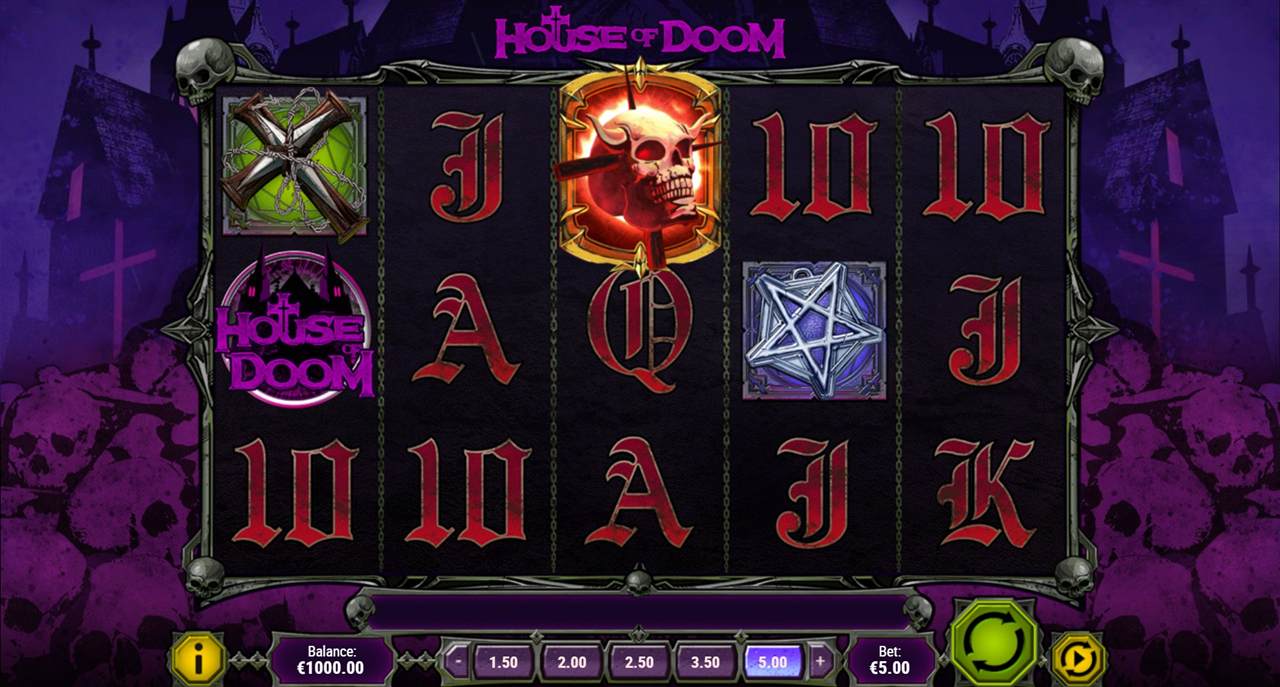
A heavy metal horror build carrying a free spins round with stacked wilds and an unusually high ceiling. It sits at the opposite end of the theme from the vampire title in every respect.
High variance throughout. The artwork warns nobody of that.
A heavy metal band licence sits over the artwork and the soundtrack. The build pairs that with stacked wilds during free spins and a maximum win far above the vampire title it competes with.
The trade is obvious once the rating is read. These horror slots return the same money through rare large results rather than through constant small ones.
A sequel exists and behaves differently from the original. Reading which build a lobby carries takes one glance at the title, and the rules screen separates them in a single line.
Both sit at the harsh end. These horror slots ask for a bankroll that survives long stretches of nothing between the free spins rounds.
The soundtrack is part of the licence rather than an addition. Among horror slots it is one of the few builds where audio carries a rights cost.
What is Immortal Romance?
A vampire romance build with a four character bonus structure that unlocks progressively across sessions. Each character carries a different free spins configuration and the fourth takes a long time to reach.
The unlock ladder is the hook. Very little else uses it.
The Chamber of Spins structure is the part worth explaining. Four characters unlock in sequence as a player triggers the round repeatedly, and each one carries its own free spins configuration and multiplier behaviour.
Reaching the fourth takes dozens of triggers. Almost no horror slots ask a player to invest across sessions like that, and the design is older than most of the shelf around it.
The design predates the current fashion for instant gratification. A structure that asks a player to return across sessions would rarely be built today, and that is exactly why the title reads as distinctive.
A modern sequel exists alongside it. Between them the two horror slots cover the same theme with very different pacing and very different ceilings.
The build is old enough that its interface reads dated beside a current release. Among horror slots it survives on structure rather than on presentation.
Which studios build horror slots?
Most of them, because the theme costs nothing to adopt. The recognisable Canadian titles come from NetEnt, Play n GO, Microgaming and Nolimit City, each with a completely different approach to it.
No studio owns the theme. Every lobby carries several.
Each studio approaches the genre differently. One builds a low variance vampire title, another builds an extreme slasher grid, and a third licenses a film property and prices the rights into the return figure.
No house style exists across the theme. That is why horror slots vary more inside their own category than most themed shelves in a Canadian lobby.
The extreme end of the shelf comes from the smaller studios. Builds with tiny grids, brutal variance and graphic artwork sit alongside a twelve year old vampire title in the same lobby category.
Nothing warns a player which is which. The filter delivering these horror slots sorts on artwork and never on mathematics.
Availability follows the operator agreement rather than the studio. A registered Ontario site carries whichever horror slots its supplier deals cover.
Do horror slots share a mechanic?
No, and that is the most useful thing to know before browsing the shelf. A horror tile can hide a ten line classic, a cluster grid, a Megaways engine or a hold and win build.
Theme predicts nothing here. Read the rules screen instead.
Comparing against a themed shelf with convergence makes the point. A player opening two Egyptian builds can reasonably expect a book mechanic in both, and no equivalent expectation applies here.
The tile carries no mechanical information at all. Every one of these horror slots has to be read individually before anything about the session is predictable.
The absence of convergence has one practical consequence. A player who enjoyed one title on the shelf cannot pick a second on the strength of it, because nothing underneath them is related.
Working from the mechanic instead is the fix. Choosing horror slots by cluster grid or by hold and win produces far better matches than choosing by coffin.
Filtering by mechanic where an operator offers it works better. That route finds horror slots a player will actually enjoy.
What return figures do horror slots publish?
Anywhere from ninety four to ninety eight percent, which is the widest spread of any theme on a Canadian lobby. The vampire title at the top and a licensed film build at the bottom differ by four full points.
The theme does not set the figure. The studio does.
Four percentage points across one theme is a very wide band. Over a long session that gap is the difference between a balance that lasts and one that disappears well before the player expected it to.
The spread has a cause. Licensed builds carry a rights bill and original horror slots do not, and the money comes out of the published figure either way.
The high end of the band is genuinely unusual. Ninety eight percent is a figure a Canadian lobby carries on a handful of titles in total, and one of them happens to be a vampire build.
The low end is ordinary rather than bad. Ninety four percent horror slots sit level with the licensed builds across every other theme on the same site.
Comparing two titles by percentage alone works only at matched volatility. Horror slots at the same figure can behave nothing alike across a session.
What volatility do horror slots run?
The full range, from very low to extreme. A player can open two horror titles side by side and find one paying every third spin and the other paying nothing across two hundred.
Read the rating before the theme. It changes the session.
The rating matters more here than on almost any other themed shelf. A vampire build paying every third spin and a slasher grid paying nothing across two hundred sit under identical artwork conventions.
Reading the rating takes one glance at the rules screen. Nothing about the imagery on horror slots signals which of those two a player has opened.
Feature frequency is what a session actually feels. A build opening its round every eightieth spin keeps a balance moving, and one opening it every two hundred and fiftieth does not.
Both figures exist inside this theme. Reading the rating separates horror slots more reliably than any amount of looking at the artwork.
Matching the build to the balance is the practical decision. The rating on horror slots sits beside the percentage in the same panel.
Two hundred spins in demo settles the question faster than reading does. The rating on horror slots describes exactly what that sample will show.
Are licensed horror slots any good?
The mathematics are usually worse and the recognition is better. A film licence costs the studio money, and that cost comes out of the published percentage rather than out of the marketing budget.
Original horror slots often return more. The names are unfamiliar.
The recognition is worth something to a player who wants a specific film. A title carrying a familiar mask or a familiar house delivers an experience an original build cannot replicate, and that has genuine value.
The cost appears in the percentage. Original horror slots frequently publish a point or two higher, and the names on them mean nothing to anybody.
Licence terms also expire. A film build can disappear from a Canadian lobby without notice when an agreement ends, and no replacement carries the same mathematics.
Original builds carry no such risk. Studio owned horror slots stay on the shelf as long as the operator agreement does.
Recognition and percentage pull in opposite directions here. Choosing between them on horror slots is a straightforward trade.
Checking who owns the title takes one look at the loading screen. Studio owned horror slots carry the supplier name alone and licensed builds carry a rights notice beside it.
What is the Halloween spike?
Canadian lobbies promote horror slots heavily every October and then bury them again. Promotion changes placement rather than mathematics, so a title on the front page in October is unchanged in March.
Seasonal placement means nothing about value. The figure holds.
Operators build October campaigns around the theme every year. Front page rows fill with horror slots, free spins offers attach to them, and the whole shelf disappears again in the first week of November.
Nothing about the mathematics changes across that cycle. The same certified build runs in October and in March with the identical published percentage.
Seasonal promotion frequently arrives with free spins offers attached. Those offers carry wagering terms exactly as any other promotion does, and the eligible game list is usually narrow.
Reading the terms matters more than the season. A campaign built around horror slots is a bonus offer with a theme painted on it.
Lobby placement is not a recommendation. A title promoted in October carries the identical certified build it carried in June.
Do horror slots have jackpots?
A handful carry progressive pools and most do not. The theme has no relationship with jackpot structure, and the linked horror titles appear inside a studio network rather than as a horror network.
No shared horror pool exists. Each network is its own.
Progressive pools follow the studio rather than the theme. A linked horror title feeds whatever network its supplier runs, alongside Egyptian, Irish and fruit builds from the same catalogue.
That is why no horror jackpot exists. The pools that these horror slots feed are supplier networks with no theme attached to them at all.
Fixed jackpot tiers are more common than progressive pools here. A number of builds carry stated multiples of the stake that pay from the game itself without funding anything shared.
Those tiers keep the percentage intact. Progressive horror slots publish lower figures because the pool contribution comes out of the same total.
Pool size is visible before a spin. The figure climbing on linked horror slots is shared across a whole supplier catalogue.
The linked builds publish a lower figure than their unlinked siblings. That gap is the pool contribution, and it applies to horror slots exactly as it does everywhere else.
Which horror slots suit a small bankroll?
The low variance vampire builds at the top of the return range. A high percentage combined with frequent small wins is exactly what a modest balance needs across a long session.
The slasher and metal builds are not. Both run harsh.
The combination worth looking for is a high published figure and a low volatility rating. Both appear in the rules screen, and together they describe a session that lasts rather than one that ends abruptly.
The vampire builds at the top of the range fit that description. The metal and slasher horror slots do the opposite in every respect.
Stake selection does the same work as title selection. Dropping to the lobby minimum on a high percentage build buys the spin volume that lets a low variance rating show itself.
The pairing is what matters. A small balance on high variance horror slots is a short session regardless of how good the published figure looks.
Deposit limit tooling sits inside every registered Ontario account. Setting it first does more than any choice between horror slots.
Are horror slots available in Ontario?
Yes, and broadly. Every major studio supplying registered Ontario operators carries horror titles, and the certified builds appear alongside every other theme on the lobby.
No special rule applies to the theme. Certification is identical.
Supplier registration and per title certification govern availability exactly as they do for every other theme. The Alcohol and Gaming Commission of Ontario tests the mathematics rather than the artwork.
Content ratings play no part. A registered Ontario lobby carries horror slots beside every other theme without any additional restriction attached.
Depth varies by operator agreement rather than by theme. A registered site carrying the full catalogue of four major studios stocks dozens of titles, and a narrower site stocks a handful.
Searching by title beats browsing. The recognisable horror slots surface immediately by name on any Ontario lobby that carries them.
The regulator publishes its registered supplier list openly. Confirming a lobby carrying horror slots operates legally takes one search.
New titles arrive on the shelf monthly rather than seasonally. A Canadian checking the horror slots category in spring finds releases that were not there in autumn.
Do provincial crown platforms carry horror slots?
Yes, and more readily than the harsher mechanical categories. Recognisable horror titles from established studios fit a crown catalogue brief without difficulty.
The licensed film builds cross less often. Rights complicate it.
Crown catalogues favour recognisable titles from established suppliers, and the theme produces plenty of those. The vampire and romance builds in particular have been on provincial shelves for years.
Licensed film builds are the exception. Rights agreements complicate procurement, and those horror slots reach private Ontario lobbies far more reliably.
Crown catalogues also turn over slowly. A title added to private Ontario lobbies this season can take a long time to cross, and the older established builds are the ones already there.
Players outside Ontario work from that narrower shelf. The horror slots they meet are chosen for breadth of appeal rather than for variance.
Are horror slots certified?
Every title on a registered Ontario lobby has passed independent laboratory testing of the generator, the reel strips and the published return percentage before deployment.
Theme plays no part in testing. The mathematics are the subject.
Testing covers the random number generator, the symbol distribution, the feature trigger rates and the published percentage. The tested build is the deployed build and the operator changes nothing inside it.
Artwork is outside that process entirely. Certification on horror slots says the mathematics are accurate and nothing at all about whether the theme suits a player.
Testing also covers spin independence. No run of losing spins makes the next one more likely, whatever a forum thread claims about a haunted title being due to pay.
The certificate applies to one build. Two horror slots sharing a name and artwork can be separate submissions with separate published figures.
A certificate number appears in the rules screen on most builds. It exists so a player can verify rather than trust.
Can you play horror slots for free?
Demo versions run the identical certified build with a play money balance, and Ontario registered operators publish them alongside the real money client.
Demo is the fastest way to read variance. The theme hides it.
Demo play is the fastest way to separate the shelf. Two hundred spins on two horror slots from different studios shows the variance gap immediately, and no written description manages the same thing.
Nothing is softened in demo mode. The identical certified mathematics run with a play money balance on every Ontario registered lobby that publishes them.
Demo play also answers the mechanic question without any reading. Thirty spins shows whether a title cascades, holds symbols or runs fixed lines, which the tile never reveals.
Availability is broad. Most Ontario registered operators publish demo versions of horror slots alongside the real money client without a deposit.
Nothing is softened in demo mode. The identical certified mathematics run behind every demo build of these horror slots.
How do horror slots compare with Egyptian slots?
Both are visual themes rather than mechanical categories and the difference is convergence. Egyptian builds cluster hard around one book mechanic, and horror titles share nothing underneath at all.
One theme predicts a structure. This one predicts nothing.
Convergence is the whole difference. One theme produced a dominant mechanic that dozens of studios copied, and the other produced no shared structure whatsoever across its entire shelf.
That makes browsing harder here. A Canadian scanning horror slots learns nothing from the tile, where an Egyptian tile carries a reasonable mechanical prediction.
Return spread differs as sharply as structure does. Egyptian builds cluster inside a narrow percentage band, and this theme covers four full points from top to bottom.
That makes the rules screen more valuable here. Two horror slots on the same row can differ by more than any two Egyptian titles would.
Both shelves reach Ontario through identical registration and testing. Choosing between them is a choice about artwork and structure.
What should a Canadian check before playing a horror slot?
Three things in the rules screen. The published return figure, the volatility rating, and which mechanic the title actually runs beneath the artwork.
The third is the surprise every time. Nothing on the tile says it.
All three sit on the same panel. The rules screen opens from the menu inside the running client, and the percentage, the rating and the feature description are on the first or second page of it.
Reading takes under a minute. That minute is what separates a chosen title from whatever the October campaign put on the front page.
A fourth check helps anyone on a modest balance. The minimum stake on the deployed build decides how many spins a deposit buys, and it varies between Ontario operators carrying the same title.
None of the four requires a deposit. Every figure worth knowing about horror slots sits inside the demo client.
The habit transfers to every theme on the lobby. Reading three figures works on horror slots and on everything sitting beside them.
Which slot pages are worth reading next?
Four pages sit closest to this one. Each covers a theme or a studio that appears somewhere above, and each stands on its own.
Horror slots are a paint job over a shelf with no shared mathematics, and the spread between the best and worst published figures is the widest of any theme. Read the number, not the coffin.