
The Whittaker betting system Canada players meet in a roulette room is a negative progression that lifts the stake after a loss and trims it after a win. Gambling Zone calls the method a hybrid of prudence and progression, with a gentler climb than the famous Martingale. Anyone weighing up venues first can look through licensed Canadian casinos to check which wheels offer single-zero layouts and workable ceilings.
Seven outlets describe the plan here, and they do not agree on every rung of the ladder. Gambling Zone, Betway, Betting Systems, Casino Top 10, Casino Encyclopedia, LinkedIn and Betaminic each add a different piece. Every figure below comes from one of those pages, or is marked as our own sums. The same rule sits at the centre of the horse-racing and football versions described further down.
| Point of the plan | What the seven sources record |
|---|---|
| Other spellings | Whitaker and Whittacker appear on Betting Systems and Casino Encyclopedia |
| Family | A negative progression, so the stake rises after a loss (Gambling Zone) |
| Core rule | The next stake is the sum of the two earlier losing bets (Gambling Zone) |
| Opening steps | One unit, one unit, then two units (Gambling Zone and Casino Top 10) |
| Full even-money ladder | One, one, two, three, five, eight, thirteen and onwards, by our sums |
| Bets it fits | Even-money outside bets: red, black, odd, even, high and low (Betway, Gambling Zone) |
| Better-paying branch | Columns and dozens at 2/1 work far better with the plan (Betway) |
| Twelve-number start | One unit, one unit, two units, then the balance is divided (Casino Encyclopedia) |
| Unit size rule | Split the bankroll by one hundred to fix a single unit (Casino Top 10) |
| House edge, one zero | 2.70 for every 100 wagered (Gambling Zone and Betway) |
| After a win | A fresh start on Casino Top 10, a two-step walk back on Betway |
| Horse-racing use | Selections priced 2/1 to 50/1 (LinkedIn) |
| Known weakness | A bottomless bankroll demand and casino table ceilings (Casino Top 10) |
How does the Whittaker betting system Canada readers meet differ from plain doubling?
The Whittaker betting system Canada readers meet is not a doubling plan. Where Martingale copies and doubles the last stake, the Whittaker adds the two most recent losing bets together, so the ladder grows by addition rather than multiplication.
Gambling Zone explains that the stake rises after a loss to recover earlier wagers plus a small gain. Betway notes that the stake drops again once a win lands. The plan therefore has two directions instead of one.
Casino Top 10 walks through the opening steps with a ten-unit starting stake. Lose it, lose the repeat, then bet twenty, thirty and fifty as each pair of earlier stakes is added together.
Which bets does the Whittaker betting system Canada ladder fit, and which pockets sit behind them?
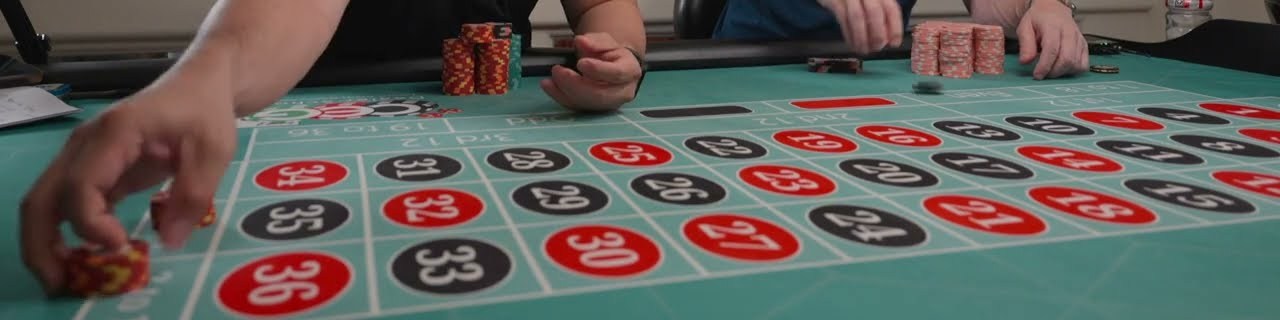
Even-money outside bets are the fit for the Whittaker betting system Canada players read about. Betway lists red, black, odd and even as the required wagers, and Gambling Zone adds high and low.
Each of those options covers eighteen pockets on a single-zero wheel. Casino Top 10 advises sticking to even-money shots, because the whole structure is built for fifty-fifty outcomes.
Casino Encyclopedia treats the twelve-number bet as a separate branch, covering dozens and columns that pay 2/1. That branch opens with one, one and two units rather than a repeat of the base stake.
Why does the Whittaker betting system Canada ladder begin with two single-unit steps?
The repeat exists because the rule adds two earlier stakes. After one losing bet the Whittaker betting system Canada players follow has only a single number to add, so the second stake stays at one unit.
Gambling Zone spells out the chain in order. One loses, the next bet is one, then two as one plus one, then three as one plus two, then five as two plus three.
Casino Top 10 arrives at the same shape from another direction. That outlet waits for two losses in a row before any addition begins at all.
What does the Whittaker betting system Canada players run look like across ten losing spins?
By our sums a ten-spin losing run on the Whittaker betting system Canada players run lays out 143 units, and the next winning bet returns only the two stakes that came before it.
Betway reports the same shape from a worked example. Nine straight losing spins bury the player before the tenth spin finally lands. That outlet puts the damage after eight losing spins at more than twenty unit bets.
By our sums nine losses cost 88 units and twelve cost 376 units. The gap between a losing run and its repair widens with every extra spin.
| Spin | Stake if the losing run continues | Total staked so far | Net position if this spin wins |
|---|---|---|---|
| First | 1 | 1 | Up 1 |
| Second | 1 | 2 | Level |
| Third | 2 | 4 | Level |
| Fourth | 3 | 7 | Down 1 |
| Fifth | 5 | 12 | Down 2 |
| Sixth | 8 | 20 | Down 4 |
| Seventh | 13 | 33 | Down 7 |
| Eighth | 21 | 54 | Down 12 |
| Ninth | 34 | 88 | Down 20 |
| Tenth | 55 | 143 | Down 33 |
| Eleventh | 89 | 232 | Down 54 |
| Twelfth | 144 | 376 | Down 88 |
How far does a Whittaker betting system Canada stake climb when a losing run refuses to break?
By our sums the Whittaker betting system Canada players run keeps adding, so twelve straight losses lift the next single stake to 144 units and push the total risk past 376 units.
Each extra loss asks for more than the one before it. Gambling Zone warns that a long streak forces wagers high enough to reach the table ceiling, and Casino Top 10 lists the same danger as an endless bankroll demand.
By our sums the seventeenth rung of the ladder asks for more than a thousand units on a single spin. That is why the plan suits players with tight limits poorly.
Where do the seven source pages disagree about the running total?
The split sits between ladders and balances. Gambling Zone and Casino Top 10 grow the Whittaker betting system Canada players apply from the two earlier bets, while Casino Encyclopedia divides the whole negative balance by two, three, four or five.
Casino Top 10 restarts the ladder the moment a win lands. Betway reports a walk back of only two places on the scale instead of a full reset.
Betway also flags that a tighter bankroll calls for a less severe sequence. A player who can ride the downswings is invited to set the line higher.
Is the Whittaker betting system Canada ladder a straight copy of Fibonacci?
Casino Top 10 argues that the Whittaker betting system Canada players study is all but identical to Fibonacci, yet Gambling Zone says the two differ in origin and objective.
The Fibonacci sequence was built for a rabbit-breeding puzzle, not a wheel. Casino Top 10 traces that puzzle to Leonardo of Pisano, later shortened to Fibonacci from Filius Bonacci.
Readers who want to weigh the two side by side can study the Fibonacci ladder used in Canada against the chain described here. Betway draws the line at the exit rather than the entrance, because the Whittaker reduces the stake only bit by bit after a win.
How does the Whittaker betting system Canada bettors apply handle the walk back down after a win?
The Whittaker betting system Canada bettors apply climbs by addition and descends by degrees. Betway describes a player who wins on the tenth spin and steps the stake back two places, so the eleventh wager is 13 units instead of a fresh single unit.
That outlet notes the descent is the part that resembles Labouchere, where the next figure is read off earlier entries rather than taken from a fixed table. A Fibonacci player, by contrast, returns to the start of the number chain straight after any win.
Betway records that play continues on the shortened ladder until the player arrives back at the original unit stake.
Why does Betway place the eleventh stake at thirteen units rather than one?
Because the plan refuses to abandon the ladder in one jump. Betway’s worked example of the Whittaker betting system Canada readers see keeps the player on the scale after a winning spin, and only two rungs come off.
That single detail separates the plan from a plain Fibonacci reset. Betway reports an immediate return to the opening figure after any winning spin on that chain.
The same outlet counts the cost of the climb instead of the recovery. Nine losing spins leave a player deep in the red before the tenth spin pays.
What does a two-unit third step cost a player with a small balance?
Casino Top 10 sets the unit itself, telling players to divide the whole bankroll by one hundred. That rule scales the Whittaker betting system Canada bettors apply down to the size of the balance.
That outlet also asks the player to choose a single bet and keep it for the whole session. Switching selections mid-run breaks the arithmetic and the record keeping together.
Betway adds that the same ladder is adjustable. A player with a tight balance can flatten the sequence, and a player who expects wild swings can steepen it.
How large a bankroll does a twelve-spin losing run demand?
By our sums the Whittaker betting system Canada players learn demands 376 units across a twelve-spin losing run, because the twelve stakes go down one after another and the earlier ones are already gone.
Casino Top 10 reports that both this plan and Martingale carry an infinite wealth requirement alongside the table ceiling. Gambling Zone frames the same risk as a wager that rises past the point a balance can stand.
By our sums the distance between a comfortable run and a costly one is a handful of spins. The size of the reserve therefore matters more than the size of the first bet.
| Spin in the losing run | Already staked | Next stake if the run continues | Reserve required for that spin |
|---|---|---|---|
| Sixth spin | 12 | 8 | 20 |
| Eighth spin | 33 | 21 | 54 |
| Tenth spin | 88 | 55 | 143 |
| Twelfth spin | 232 | 144 | 376 |
Which table ceiling ends a Whittaker betting system Canada ladder first?
By our sums a ceiling of 500 units is breached at the fifteenth rung of the Whittaker betting system Canada players follow, when the ladder asks for 610 units on one spin.
A ceiling of 100 units is breached far earlier, at the twelfth rung, which asks for 144 units. Casino Top 10 names casino table limits as one of the two hard walls the system meets.
Gambling Zone reports the same wall in another shape. A wager stops rising because the house will not accept it. A ceiling turns the ladder into a dead end, no matter how the earlier spins went.
What happens to the Whittaker betting system Canada players follow when a double-zero wheel is used?
The Whittaker betting system Canada players follow loses ground faster on a double-zero wheel. By our sums the American layout takes 5.26 of every 100 wagered against the 2.70 that Gambling Zone and Betway record for the single-zero version.
Betway states that the casino keeps 2.70 of every 100 wagered at European roulette over the long run. That figure is the one the source pages publish, and the double-zero figure below is worked out by our sums.
The gap between the two wheels is the strongest argument for a single-zero table when the Whittaker betting system Canada players use is in play. Casino Encyclopedia shows the extra hole in another way, because a losing spin caused by the extra pocket repeats the bet and the loss is carried against the session balance.
| Wheel layout | Pockets | House edge on even-money bets | Source of the figure |
|---|---|---|---|
| Single zero, European | 37 | 2.70 per 100 wagered | Gambling Zone and Betway |
| Double zero, American | 38 | 5.26 per 100 wagered | By our sums, from the same method |
How does the house edge bite during an hour of Whittaker betting system Canada play?
By our sums an hour of sixty spins at ten units each turns over 600 units, and the Whittaker betting system Canada players apply pays 16.2 of it on a single-zero wheel and 31.6 on a double-zero wheel.
The ladder lifts the average stake, and the loss grows with the turnover. Betway states plainly that the casino holds the long-term advantage, which is why the edge applies to every stake rather than to the session result.
Gambling Zone points out that each spin stands alone. Earlier results do not touch the next one. The edge therefore survives any arrangement of stakes a player chooses.
| Spins in the hour | Average stake | Turnover | Expected loss, single zero | Expected loss, double zero |
|---|---|---|---|---|
| Sixty | 5 | 300 | 8.1 | 15.8 |
| Sixty | 10 | 600 | 16.2 | 31.6 |
| Sixty | 15 | 900 | 24.3 | 47.4 |
Why does a 2/1 payout suit the ladder better than a 1/1 payout?
Betway reports that the higher payout rewards a player who is clawing back losses, because a single winning column or dozen returns twice the stake. The Whittaker betting system Canada readers see gains more from that repair.
The same outlet notes that the plan can be adjusted for column and dozen bets, which pay 2/1 rather than the even-money rate. The ladder still works, but the figures change.
Casino Encyclopedia builds a whole separate version for those twelve-number bets. That shows how far the adjustment stretches.
How does the dozen and column version of the plan start?
Casino Encyclopedia opens the twelve-number branch of the Whittaker betting system Canada players run with one unit, one unit and two units. A win on the first bet returns two units of profit.
A win on the second bet returns one unit, and a win on the third returns two. That outlet then states that the progression begins fresh at one, one and two in each of those three cases.
The author of that page is Jennifer Lynn. She writes that she began behind a land-based table in her early twenties before taking a journalism degree.
What balance-division rule does the Whittaker betting system Canada players apply on twelve-number bets?
Once three bets are lost, the Whittaker betting system Canada players apply switches from adding to dividing. Casino Encyclopedia splits the whole negative balance by two, three, four or five, depending on how deep the hole has become.
That outlet rounds any fraction upward, so a balance of nine units is halved to five rather than four. The rule keeps every stake a whole number.
Betway reports the same slow descent in the even-money version, where the stake is trimmed rather than thrown back to the base after a win.
| Negative balance | Divisor | Worked figure from the source |
|---|---|---|
| 4 to 9 units | Divide by 2 | 9 becomes 5 after rounding up |
| 10 to 21 units | Divide by 3 | 14 becomes 5 after rounding up |
| 22 to 100 units | Divide by 4 | Applied to the deeper part of the hole |
| Over 100 units | Divide by 5 | Applied once the balance passes the last band |
How did the recorded Hamburg sessions finish for the dozen and column ladder?
Casino Encyclopedia reports two sessions from a Hamburg table that tested the Whittaker betting system Canada readers study. The first covered forty spins on dozens and finished thirteen units up.
Flat betting on those same forty spins finished four units up. The second session covered sixty spins on columns and finished seven units up, while flat betting on the same spins finished eight units down.
The highest stake in the second session was fourteen units. That page notes a couple of good bets repaired a bad stretch, then warns that the selection used there is one it does not recommend.
What does the plan do when a zero takes a twelve-number bet?
Casino Encyclopedia repeats the bet when a zero takes it. The Whittaker betting system Canada players follow carries the loss against the session balance, because a zero belongs to no dozen or column.
That source adds that the amount lost to the extra pocket is subtracted from the session balance rather than added to the ladder.
Gambling Zone reminds readers that the wheel does not remember. A zero landing now has no bearing on the spin that follows.
Why does Casino Encyclopedia insist the progression never travels without a betting selection?
Because the ladder only manages stakes, not results. Casino Encyclopedia states that the Whittaker betting system Canada players apply is used in no case without a good betting selection.
The page labels both the bet on last and the bet before last as weak selections for a dozen or column wager. It says those two were included only to make the mechanics visible.
LinkedIn makes the matching point for racing, where the staking plan is described as no substitute for value-driven selections.
How does the Whittaker betting system Canada plan sit beside Martingale in raw mechanics?
Gambling Zone contrasts the two directly. Martingale doubles, so the ladder is steep, while the Whittaker betting system Canada bettors follow adds the two earlier bets and climbs gently enough for a smaller balance.
Casino Top 10 reports that the odds of winning under the Whittaker are extremely similar to those of Martingale. The difference therefore lies in the shape of the stakes rather than in the chances.
Both outlets agree that the two plans share the same two walls. A bankroll runs dry, or a table stops accepting higher bets.
By how far does the ladder fall short of Martingale after seven losses?
By our sums seven straight losses cost 33 units on the Whittaker betting system Canada players use and 127 units on a doubling plan. The gap widens with every spin.
That is the trade a player makes for slower repair. Gambling Zone calls the arithmetic progression far more forgiving on a bankroll than the exponential version, and links that softness to players on limited budgets.
Betway adds the counterweight. The same gentleness means a slower route back to profit.
| Step | Doubling stake | Ladder stake | Doubling total | Ladder total |
|---|---|---|---|---|
| First | 1 | 1 | 1 | 1 |
| Second | 2 | 1 | 3 | 2 |
| Third | 4 | 2 | 7 | 4 |
| Fourth | 8 | 3 | 15 | 7 |
| Fifth | 16 | 5 | 31 | 12 |
| Sixth | 32 | 8 | 63 | 20 |
| Seventh | 64 | 13 | 127 | 33 |
How does the Whittaker betting system Canada bettors follow line up against Labouchere?
The Whittaker betting system Canada bettors follow is described by Casino Top 10 as resembling Labouchere, because the next amount is read off earlier bets instead of a fixed table. Betway reaches the same comparison through the exit.
That second outlet notes the plan reduces stakes only gradually after a win, which is the behaviour it links to the Labouchere approach.
Casino Top 10 adds that the origins of the Whittacker name are veiled in mystery. That contrasts with the Fibonacci sequence and its documented rabbit puzzle. The gradual exit is the trait it shares with the Labouchere plan for Canadian players, where the next figure is also read off the earlier entries.
What do the seven source pages record about D’Alembert and Paroli?
Nothing. None of the seven pages used here describes the D’Alembert ramp or the Paroli stop idea. That is why the Whittaker betting system Canada readers meet appears here without either name beside it.
What the pages do cover is the family the Whittaker belongs to, and that family is described through Martingale, Fibonacci and Labouchere alone.
Keeping the comparison inside that sourced set is deliberate. A table built from the pages carries the four systems they describe, and marks the two they leave out.
| Plan | How the stake moves, as recorded | Covered by the seven pages |
|---|---|---|
| Martingale | Doubles the stake after a loss | Gambling Zone, Casino Top 10 |
| Fibonacci | Next stake is the sum of the two before it, from a strict chain | Betway, Casino Top 10 |
| Labouchere | Next figure is read from earlier entries, so the exit is gradual | Betway, Casino Top 10 |
| Whittaker | Sum of the two earlier losing bets, with a slow descent | Gambling Zone, Betway, Casino Top 10, Casino Encyclopedia |
| D’Alembert | Not described on any of the seven pages | No |
| Paroli | Not described on any of the seven pages | No |
Which staking plan resets hardest, and which one drifts?
Betway reports that a Fibonacci player returns to the start of the number chain after any win, while Casino Top 10 reports the same instant restart for the Whittaker betting system Canada bettors follow.
Betway’s own Whittaker example instead drifts down two rungs at a time. Labouchere sits at the drifting end, because Casino Top 10 describes it as a plan where the next amount is calculated from earlier bets.
That single difference changes the feel of a session more than the entry rule does. It decides how fast a player leaves the ladder behind.
How did the Whittaker betting system Canada readers find its way onto the racecourse?
The Whittaker betting system Canada readers find in roulette rooms also appears in racing. Pete Nordsted writes on LinkedIn that Trade on Horses relies on it when backing horses priced between 2/1 and 50/1.
That article describes the plan as a progression built to smooth variance without the aggressive risk of Martingale. Protection against a runaway loss sits inside the structure.
Nordsted also states that the plan manages risk better than flat staking. He adds that the Whittaker betting system Canada readers apply locks in profit during winning runs and shields the bankroll during the downswings.
Which horse price bands does the LinkedIn plan target?
LinkedIn splits the 2/1 to 50/1 range into three zones for the Whittaker betting system Canada readers see. The shortest band holds regular returns and the longest band hunts hidden value among outsiders.
Nordsted writes that the shortest prices give horses a solid chance of winning. The middle band accepts lower strike rates because the pay-offs justify the risk.
The longest band covers longshots. The article argues that larger fields push the market into mispricing outsiders.
| Zone | Price range | What the article says about it |
|---|---|---|
| Zone one | 2/1 to 10/1 | Solid winning chance and regular returns |
| Zone two | 11/1 to 20/1 | Strike rates fall while pay-offs carry the risk |
| Zone three | 20/1 to 50/1 | Longshots with hidden value in bigger fields |
Why do handicaps suit the Whittaker staking approach?
LinkedIn reports that the Whittaker betting system Canada players follow performs consistently across tracks and race types, and names handicaps in particular because pricing inefficiencies cluster there.
Nordsted writes that a run of shorter-priced winners fuels the bank. An occasional bigger-priced winner creates growth without destabilising the plan.
The article credits the method with reduced drawdowns against level stakes and a smoother profit curve. It says both help bettors stay the course.
What three benefits does LinkedIn credit the plan with?
LinkedIn names three benefits of the Whittaker betting system Canada bettors apply. Bankroll longevity comes from refusing to chase losses aggressively, while psychological discipline replaces emotion with a clear structure.
The middle benefit is compounding growth. The article says it lets bigger-priced winners work without disproportionate exposure.
Nordsted writes that staking systems are not only about arithmetic. A structured plan removes feeling from the decision of what to stake next.
How does Betaminic turn the plan into odds-bracket settings?
Betaminic publishes a Whitaker staking table sorted by odds bracket, and the Whittaker betting system Canada players study sits behind it. Short prices are staked as a share of the bank.
Longer prices are staked to win a target share of the bank instead. Tom Whitaker, interviewed as a veteran user of that service, applies those settings to add-on bets on the over 0.5 and over 1.5 goal markets at two per cent of the current bank.
The same interview shows a repeat bet placed when a match reaches half time without a goal. That bet is staked at one per cent of the bank under the same settings.
| Odds bracket | Setting | Staking style |
|---|---|---|
| 1.01 to 1.49 | Stake two per cent of the bank | Percentage staking |
| 1.50 to 1.99 | Stake one and a half per cent of the bank | Percentage staking |
| 2.00 to 2.49 | Stake to win two per cent of the bank | Target profit staking |
| 2.50 to 4.49 | Stake to win two and a half per cent of the bank | Target profit staking |
| 4.50 and above | Stake to win three per cent of the bank | Target profit staking |
How do level stakes and a Whitaker plan split apart in a recorded season?
Betaminic records the gap twice. One set fell twenty points over eighteen days on level stakes, and a later set turned a twenty-nine per cent loss into a gain of eight per cent under the Whittaker betting system Canada bettors follow.
The interview also reports a staking software run that lifted a bank ninety per cent in its first week before finishing the month twenty-eight per cent up.
Whitaker draws a principle from those results. Inefficient trends in bookmaker models are usable, but a staking plan and bank management are needed to survive the six months that give the trend a chance.
How does the Whittaker betting system Canada players follow protect a whole bank?
The Whittaker betting system Canada players follow protects a bank by spreading risk rather than concentrating it. Betaminic reports four separate systems running with separate banks, each starting at a thousand units.
A simulation printed in that interview put average bank lows at 223 against a starting bank of a thousand. The weakest of a thousand simulated runs fell to 28.
Whitaker tells readers not to be surprised by a drop toward a fifth of the starting balance. The same simulation doubled the bank fourteen times across ten years of historical data, which is the argument the article makes for patience over a long record.
Why can neither the Whittaker betting system Canada plan nor any other staking plan move the house edge?
Because the edge is charged on every stake, and a staking plan only changes the size and timing of those stakes. Gambling Zone states that no strategy, the Whittaker betting system Canada players run included, alters the house edge.
Betway puts a number on it. European roulette keeps 2.70 of every 100 wagered over the long run. A plan that raises the average stake simply raises the turnover the edge applies to. Our own figures on roulette odds in Canada follow the same logic.
Casino Top 10 goes further and calls it very hard if not impossible for anyone to overcome the house edge. That outlet still credits the plan with keeping a player focused and patient.
What do the seven pages say about the risk of losing the whole bank?
Betting Systems is bluntest, stating that all betting systems carry the risk of losing all your bank. The same page names the Whittaker betting system Canada players apply as one of them.
That page also warns that past data does not guarantee future profit. It argues a data-led approach still beats other methods for planning a system.
Casino Top 10 frames the same danger through its infinite wealth rule. Gambling Zone frames it through the assumption that a win arrives before the resources run out.
How does the Whittaker betting system Canada plan sit inside Ontario’s regulated market?
The Whittaker betting system Canada plan sits inside a market where Ontario and, since this summer, Alberta run regulated online markets for private operators. Ontario is not the only regulated province, and both markets publish operator rules.
A regulated market does not change the arithmetic of the ladder. It changes who holds the licence, how disputes are handled, and which tools a player can reach.
Gambling Zone makes the point that the plan cannot alter the underlying odds. The value of regulation therefore sits in protection rather than in the numbers.
Which other provinces run regulated online markets for private operators?
Ontario and Alberta do. Alberta opened its regulated market to private operators this summer, so the Whittaker betting system Canada players use sits in a country with two such markets, not one.
The legal age for gambling is 19 in most provinces, and 18 in Alberta, Manitoba and Quebec. A player in Canada checks the local rule before opening an account.
The seven pages used for this article say nothing about provincial licensing elsewhere. No claim is made here about markets outside Ontario and Alberta.
| Province | Legal age | Market note |
|---|---|---|
| Ontario | 19 | Regulated online market for private operators |
| Alberta | 18 | Regulated online market for private operators since this summer |
| Manitoba | 18 | Legal age of 18 |
| Quebec | 18 | Legal age of 18 |
| Remaining provinces | 19 | Legal age of 19 across most of the country |
What do the sources say about the odds of winning under the Whittaker betting system Canada plan?
Casino Top 10 reports that the odds of winning under the Whittaker betting system Canada readers study are extremely similar to those of Martingale, and calls the design one that keeps a player statistically ahead.
That same outlet then sets a caveat beside the claim. An endless bankroll requirement and casino ceilings undo the advantage before it can be collected.
Gambling Zone adds that the plan can produce modest profit during a favourable run of variance, and nothing beyond that.
How does the Whittaker betting system Canada players use sit beside deposit limit tools?
The Whittaker betting system Canada players use manages stakes, while a deposit limit manages the money that reaches the table. The two work on different problems, so the limit holds even when the ladder is mid-climb.
A practical routine for setting deposit limits online in Canada sits comfortably with the record keeping that Casino Top 10 recommends. That outlet asks a player to write down every bet and every loss on paper.
Betting Systems asks readers to log deposits as a minimum. The Betaminic interview names the same habit as a key principle behind four years of recorded results.
Where can a player test the Whittaker betting system Canada ladder before risking real money?
Casino Top 10 suggests a short spell of free games first, to train and to prepare mentally for the losing runs. A free table runs the Whittaker betting system Canada players apply without the bankroll risk.
Gambling Zone notes that autoplay settings and low table minimums suit the plan, because they allow a longer session at a steady pace. A trial run shows how long the climb lasts before it turns.
A wider set of online roulette strategies for Canada sits alongside this one for players who want a second comparison.
Where does a player in Canada find support when the ladder stops being fun?
Casino Top 10 carries a responsible gaming notice that points readers to problem gambling support and helplines, and the Whittaker betting system Canada players use falls under that same adult-only label.
That outlet also describes the plan’s real risk plainly. A session can slide from structured play into loss chasing once the ladder lengthens.
Gambling Zone closes its own article on the same note. It asks players to stop when control slips, rather than when the bankroll runs out.
Why do the sources tie the Whittaker betting system Canada ladder to the Gambler’s Fallacy?
Because the ladder assumes that a losing run makes a win more likely. Casino Top 10 states that the Whittaker betting system Canada bettors follow relies on the Gambler’s Fallacy, and that long-term failure stays possible after short-term gains.
Gambling Zone puts the correction in one line. Each spin is independent, and past results do not influence the next one.
Casino Encyclopedia reaches the same place from the other side. It warns that the progression is useless without a strong selection, and offers no promise that the selection itself will hold up.