

The gambling anime Canada fans stream most are Kakegurui, Kaiji and Akagi: shows where a bet decides status, freedom or survival, and the drama comes from bluffs, cheats and nerve rather than luck. Around them sit mahjong series such as Saki and Legendary Gambler Tetsuya, the baseball gamble One Outs and lighter casino fare like Rio: Rainbow Gate!. If the shows send you looking for real games, our list of safe online casinos for Canadians shows the sites we have reviewed.
The table sums up the gambling anime Canada viewers ask about, with the studio and the main game in each. The trailer on this page gives a taste of the genre.
| Anime | Studio | Main gamble |
|---|---|---|
| Kakegurui | MAPPA | School gambles that set student rank |
| Kaiji: Ultimate Survivor | Madhouse | Restricted Rock-Paper-Scissors, E-Card |
| Kaiji: Against All Rules | Madhouse | Cee-lo and the pachinko machine “the Bog” |
| Akagi | Madhouse | Mahjong against yakuza players |
| One Outs | Madhouse | A pitcher paid per out, fined per run |
| Legendary Gambler Tetsuya | Toei Animation | Underground mahjong |
| Saki | Gonzo | High school mahjong tournaments |
| Rio: Rainbow Gate! | Xebec | Casino dealer duels |
When does a show earn the gambling anime label?
When wagers drive the story. Casino.org sets the bar clearly: gambling has to be the core of the plot, the stakes have to hurt, the games have to make sense and danger has to hang over every decision.
Shows with a single card-game episode do not qualify.
That definition keeps the gambling anime Canada viewers watch focused on risk.
Why do gambling anime focus on psychology?
Because the games are simple and the people are not. Casino.org notes that the best entries turn games into psychological battles of bluffs, nerves and consequences, where reading an opponent matters more than the cards.
Close-ups of sweating faces carry the same tension as any reveal.
Mind games are the real subject of the gambling anime Canada fans love.
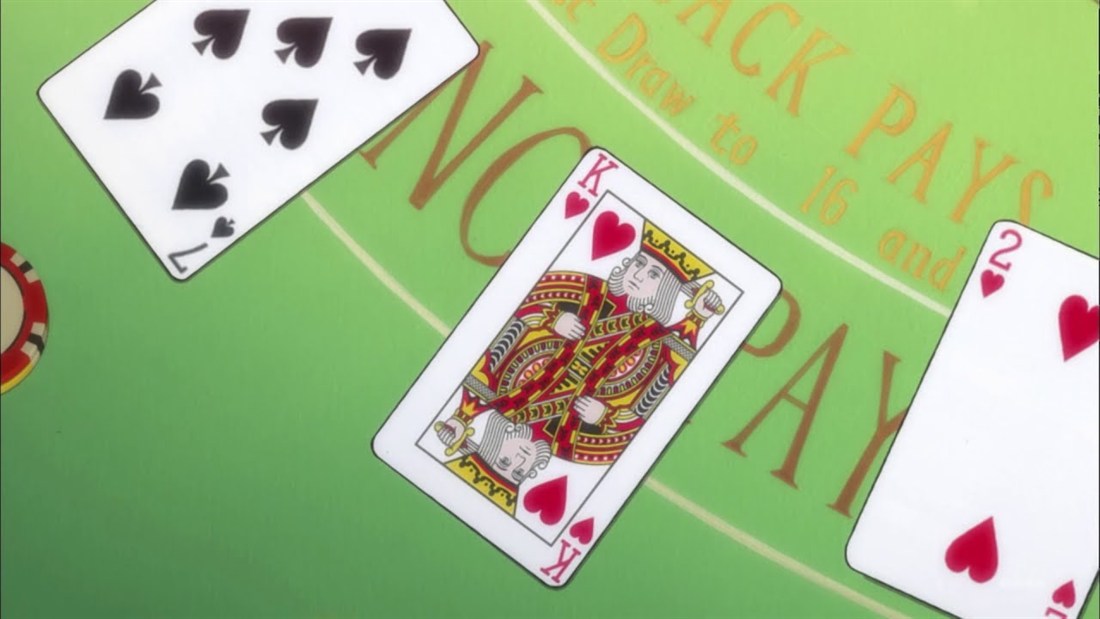
What makes a gambling anime work?
Casino.org looks for four things: real stakes such as debt, freedom or reputation; games the audience can follow; wins built on nerve, not just luck; and constant danger that one bad call puts everything on the line.
Shows that miss these feel like coin flips.
Those tests separate strong gambling anime Canada viewers recommend from filler.
Why do gambling stories thrive in Japan?
Japan has a long tradition of gambling manga, led by Nobuyuki Fukumoto, creator of Kaiji, Akagi and Ten, and magazines such as Kindai Mahjong that publish mahjong stories. Pachinko parlours and mahjong clubs give those stories a familiar backdrop.
Popular manga often become anime.
That publishing culture feeds the gambling anime Canada audiences stream.
Who is Nobuyuki Fukumoto?
Fukumoto is the manga artist behind Kaiji, Akagi and Ten. Wikipedia notes that he had already built a reputation for gambling manga before Kaiji, and that Kaiji began as a short story about its first game before growing into a long series.
His rough art style and inner monologues are instantly recognisable.
Fukumoto’s work anchors the gambling anime Canada fans rank highest.
Which studio made the most gambling anime?
Madhouse stands out. It produced both Kaiji series, Akagi, One Outs, Mr. Tonegawa and No Game No Life, giving it a hand in most of the genre’s landmark titles.
MAPPA, Toei Animation, Gonzo and Xebec made the other major entries.
Madhouse’s catalogue is a reliable route through the gambling anime Canada fans explore.
Who is director Yūzō Satō?
Yūzō Satō directed both Akagi and One Outs for Madhouse, and both series share series composer Hideo Takayashiki and character designer Takahiro Umehara, according to Wikipedia.
That shared team gives the two shows a similar tense rhythm.
Fans of one usually enjoy the other among the gambling anime Canada viewers watch.
How long is each series?
Episode counts from Wikipedia give a sense of the time each show takes. Shorter shows suit a weekend; Kaiji’s two seasons take longer.
| Series | Episodes |
|---|---|
| Kakegurui (two seasons) | 12 + 12 |
| Kaiji: Ultimate Survivor and Against All Rules | 26 + 26 |
| Akagi | 26 |
| One Outs | 25 |
| Saki | 25 |
| Mr. Tonegawa | 24 |
| Legendary Gambler Tetsuya | 20 |
Plan a viewing schedule around these numbers, and leave room for the manga if you want the full stories.
What is Kakegurui?
Kakegurui – Compulsive Gambler is a manga by Homura Kawamoto and Tōru Naomura, adapted into an anime by MAPPA. It is set at Hyakkaou Private Academy, an elite school where students rank each other by gambling rather than grades or sport.
Netflix licenses and streams the anime outside Japan.
Kakegurui is the most stylish of the gambling anime Canada viewers find.
What does the title Kakegurui mean?
The English subtitle, Compulsive Gambler, translates the idea: someone driven to gamble by craving rather than reason. The title fits Yumeko, who gambles purely for the thrill of risk.
The word sets the tone before the first episode starts.
The name sums up the most famous gambling anime Canada fans stream.
Who is Yumeko Jabami?
Yumeko Jabami is Kakegurui’s transfer student and a compulsive gambler who bets for the thrill, not for money or status. Wikipedia says her sharp eye for scams lets her expose the cheating that keeps other students on top, which unsettles the whole school hierarchy.
Her wild grin in high-stakes moments became the show’s signature image.
Yumeko is the face of the gambling anime Canada fans meet first.
How does the Kakegurui school hierarchy work?
Students are ranked by their contributions to the Student Council and bet their fortunes against each other after class. Winners gain status, while losers fall into debt and become “Pets”, tagged with collars and named Fido or Mittens in the English version.
Pets who stay in debt receive “Life Schedules” that plan their future.
Debt as social control drives the drama in this gambling anime Canada viewers stream.
What are the Pets called in Japanese?
In the original Japanese, indebted students are called “Pochi” or “Mike”, common pet names, which the English version renders as Fido and Mittens. The names make the humiliation of debt explicit.
The collar-like tags add to the point.
Small details like these sharpen the satire in this gambling anime Canada viewers watch.
Who leads the Student Council?
Kirari Momobami, the Student Council president, runs the system and takes a keen interest in Yumeko once she starts disrupting it. The council’s members act as the main rivals across both seasons.
Each rival brings a new gamble and a new cheat.
The council gives this gambling anime Canada fans watch its long arc.
How was the Kakegurui anime made?
MAPPA produced 12 episodes directed by Yuichiro Hayashi, with scripts by Yasuko Kobayashi. The opening theme, “Deal with the Devil”, is performed by Tia. A second season, Kakegurui ××, ran for another 12 episodes with the same cast.
Netflix released both seasons outside Japan.
Polished production lifted this gambling anime Canada audiences discovered on Netflix.
Who is Mary Saotome?
Mary Saotome is one of the first students Yumeko beats in Kakegurui, losing her status and becoming a Pet before turning into an ally. She later leads the prequel, Kakegurui Twin.
Her arc shows how fast fortunes change at Hyakkaou.
Mary is a fan favourite among the gambling anime Canada viewers watch.
What is Kakegurui Twin?
Kakegurui Twin is a prequel spin-off about Mary Saotome before Yumeko arrives. Casino.org says it dials back the wildness and focuses more on long-term strategy and how players adapt to the school’s power games.
It also exists as its own manga series.
Twin is a calmer entry among the gambling anime Canada viewers can try.
Are there live-action versions of Kakegurui?
Yes. Wikipedia lists a two-season Japanese live-action drama and a film with the same cast, starring Minami Hamabe as Yumeko. A later live-action series, Bet, also adapts the story.
The anime remains the best-known version.
Live action broadens the reach of this gambling anime Canada fans follow.
Was there a Kakegurui video game?
Yes. Kakegurui: Cheating Allowed was a mobile game for iOS and Android with a gambling system similar to the manga. Wikipedia notes that its servers closed and the game became inaccessible.
The anime and manga remain the ways to enjoy the story.
The game was a short-lived spin-off of the gambling anime Canada fans love.
Can you read Kakegurui in English?
Yes. Yen Press publishes the manga in English in North America, and the series has more than twenty volumes in Japan. Bookshops and libraries in Canada stock Yen Press titles.
The manga runs well past the anime’s story.
Reading on is easy for the gambling anime Canada fans who want more.
What is Kaiji?
Kaiji, or Gambling Apocalypse: Kaiji, follows Kaiji Itō, a broke young man in Tokyo who gets dragged into deadly underground gambles after co-signing a friend’s debt. Casino.org ranks it first because it feels dangerous: wins bring temporary relief, while losses can be catastrophic.
Its tone is raw rather than glamorous.
Kaiji is the darkest of the gambling anime Canada viewers recommend.
How does Kaiji’s story begin?
Loan shark Yūji Endō visits Kaiji to collect the co-signed debt and offers a choice: repay it over ten years or gamble aboard the ship Espoir, French for “hope”, for one night. Kaiji takes the gamble.
The ship becomes the first of the series’ traps.
Debt is the hook of this gambling anime Canada fans start with.
Who is Yūji Endō?
Endō is the loan shark who pulls Kaiji into the gambling world and keeps reappearing. After Kaiji beats the Bog, Wikipedia says Endō drugs him and takes most of the winnings to repay the loan behind the plan.
He is neither friend nor enemy, only a creditor.
Endō personifies debt in the gambling anime Canada fans watch.
What is Restricted Rock-Paper-Scissors?
On the Espoir, players get twelve cards, four each of rock, paper and scissors, and three plastic stars as collateral. Wikipedia notes that their stake money is a loan charging 1.5% interest every ten minutes during a four-hour voyage, and only half the players survive.
Winners trade spare stars for cash; losers are taken below deck.
The game is the most famous scene in the gambling anime Canada viewers watch.
What happens on the steel beam?
At the Starside Hotel, debtors play a “Human Derby” and then cross an electrified steel beam high between buildings, with no rules explained in advance. Kaiji emerges as the sole survivor of the event.
The sequence shows rich spectators betting on poor players’ lives.
Its cruelty defines the tone of this gambling anime Canada fans remember.
What is E-Card?
E-Card is a card game Kaiji plays against Yukio Tonegawa, the second-highest executive of the Teiai Group, after the steel beam. Kaiji wins but loses an ear in the process, according to Wikipedia’s plot summary.
The duel is a classic battle of reading an opponent.
E-Card is the tactical high point of the first gambling anime Canada viewers see in the Kaiji series.
What is the Bog?
The Bog is a giant pachinko machine in a Teiai-owned casino, rigged by casino manager Seiya Ichijō so that it never pays. In the second series, Kaiji and fellow debtor Kōtarō Sakazaki devise a plan to beat it.
The arc shows how a house can rig a machine.
The Bog turns pachinko into a heist in this gambling anime Canada fans enjoy.
What is the Teiai Group?
Teiai is the villainous company behind Kaiji’s gambles, described as one of Japan’s largest consumer finance conglomerates. Chairman Kazutaka Hyōdō stages the deadly games for the entertainment of the rich.
Tonegawa is one of its top executives.
Teiai embodies the house in the gambling anime Canada viewers follow.
Who is Kazutaka Hyōdō?
Hyōdō is Teiai’s chairman and Kaiji’s ultimate antagonist, a wealthy figure who treats debtors’ lives as entertainment. In Mr. Tonegawa, the comedy comes from staff trying to keep him from boredom.
His son Kazuya also clashes with Kaiji later in the manga.
Hyōdō is the face of power in the gambling anime Canada fans watch.
What are perica and the Forty-fivers?
In Teiai’s underground labour camp, workers are paid in perica, a camp currency worth one tenth of a yen; Kaiji starts on 91,000 perica a month. After a loss halves his pay to 45,000, he joins other workers on the same wage, known as the Forty-fivers.
The camp shows debt as forced labour.
The Forty-fivers arc is a grim highlight of the gambling anime Canada viewers follow.
Who is Kōtarō Sakazaki?
Sakazaki is an indebted man who tells Kaiji about the Bog and teams up with him to beat it. After Kaiji clears his debt, Wikipedia says he lives with Sakazaki’s family for months before moving on.
Their partnership adds warmth to a bleak story.
Sakazaki is a memorable ally in the gambling anime Canada fans follow.
What is Underground Cee-lo?
In Teiai’s underground labour camp, workers paid in “perica” gamble on a dice game called Underground Cee-lo. Kaiji’s wages are halved after he loses to Ōtsuki, a site foreman.
Cee-lo is a real three-dice street game.
The camp arc adds a working-class edge to the gambling anime Canada viewers follow.
What happens in the later Kaiji manga?
The manga continues past the anime. Kaiji takes on a rigged mahjong game called “17 Steps” run by casino president Takashi Muraoka, then faces Kazuya Hyōdō in “One Poker” and escapes with a fortune while Teiai’s debtors hunt him.
These arcs have not been animated in the two seasons.
Manga readers get far more of the gambling anime Canada fans start with.
What is One Poker?
One Poker is the high-stakes card duel between Kaiji and Kazuya Hyōdō in the later manga. Wikipedia says Kaiji nearly dies during the matches but wins, and then saves Kazuya’s life before fleeing with 2.4 billion yen.
It is one of the series’ most extreme gambles.
One Poker shows how far the gambling anime Canada readers follow can push the stakes.
Which Kaiji anime seasons exist?
Two, both by Madhouse with 26 episodes each: Kaiji: Ultimate Survivor and Kaiji: Against All Rules. Wikipedia notes that Crunchyroll added both to its catalogue and Sentai Filmworks later licensed them.
The manga continues far beyond the anime.
Two seasons make Kaiji a substantial gambling anime Canada fans can binge.
How popular is the Kaiji manga?
Wikipedia reports more than 30 million copies in circulation, and the first series won the Kodansha Manga Award in the general category. It has also inspired live-action films in Japan and a Chinese adaptation, Animal World.
Spin-offs include the comedy Mr. Tonegawa.
Those numbers make Kaiji the giant among the gambling anime Canada readers explore.
Are there live-action Kaiji films?
Yes. Wikipedia lists a series of Japanese films starring Tatsuya Fujiwara as Kaiji, directed by Tōya Satō, plus a loose Chinese adaptation, Animal World, starring Li Yifeng and Michael Douglas.
The films compress the games into feature length.
Films offer another way into the gambling anime Canada viewers know as Kaiji.
What is Mr. Tonegawa: Middle Management Blues?
It is a comedy spin-off of Kaiji about Yukio Tonegawa, the Teiai executive, struggling to plan a “game of death” that will keep his boss, Chairman Hyōdō, entertained. Madhouse produced a 24-episode anime.
Sentai Filmworks licensed it, with streaming on HIDIVE and Crunchyroll.
It is the funny side of the gambling anime Canada fans know from Kaiji.
What is Akagi?
Akagi is Fukumoto’s mahjong series about Shigeru Akagi, a boy who beats yakuza mahjong players at 13 and returns years later as a legend. Casino.org describes a near-silent prodigy who dismantles experienced players.
It is a prequel to Fukumoto’s earlier manga Ten.
Akagi is the purest mind game among the gambling anime Canada viewers rate.
What does the full Akagi title mean?
The manga’s full title, Akagi: Yami ni Oritatta Tensai, translates as “Akagi: The Genius Who Descended into Darkness”. It describes a gifted boy stepping into the shadowy world of yakuza mahjong.
The anime’s title adds “Mahjong Legend”.
The title sets the mood for one of the gambling anime Canada fans rate highest.
How was the Akagi anime made?
Madhouse produced a 26-episode series titled Tōhai Densetsu Akagi, or Mahjong Legend Akagi, directed by Yūzō Satō for Nippon TV. Wikipedia notes it covers about 13 volumes of the manga.
The same director later made One Outs.
Shared creators link Akagi to other gambling anime Canada fans watch.
Is mahjong knowledge required for Akagi?
No. Casino.org notes that the show rarely explains mahjong’s dense rules, because the story is about hesitation, emotion and pressure rather than the tiles. Narration explains each player’s state of mind.
Knowing the basics adds to the fun but is not required.
Akagi is accessible for the gambling anime Canada viewers who have never played mahjong.
What is Legendary Gambler Tetsuya?
The Legend of the Gambler: Tetsuya is a mahjong manga by Fūmei Sai and Yasushi Hoshino, set in post-war Japan. Toei Animation adapted it into a 20-episode anime for TV Asahi.
The manga sold more than 16 million copies and won a Kodansha Manga Award.
Tetsuya brings history to the gambling anime Canada fans explore.
Why is cheating central to Tetsuya?
Casino.org says games in Tetsuya are often decided by cheating and counter-cheating: the point is understanding how others bend the rules and beating them at it. That reflects the gritty underground games of its post-war setting.
Real casinos invest heavily in surveillance to stop exactly that.
Cheat-versus-cheat duels mark this gambling anime Canada viewers find.
What is One Outs?
One Outs is a baseball manga by Shinobu Kaitani, adapted by Madhouse into a 25-episode anime. Pitcher Tōa Tokuchi, a gambler who wins underground one-on-one duels, joins the struggling Saitama Lycaons and treats every pitch as a wager.
It is a sports story built entirely on risk.
One Outs is the sports entry among the gambling anime Canada fans recommend.
How does Tokuchi win?
Wikipedia describes Tokuchi as a pitcher who uses perceptive intellect rather than raw speed, manipulating and intimidating batters and outthinking team owners in high-stakes battles of wits.
He treats every pitch as a read of the batter’s mind.
Psychology over talent defines this gambling anime Canada sports fans enjoy.
What is the One Outs contract?
Tokuchi proposes pay based on performance: 5,000,000 yen for every out he pitches and a 50,000,000-yen penalty for every run he allows. Each at-bat becomes a high-stakes bet against the team’s owner.
The deal turns baseball into a running wager.
That contract is the hook of the gambling anime Canada sports fans enjoy.
Who are the Saitama Lycaons?
The Lycaons are the weakest team in the league. Their star batter, Hiromichi Kojima, runs a training camp in Okinawa for one last shot at a title, and it is there he meets Tokuchi in an underground pitching duel.
Kojima becomes the first player to beat Tokuchi.
The underdog team gives this gambling anime Canada sports fans enjoy its heart.
What is the L-Ticket in One Outs?
Later, Tokuchi introduces the L-Ticket: an admission ticket at 1.5 times the normal price with a full refund if the Lycaons lose, plus fan votes for MVP that feed into player salaries at 200 yen a vote.
It is a bet offered to the fans themselves.
Creative wagers keep this gambling anime Canada viewers watch inventive.
What is Saki?
Saki is a mahjong manga by Ritz Kobayashi about first-year high schooler Saki Miyanaga, drawn into competitive mahjong by Nodoka Haramura. Gonzo adapted it into a 25-episode anime for TV Tokyo, and Yen Press publishes the manga in English.
It treats mahjong as a sport rather than a gamble.
Saki is the friendliest mahjong show among the gambling anime Canada fans list.
How does Saki treat mahjong as a sport?
Saki frames mahjong like school sports anime: clubs, training and a national inter-high championship. Spin-offs such as Saki: Achiga-hen follow other teams aiming for the same tournament.
There is no money at stake, only pride.
Saki offers a gentler version of the gambling anime Canada fans watch.
What is Shinohayu?
Shinohayu the dawn of age is a Saki spin-off that shows the childhood of the series’ professional mahjong players, centred on a girl named Shino Shiratsuki. It expands the world of the main series.
It suits fans who want more Saki backstory.
Spin-offs keep this gentle gambling anime Canada fans like growing.
What is Rio: Rainbow Gate!?
Rio: Rainbow Gate! is an anime by Xebec based on Koei Tecmo’s Rio pachinko games. Rio Rollins, a dealer at the Howard Resort known as the “Goddess of Victory”, competes for thirteen cards called Gates that mark the world’s best dealer.
Casino.org calls it lighter and more playful, with fan-service visuals.
Rio is the most casino-like of the gambling anime Canada viewers can find.
What is No Game No Life?
No Game No Life, adapted by Madhouse from Yuu Kamiya’s light novels, follows step-siblings Sora and Shiro, an unbeaten gaming duo summoned to Disboard, a world where every dispute, from borders to lives, is settled by games.
Crunchyroll simulcast the anime outside Japan.
Wagers on games give this fantasy series a place near the gambling anime Canada fans watch.
How does No Game No Life begin?
The god of games challenges Sora and Shiro to chess, and after they win he summons them to Disboard. There, they set out to conquer the sixteen ruling species and challenge the god himself.
A film, No Game No Life: Zero, adapts the sixth novel.
Its game-first world sits at the fantasy edge of the gambling anime Canada viewers explore.
What is Tomodachi Game?
Tomodachi Game follows Yūichi Katagiri, a poor high school student forced with his friends into psychological games to pay off a collective debt. Okuruto Noboru produced the anime, and Crunchyroll streamed it outside Asia.
Trust between friends is the real stake.
Debt-driven games tie it to the gambling anime Canada viewers enjoy.
Is Tomodachi Game also live action?
Yes. Wikipedia lists a television drama and two live-action films, and a second drama, Tomodachi Game R4, aired on TV Asahi. The anime remains the version most viewers outside Japan know.
Crunchyroll streamed the anime with an English dub.
Multiple versions widen the reach of this gambling anime Canada fans watch.
What is Mahjong Hishouden: Naki no Ryu?
Casino.org describes it as a niche mahjong series about a mysterious player, Ryu, who dominates tables with almost supernatural calm. It commits fully to the psychological drama of mahjong but is less accessible than the bigger titles.
It suits viewers who already know the genre.
Naki no Ryu is a deep cut among the gambling anime Canada fans seek out.
Which shows are gambling-adjacent?
Casino.org adds Alice in Borderland, where strangers play deadly games that work like wagers on survival, and Great Pretender, about con artists whose schemes depend on bluffing and reading people. Neither involves formal gambling.
They capture the feeling of risk without the casino.
Adjacent titles round out the gambling anime Canada viewers explore next.
Which anime are based on games?
Rio: Rainbow Gate! comes from Koei Tecmo’s Rio pachinko games, and the flow also runs the other way: Akagi inspired console games and a pachislot machine in Japan, and Kakegurui had a mobile game.
Gambling and games feed each other in Japanese media.
Crossovers link the gambling anime Canada viewers watch with real machines.
Which shows put casinos on screen?
Rio: Rainbow Gate! is set at the Howard Resort casino, Kaiji visits a Teiai-owned casino to beat the Bog, and the Starside Hotel stages the steel beam gamble. Kakegurui moves casino-style games into a school.
The casinos are glamorous, rigged or both.
On-screen casinos give gambling anime Canada viewers a dramatic version of the real thing.
How do the shows depict the house?
Usually as rigged or ruthless. The Bog is fixed not to pay, Teiai profits from debtors and Kakegurui’s council stacks games in its favour. Real licensed casinos do not rig games; they rely on a built-in house edge instead.
Both versions leave players behind over time.
The house always looms over the gambling anime Canada fans watch.
What is Usogui?
Usogui, “The Lie Eater”, is a manga by Toshio Sako about master gambler Baku Madarame, who takes on ruthless opponents in life-or-death wagers. It received a short original video animation and a live-action film, and anime databases list it among gambling titles.
The manga ran to 49 volumes.
Usogui is a cult favourite among the gambling anime Canada fans dig into.
What is Kakerou in Usogui?
Kakerou is the underground gambling organisation at the heart of Usogui. Wikipedia says it acts as a neutral referee for extreme gambles, with 48 elite members and 101 referees who supervise games, enforce outcomes and collect debts, even when lives are at stake.
Baku’s goal is to take control of it.
Kakerou gives the series its high-stakes framework among gambling anime Canada readers explore.
What is C?
C, from Tatsunoko Production, follows economics student Kimimaro Yoga, who enters the Financial District, an alternate reality where people bet their own futures in battles. Fighters, called Entres, win money but lose their futures if they are defeated.
Its director brought in an economics editor as an adviser.
C turns finance into a gamble, a twist on the gambling anime Canada viewers know.
Is Death Parade a gambling anime?
It is close. In Death Parade, from Madhouse and director Yuzuru Tachikawa, the newly dead arrive at afterlife bars and play Death Games with their souls on the line, while bartender Decim judges their fate.
The series grew from a short film, Death Billiards.
Its game-as-judgement idea places it near the gambling anime Canada fans love.
What happens in One Piece Film: Gold?
The Straw Hat Pirates visit Gran Tesoro, a ship that is an entertainment city and independent nation run by Gild Tesoro. A concierge named Baccarat lends them money to gamble, and Tesoro challenges them to a dice game in his VIP lounge.
It brings a casino setting to a mainstream franchise.
The film is the biggest casino story near the gambling anime Canada viewers watch.
Which other titles appear on gambling anime lists?
An IMDb list adds Bus Gamer, Joker Game, Liar Liar and Yu-Gi-Oh!, and Anime-Planet’s gambling tag adds High Card, Junket Bank and FAKE TYPE: GAME OF DICE. The fit varies: card battles and spy games stretch the label.
Check each show’s summary before you commit to a full season.
Long lists widen the gambling anime Canada fans can try after the classics.
Which gambling anime have English dubs?
Wikipedia notes an English dub of Mr. Tonegawa streaming on HIDIVE, and Tomodachi Game has an English cast, with David Matranga voicing Yūichi. Subtitles are the norm for the older mahjong series.
Dub availability depends on the service.
Dubs make the gambling anime Canada viewers start with easier to follow.
Do any shows feature real casino games?
Rio: Rainbow Gate! uses dealer games in a casino resort, One Piece Film: Gold has dice in a VIP lounge, and Kakegurui twists casino-style games with bluffing and cheats. Mahjong dominates the rest.
Roulette and blackjack rarely take centre stage.
Invented games beat real ones in the gambling anime Canada fans watch.
Which gambling anime suits which viewer?
Casino.org suggests Kakegurui or Rio for casino-style games, Kaiji for a serious thriller and Akagi for slow tension. The table adds our picks for other tastes.
| If you want | Watch |
|---|---|
| Stylish casino-style games | Kakegurui |
| A dark survival thriller | Kaiji: Ultimate Survivor |
| Slow, tense mahjong | Akagi |
| Sports and money | One Outs |
| Light mahjong with a team | Saki |
| Comedy | Mr. Tonegawa |
Start with one and follow its creator or studio, since shared teams often mean a similar style.
The table is a quick way into the gambling anime Canada fans debate.
Where can Canadians stream gambling anime?
Netflix licenses Kakegurui outside Japan, Crunchyroll carries Kaiji, No Game No Life and Tomodachi Game, and HIDIVE and Crunchyroll stream Mr. Tonegawa, according to the series’ Wikipedia pages. Catalogues change, so check each service in Canada.
Paid services offer subtitles and, for certain shows, English dubs.
Streaming is the main route to gambling anime Canada viewers use.
Where do Canadian anime fans meet?
Large conventions such as Anime North in Toronto, Otakuthon in Montreal and Fan Expo Canada bring fans together for screenings, panels and cosplay. Anime clubs often meet around them.
Local clubs and libraries also host anime nights.
Conventions are where gambling anime Canada fans share favourites.
How does anime mahjong compare with casino games in Canada?
Mahjong is a tile game for four players, played socially or in clubs; it is not a standard game at Canadian casinos. Casino tables in Canada offer games such as blackjack, baccarat, roulette and poker instead.
Mahjong’s rules take time to learn, which the anime skips.
That gap separates the gambling anime Canada viewers watch from casino floors.
How does pachinko compare with Canadian slots?
Pachinko machines drop steel balls through pins and are a Japanese parlour game, not found in Canadian casinos. Slots in Canada use reels and a certified random number generator, with a published return to player.
The Bog in Kaiji shows a rigged machine; licensed slots are tested for fairness.
Real slots differ sharply from the pachinko in gambling anime Canada fans see.
Are gambling anime suitable for younger viewers?
Most are not. Kaiji shows injuries, deadly games and crushing debt, Kakegurui has intense, suggestive scenes, and Tomodachi Game deals with betrayal and violence. Check ratings on your streaming service before younger viewers watch.
Saki and No Game No Life are milder but still aimed at teens and adults.
Ratings matter for the gambling anime Canada families choose.
Are anime gambles realistic?
Rarely. Shows invent games, bend odds and reward impossible reads of opponents. Real casino games have fixed rules and a house edge that no amount of nerve can overcome over time.
Anime exaggerates control to build drama.
Enjoy the gambling anime Canada viewers love as fiction, not strategy.
How do anime cheats compare with real casino security?
Kakegurui and Tetsuya revolve around marked cards, hidden signals and loaded dice. Real casinos use surveillance, card shufflers and strict procedures to stop those tricks, and cheating at play is a crime under Canada’s Criminal Code.
Our page on edge sorting covers a real card case that ended in court.
Real-world cheating carries consequences the gambling anime Canada fans watch rarely show.
What do Kaiji’s debts say about real borrowing?
Kaiji’s story starts with a co-signed loan and spirals through interest charged every ten minutes. Real gambling debt also grows fast when players chase losses, which is why borrowing to gamble is a warning sign.
Never gamble with borrowed money.
Kaiji’s lesson outlasts the drama for gambling anime Canada viewers.
Is rock-paper-scissors really random?
Between people, not entirely: players fall into patterns, which is why Kaiji’s card version turns into a reading game. Casino games use random number generators or physical randomness, so there is no pattern to read.
Our page on random number generators explains how casinos keep results random.
Pattern reading works in the gambling anime Canada fans watch, not at a slot.
Are there anime-themed slots?
Yes. Fugaso’s Book of Anime uses anime-style art on a classic Book slot with expanding-symbol free spins. Our Book of Anime review walks through its features, jackpots and payout rate.
Themed slots borrow the look, not the mind games.
Anime art crosses over from the gambling anime Canada fans watch into slot lobbies.
Can watching gambling anime encourage gambling?
Shows that glamorise risk can make gambling look exciting and controllable. Kakegurui’s Yumeko is explicitly a compulsive gambler, and Kaiji shows the harm of debt, so the genre carries both thrill and warning.
Talk with younger viewers about the difference between fiction and real odds.
Context helps keep gambling anime Canada teens watch in perspective.
What age do you have to be to gamble in Canada?
You must be 19 in most provinces and 18 in Alberta, Manitoba and Quebec to gamble, whatever the age of the characters on screen. Licensed sites check identity before paying winnings.
Our page on the gambling age by province sets out the rules.
School-age heroes in the gambling anime Canada fans watch would be barred from real casinos.
Which anime best shows compulsive gambling?
Kakegurui is the clearest: its full title calls Yumeko a compulsive gambler, and casino.org notes that its characters chase the high of uncertainty rather than rational gain. Kaiji shows the debt and desperation that follow.
Both are dramatised, but the patterns are real.
Those portrayals give gambling anime Canada viewers something to think about.
What are the warning signs of problem gambling?
Warning signs include chasing losses, borrowing to gamble, hiding play, gambling longer than planned and feeling restless when not playing. The anime turns these into plot twists; in real life they call for help.
Our page on setting gambling limits covers practical tools.
In Ontario, ConnexOntario offers free, confidential help day and night.
How do gambling anime use narration?
Narrators explain what players are thinking, which turns quiet tile draws or card flips into gripping moments. Mr. Tonegawa even has a celebrity narrator, Jay Kabira, according to Wikipedia.
Inner monologues let viewers follow complex reads.
Narration is a signature tool of the gambling anime Canada fans watch.
Which gambling anime has the best soundtrack moments?
Kakegurui’s opening “Deal with the Devil” by Tia is one of the best-known themes in the genre, and Akagi’s opening “Nantoka Nare” sets its moody tone. Mr. Tonegawa uses a rotating cast of voices for the series’ famous “zawa zawa” sound effect.
Music carries a large share of the tension in these shows.
Theme songs are part of the appeal of the gambling anime Canada fans replay.
What does “zawa zawa” mean?
“Zawa zawa” is Fukumoto’s trademark onomatopoeia for tension and unease rippling through a scene. The Mr. Tonegawa anime turned the sound effect into a running joke with guest voices.
Fans quote it as shorthand for a tense moment.
The phrase is a calling card of the gambling anime Canada fans know.
What can real players take from these shows?
Three lessons carry over: the house is built to win, borrowed money turns a loss into a crisis, and the urge to keep going after a loss is exactly when to stop. The anime dramatise all three.
No bluff beats a house edge.
Those lessons are the useful side of the gambling anime Canada fans enjoy.
Which order is best for a first watch?
Start with Kakegurui for accessibility, move to Kaiji: Ultimate Survivor for intensity, then try Akagi for slow tension and One Outs for a sports twist. Finish with Mr. Tonegawa for comedy once you know Kaiji.
Saki suits viewers who want a lighter mahjong story.
This order builds up the gambling anime Canada beginners can follow.
Who will enjoy the gambling anime Canada fans recommend?
Viewers who like psychological thrillers, mind games and high-stakes tension will enjoy the genre, from Kakegurui’s style to Kaiji’s grit. Viewers who want real gambling advice will find better help in strategy and safety pages than in fiction.
Watch for the drama, the mind games and the music.
Keep any real gambling legal, adult and within your limits.