Bingo terms Canada players hear come from two traditions. North American halls supply the card and game words, such as face, free space, dauber, early bird and coverall. British halls supply the rhyming calls, such as “legs eleven” and “two fat ladies”. Our Canadian online casino rankings show where bingo fits among other games.
The table sums up the core bingo terms Canada halls and online rooms use, with figures from Arrow International, the Lancaster Bingo Company, freebingo.ca and the Alcohol and Gaming Commission of Ontario (AGCO).
| Term | Meaning |
|---|---|
| Face | One bingo grid: 24 numbers plus a free space |
| Columns | B 1-15, I 16-30, N 31-45, G 46-60, O 61-75 |
| Dauber | Ink bottle with a foam tip for marking numbers |
| Early bird | Two to eight short games before the main session |
| Coverall or blackout | Cover all 24 numbers, usually after 50 to 60 calls |
| On | One number away from a win |
| Wrap up | The last game of a session |
| Regular Bingo licence | Ontario events with total prizes up to $5,500 |
| Special (Monster) Bingo licence | Ontario events with total prizes above $5,500 |
What are bingo terms?
Bingo terms are the words players, callers and hall staff use for the cards, the draw, the patterns and the prizes. Arrow International’s glossary lists 98 of them, from admission packet to wrap up.
Most of the words are practical. They tell you what to buy, what to cover and when a game ends.
A smaller set is pure fun: the rhyming calls that once named every number. Both halves belong to the bingo terms Canada players meet.
How are the B-I-N-G-O columns numbered?
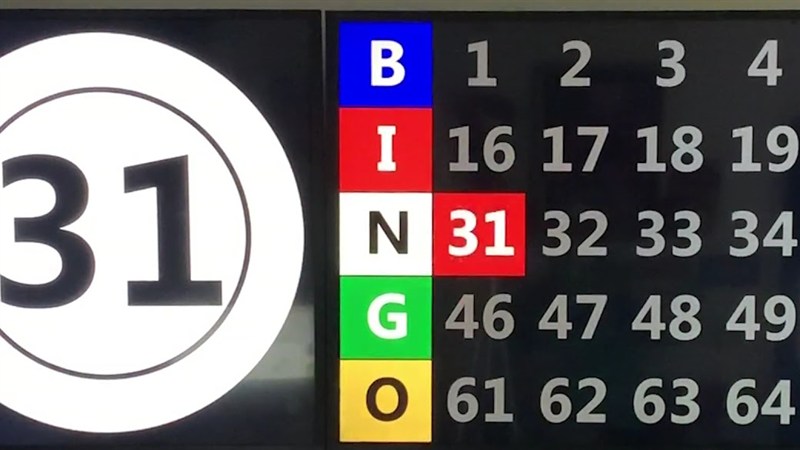
Each letter heads a column with a fixed range. B holds 1 to 15, I holds 16 to 30, N holds 31 to 45, G holds 46 to 60 and O holds 61 to 75.
The N column has only four numbers, because the free space sits in its centre.
Callers say the letter with the number, as in “N 31”, so you look in the right column at once. That habit is the first of the bingo terms Canada beginners pick up.
What is a bingo face?
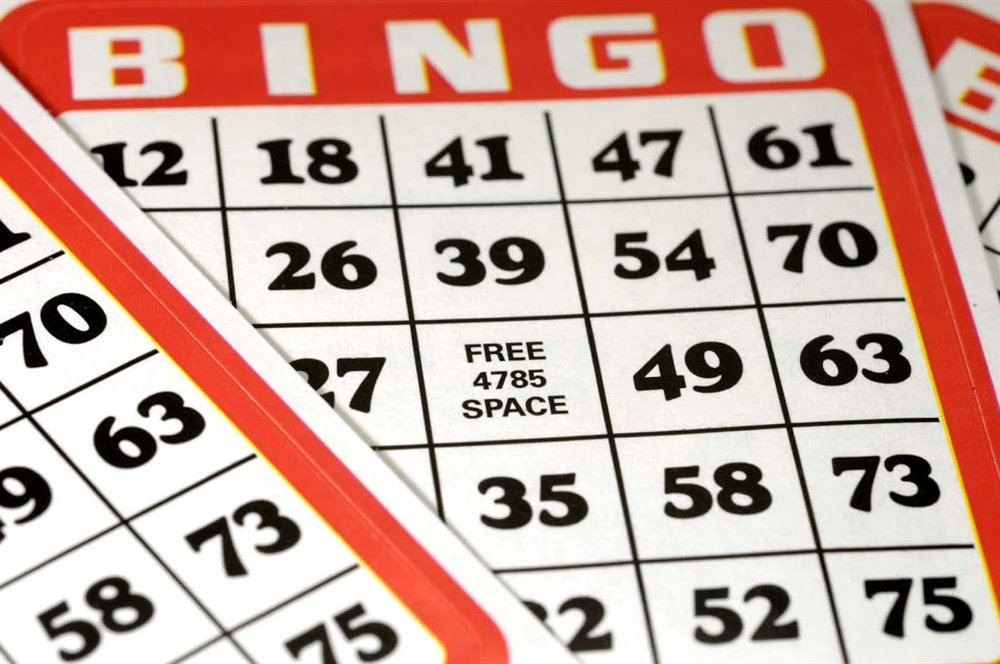
A face is one bingo grid. It holds 24 numbers and a free space, set out in five columns and five rows, for 25 squares in total.
Players often call it a card. One sheet of paper can carry six or nine faces.
Suppliers count paper in faces, so the word leads any list of bingo terms Canada halls print.
What is the free space?
The free space is the centre square of the card. It has no number, and it counts as covered in every game, like a joker or a wild square.
Arrow and the Lancaster Bingo Company describe it in the same way. You mark it before the first call.
It helps on any pattern that runs through the centre, such as a diagonal line, and it is the easiest of the bingo terms Canada beginners learn.
Where does bingo come from?
Bingo Card Creator traces the game to an Italian lottery called Lo Giuoco del Lotto D’Italia in the sixteenth century. It spread through France and Germany before it reached Britain.
Britain gave the game its rhyming calls. North America gave it the five-column card.
That mixed history explains why bingo terms Canada players use blend British and American words.
What is a hard card?
A hard card is a reusable card printed on heavy cardboard. Older versions had shutters that slid over each number, and others were marked with plastic chips.
freebingo.ca notes that each hard card in a series keeps the same numbers for good, so card 1252 always looks the same.
Hard cards are rare today. Disposable paper has taken their place in most halls, but the name lives on among bingo terms Canada regulars use.
What are flimsies and throwaways?
Flimsies, also called throwaways, are bingo cards printed on thin paper. A sheet usually carries three cards, though one, two, four, six and nine-card formats exist.
freebingo.ca puts a typical flimsy sheet at one or two dollars. Halls use them for special games.
A win on a flimsy special usually pays more than a regular game, which keeps the word high on lists of bingo terms Canada regulars use.
What is a dauber?
A dauber is an ink-filled bottle with a foam tip. You touch the tip to a called number, and it leaves a coloured dot on the square.
Other names include dabber, ink marker and dab-o-ink, according to the Lancaster Bingo Company.
Daubers come in bright colours and novelty designs. Of all the bingo terms Canada paper players use, dauber names the one tool everyone carries.
What does ON mean on bingo paper?
ON is the number of bingo faces printed on one sheet. A 6 ON sheet carries six faces, and a 9 ON sheet carries nine.
Higher ON counts put more faces in front of you each game.
Do not confuse it with being “on”, which means one number short. The same two letters do two jobs among bingo terms Canada players hear.
What does UP mean in a bingo book?
UP is the number of sheets in a bingo book. A 6 UP book holds six sheets of paper, and a 10 UP book holds ten.
Read the UP and ON numbers together. A 6 UP book of 9 ON sheets holds 54 faces.
Those two numbers show the amount of paper in a pack before you pay, so they are practical bingo terms Canada players read every session.
What is a bingo paper pack or booklet?
A pack or booklet is a set of numbered sheets in different colours, collated in the order the games are played. Each sheet holds the same number of faces.
The colours tell players which sheet belongs to which game.
The caller names the colour, and you turn to that page.
What is the serial number on bingo paper?
The serial number is printed over the N in BINGO on each face. It identifies the set the paper belongs to and keeps outside paper out of the game.
When you claim a win, staff can check that your serial matches the paper sold that session.
It is one of the bingo terms Canada players rarely notice until a win is checked.
What is a series of bingo faces?
A series is the number of unique faces in one set of bingo paper. A 9,000 series contains 9,000 different faces, and freebingo.ca mentions 6,000-card series as well.
No face repeats inside a series, so two players never hold the same card.
The series size caps the faces a hall can sell for one game without duplicates. Series is one of the quieter bingo terms Canada halls rely on.
What is the free space number?
The free space number is printed in the centre square of each face. It runs in order through the series, so a 1 to 9,000 series has free space numbers from 1 to 9,000.
Staff use it to look up the winning face in a verification book or an electronic verifier.
It is the quickest way for a hall to confirm a claim, which makes it one of the handiest bingo terms Canada hall workers know.
What is a six-pack or nine-pack?
A six-pack or nine-pack is a pattern made of a solid block of six or nine numbers on one card. Arrow and the Lancaster Bingo Company both list it.
The nine-pack is a three-by-three square. The six-pack is a block of two rows of three.
Both appear on game schedules beside the postage stamp and the coverall, two more bingo terms Canada halls use for shapes.
What is a blower?
A blower is a forced-air device that mixes the bingo balls and sends one at a time to the caller. The caller reads the number and lights it on the board.
Air mixing keeps the draw random and visible to the room.
Online rooms replace the blower with software, so the word stays a hall-only entry among bingo terms Canada players learn.
What is a flashboard?
A flashboard is the electronic sign that lights up each number after the caller announces it. In a 75-ball hall it shows all 75 numbers, grouped under B, I, N, G and O.
Players glance at it to check a number they missed.
The board is also called a bingo board or display board, two more bingo terms Canada halls use for the same sign.
What is a game board?
A game board is a display next to the flashboard that looks like a bingo card. It lights the pattern for the current game, such as Four Corners, Chevron or Blackout.
freebingo.ca describes it as the quickest way to see which variation is in play.
Check it before every game, because the pattern changes through the session. The game board puts the shape names among bingo terms Canada halls use on display.
Who is the bingo caller?
The caller is the person, or machine, who draws and announces the numbers. In halls, the caller usually sits above the crowd so everyone can see the draw.
freebingo.ca jokes that the caller is also the person to blame when your number never comes up.
Callers set the pace of the game. Our page on how to become an online casino dealer covers a related job on the casino side.
What does a floor worker do?
A floor worker keeps the hall running during play. They sell pull tabs in their section and step in to verify a winning card when someone calls bingo.
The floor worker reads the winning numbers back to the caller.
If the numbers match, the caller confirms the win. Floor worker is one of the staff titles among bingo terms Canada players hear on a busy night.
What is a card minding device?
A card minding device is an electronic unit that stores, displays and marks bingo faces for the player. It connects to the equipment the hall uses to run the game.
Arrow and the Lancaster Bingo Company define it in matching words.
It lets one player follow far more faces than paper allows.
What is a personal bingo verifier in Ontario?
Under AGCO terms, a personal bingo verifier, or PBV, is a hand-held device that helps a player track and check the numbers called. It never replaces bingo paper and daubers.
The game must still be played on paper, with numbers dabbed in the normal way.
That rule sets the PBV apart from a card minding device among the bingo terms Canada players see in Ontario halls.
What is a bingo session?
A session is the full daytime or evening programme of bingo. It mixes regular games with special games, and the Lancaster Bingo Company puts its length at two and a half hours to three hours and fifteen minutes.
Arrow puts the usual length at two to three hours.
Plan your budget for the whole session, not one game. Session is the frame that holds every other entry in this list of bingo terms Canada players use.
What is a regular session?
The regular session is the main part of the programme, with between 10 and 20 games. The big jackpot usually comes last to hold the crowd.
Arrow calls it the main attraction of the evening.
Early birds and late birds wrap around it, and both are timing words among the bingo terms Canada halls print.
What is an early bird game?
An early bird is a short set of two to eight games played before the regular session. Halls use it to bring players in well before the main start.
Prizes in early bird games are usually small.
freebingo.ca adds that the first game of a session sometimes carries the same name, so early bird is one of the looser bingo terms Canada halls use.
What is a warm up?
A warm up is a short set of two to four games at the start, used to get players settled. Small prizes are the norm.
freebingo.ca treats warm up and early bird as near twins.
Either way, the warm up lets newcomers learn the pace before the big games begin.
What are late birds and nite owls?
A late bird or nite owl is a short set of two to eight games played after the regular session. It lets players stay on once the main programme ends.
Prizes are small, as in the early birds.
freebingo.ca uses the term after games for the same idea, another pair of bingo terms Canada halls use for one thing.
What is moonlight bingo?
Moonlight bingo is a session that starts late at night, usually about 10 p.m. freebingo.ca also calls it late night bingo, a name that explains itself.
It suits players who finish work after the evening programme.
Check your hall’s schedule to see whether it runs one. Moonlight is the most poetic of the bingo terms Canada halls use.
What makes a bingo game a speed game?
Speed bingo is a fast variation where numbers are called very quickly. You can win in as few as three numbers, and it is usually played before or after a regular session.
The Lancaster Bingo Company also uses speed game for a pot split between the winner and the house.
Ask which meaning your hall uses before you buy in, since speed is one of the bingo terms Canada halls apply in two ways.
What is a special game?
A special is a game played with different cards from the pack bought at admission. Specials usually use flimsies or loose paper sold separately.
They tend to carry bigger prizes than regular games.
freebingo.ca simply defines a special as a game played on a flimsy sheet. Special and flimsy go together among bingo terms Canada players hear.
What is the wrap up?
The wrap up is the last game of a bingo session. freebingo.ca, Arrow and the Lancaster Bingo Company all define it the same way.
The wrap up often carries the night’s biggest prize, because the jackpot comes last.
When the caller announces the wrap up, the night is nearly over. It closes every list of bingo terms Canada halls print.
What is an admission packet?
An admission packet is the minimum set of cards you must buy to enter a session. Arrow puts it at six to twelve cards for each regular game, with the content and price set by each hall.
freebingo.ca puts the typical packet at three to six cards per regular game, often with special games included.
Admission is the first of the bingo terms Canada newcomers meet at the counter, before a single number is called.
What is a buy-in?
A buy-in is the price of a packet of bingo paper for the event. Halls offer different buy-in levels, so players can choose how much to play and pay.
Arrow notes that levels can combine early birds, the regular session, specials and night owls.
The minimum buy-in is the least you can spend and still be eligible for prizes. Both versions sit side by side among bingo terms Canada halls post at the door.
What is U-Pik-Em?
U-Pik-Em is a special game where players choose their own numbers on a two-part form. You keep the top copy and hand in the second before play, so the hall can verify a win.
It turns the usual random card into a personal pick.
That choice sets U-Pik-Em apart from every other format in this list of bingo terms Canada players can try.
What is a bingo pattern?
A pattern is the shape you need to cover on your card to win. You need only the numbers inside the pattern, and the basic patterns are straight lines across, down or corner to corner.
The caller and the game board announce the pattern before each game.
Learning the patterns is the fastest way into the bingo terms Canada halls use every night.
What is hard-way bingo?
Hard-way bingo is a straight-line pattern that does not use the free space. Lines through the centre do not count, so you must cover five real numbers.
Arrow and Lancaster define it in identical words.
Expect hard-way games to run longer than a normal line game, since fewer lines qualify. Hard-way is a pattern word worth knowing among bingo terms Canada halls use.
What is a coverall or blackout?
A coverall, also called a blackout, asks you to cover all 24 numbers on a face. Arrow says 50 to 60 of the 75 numbers are usually called before someone wins.
Coveralls in as few as 43 numbers have been recorded. freebingo.ca mentions blackouts in 42 or 43 numbers in the Seattle area.
The coverall is usually a late, big-money game, which makes it one of the bingo terms Canada players hear just before the jackpot.
What is a postage stamp pattern?
A postage stamp is a two-by-two block of four numbers in any of the card’s four corners. Covering those four squares wins the game.
The shape looks like a stamp on the corner of an envelope.
It is a quick pattern, since only four numbers are needed. Postage stamp is a favourite among the shape names in bingo terms Canada halls use.
What does the letter X pattern need?
The letter X pattern needs both diagonal lines covered, crossing at the free space. Arrow uses it as its example of a game pattern.
Because the two lines share the free space, the X needs eight numbers.
Letter patterns are a staple of North American game schedules, and the X is the simplest of them.
What are Four Corners and Chevron?
Four Corners asks for the four corner numbers of the card. Chevron is a V-shaped pattern, like a stripe on a sleeve. freebingo.ca names both as typical game board patterns.
Four Corners needs only four numbers, so it often ends fast.
Patterns like these keep a long session varied, and they add colour to the bingo terms Canada players learn.
What does on the way mean?
On the way, or games on the way, are the smaller games played on a blackout card before the blackout itself. The caller keeps calling on the same card until someone covers it all.
freebingo.ca explains that the early games are played first and the blackout follows.
One card can pay more than once in a single game this way, a useful point among bingo terms Canada regulars explain to newcomers.
What is a Texas blackout?
A Texas blackout is a blackout where the first number decides which numbers are wild. If the first call is even, every even number is wild. If it is odd, every odd number is wild.
The game then continues until someone covers the card.
With half the numbers free, a Texas blackout ends far sooner than a standard coverall. Its name is a reminder that bingo terms Canada players use often come from American halls.
What is the wild number game?
In the wild number game, the first ball out sets a wild digit. In Arrow’s example, if N42 is drawn, players mark every number ending in 2.
Arrow says the wild number is played on a double bingo that leads into a triple bingo.
The wild digit speeds up the game for everyone at once. It is one of the rarer bingo terms Canada players meet, so ask the caller if it appears on your schedule.
What is a bingo jackpot?
A jackpot is a big prize for a difficult pattern, such as a blackout, completed within a set number of calls. If nobody wins inside the limit, a smaller consolation prize usually goes out instead.
freebingo.ca notes that the numbers allowed can grow too, so the jackpot gets easier to win over time.
Our page on how online jackpots work in Canada covers the casino version.
What is a progressive bingo jackpot?
A progressive jackpot grows until someone wins it. It builds daily, weekly or monthly whenever nobody wins within the set number of calls.
Different versions add money, add numbers, or both. There is usually a separate buy-in.
If no one wins in time, consolation prizes of smaller amounts are paid. The progressive is the headline prize behind the bingo terms Canada players hear at the counter.
How do pre-drawn numbers work in Bonanza bingo?
Bonanza bingo is a progressive coverall where numbers are drawn before the session. Arrow says 45 numbers are drawn first, the game is usually the 13th of the session and the fee is usually $1.
Players mark the pre-drawn numbers on separate cards. Arrow’s countdown starts at 48 numbers or fewer and rises by one each week, up to 52, until someone wins.
freebingo.ca describes a version with 50 pre-drawn numbers and an instant prize for a blackout. Like other jackpot bingo terms Canada halls use, Bonanza follows house rules.
What is a tear-open?
A tear-open is a single bingo face folded and sealed, so nobody sees it until it is sold and torn open. Arrow calls it a bonanza game, usually the big jackpot game.
The seal keeps the face hidden until the buyer opens it.
It pairs with Bonanza bingo among the bingo terms Canada halls use for jackpots.
What happens when two players bingo at once?
When two or more players bingo on the same call, they share the cash prize equally. In Arrow’s example, five winners on a $500 game each receive $100.
Call out at once, since the split covers only players who claim on that number.
Shared prizes are one of the first bingo terms Canada newcomers ask about.
What is a split pot?
A split pot is a game where the winner shares the game’s sales with the hall. The Lancaster Bingo Company gives the example of 60 percent to the winner and 40 percent to the house.
The more cards sold, the bigger the pot.
Arrow calls the same idea a percentage game, with splits of 50-50 or 60-40. Split pot and percentage game are twin bingo terms Canada halls use for one format.
What is winner takes all?
Winner takes all is a stand-alone game near the end of the evening. Every dollar raised from its cards goes back to the winner as the prize.
It sits outside the regular session, so cards are sold separately.
Unlike a split pot, the house keeps nothing from this game, which makes it the most generous of the prize bingo terms Canada halls use.
What is the money ball?
The money ball is a number drawn before the game starts. If you bingo on that exact number, your winnings double.
Arrow and Lancaster define it in matching words.
It adds a jolt of tension to every call, and it is one of the bingo terms Canada players love to hear announced.
What is the lucky jar or cookie jar?
The lucky jar, or cookie jar, is a container of cash. You win it if you bingo on the lucky number, which is usually the first number called in the session.
Money is added each time the lucky number is called, or when the caller makes a mistake announcing a game.
Arrow notes that it usually runs on regular games, not special throwaway games. Lucky jar is the sweetest of the bingo terms Canada players hear, since the prize grows on its own.
What does payout mean in bingo?
Payout is the share of sales a hall returns as prizes. freebingo.ca reports an average of about 75 percent across Washington State halls, against about 45 percent for state lottery games.
Those figures are American, but the term means the same in Canada.
A higher payout means more of each dollar comes back as prizes, which makes it one of the bingo terms Canada players compare between halls.
What is a pull tab or break open?
A pull tab, or break open, is a paper ticket with perforated tabs that hide symbols or numbers. The winning tickets are set in advance by the maker.
Arrow lists other names: instant bingo tickets, tear-offs, pickles, cherries, peel-offs, bell jars, Nevadas and club tickets.
Floor workers sell them during the session, so they sit beside the bingo terms Canada halls use for the main game.
What is a flare card?
A flare card is the poster that comes with each deal of pull tab tickets. It shows the game name, the form number, the serial number and the price per ticket.
It also lists the winning symbol combinations and their prizes.
Read the flare before you buy. It is the price list among the bingo terms Canada pull tab players use.
What is a bingo event game?
A bingo event game is a pull tab game whose prizes depend partly on the draw of a bingo ball. It is often played alongside a regular bingo game.
Part of the result waits for the caller’s draw.
It links the pull tab counter to the main game, a bridge between two groups of bingo terms Canada halls use.
What are bingo calls?
Bingo calls are nicknames that callers use when they announce a number. In a crowded, noisy hall, the nickname confirms the number and adds humour to the draw.
Arrow and Lancaster both give that double purpose.
LeoVegas counts 90 calls, one for each number in the British game. That makes them the largest group of bingo terms Canada players can learn.
Where did the rhyming calls start?
LeoVegas traces bingo calls to London early in the twentieth century, as part of the Cockney rhyming slang of the East End. Wikipedia adds that the oldest calls date back to the turn of that century.
Wikipedia names “Little Jimmy” for 1 as one of the oldest, first recorded in an article about troops bound for the Boer War.
London’s halls adopted the rhymes to make numbers clear, and local calls joined later. That long history is why bingo terms Canada players hear still carry London slang.
What do the calls from one to five mean?
One is “Kelly’s eye”, two is “one little duck”, three is “cup of tea”, four is “knock at the door” and five is “man alive”. Each comes from a rhyme or a shape.
Two looks like a duck, so players answer with a single “quack”.
“Knock at the door” may come from the nursery rhyme “One, Two, Buckle My Shoe”, Wikipedia notes. The low numbers are the easiest bingo terms Canada beginners can memorise.
What do the calls from six to ten mean?
Six is “half a dozen” or “Tom Mix”, seven is “lucky”, eight is “garden gate”, nine is “doctor’s orders” and ten names the British prime minister’s den.
Tom Mix was one of Hollywood’s first Western stars.
Eight also has “one fat lady”, from the shape of the number. Shape jokes like this one run through the calls and the wider bingo terms Canada players pick up.
Why is nine called doctor’s orders?
Wikipedia explains that number 9 was a laxative pill that army doctors handed out in the First World War. Players sometimes answer the call with “cough, cough”.
Bingo Card Creator places the pill in the Second World War instead, so the sources disagree.
Either way, the call is a soldier’s joke that survived in the halls and joined the bingo terms Canada players still hear.
Why does the call for ten keep changing?
The call for 10 refers to 10 Downing Street, the British prime minister’s home. It changes with each new prime minister, and Wikipedia gives “Macmillan’s Den” as the first noted use.
LeoVegas writes it as the prime minister’s name followed by “den”.
Older calls for 10 include “cock and hen” and “Downing Street”.
Why is eleven called legs eleven?
“Legs eleven” comes from the shape of 11, which looks like a pair of legs. Wikipedia says it first appeared in the First World War as Australian slang for a tall, thin man.
Bingo Card Creator lists it among the best-known calls.
The Brampton Guardian’s list adds “chicken legs” for the same number, a reminder that bingo terms Canada halls share can vary in wording.
What do the calls from twelve to sixteen mean?
Twelve is “one dozen”, thirteen is “unlucky for some”, fourteen is “Valentine’s Day”, fifteen is “young and keen” and sixteen is “sweet sixteen” or “never been kissed”.
The Brampton Guardian adds “monkey’s cousin” for 12 and “baker’s dozen” for 13.
Wikipedia links “sweet sixteen” to the birthday celebrated in the US and Canada, a North American touch among the bingo terms Canada players hear.
What do the calls from seventeen to twenty mean?
Seventeen is “Dancing Queen”, from the ABBA song. Eighteen is “coming of age”, nineteen is “goodbye teens” and twenty is “one score” or “getting plenty”.
“Coming of age” fits 18, the age of majority in England, Wales and Northern Ireland.
A score is an old word for twenty, which explains the call.
Why is twenty-one the key of the door?
Twenty-one was the traditional age of majority, when a young adult got the key to the family door. The other call, “royal salute”, refers to the 21-gun salute.
The Brampton Guardian lists “just my age” as a third option.
The same paper gives “key of the door” to 18 as well, which shows how calls drift between halls. Expect small differences whenever bingo terms Canada halls use come from memory.
Why do players quack at twenty-two?
Twenty-two is “two little ducks” or “ducks on the pond”, because the numeral looks like two ducks in profile. Players often answer with “quack, quack”.
It is one of the best-loved calls in Britain.
The quack shows how calls invite the whole room to join in, the social side of bingo terms Canada players enjoy.
What do the calls from twenty-three to twenty-nine mean?
Twenty-three is “the Lord is my shepherd” or “thee and me”, 24 is “two dozen”, 25 is “duck and dive”, 26 is “pick and mix” and 27 is “gateway to heaven”.
Twenty-eight is “in a state” or “overweight”, and 29 is “rise and shine”.
Twenty-six also has “half a crown”, from old British money written as 2/6. Money calls like this one are the hardest bingo terms Canada players can decode.
Why is thirty Dirty Gertie?
“Dirty Gertie” was the nickname of La Delivrance, a bronze statue of a nude woman installed in North London. A wartime song about “Dirty Gertie from Bizerte” spread the name further.
LeoVegas adds that the statue honours the First Battle of the Marne.
The story turns a plain number into one of the most colourful bingo terms Canada players can learn.
What do the calls in the thirties mean?
Thirty-one is “get up and run”, 32 is “buckle my shoe”, 33 is “dirty knee” or “all the threes”, 34 is “ask for more” and 35 is “jump and jive”.
Thirty-six is “three dozen”, 37 is “more than eleven”, 38 is “Christmas cake” and 39 is “all the steps”.
“All the steps” refers to John Buchan’s novel The Thirty-Nine Steps, a literary nod among bingo terms Canada players hear.
What do the calls in the forties mean?
Forty is “life begins” or “naughty forty”, 41 is “time for fun”, 42 is “Winnie-the-Pooh”, 43 is “down on your knees” and 44 is “droopy drawers”.
Forty-five is “halfway there”, 46 is “up to tricks”, 47 is “four and seven” and 48 is “four dozen”.
LeoVegas explains “time for fun” with a twist on an old saying: life begins at 41, so it is time to have some fun.
Why do players say “evening, all” at forty-nine?
Forty-nine is “PC”, after the BBC radio series The Adventures of PC 49. The usual reply from the players is “evening, all”, a classic British police greeting.
Bingo Card Creator lists “O Canada” as a Canadian version, a nod to the 49th parallel.
That swap shows how calls change once they cross the Atlantic, and it gives bingo terms Canada players use a local accent.
What do the calls in the fifties mean?
Fifty is “half a century”, 51 is “tweak of the thumb”, 52 is “Danny La Rue” or “weeks in a year”, 53 is “stuck in the tree” and 54 is “clean the floor”.
Fifty-five is “snakes alive”, 57 is “Heinz varieties”, 58 is “make them wait” and 59 is “Brighton line”.
At 58, the caller often pauses on purpose to make the room wait. Fifty-three is also “here comes Herbie”, after the racing number of the Volkswagen Beetle in the films, and players reply “beep beep”.
What does was she worth it mean?
“Was she worth it?” is the call for 56 in Wikipedia’s list. It refers to the old British price of a marriage licence, five shillings and sixpence, and players shout back “every penny!”
Bingo Card Creator also files it under 76, linked to a price of seven shillings and sixpence, so the call has two homes.
It is the cheekiest of the bingo terms Canada players borrow from British halls.
What do the calls in the sixties mean?
Sixty is “five dozen”, 61 is “baker’s bun”, 62 is “tickety-boo” or “turn the screw”, 63 is “tickle me” and 64 is “red raw”.
Sixty-five is “old age pension”, 66 is “clickety click”, 67 is “made in heaven” and 68 is “saving grace”.
Sixty-nine is “either way up”, because the number reads the same upside down. Visual puns like this fill the bingo terms Canada callers can use.
What do the calls in the seventies mean?
Seventy is “three score and ten”, 71 is “bang on the drum”, 72 is “six dozen”, 73 is “queen bee” and 74 is “candy store”.
Seventy-five is “strive and strive”, 76 is “trombones”, 78 is “heaven’s gate” and 79 is “one more time”.
“Trombones” comes from the marching song in the musical The Music Man, an American tune inside a British list of bingo terms Canada players borrow.
Why is seventy-seven Sunset Strip?
Seventy-seven is “Sunset Strip”, after the television series 77 Sunset Strip about private investigators in Los Angeles. Players sometimes sing it and stamp their feet.
Arrow lists it as a popular US call, and LeoVegas adds “two little crutches” for the shape.
It is a call that North American and British halls share, so it suits bingo terms Canada players hear on both sides.
What do the calls in the eighties mean?
Eighty is “eight and blank”, 81 is “stop and run”, 82 is “straight on through”, 83 is “time for tea” and 84 is “seven dozen”.
Eighty-five is “staying alive”, 86 is “between the sticks” and 87 is “Torquay in Devon”.
“Between the sticks” refers to a football goalkeeper, who stands between the posts. Sport supplies its own corner of the bingo terms Canada players hear.
Why is eighty-eight two fat ladies?
Eighty-eight is “two fat ladies” because the two eights look like two women side by side. Players may reply with a cheerful “wobble, wobble!”
Bingo Card Creator calls it one of the most famous calls of all.
Wikipedia notes that if 88 comes up in the last round, callers may say “two fat gentlemen” instead. It is the call most people know, even outside the bingo terms Canada regulars use.
Why is ninety top of the shop?
Ninety is the highest number in the British game, so callers say “top of the shop”. The word “shop” refers to the whole game and rhymes with top.
Eighty-nine, one below, is “nearly there” or “almost there”.
Forty-five, halfway to 90, is “halfway there”. Those three calls mark the start, middle and end of the British list.
Do Canadian bingo halls use the British calls?
Rarely now. The Brampton Guardian notes that faster games and new technology have made calling almost nonexistent, though Bingo Country Brampton still shares a list of nicknames.
Arrow and Lancaster add that nicknames faded in British halls too, once computer draws replaced air-blown balls.
LeoVegas notes that Canadian halls blend US and UK English, so rhymes can differ. The calls survive more as fun than as standard bingo terms Canada halls announce.
Which calls have a Canadian twist?
Bingo Card Creator lists Canadian versions such as “hockey sticks” for 7, “maple leaf” for 10, “O Canada” for 49 and “moose on the loose” for 87.
It describes Canadian calls as British roots mixed with hockey and national symbols.
No regulator sets these, so each hall or host can invent its own. Home-grown calls are the friendliest bingo terms Canada hosts can add.
How do players answer the caller?
Players answer certain calls with set replies. Twenty-two gets “quack, quack”, 9 gets “cough, cough”, 49 gets “evening, all”, 53 gets “beep beep” and 88 gets “wobble, wobble”.
Fifty-six earns the loudest reply: “every penny!”
The replies turn the draw into a shared game, which is the charm of these bingo terms Canada players borrow.
Which modern calls have joined the list?
Wikipedia credits Butlins with introducing “chicken vindaloo” for 52, and it notes a children’s internet meme, “6-7”, now used for 67. Bingo Card Creator adds “Tinder date” for 8 and “selfie queen” for 17.
New calls keep the tradition fresh for younger players.
Hosts are free to invent their own, as long as the number stays clear.
How fast does a bingo caller call numbers?
Bingo Card Creator suggests one number every 10 to 15 seconds as a rule of thumb. Too fast and players fall behind, and too slow and the game drags.
Clear speech matters as much as pace.
Speed games break this rule on purpose, which is why speed and pace are linked bingo terms Canada players hear.
What does it mean to be on?
A player is “on” when a card lacks only one number for a bingo. freebingo.ca uses the term, and it is the moment the room goes quiet.
Online rooms show the same state as 1TG, short for one to go.
Being on is one of the most exciting bingo terms Canada players learn, and the most frustrating when someone else wins first.
How does 90-ball bingo differ from 75-ball?
90-ball bingo uses a ticket of nine columns and three rows, while 75-ball uses a five-by-five card. LeoVegas notes that 75-ball is the most popular version in the US and Canada.
Each 90-ball ticket holds 15 numbers, five on each row. Prizes go for one line, two lines and a full house, which means all 15 numbers.
Online rooms offer both, so the two sets of bingo terms Canada players meet sit side by side.
What is a strip of bingo tickets?
A strip is a set of six 90-ball tickets that together cover every number from 1 to 90 once. Players who buy a full strip mark a number on every call.
That guarantee makes strips popular online.
A strip is a 90-ball idea with no direct match among the bingo terms Canada 75-ball halls use for paper.
What are 80-ball and 30-ball bingo?
80-ball bingo uses a four-by-four card with 16 numbers, and 30-ball bingo uses a three-by-three card with nine numbers. Both are online formats.
30-ball games end very quickly, since a full card needs only nine numbers.
Our page on online keno, bingo and scratch cards shows where these games fit among other number games.
What do online bingo rooms add to the lingo?
Online rooms add chat terms such as 1TG and 2TG for one or two numbers to go, and auto-daub, which marks your numbers as they are drawn. The draw comes from a random number generator.
LeoVegas notes that online games keep the rhyming calls to give a real-hall feel.
Our page on random number generators in casino games explains the draw behind the newest bingo terms Canada players meet.
How does Ontario’s regulator define bingo?
The AGCO defines bingo as a lottery scheme where players pay for a chance to win cash by being first to complete a set arrangement of numbers drawn at random.
That makes bingo in Canada a lottery scheme in law, and charities run it under licences.
The AGCO’s bingo licence terms list the legal side of the bingo terms Canada halls use.
Who licenses charity bingo in Ontario?
In Ontario, charities run bingo under licences issued by a municipality or by the AGCO’s Registrar. The power to license comes from Section 207 of the Criminal Code of Canada.
A licensee is the organization that holds that licence, and a bingo hall is the gaming site where it runs the game.
The hall operator supplies paper, security, equipment and staff, paid through hall rental from event proceeds. Hall rental and licensee are business bingo terms Canada charities use daily.
What is a Regular Bingo licence?
A Regular Bingo licence allows bingo events where the total prizes for any one event do not exceed $5,500. It covers the everyday charity session.
Breaking the terms can lead to suspension, cancellation or prosecution.
The prize cap explains why regular sessions rarely offer huge jackpots. It is the most common licence behind bingo terms Canada players see on Ontario schedules.
What is a Special or Monster Bingo licence?
A Special Bingo licence, also called a Monster Bingo licence, covers events where the total prizes exceed $5,500. It suits larger events with bigger prize pools.
The AGCO separates the two licence types by prize total alone.
Monster is the eye-catching word in this pair of bingo terms Canada charities use.
What is a game schedule in Ontario bingo?
Under AGCO terms, a game schedule is the full list of games for a bingo event. It shows each winning pattern, the prizes, the paper prices, the maximum prizes and the hall’s name and address.
Schedules can mix fixed prizes with prize-board games whose payouts vary.
A variable game must still show its maximum payout. Read the schedule first, because it maps the bingo terms Canada halls will use that night.
How old do you have to be to play bingo in Canada?
The legal age is 19 in most provinces and territories, and 18 in Alberta, Manitoba and Quebec. The same ages apply to online gambling.
Halls and online sites check age before play, so age rules come before any other bingo terms Canada players learn.
Our page on the Canadian gambling age covers each province in turn.
Which live casino games borrow bingo terms?
Live casino games such as The Bingo Spot and Mega Ball borrow bingo words like ticket, ball draw and full house. They run as studio game shows rather than hall sessions.
Our Bingo Spot live review walks through one round.
The Mega Ball live game adds multipliers to a bingo-style card.
How do you keep bingo spending under control?
Set a session budget before you buy paper, and count specials, pull tabs and online pre-buys inside it. Small side purchases add up over a long session.
Our page on setting gambling limits in Canada lists the tools online sites offer.
Free, confidential help is open at any hour: Ontario residents can reach ConnexOntario by phone, chat or email.
Who will find bingo terms Canada lists useful?
New players gain the most, because a glossary turns a confusing hall into a simple game. Regulars and online players also benefit when a hall or room uses an unfamiliar word.
Start with the card words, then the patterns, then the prizes.
Save the calls for last. They are the fun part.