Online keno, bingo and scratch cards are the three lottery-style games sitting alongside slots in a Canadian casino lobby, and all three trade a low stake and a simple format for a house edge well above the table games. This guide covers how each one works, what the odds actually are, what they return and which suits which kind of player. For the wider market picture, start at our online Canada casinos hub.
The table below compares the three formats on the numbers that matter. Read it first, then work through the detail beneath.
| Game | Typical return | House edge | Pace | Top prize odds |
|---|---|---|---|---|
| Online keno at a casino | 92% to 95% | 5% to 8% | Player controlled | 1 in 8.9 million on a ten spot |
| Provincial lottery keno | 65% to 75% | 25% to 35% | Fixed draw schedule | Varies by pick size |
| Online bingo | Prize pool less rake | 10% to 25% rake | Fixed room schedule | Depends on players in room |
| Online scratch cards | 90% to 96% | 4% to 10% | Instant, player controlled | Printed on the card |
| Slots, for comparison | 94% to 97% | 3% to 6% | Player controlled | Varies widely |
| Blackjack, for comparison | 99.5% | 0.5% | Player controlled | Not applicable |
What are keno, bingo and scratch cards?
All three are lottery-style games where the player selects or receives numbers and waits for a draw, with no decisions affecting the outcome once the stake is placed and no skill element at any point.
Keno asks the player to pick numbers from a grid of eighty, and the game draws twenty. Matching more of your picks pays more.
Bingo assigns numbered cards and calls numbers until a pattern completes. The first player to complete it wins from a pooled prize.
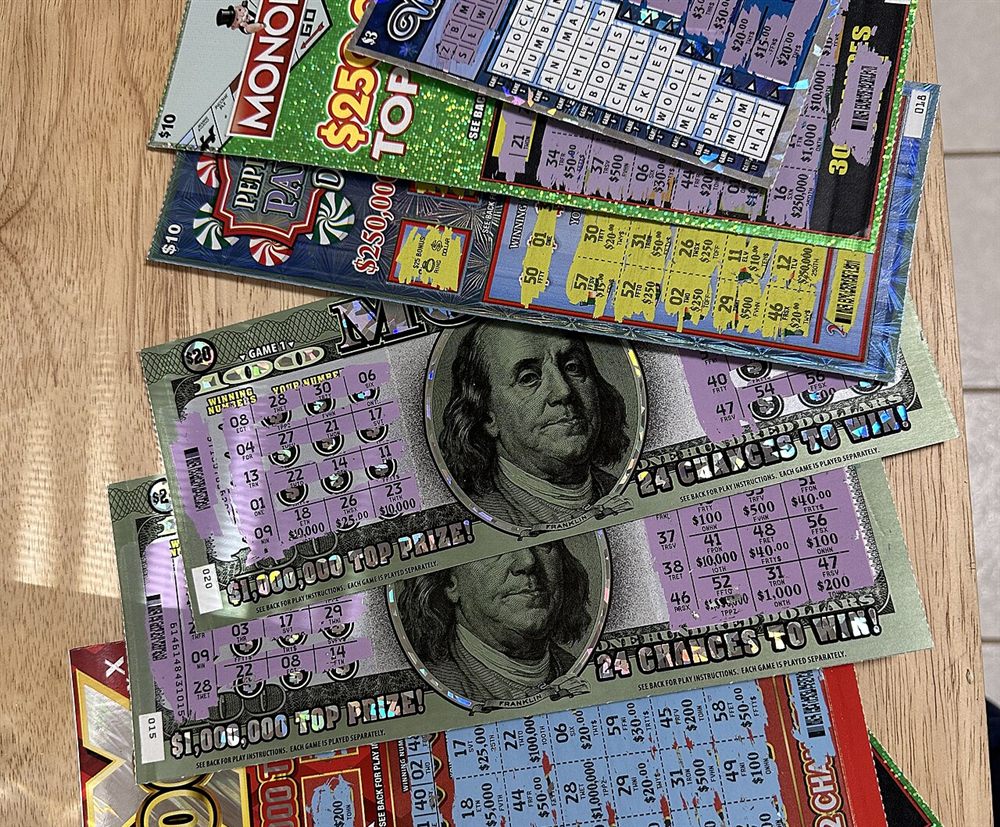
Scratch cards reveal symbols instantly, with prizes determined at purchase rather than by any subsequent action.
What separates online keno and its two companions from slots is presentation rather than mathematics. All four are chance games with a published return and no player influence.
What separates them from blackjack and baccarat is the house edge, which runs three to ten times higher across all three formats.
Grouping the three together is useful because they share an audience rather than a mechanism. Players who enjoy online keno frequently enjoy scratch cards, and bingo draws a partly separate crowd that values the room and the chat as much as the prize. All three sit apart from the table games in the same way: no decisions, a heavier edge and a lottery rhythm rather than a gambling one.
Three formats, one rule. Online keno, bingo and scratch cards all settle by draw rather than by decision, and online keno is the one of the three offering any control over pace.
How do you play online keno?
Choose how many numbers to mark on a grid of eighty, set a stake, and the game draws twenty numbers, paying according to how many of your selections appear among them.
Most versions allow between one and ten selections, and a minority extend to fifteen or twenty. The number chosen is called the spot, so a ten spot game means ten selections.
Each spot size has its own pay table. A ten spot pays nothing for two matches and a great deal for ten, while a four spot pays modestly for two.
Quick pick fills the grid randomly. It changes nothing about the odds, because every number carries an identical chance of appearing.
Multi-race options repeat the same selections across consecutive draws. That saves clicking and alters nothing mathematically.
The whole of playing online keno is choosing a spot size and a stake, and every other control on the screen is convenience.
The interface is the same at every supplier once you have seen one. A grid of eighty numbers, a spot counter, a stake selector and a play button, with the draw animated across the same grid. Learning online keno at one operator therefore transfers completely to any other, which is unusual among casino products and makes comparison shopping straightforward.
Pick a spot, set a stake, press play. That is online keno in full, and every other control on an online keno screen exists for convenience rather than for advantage.
What are the odds in online keno?
Twenty numbers are drawn from eighty, so any single number has a one in four chance of appearing, and the difficulty rises steeply with the number of matches required.
Hitting all ten on a ten spot is roughly one chance in nine million. That figure is close to a national lottery jackpot and explains the size of the payout attached.
Smaller spots are far more achievable. Hitting three of four is about one chance in twenty-three, and hitting two of four is roughly one in seven.
The trade is payout size. Frequent small wins on a low spot produce a gentler ride, and high spots produce long droughts with occasional large results.
None of the spot sizes changes the house edge meaningfully. The pay tables are calibrated so that each returns a similar percentage over time.
That calibration is the point most players miss. Choosing a spot size in online keno selects variance rather than value.
Two numbers describe every keno game. One in four is the chance any single selection appears in the draw, and the spot size decides how many of those one in four events have to land together. Everything else on the pay table follows from that pair, and no arrangement of picks improves either figure.
One in four per number, compounding with the spot size. Online keno odds follow from that alone, and no online keno pattern or system moves either figure.
What return does keno actually offer?
Casino versions of online keno typically return between ninety-two and ninety-five percent, while provincial lottery keno returns closer to sixty-five or seventy-five percent, which is one of the largest gaps between two versions of the same game anywhere.
The difference comes from purpose. Lottery keno funds public programmes from its margin, and casino keno competes against slots in the same lobby.
That makes the venue choice worth more than any playing decision. The identical game costs three or four times more at a lottery terminal as at a casino table.
Return figures are published in the game information panel at licensed casinos. A version not stating one is worth treating cautiously.
Even at ninety-five percent the edge sits above slots and far above blackjack. Online keno is a mid-priced game rather than a cheap one.
Our comparison of roulette odds puts that in context, since roulette charges 2.70 percent against keno’s five to eight.
The venue gap deserves emphasis because it dwarfs every other consideration in this guide. A player choosing casino online keno over the provincial lottery version keeps roughly a quarter more of every dollar staked, and no amount of careful spot selection comes close to that difference.
Venue decides the price. Casino online keno returns around ninety-five percent and lottery online keno returns closer to seventy, for an identical game on an identical grid.
How does online bingo work?
Players buy numbered cards for a scheduled game, numbers are called automatically, and the first card completing the required pattern wins a share of the pooled ticket money less the operator’s cut.
Auto-daub marks the cards for you. Nothing is lost by using it, because no skill exists in spotting a number faster than the software does.
Card quantity is the only real decision. Buying more cards raises the chance of winning proportionally and raises the stake by the same proportion.
The prize comes from the players rather than from the house. Bingo is a pooled game, which makes it structurally different from keno and scratch cards.
Room size therefore matters. A crowded room produces larger prizes and longer odds, and a quiet room produces the reverse.
Chat features are a genuine part of the format. Bingo is the most social product in an online casino, and a substantial share of players are there for that.
Ticket price rather than return is the figure to watch here, because the prize comes from the players in the room rather than from a published percentage. A cheaper ticket in a busy room and a dearer ticket in a quiet one can produce similar expected outcomes, and the operator takes its share either way.
Tickets pool, the house rakes, the room splits the rest. Bingo differs from online keno structurally, because the prize comes from players rather than from the operator.
What bingo variants will you meet?
Canadian lobbies carry two main formats: seventy-five ball bingo played on a five by five grid with pattern wins, and ninety ball bingo played on a nine by three ticket with one, two and full house lines.
Seventy-five ball is the North American standard. Patterns range from simple lines to elaborate shapes, and the pattern is announced before the game.
Ninety ball is the British format and pays three prizes per game. One line, two lines and a full house split the pool in rising proportions.
Speed variants compress everything. Thirty ball and fifty ball games finish in a minute and suit players wanting pace over duration.
Progressive jackpot rooms add a pooled prize won by completing a full house within a set number of calls.
The format changes the rhythm and not the mathematics. Every variant returns the ticket pool less the operator’s rake.
Choosing a variant is mostly choosing how long you want to sit. Ninety ball games run longer and pay three prizes, seventy-five ball games resolve faster with a single pattern, and speed variants finish in about a minute. None of the three is better value, and all three take the same rake from the pool.
Ninety ball, seventy-five ball, speed rooms. All three rake the pool identically, and none carries the published return figure that online keno and scratch cards both display.
How do bingo odds actually work?
Your chance of winning a bingo game is simply your cards divided by all cards in play, which makes bingo the only game in this guide where the odds depend on how many other people are playing.
Ten cards in a room holding a thousand gives a one percent chance. The same ten cards in a room holding a hundred gives ten percent.
Prize size moves in the opposite direction. The crowded room offers a larger pool and a smaller chance, and the quiet room offers the reverse.
Expected value is roughly constant across rooms. Operators take a percentage of the pool regardless of how many players are present.
The rake is the real cost and is rarely stated plainly. Ten to twenty-five percent of ticket sales is typical, which is a heavier edge than online keno carries.
Free bingo rooms exist and are funded as marketing. They return real prizes from operator money rather than from a player pool.
Room population is public information at most operators and worth a glance before buying tickets. A room showing its player count lets you calculate your own chance directly, which is something neither online keno nor scratch cards ever permit, and it is the one genuinely transparent number in the category.
Your cards over all cards in play. That is the whole calculation, and unlike online keno it changes with every player who joins the room.
What are online scratch cards?
Online scratch cards are instant win games where the outcome is decided the moment the card is bought, and the scratching animation reveals a result that was already fixed rather than generating one.
That distinction matters for understanding them. Nothing about how a card is revealed affects what it contains.
Formats vary widely. Match three symbols, beat a target number, reveal a prize amount and find a hidden symbol are all common designs.
Stakes run from ten cents to five dollars per card. The prize structure scales with the stake rather than improving at higher levels.
Prize tables are printed on the card itself. Top prizes, their odds and the overall return are usually stated in the game information.
Compared with online keno, scratch cards resolve faster and offer less choice, since there is no spot size or selection to make.
Theme and animation vary enormously and change nothing. Two cards with identical return figures and different artwork are the same product, and a card whose animation feels more generous is not. Reading the return figure rather than the presentation is the whole of the assessment available.
Instant reveal, fixed outcome. Scratch cards resolve faster than online keno and offer even less to decide, because online keno at least lets a player choose a spot size.
What return do scratch cards offer?
Online scratch cards typically return between ninety and ninety-six percent, which places the better ones alongside slots and the weaker ones well below.
Physical lottery scratch tickets return considerably less. Sixty to seventy percent is typical, because the margin funds public programmes rather than competing for casino players.
That gap mirrors the keno one exactly. The same product costs far more from a lottery terminal than from a licensed casino.
Return figures are published per game at licensed operators. Comparing two cards in the same lobby frequently reveals a difference of three or four percent.
Top prize odds are stated separately and are usually long. A card advertising a large jackpot funds it from the same return figure everything else comes from.
Reading both numbers before buying is the whole strategy available, since no decision exists after purchase.
The spread within a single lobby is the surprise here. Cards from different suppliers sitting side by side can differ by six percentage points, which is a larger gap than exists between most slots. Checking two or three before settling on one takes a minute and is the only decision the format offers.
Ninety to ninety-six percent at a licensed casino, far less at a lottery terminal. Scratch cards mirror online keno exactly on that venue gap.
How do the three compare on cost?
Ranked by house edge, online scratch cards and casino keno sit closest together at roughly four to eight percent, bingo sits above them at ten to twenty-five percent rake, and provincial lottery versions of all three sit far above everything.
None competes with the table games. Blackjack at half a percent and baccarat at one percent are five to ten times cheaper per dollar staked.
Pace changes the hourly cost substantially. A player clicking through scratch cards rapidly stakes far more per hour than a bingo player waiting for scheduled games.
Bingo therefore costs less per hour than its rake suggests. Slow pace and long games limit turnover even at a heavy percentage.
Online keno sits in the middle on both measures. Moderate edge, player-controlled pace, and an hourly cost that depends entirely on how fast the button is pressed.
Our guide to baccarat covers the cheapest end of the lobby for comparison, at 1.06 percent on the Banker bet.
Ranking them honestly requires separating edge from hourly cost. Bingo carries the heaviest percentage and the lightest hourly burn because games are slow, while online keno and scratch cards carry a lighter percentage and can cost far more per hour at speed. Which matters depends entirely on how fast you play.
Bingo costs most per dollar and least per hour. Scratch cards and online keno reverse that, and online keno sits between the two on both measures.
Are provincial lottery sites better for these games?
Provincial platforms offer regulatory protection, local dispute resolution and guaranteed payment, and they charge substantially more for keno and scratch products than a licensed casino does.
That trade is genuine on both sides. A player valuing recourse above return is served better by the provincial option.
Bingo is the exception where the comparison narrows. Community bingo rooms exist on both sides and the rake is broadly similar.
Provincial sites also carry smaller game libraries. Fewer scratch card designs and fewer keno variants appear than at a large offshore lobby.
Every operator reviewed on this site holds an offshore licence rather than a provincial one, which places recourse with the licensing authority instead.
Our guide to online casino legal regulations covers what that means in practice for a Canadian player.
The answer differs by product rather than being uniform. For keno and scratch cards the casino version returns substantially more, and for bingo the two sides are comparable. A player who wants regulatory recourse pays for it in return on the first two and pays very little for it on the third.
Do bonuses work with these games?
Keno, bingo and scratch cards are weighted inconsistently in bonus terms, with bingo frequently excluded entirely, scratch cards often counting at ten percent and keno varying widely between operators.
Bingo exclusion is common because bingo prize pools come from players rather than from the house. Clearing a bonus on a pooled game creates problems for the operator’s own arithmetic.
Scratch cards are treated like slots at certain operators and excluded at others. The weighting table states which applies.
Online keno sits between the two. Ten to a hundred percent weighting appears across the market, and the difference is worth ten times the turnover.
Bingo-specific bonuses do exist and behave differently. They usually credit bingo bonus funds usable only on bingo tickets.
Our guide to reload bonuses covers how weighting changes the real cost of any offer before it is claimed.
Checking the weighting table before playing is worth more here than in most categories, because the variation is so wide. Online keno counting at full weight and online keno counting at ten percent are the same game with a tenfold difference in how long a bonus takes to clear.
Check the weighting every time. Online keno counting at full weight and online keno counting at a tenth are the same game with tenfold different turnover.
Do strategies work in these games?
No strategy affects the outcome in any of the three, because every result is drawn or predetermined and no decision made by the player influences it.
Hot and cold number tracking is the common keno myth. Draws are independent, and a number absent for fifty games carries the same one in four chance as any other.
Card selection systems in bingo fail the same way. Cards are assigned randomly and no arrangement of numbers performs better than another.
Scratch card systems are the least plausible of all, because the outcome was fixed before the card was displayed.
What does affect results is selection rather than play. Choosing the higher return version of a game changes the expected outcome measurably.
That is the honest summary: pick the game carefully, then accept that online keno and its companions offer nothing further to decide.
The absence of strategy is worth stating positively rather than as a warning. These are games to relax with rather than concentrate on, and that is precisely what a large share of their audience wants from them. Nobody needs a chart, a system or a practice session to play them correctly.
Which of the three suits which player?
Scratch cards suit a player wanting instant results at their own pace, bingo suits a player wanting a long social session at low cost per hour, and keno suits somebody wanting lottery-style anticipation with control over pace.
Bankroll requirements differ accordingly. Scratch cards consume a bankroll quickly at speed, and bingo consumes one slowly across scheduled games.
Session length follows the same pattern. A bingo evening runs for hours on a modest stake, and a scratch card session can end in minutes.
Players optimising for cost should look past all three. Blackjack, baccarat and video poker all return more per dollar staked.
Players who enjoy these formats specifically are buying entertainment they prefer at a higher price, which is a legitimate choice made knowingly.
Choosing the casino version over the lottery version is the one decision that saves real money across all three formats.
Trying all three costs very little at demo stakes and settles the question faster than any description. Preference in this category is genuinely personal, and the format that holds your attention is the one worth playing regardless of which carries the marginally better return figure.
Pace decides it. Bingo for a long social evening, scratch cards for instant results, and online keno for lottery anticipation with the online keno pace set by the player.
How do you start with keno, bingo or scratch cards?
Open the game information panel, read the published return, start at the smallest available stake, and play twenty rounds before deciding whether the format suits you.
Demo play removes the money entirely at most Canadian-facing operators. Twenty practice rounds cost nothing and establish the rhythm.
Compare two versions of the same game before committing. Return figures differ by three or four percent within a single lobby.
Set a session budget in rounds rather than in minutes. Online keno and scratch cards both resolve fast enough that time is a poor measure of exposure.
For bingo, check the room schedule and the ticket price rather than the return, since the prize depends on who else buys in.
Our guide to minimum deposit casinos covers which operators genuinely support small stakes across these formats.
One habit covers the whole category. Read the published return before the first stake, compare it against a second version of the same game, and choose the higher figure. That single check is worth more than everything else on this page combined, and it applies equally to online keno, bingo tickets and scratch cards.
Read the return, compare two versions, pick the higher. That single habit applies to online keno, to bingo tickets and to every scratch card in the lobby.
Gambling is entertainment rather than income, and lottery-style games carry a higher price than the table games beside them. Set a deposit limit, decide the session length in advance, and stop when it stops being enjoyable. For independent help with gambling in Canada, the Responsible Gambling Council publishes free resources and support contacts.
Site optimisation by SEO.