

Hacksaw builds the smallest grids and the widest outcomes in the Canadian market. No cabinets, no jackpot network and no attempt at breadth, just a short catalogue of very high variance titles that reached Ontario faster than most studios twice its age. For the wider market picture, start at our online casino Canada hub.
The table below sets out what the Hacksaw slots catalogue delivers. Read it first, then work through the detail beneath.
| Trait | Detail |
|---|---|
| Origin | Browser native, built on instant win games rather than cabinets |
| Signature titles | Wanted Dead or a Wild, Chaos Crew, Le Bandit |
| Grid size | Small, frequently five reels by three rows or less |
| Volatility | Very high on almost the whole catalogue |
| Return range | Roughly 96 to 96.5 percent, unusually consistent |
| Canadian supply | Ontario registered operators, growing across other provinces |
What are Hacksaw slots?
Hacksaw slots are titles from a Maltese studio that builds exclusively for browsers. the Hacksaw slots catalogue is short by industry standards and the design language is unusually consistent across it.
Nothing here was ever a cabinet. That shapes everything else.
Catalogue size is the first thing that separates Hacksaw slots from every supplier beside them on a Canadian lobby. Where a major studio lists hundreds of titles accumulated across product generations, this one lists a short shelf built entirely within the browser era and entirely by one team.
The consistency that follows is unusual. Two Hacksaw slots opened back to back share an interface layout, a sound language, a volatility band and a return figure within half a percentage point, which almost no other catalogue on a Canadian site can claim.
That uniformity cuts both ways. A player who dislikes the approach dislikes the whole catalogue, and a player who likes it can move between titles without re-reading anything except the feature description.
Release pace is the other structural difference. A large supplier ships content from five teams at once and fills a lobby with dozens of titles a year, and this studio ships a small number and gives each one a distinct identity. That pace suits the Hacksaw slots catalogue because every release has to justify a lobby position against the previous one rather than simply adding volume.
Lobby placement follows from it. Canadian operators surface Hacksaw slots in their own row on many sites, which almost never happens for a supplier without a recognisable house style, and that row is how most players discover the Hacksaw slots catalogue rather than through search.
None of this says anything about the mathematics. It explains why the Hacksaw slots catalogue is easy to recognise and nothing about what any individual title returns, which is still a rules screen question.
One practical consequence follows from all of it. A Canadian player deciding whether Hacksaw slots suit them can reach an answer from a single title rather than from a survey, because the Hacksaw slots catalogue is consistent enough that one release predicts the rest. That is the opposite of a broad supplier, where sampling one game tells you almost nothing about the next.
Assessing the shelf as a whole is therefore realistic in a way it is not for a broad supplier. A Canadian player can open three releases, read three rules screens and form an accurate view of what the whole of Hacksaw slots offers, which would take dozens of titles on a catalogue assembled from several teams across two decades.
What did Hacksaw build before slots?
Instant win games, which are digital scratch cards resolved in a single action. That heritage explains the short sessions, the small grids and the willingness to strip a title down to one idea.
The scratch card logic never left. It shows in every release.
Instant win games are the forgotten half of the online casino market. A digital scratch card resolves in a single action with no reels, no spin count and no session arc, and building them well teaches a very particular discipline about how fast a player should learn what a game does.
The studio carried that discipline into reels. A Hacksaw slot explains itself in one screen, resolves a round quickly and asks nothing of the player beyond a stake decision and a choice about whether to buy the feature.
Scratch cards also normalised extreme outcome distributions. A card that pays nothing on almost every purchase and occasionally pays enormously is exactly the shape these Hacksaw slots deliver through reels instead.
The transition took a number of years and the instant win catalogue never stopped. Scratch cards and quick resolve games still sit alongside the reels on operator sites that carry the full supplier feed, which is unusual for a studio known mainly for slots.
That dual catalogue keeps the design honest. A team that ships a game resolving in one click has to make the proposition legible immediately, and carrying that requirement into reels is what produces the one idea per title approach.
It also explains the attitude to purchase options. If a player can buy a scratch card outcome directly, letting them buy a bonus round entry is not a philosophical leap, and the studio treats both as ordinary rather than as something requiring justification.
Canadian lobbies rarely surface the instant win side. A player meeting Hacksaw slots in an Ontario registered lobby usually never sees the games the studio started with.
The heritage also explains the pricing confidence. A studio that has always sold single resolution outcomes has no reluctance about letting a player buy one, which is why purchase options appear across Hacksaw slots as standard rather than as a premium feature.
The instant win heritage also shows in how quickly a round resolves. A feature on these Hacksaw slots runs its course in under a minute on most titles, where a free spins round on a conventional build can run several minutes, and that pace suits a player checking a phone between other things.
What defines a Hacksaw slot?
A small grid, a single strong mechanic, a very high variance profile and a purchase option on almost every title.
The studio removes rather than adds, which is the opposite of the market direction.
Recognition comes from the art style. It is deliberately crude.
Subtraction is the design principle. Where the wider market adds mechanics until a rules screen runs to several pages, this studio strips a title down to one idea and builds the whole mathematics around it.
The art style reinforces that. Deliberately crude character work, heavy outlines and a limited palette make the Hacksaw slots catalogue instantly recognisable on a lobby page crowded with polished three dimensional renders.
Purchase options appear on almost every release. The studio treats the feature as the product and the base game as the route to it, so buying direct entry is presented as a normal way to play rather than as an afterthought.
What ties all of it together is the variance. Every one of these Hacksaw slots is built to produce long nothing and rare enormous, and none of them pretend otherwise.
Naming conventions are part of the identity too. Titles arrive with short punchy names that read as deliberately unglamorous, which sits against a market that favours grandeur and mythology in almost every release.
Sound design carries the same signature. Sparse effects, heavy bass and a restraint about celebration animations mean a win on these Hacksaw slots is acknowledged rather than performed, which suits a catalogue where most spins return nothing.
The interface is the final piece. Stake controls, the purchase button and the feature description sit in the same places across the Hacksaw slots catalogue, so a player moving between titles never has to relearn the screen.
Together those choices produce something rare in the market. A supplier catalogue that reads as a single authored body of work rather than as a feed assembled from multiple teams.
Anyone recommending the Hacksaw slots catalogue on the strength of one title is on safer ground here than almost anywhere else. The house style is real, the variance band is narrow, and the return figures cluster, so a recommendation about Hacksaw slots generalises in a way most supplier recommendations do not.
One more marker separates these builds from the market around them. Feature descriptions are written in plain language rather than in invented mechanic names, so a player reads what a round does instead of learning a trademark. That plainness is consistent across Hacksaw slots and it saves real time when assessing an unfamiliar release.
The house style has a commercial effect too. Operators can merchandise Hacksaw slots as a recognisable group because the artwork and the interface identify them instantly, which is why a dedicated supplier row appears on Canadian lobbies that would never build one for a supplier without a visual signature.
Which Hacksaw slots do Canadians know?
Wanted Dead or a Wild leads by a wide margin, followed by Chaos Crew, Le Bandit, Le Pharaoh and RIP City.
All five appear across Ontario registered lobbies.
The shortlist is genuinely short. That is the point.
Wanted Dead or a Wild is the entry point for most players and the title that carried the studio into mainstream awareness. Its three separate bonus rounds inside a small grid became the reference for what the Hacksaw slots catalogue could do.
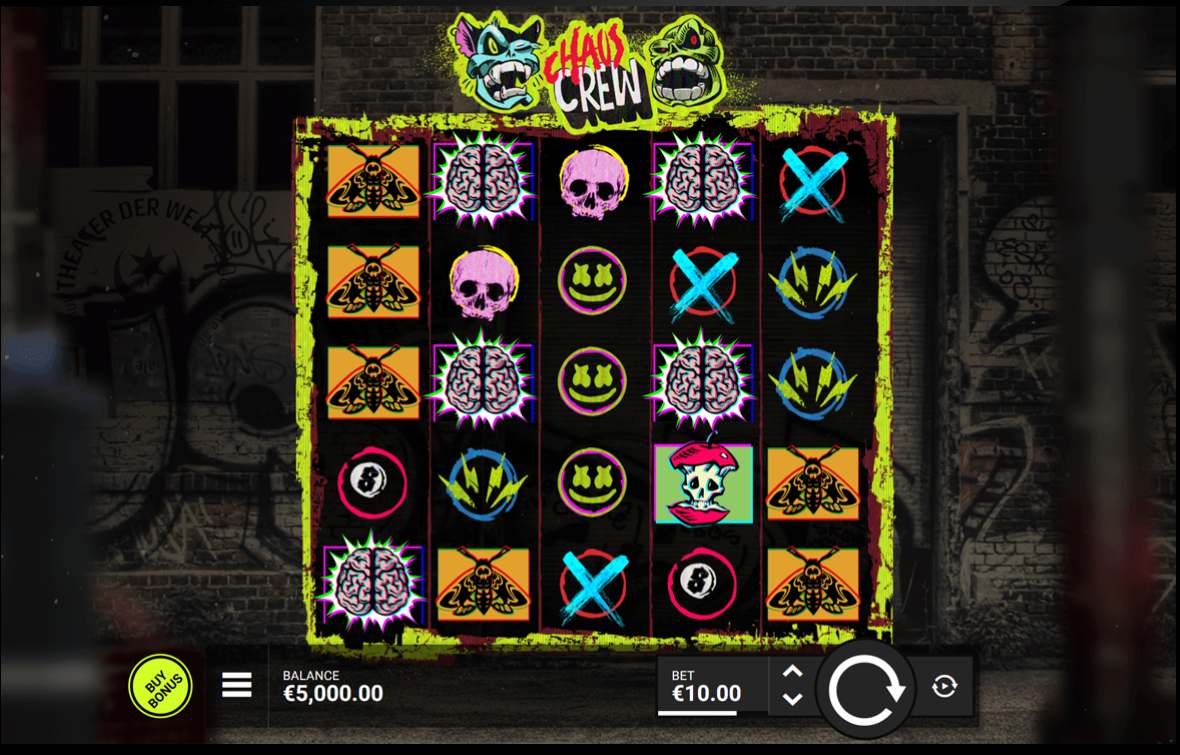
Chaos Crew and its sequel represent the cluster side of the shelf, and Le Bandit represents the stripped back respin approach. Le Pharaoh and RIP City fill out the set that appears most often on Ontario registered lobbies.
Recognition here runs differently from the old suppliers. Players know these Hacksaw slots from streaming and community discussion rather than from a casino floor, which is why the audience skews younger and more online.
Discovery patterns differ sharply from the cabinet suppliers and that shapes which titles Canadians recognise. A player meets these releases through a lobby row, a streaming clip or a community recommendation rather than through a casino floor, and the titles that travel are the ones that produce dramatic outcomes on camera.
That selection effect favours the extreme end of the Hacksaw slots catalogue. The most recognisable Hacksaw slots are not necessarily the best value in it, and the quieter releases frequently publish identical return figures with less punishing distributions.
Working past the recognisable set is therefore worthwhile. Filtering a Canadian lobby to the supplier and reading three or four unfamiliar rules screens surfaces titles that suit a session better than the famous ones do.
Availability is broad enough to make that practical. Most Ontario registered operators carrying the supplier list the deeper catalogue rather than only the headline releases.
Lobby placement reinforces the same handful. Operators surface the recognisable releases in a supplier row and leave the rest to search, so a player who never opens the filter meets four or five Hacksaw slots and assumes that is the Hacksaw slots catalogue.
A useful exercise for anyone new is to ignore the promoted row entirely. Filtering to the supplier and sorting by release date surfaces the current work rather than the titles that went viral, and the newer Hacksaw slots frequently publish the same figures with more considered feature design.
What is Wanted Dead or a Wild?
The title that made the studio. A western build with three separate bonus rounds, each with a different structure, and a maximum win far above what the grid size suggests is possible.
Three rounds inside one small grid is unusual. It works.
The structure is unusual for a five reel build. Three distinct bonus rounds sit behind one scatter trigger, each with its own grid behaviour, and which round opens is decided at the trigger rather than chosen by the player.
One round runs sticky multipliers, one runs expanding symbols across a widening grid, and one runs a duel structure that resolves fast and wide. The three occupy different points on the outcome distribution, which is why the title feels less repetitive than its grid size suggests.
The maximum win sits far above what a small grid would normally support, and the base game is correspondingly thin. That trade is the clearest single illustration of how Hacksaw slots are built.
The three round structure solves a real problem for a small grid. A single feature on a five by three layout runs out of ideas quickly, and rotating between three genuinely different rounds keeps the title from feeling repetitive across a long session.
Each round also carries its own purchase price. A player can buy entry to a specific round rather than to the feature generally, which is unusual and makes the pricing structure worth reading before committing anything.
The title established the studio reputation and set expectations for everything after it. Later Hacksaw slots are frequently described in relation to it, and the three round idea has appeared in modified form across later releases since.
For a Canadian player it remains the reasonable entry point. The mechanics are legible, the rounds are distinct, and the rules screen states all three clearly.
Its influence inside the Hacksaw slots catalogue is visible in everything since. Later Hacksaw slots borrow the multiple round idea, the purchase per round pricing or the thin base game funding a wide ceiling, and the title is the reference point players use when describing them.
Its base game deserves a mention because players rarely discuss it. Outside the feature the title returns very little, which is the direct funding cost of three rounds and a ceiling that large, and understanding that trade is the point of reading the volatility rating on any of these Hacksaw slots.
Its western setting is worth a note because the studio rarely repeats a theme. Where other suppliers build families around a successful setting, this one moves on, and the follow ups to its biggest title share the structural ideas rather than the artwork. That habit keeps the Hacksaw slots catalogue varied on the surface while staying consistent underneath.
What is Chaos Crew?
A five by five grid with a cluster style payout and a collection mechanic that upgrades symbols as the round runs.
The art is deliberately chaotic and the mathematics is deliberately harsh.
The sequel widened the idea. The variance stayed.
The build runs a five by five grid with cluster style payouts rather than lines or ways. Matching symbols in a group pay, the grid refills, and a collection meter upgrades symbol tiers as the round continues.
The sequel widened the grid and deepened the upgrade ladder without softening the mathematics. Both versions sit at the top of the volatility scale and both publish return figures inside the studio narrow band.
Artwork is where the title earns its name. Deliberately abrasive character design and a colour palette that ignores every convention of the category make it unmistakable on a lobby page.
The cluster structure gives the title a different rhythm from the payline builds around it. Wins clear the grid and refill it, so a single spin can chain repeatedly, and the collection meter advancing across those chains is what carries the round upward.
Upgrade ladders are common across the market now and this implementation is harsher than most. Reaching the top tier requires a long chain, and the value is concentrated there rather than distributed across the lower tiers.
The sequel is the more commonly listed of the two on Canadian lobbies. Both sit inside the studio narrow return band and both publish top of scale volatility ratings.
Anyone new to the Hacksaw slots catalogue should read the cluster rules first. Cluster payouts behave differently enough from lines that assuming familiarity is how players misjudge these Hacksaw slots.
The pairing with its sequel is worth noting when choosing. Both sit in the same variance band and publish near identical figures, so the decision between these two Hacksaw slots comes down to grid preference and upgrade ladder depth rather than to value.
Anyone arriving from payline builds should read the cluster rules before the first spin. A cluster payout counts touching groups rather than routes from the leftmost reel, and assuming familiarity is the most common way players misjudge what these Hacksaw slots are doing on screen.
What is Le Bandit?
A stripped back build where a single multiplier symbol carries the whole ceiling. No free spins in the conventional sense, just a respin structure that either connects or does not.
It is the clearest example of the studio approach. One idea only.
The title is the studio in miniature. A respin structure where a single multiplier symbol carries the entire ceiling, no conventional free spins round, and nothing else competing for the player attention.
Gold symbols lock and a multiplier symbol applies to whatever the locked positions total. Whether a round produces anything depends almost entirely on whether that multiplier lands while enough value is on the grid.
Stripping a slot to one decision point is rare and commercially risky. That it worked is the reason the French themed line continued with further releases carrying the same restraint.
Reducing a slot to a single decision point is a genuine design risk and it is worth understanding why it worked. With one mechanic there is nothing to hide behind, so the mathematics has to carry the entire experience.
The respin structure delivers that by making every locked symbol visible progress toward a total the multiplier will eventually act on. A player can read the state of the round at a glance without any counter or meter.
The French themed line extended the approach across three further releases. Each keeps the restraint and changes the mechanic slightly, which is how the studio builds a family without repeating a title.
Among Hacksaw slots it is the clearest demonstration of the subtraction principle. Nothing in the build exists that does not affect the outcome.
For a player new to the Hacksaw slots catalogue it is also the fastest way to understand the studio. Five minutes on this title explains the design philosophy behind every other release, which makes it a better starting point than the famous one for anyone assessing Hacksaw slots seriously.
The restraint carries a genuine risk that is worth naming. With one mechanic and nothing else, a session that fails to land the multiplier produces nothing memorable at all, and the title makes no attempt to fill that gap with secondary features the way a conventional build would.
Why are Hacksaw grids so small?
Because a small grid concentrates variance. Fewer positions means fewer ordinary wins and a larger share of the return sitting in rare outcomes, which is exactly the distribution the studio builds toward.
It also loads faster. Mobile play drove that decision.
Variance concentration is the mathematical answer. A grid with fewer positions produces fewer ordinary combinations, which means a larger share of the certified return has to sit in the rare outcomes rather than in the base game.
That is precisely the distribution the studio wants. A wide ways engine spreads the same return across thousands of routes and produces frequent small wins, which is the opposite of what these Hacksaw slots are built to deliver.
Load time is the practical second reason. A small grid with light animation opens in a fraction of the time a heavy release needs, which matters enormously on a phone over a mobile connection.
Screen real estate is the third reason and it matters more than it sounds. A five by three grid fills a portrait phone screen at a symbol size a player can actually read, and a seven by seven cluster grid on the same screen renders symbols too small to identify at a glance.
The studio designs for the phone first, so that constraint drives the layout rather than being worked around afterwards. Desktop players get a grid that looks small in a browser window, which is a deliberate trade.
Feature presentation benefits as well. A bonus round on a small grid can expand, add rows or change shape and the player still follows what changed, where the same transformation on a large grid is difficult to read.
All of it reinforces the variance profile. Small grids, few positions and concentrated value are three descriptions of the same design decision behind Hacksaw slots.
None of this is accidental or cost driven. Building a small grid well is harder than building a large one, because there is nowhere to hide a weak mechanic, and the discipline shows across Hacksaw slots in how few of them carry filler.
The decision also constrains what the studio can build, which is part of the point. A small grid rules out wide ways engines, large cluster boards and the expanding layouts other suppliers use, and accepting that constraint is what keeps Hacksaw slots recognisable rather than drifting toward the market average.
What grid sizes does the studio use?
Five reels by three rows is the most common layout, with five by five grids appearing on the cluster builds and smaller arrangements showing up on the most stripped back releases.
Very few titles run six reels and none run a wide ways engine.
Route count is never the selling point. The ceiling is.
Five reels by three rows covers the majority of the Hacksaw slots catalogue, with five by five appearing on the cluster builds and smaller layouts showing up on the most stripped back titles.
Six reel builds are rare and wide ways engines are absent entirely. The studio has never shipped a Megaways licence or a 4096 ways layout, which is a deliberate exclusion rather than a gap.
Grid size is not the selling point on any release. The specification sheet leads with the maximum win and the volatility rating, and the layout is treated as an implementation detail.
Feature rounds frequently change the grid rather than keeping it fixed. A round can add rows, widen reels or convert the layout entirely, and that transformation is where several titles hold their ceiling.
Because the base grid is small, those changes read clearly. A player sees the grid grow and understands immediately that the round has escalated, which is harder to convey on a layout that was already wide.
The absence of a wide ways engine is worth restating because it is unusual. Almost every major supplier licences or builds one, and choosing not to is part of what keeps these Hacksaw slots distinct from the rest of a Canadian lobby.
A player looking for frequent small wins from a high route count is therefore looking at the wrong supplier entirely. the Hacksaw slots catalogue offers no title built that way.
A player comparing layouts across a Canadian lobby will notice the difference immediately. Hacksaw slots occupy less screen area than almost anything beside them, and the symbols are correspondingly larger and easier to read on a phone.
Layout consistency has a second effect worth noting. Because the grids barely change between releases, a player learns to read symbol positions quickly and carries that reading across the whole shelf, which shortens the time needed to assess an unfamiliar title to almost nothing.
How volatile are Hacksaw slots?
Very high across almost the entire catalogue. The studio publishes volatility ratings at the top of the scale on most releases and makes no attempt to offer a gentle alternative.
A player wanting steady returns is in the wrong catalogue.
The published ratings sit at the top of the scale on the clear majority of the Hacksaw slots catalogue. Where a broad supplier offers low, medium and high options to cover every audience, this one offers high and higher.
Session shape follows directly. Long stretches returning nothing, occasional small returns that fail to hold a balance level, and rare rounds that produce a result four or five hundred times the stake or more.
That is not a criticism of the build. It is the stated design, published honestly on every release, and a player who reads the rating before the first spin knows exactly what to expect.
Reading a rating at the top of the scale should change how a session is planned rather than simply being noted. A balance sized for two hundred spins on a medium build covers far fewer meaningful outcomes on one of these Hacksaw slots, because the outcomes that matter arrive so much less often.
Stake sizing is the lever available. Running at a lower stake extends the spin count enough to reach a feature, and the ceiling scales down with it, which is the honest trade rather than a workaround.
The studio publishes the rating prominently on every release and makes no attempt to soften the description. That transparency is a genuine strength, and it is more than several larger suppliers offer.
A player who reads it and proceeds anyway is making an informed choice. A player who skips it is the one who ends a session confused about what happened.
The rating also predicts how a bonus balance will behave. Clearing a wagering requirement on Hacksaw slots produces a very wide range of outcomes and frequently ends early, where a medium rated build progresses steadily, and that difference matters more than the return figure when bonus funds are in play.
Comparing the rating against the rest of a Canadian lobby puts it in perspective. A medium rated cabinet conversion pays something on roughly a third of spins, and a top of scale Hacksaw slot can run twenty or thirty spins returning nothing without anything unusual having happened. Both are certified, both are honest, and only one suits a long session.
Setting a loss limit before the first spin is the practical discipline this catalogue asks for. A top of scale rating means a session can end quickly through entirely ordinary variance, and deciding the stopping point in advance is more useful on Hacksaw slots than on anything gentler.
What return figures do Hacksaw slots publish?
Unusually consistent, clustering between 96 and 96.5 percent. Where other studios ship several certified versions, this Hacksaw slots catalogue is far tighter and the deployed figure rarely surprises.
The consistency is a genuine advantage. Comparison takes seconds.
The consistency is the genuinely unusual part. Most of the Hacksaw slots catalogue ships between 96 and 96.5 percent, which is a far tighter band than a supplier shipping three or four certified versions of every title can offer.
The absence of a jackpot network explains part of it. No pool contribution is skimmed from the base return, so the full certified percentage stays inside ordinary play and the feature.
Operators deploying lower certified versions is the exception rather than the pattern here. A player comparing Hacksaw slots across two Ontario registered sites will usually find the same figure on both.
Comparing across the Hacksaw slots catalogue is therefore unusually quick. Where a broad supplier requires checking every title because the deployed version varies, this one can be assessed as a group with occasional spot checks.
That does not make the check optional. An operator can still deploy a lower certified version where one exists, and the rules screen inside the running client remains the only authority on what is live.
The tight band also makes the volatility rating the deciding number rather than the return figure. When two Hacksaw slots publish percentages half a point apart, the difference between them is entirely in the distribution.
For a Canadian player that simplifies the choice considerably. Pick on feature and variance, confirm the figure, and the comparison is finished.
The band is tight enough that an outlier is worth investigating. A Hacksaw slot published well below 96 percent on a particular lobby is likely a lower certified version, and checking another registered operator frequently finds the standard build.
The consistency has a second benefit that is easy to miss. Because the figures cluster, a player can stop treating the return percentage as the deciding number and start choosing on feature structure instead, which is a more useful basis for picking between Hacksaw slots than half a percentage point ever is.
Checking remains worthwhile even so. Opening the rules screen and confirming the figure takes a few seconds, it rules out a lower certified deployment, and it is the only step that turns an assumption about Hacksaw slots into a fact about the session in front of you.
Why do Hacksaw slots advertise such large maximum wins?
Because the ceiling is the product. A very high variance build with a small grid concentrates its return into rare outcomes, and the advertised maximum is the honest description of where that value sits.
The number is funded by everything below it. Nothing is free.
The ceiling is the product rather than a marketing decoration. A small grid at very high variance concentrates the certified return into rare outcomes, and the advertised maximum is the honest description of where that value sits.
Figures in the tens of thousands of times the stake appear across the Hacksaw slots catalogue. Reaching them requires a specific and extremely unlikely arrangement inside a bonus round, which is exactly why the base game pays as little as it does.
Comparing that figure between titles tells a player almost nothing on its own. Two Hacksaw slots with very different ceilings can publish identical return percentages, because the ceiling describes the tail rather than the total.
The figure also sets expectations for the feature rather than for the session. A ceiling in the tens of thousands describes what a bonus round can theoretically reach, and almost every actual round resolves several orders of magnitude below it.
Reading it as a target is the common error. The number describes the extreme tail of a certified distribution, and the overwhelming majority of outcomes sit nowhere near it on any title in the Hacksaw slots catalogue.
What the figure genuinely signals is the shape. A very large ceiling on a small grid is a reliable indicator that the base game has been thinned to fund it, which the volatility rating then confirms.
Used that way the number is useful. Used as a promise it is the most misleading figure on any specification sheet across Hacksaw slots or anywhere else.
Comparing ceilings between suppliers is even less informative than comparing them within one. A cabinet conversion capping at five thousand times and a Hacksaw slot capping at twenty five thousand can publish similar percentages, because the two builds distribute the same return completely differently.
Regulators require the figure to be accurate rather than aspirational. A stated maximum on a certified build is the genuine ceiling of the tested distribution, which makes it an honest number that is nonetheless close to useless as a prediction for any individual session on Hacksaw slots.
Who is the Hacksaw audience?
Players who accept long losing stretches in exchange for a wide ceiling, and who use the purchase option to reach the feature directly rather than waiting for it.
the Hacksaw slots catalogue makes no effort to broaden that. It is deliberate.
the Hacksaw slots catalogue targets a specific player and makes no attempt to broaden beyond them. Someone comfortable with long losing stretches, focused on the feature rather than the base game, and willing to use a purchase option to reach it directly.
Streaming culture shaped that audience considerably. A title that produces long nothing and rare enormous is compelling to watch in a way a steady medium variance build is not, and the community around slot streaming adopted these releases early.
A player wanting a long session on a modest balance is not in that group. The studio publishes the volatility rating prominently enough that the mismatch is visible before any money moves.
Session length expectations differ sharply from the mainstream audience too. A player here is frequently running a short deliberate session aimed at reaching a feature rather than a long evening on a modest balance.
Purchase options serve exactly that pattern. Buying entry converts a long uncertain wait into an immediate outcome, which suits a player with limited time far better than spinning through a thin base game.
Community discussion reinforces the approach. Streaming clips, forum threads and shared results all concentrate on feature outcomes rather than on base game sessions, which normalises the buy as the default way to engage.
That culture is a large part of why Hacksaw slots reached Canadian players as quickly as they did. Awareness travelled through communities rather than through operator marketing.
Knowing whether you are in that audience is the most useful thing a player can establish early. Someone who enjoys a long steady session will find Hacksaw slots frustrating regardless of how well built they are, and the volatility rating states that before any money moves.
Operator marketing rarely reaches this group first. Awareness moves through communities, clips and word of mouth, and by the time a lobby promotes a release the audience already knows it, which inverts how most supplier catalogues are discovered. That dynamic is unusual enough to be worth naming, because it explains why Hacksaw slots reached Canadian players faster than their catalogue size would predict.
Do Hacksaw slots have progressive jackpots?
No. The studio runs no jackpot network, which keeps the full certified return inside ordinary play and the feature rather than diverting a slice into a shared pool.
That is part of why the published figures sit high. Nothing is skimmed.
The studio runs no network and has shown no interest in building one. Every title keeps its full certified return inside the base game and the feature, with nothing diverted into a shared pool.
That decision is why the published figures sit as high as they do. A jackpot linked build has to fund its tiers from somewhere, and the base return is always where the funding comes from.
It also keeps the Hacksaw slots catalogue simple to compare. No qualifying bet rules, no tier eligibility and no pool scope questions, just a return figure, a volatility rating and a maximum win on every release.
The absence also simplifies the rules screen considerably. No qualifying bet line, no tier table, no pool scope explanation, just the return figure, the volatility rating and the feature description.
That brevity is consistent with everything else in the Hacksaw slots catalogue. A player can read the complete specification of one of these Hacksaw slots in under thirty seconds, which is not true of a jackpot linked build from a larger supplier.
Whether the studio ever adds a network is an open question. Nothing in the current catalogue suggests it, and the published return figures would have to fall if one arrived.
For now the trade is clean. No shared prize, and a higher percentage staying inside the game a player is actually spinning.
The comparison with a jackpot linked catalogue is stark. A player moving from four tier panels to Hacksaw slots is moving to builds that keep the whole certified return inside the game in front of them, which usually shows up as a percentage point or more in the published figure.
The absence also removes a category of confusion for Canadian players. No qualifying stake means no risk of funding a prize that is out of reach, which is a real trap on the jackpot linked shelves and simply does not exist across Hacksaw slots.
What is a feature drop?
A mechanic where the bonus round can arrive at random rather than only through symbol triggers. Several titles carry a version of it, usually alongside the conventional trigger.
It raises the trigger rate slightly. The rules screen states it.
The mechanic lets a bonus round arrive without the usual symbol trigger. A spin can open the feature at random, which raises the effective trigger rate slightly above what the scatter distribution alone would produce.
A number of titles in the Hacksaw slots catalogue carry a version of it, usually alongside the conventional route rather than replacing it. The rules screen states whether a given release includes it and how the two triggers interact.
For a player the practical effect is modest. It shortens the average wait a little without changing the certified return or the volatility rating in any meaningful way.
The mechanic exists mainly to soften the worst case rather than to change the average. A very high variance title with a scatter only trigger can run four hundred spins without opening anything, and a random route shortens the tail of that wait.
It does not raise the return figure. The certified percentage accounts for every trigger route the build contains, so adding one and adjusting the others leaves the total where it was.
Players occasionally read the feature as generosity. It is a distribution adjustment, published in the rules screen, and the volatility rating already reflects whatever effect it has.
Where a title carries it, the rules screen states the interaction with the scatter trigger. That line is worth reading on any of the Hacksaw slots that include it.
Where a title carries both routes the rules screen states how they interact. Reading that line is worth the seconds it takes, because the random route changes the wait without changing the reward, and Hacksaw slots publish enough detail to work that out.
The mechanic name varies between suppliers and the idea does not. Random bonus entry, feature drop and bonus chance all describe a route into the round that bypasses the symbol trigger, and reading which name a release uses matters less than reading what the rules screen says the route does on that particular title.
Are Hacksaw slots available in Ontario?
Yes, and the studio moved early. Supplier registration with the Alcohol and Gaming Commission of Ontario came sooner than several larger names managed, and major registered operators carry the Hacksaw slots catalogue.
Other provinces are following. Alberta licensing is in progress.
The studio registered with the Alcohol and Gaming Commission of Ontario early in the regulated market and reached major operators quickly. Partnerships with large operator groups brought the Hacksaw slots catalogue to Ontario players faster than suppliers with far longer histories managed.
Coverage across registered private lobbies is now broad. Most sites carrying a full third party catalogue list the recognisable titles, and the deeper shelf appears on lobbies that integrate the supplier directly.
Other provinces are following as their markets open. Licensing work in Alberta is underway, which would extend the Hacksaw slots catalogue beyond Ontario into a second regulated provincial market.
Speed into the market was a genuine competitive advantage. Operators launching in a newly regulated province need content that differentiates their lobby, and a recognisable supplier catalogue with a distinct house style does that better than another feed of conventional releases.
The partnerships that followed were substantial. Large operator groups integrated the supplier directly rather than through an aggregator, which is why the deeper catalogue appears on those sites rather than only the headline titles.
Coverage now extends across most registered private lobbies in the province. A Canadian player in Ontario looking for Hacksaw slots will find at least the recognisable set almost anywhere.
Expansion beyond Ontario is following the regulatory timetable rather than any commercial hesitation. Where a province opens, the supplier has moved quickly.
Coverage is worth checking per operator rather than assumed. Some Ontario registered sites carry the full supplier feed and others carry only the recognisable releases, so a player looking for a specific title among the Hacksaw slots may need a second lobby.
Provincial expansion changes the picture gradually rather than suddenly. Each market that opens adds operators rather than changing the games, so the Hacksaw slots a player meets in a new province are the same certified builds already running in Ontario under the same testing standard.
Regulatory registration is worth understanding as a quality signal rather than a formality. A supplier that reached an Ontario registration early had to satisfy the same technical and corporate requirements as any established name, and every one of the Hacksaw slots on a registered lobby passed through that process.
Do provincial crown platforms carry Hacksaw slots?
Rarely. Crown catalogues favour recognisable and gentle titles for a broad audience, and a very high variance catalogue with crude artwork is a poor fit for that brief.
Private lobbies carry it instead. That gap is deliberate on both sides.
Rarely, and the reasons are straightforward. A crown operator curates two or three hundred titles for a broad general audience, and a catalogue built around extreme variance and deliberately abrasive artwork is a poor fit for that brief.
Crown catalogues favour recognisable brands and gentle mathematics. A player arriving at a provincial site is more likely to meet a cabinet conversion than a browser native high variance release.
Registered private lobbies fill the gap entirely. A Canadian player looking specifically for Hacksaw slots will find them there rather than on a crown platform.
Curation philosophy is the whole explanation and it is not a criticism of either side. A crown operator serves a broad general audience including many players who have never opened a rules screen, and a top of scale volatility catalogue is a poor introduction to online slots.
Artwork compounds it. A deliberately abrasive visual style that works as differentiation on a private lobby reads as inappropriate on a platform run by a provincial government.
The result is a clean split in the Canadian market. Crown catalogues carry cabinet conversions and gentle mathematics, and registered private lobbies carry the browser native high variance catalogues including this one.
A player who wants both simply uses both channels. Nothing prevents holding accounts on a crown platform and a registered private operator at the same time.
The split is stable rather than temporary. Nothing in the crown procurement approach suggests a shift toward extreme variance content, and nothing in this studio output suggests a move toward the gentler builds crown catalogues favour.
Nothing about the gap reflects a quality judgement in either direction. A crown catalogue and a registered private lobby are serving different briefs, and a player who wants both simply holds accounts on both, which is entirely permitted and reasonably common in Ontario.
Are Hacksaw slots certified?
Every title on an Ontario registered lobby has passed independent laboratory testing of the generator, the reel strips and the feature mathematics before deployment.
The purchase option is tested separately. It carries its own figure.
Every title on an Ontario registered lobby has passed independent laboratory testing before deployment. The generator, the reel strips and the feature mathematics are all examined, and the published return figure is verified against a simulation.
The purchase option receives its own treatment. Buying direct entry to a feature is tested as a separate product with its own certified percentage, which is why the two figures appear separately in the rules screen.
Ontario then audits operators against that standard. A registered site has to run the certified package unmodified and make the return figure available, which is the practical difference from an unregulated deployment.
The testing process is identical to the one every other supplier goes through, which is worth stating because a newer studio occasionally attracts unfounded suspicion. Accreditation, simulation and reel strip verification apply the same way regardless of catalogue size.
Separate certification of the purchase path is the detail worth knowing. Buying a feature is a distinct product with its own tested percentage, and that figure appears separately in the rules screen on the titles that offer it.
Regulatory oversight then continues after launch. Ontario audits operators against the certified builds, and a registered site cannot modify a package or substitute a different version without going through the process again.
For a Canadian player the practical takeaway is simple. The age of a studio says nothing about the rigour behind its Hacksaw slots, and the certification is the same standard applied to a supplier decades older.
Anyone uneasy about a newer supplier can verify the position directly. The Alcohol and Gaming Commission of Ontario publishes its registered supplier list, and the certification behind Hacksaw slots is the same process applied to every name on it.
Reading the two percentages separately is the habit worth forming. A base game figure and a purchase figure describe two different products, and on Hacksaw slots the purchase path frequently publishes the lower of the two, which is the cost of skipping the wait.
Certification records are traceable rather than asserted. An accredited laboratory issues a report for each build, the operator retains it, and the regulator can request it, which is what makes a published figure on Hacksaw slots an auditable claim instead of marketing copy.
Can you play Hacksaw slots for free?
Demo versions run the identical certified build with a play money balance, and the studio hosts playable demos on its own site alongside operator versions.
Demo play matters more here than elsewhere. The variance is punishing.
Demo versions run the identical certified build with a play money balance attached, and the studio hosts playable demos on its own site alongside the operator versions.
Demo play matters more on this Hacksaw slots catalogue than on most. A hundred spins on a very high variance title frequently returns nothing at all, and learning that before staking anything is genuinely useful information.
The limit is sample size. A demo session cannot show the certified trigger rate or the tail behaviour, so it teaches the mechanics and the rhythm rather than the mathematics.
Using the demo to test stake sizing is the more useful exercise here than learning the mechanics. Running two hundred spins at a chosen stake shows how quickly a balance of that size would have disappeared, which is information a rules screen cannot convey.
The studio hosting its own demos matters as well. A player can read the rules and try a title without registering anywhere, which removes the friction that keeps most people from checking before they commit.
Purchase options usually work in demo mode too. Buying a feature with play money shows what the round actually delivers on average, and three or four purchases is often more instructive than an hour of base game spins.
None of it substitutes for the published figures. A demo session on these Hacksaw slots teaches rhythm and cost, and the rules screen teaches the mathematics.
Demo play also removes the pressure of the purchase decision. Buying a feature with play money several times shows the spread of outcomes clearly, which is information no rules screen conveys and which matters enormously on Hacksaw slots specifically.
A structured demo session beats an unstructured one considerably. Setting a spin count, running it at a fixed stake and recording what came back turns an hour of play money into a genuine read on how the title behaves, and on Hacksaw slots that read is worth having before any deposit.
How do Hacksaw slots run on a phone?
Better than most. Small grids, light animation and a browser native build mean these Hacksaw slots load quickly and run cleanly on hardware that struggles with heavier releases.
Mobile was the design target. It was never an adaptation.
Better than almost anything beside them. Small grids, light animation and a browser native build mean these Hacksaw slots open quickly and run cleanly on hardware that struggles with heavier releases.
Mobile was the design target rather than an adaptation. The control layout, the grid proportions and the feature presentation were all drawn for a portrait phone screen first and a desktop browser second.
That ordering is the opposite of the cabinet suppliers, whose online catalogues reflow a layout designed for a wide fixed screen. The difference is visible the moment a phone is turned sideways on either.
Data usage is the underrated advantage. A light build loads quickly on a mobile connection and stays responsive where a heavy release stutters, which matters for a catalogue whose audience plays predominantly on phones.
Battery behaviour follows the same pattern. Less animation and a smaller render area draw less power, so a long session costs less charge than an equivalent session on a graphically dense release.
Disconnection handling is unchanged from any certified build. A spin resolves on the server and appears in the account history, so reopening a title on a different device shows the same result.
Taken together these are small advantages that accumulate. For a player whose sessions happen on a phone, Hacksaw slots are among the smoothest options on a Canadian lobby.
The design priority shows in small details a player notices without articulating. Button placement within thumb reach, stake controls that do not require precision, and a feature presentation that reads at arm length all mark Hacksaw slots as phone first builds.
Landscape and portrait both work without the layout breaking, which is not universal. A converted cabinet build frequently looks stretched in one orientation and cramped in the other, and Hacksaw slots were drawn for both from the start rather than adapted afterwards.
Are Hacksaw slots good for a small bankroll?
No, and the studio would not claim otherwise. A very high variance catalogue needs enough balance to survive long stretches with nothing, and a small bankroll frequently ends before a feature arrives.
Lowering the stake is the only honest adjustment. The ceiling scales down with it.
No, and the studio publishes enough information for a player to reach that conclusion before staking anything. A very high variance build needs enough balance to survive long stretches with nothing.
The arithmetic is unforgiving. A title concentrating its return into rare feature outcomes needs three or four hundred spins to give a reasonable chance of reaching one, and a modest balance at a normal stake rarely covers that.
Lowering the stake is the only honest adjustment available. Running at the lobby minimum extends the session enough to reach a feature, and the ceiling scales down proportionally, which is the trade the structure demands.
Session planning helps more than title selection within the Hacksaw slots catalogue, because every title carries a similar profile. Deciding in advance how many spins a balance should cover and setting the stake to reach that number is the only meaningful control available.
Purchase options complicate that calculation rather than simplifying it. Buying a feature at sixty or a hundred times the stake commits a large share of a small balance in one action, and two unsuccessful purchases can end a session immediately.
A player set on the Hacksaw slots catalogue with a modest balance should use the lobby minimum and accept the reduced ceiling. That is the honest position rather than a compromise.
A player wanting a long steady session should look elsewhere entirely. Other suppliers on the same Canadian lobby build exactly that, and these Hacksaw slots deliberately do not.
The honest framing is that the Hacksaw slots catalogue asks for a particular kind of session rather than a particular size of balance. A small balance played at the lobby minimum across enough spins works, and the same balance at a comfortable stake does not.
Comparing the two approaches settles it quickly. The same balance on a medium volatility ways build covers a long session with frequent small returns, and on Hacksaw slots it covers fewer meaningful events in exchange for a ceiling the other build cannot reach.
Purchase pricing deserves one more note for anyone in that position. An entry priced at sixty or a hundred times the stake commits a large share of a small balance in a single action, and two unsuccessful purchases can end a session before the base game has been played at all.
How do Hacksaw slots compare with the old cabinet suppliers?
They are opposites in almost every respect. A cabinet catalogue offers breadth, recognition, gentle variance and a wide return range, and this one offers a short list, consistent figures and extreme variance.
Neither is better. They serve different sessions entirely.
The two approaches are opposites in almost every dimension. A cabinet catalogue offers breadth, decades of recognition, gentle variance and a return range spanning four or five percentage points, built for a floor where a player has already sat down.
this Hacksaw slots catalogue offers a short shelf, consistent figures, extreme variance and a design language aimed at a phone screen. Neither is better and neither is trying to serve the other audience.
Return figures actually favour the newer studio. A tight band near 96 percent beats a range starting in the high eighties, which is the clearest measurable advantage browser native Hacksaw slots hold over a converted floor catalogue.
Transparency is the other dimension where the comparison is uneven. this Hacksaw slots catalogue publishes return figures, volatility ratings and maximum wins on every release, and several cabinet suppliers publish the return figure and leave the rest to be inferred.
Recognition runs the other way. A cabinet brand carries decades of familiarity that a browser native studio cannot manufacture, and for many Canadian players that recognition is worth more than a published rating.
Catalogue depth favours the older suppliers heavily. Hundreds of titles across product generations against a short focused shelf is not a close contest on breadth alone.
The honest summary is that they answer different questions. One offers familiarity and range, and Hacksaw slots offer consistency and a clearly stated distribution.
A Canadian lobby carrying both is the ideal arrangement for a player. Cabinet conversions cover the sessions where recognition and steadiness matter, and Hacksaw slots cover the sessions aimed at a feature, and nothing requires choosing one supplier permanently.
Update cadence is the last dimension worth comparing. A converted cabinet library changes slowly because re certifying an old build is expensive, and a browser native studio ships new work continuously, so the Hacksaw slots on a lobby this year include releases that did not exist last year.
What should a Canadian check before playing a Hacksaw slot?
Three things in the rules screen. The published return figure, the volatility rating, and whether the purchase option carries a different certified percentage from the base game.
The third catches people out. The two figures rarely match.
The return figure comes first as always, though it matters less here than on most catalogues because the band is so tight. Confirming it takes seconds and rules out the rare lower certified deployment.
The volatility rating comes second and it is the number that decides the session. A top of scale rating on a modest balance predicts an early end, and the rating is published on every release.
The purchase percentage comes third and it is the one players overlook. Buying a feature is a separately certified product with its own figure, and it frequently differs from the base game percentage by a visible margin.
A fourth check is worth adding for anyone new to the Hacksaw slots catalogue, which is the feature description itself. Knowing whether a title runs three rotating rounds, a cluster upgrade ladder or a single multiplier respin explains the session shape better than any number does.
Reading it takes seconds because the rules screens are short. That brevity is one of the genuine advantages of a catalogue built around one idea per title.
Together the four checks describe any of these Hacksaw slots accurately enough to decide whether to commit a session to it. Return figure, volatility rating, purchase percentage and feature structure.
None of it requires a comparison site. Every number sits inside the running client on a regulated Canadian lobby, and reading them is faster than searching for someone else opinion.
The whole check fits inside a minute and it is the same minute on every release. That repeatability is itself an argument for the Hacksaw slots catalogue, because a player who learns to read one of these Hacksaw slots has learned to read all of them.
One habit covers all four checks. Open the rules screen before the first spin, read the figures it holds, and treat the lobby tile as the last thing on the page rather than the first. Hacksaw slots make that easy because the screens are short and the numbers are all published.
Which slot pages are worth reading next?
A supplier catalogue sits on top of mechanics, scoring rules and published return figures that apply across every studio rather than to Hacksaw slots alone.
The pages below cover the parts that travel beyond one shelf.
- What a purchase option actually costs
- Why these Hacksaw slots pay so rarely
- Titles with the strongest published return figures
- The grid Chaos Crew runs on
- A catalogue built the opposite way
Hacksaw slots are a short catalogue built around one idea, and the idea is variance. Read the published return figure, the volatility rating and the purchase percentage before the first spin, and size the session to match rather than hoping the distribution behaves. the Hacksaw slots catalogue is unusually honest about what it is, which makes it easy to assess and easy to avoid, and both of those are worth more than a lobby full of titles that hide behind their artwork.
1 thought on “Hacksaw Slots Canada: Small Grids, Extreme Variance”