
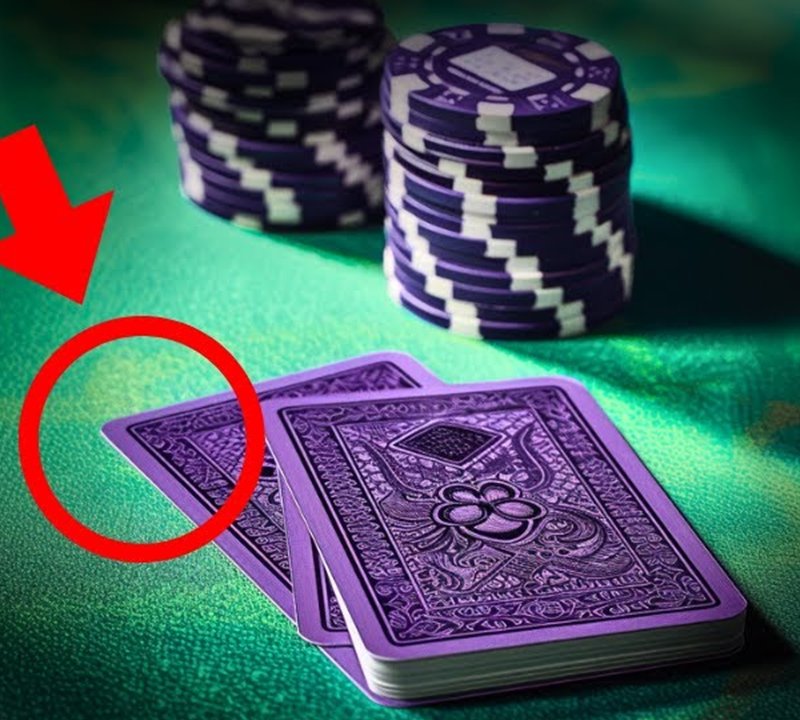
Edge sorting is a baccarat and blackjack technique that reads tiny flaws on the backs of playing cards so a player knows which cards are coming before they are turned. It became famous through Phil Ivey’s multimillion-dollar cases in London and Atlantic City, which courts in both countries decided against him. The edge sorting Canada players read about is a legal grey zone at best and a costly risk at worst. Our list of safe online casinos for Canadians shows the sites we have reviewed.
The table sums up the edge sorting Canada readers ask about, drawn from court reports and casino experts. The video on this page walks through the Ivey story.
| Item | Detail |
|---|---|
| What it is | Reading asymmetric card-back patterns to identify cards before they are dealt |
| Main games | Punto banco baccarat and blackjack |
| What it needs | Asymmetric card backs, rotated key cards and a shuffle that does not turn cards |
| Best-known case | Phil Ivey and Cheung Yin Sun at Crockfords, London, and the Borgata, Atlantic City |
| UK result | Supreme Court ruled it cheating; about £7.7 million withheld |
| US result | Judge found breach of contract; $10.1 million judgment, later settled |
| Canadian law | Criminal Code section 209 makes cheating at play an offence; no Canadian ruling on edge sorting found |
| Simple fix | A turn in every shuffle |
How does edge sorting give a player an edge?
Edge sorting is an advantage play technique that uses manufacturing flaws on card backs. When the back pattern is not symmetrical, a card turned 180 degrees looks different from one that was not, so a player who gets key cards turned can spot them face down.
Casino.org describes it as a technique used mostly in baccarat.
That is the whole idea behind the edge sorting Canada headlines described.
How does edge sorting work, step by step?
First, find a deck whose back pattern is asymmetric. Next, get the important cards rotated so their edges face one way and the rest face the other. Then make sure the shuffle does not turn the cards, so the sorted edges survive into the next shoe.
From then on, the edge facing you reveals whether the next card is a key card.
Every step must work for the edge sorting Canada players hear about to pay off.
Where does the term edge sorting come from?
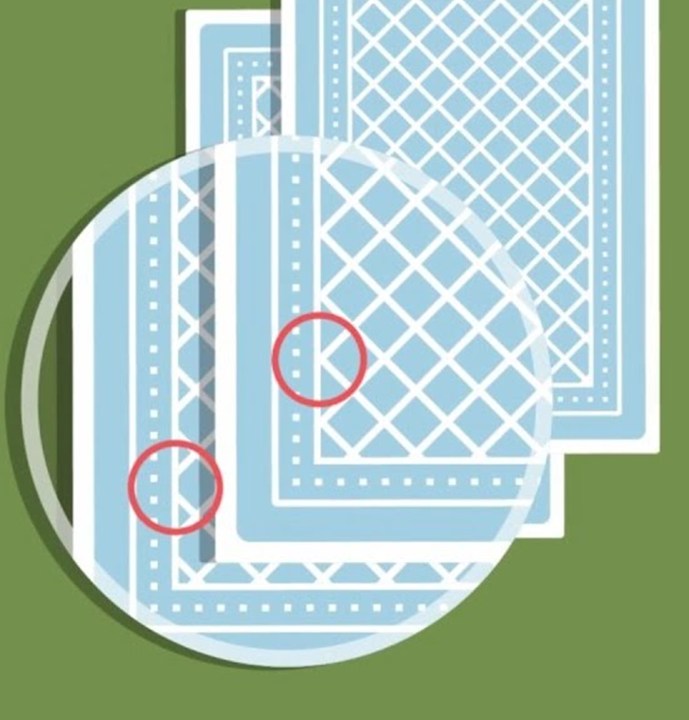
The name describes the method: cards are sorted by their edges. Key cards end up with one edge pattern facing the player and the rest with the other, so the deck is effectively sorted into two groups that can be told apart face down.
Nothing else about the cards changes.
The plain name hides the planning edge sorting Canada style demands.
Why do certain card backs allow edge sorting?
Casino card backs often use repeating circles or diamonds. When cards are cut, one long edge may show a full shape while the opposite edge shows half of one, so the card looks different when turned around.
The National Post reported that the flaws in the Borgata cards were no wider than 1/32 of an inch.
Tiny printing errors are the raw material of edge sorting Canada casinos guard against.
How common are cards that can be edge-sorted?
More common than casinos would like. Writing for 888casino, table games expert Eliot Jacobson said that over two-thirds of his own collection of about 50 casino decks can be edge-sorted.
He stressed that using such cards is not a mistake, as long as the shuffle includes a turn.
Common flaws keep the edge sorting Canada risk alive for any casino that skips the fix.
Why does an automatic shuffler matter?
An automatic shuffler mixes the order of the cards but does not rotate them. Casino.org explains that a manual shuffle by the dealer would spoil the setup, while a machine keeps every sorted edge in place.
That is why Ivey asked for a shuffling machine at both casinos.
The machine is the quiet partner in every edge sorting Canada story.
Which games are open to edge sorting?
Punto banco baccarat is the main target, because knowing a single card can swing a bet. Blackjack is also vulnerable, and Jacobson describes teams rotating aces and ten-value cards one way and the rest the other.
Any game dealt from a shoe without a turn in the shuffle is exposed.
Baccarat sits at the centre of edge sorting Canada discussions for that reason.
What is punto banco?
Punto banco is the version of baccarat played in most casinos, where the house banks every hand and the drawing rules are fixed. Players only choose to bet on player, banker or a tie, then the cards decide.
No playing decisions means the only edge comes from knowing the cards.
That structure makes punto banco the classic stage for edge sorting Canada readers know.
How are baccarat hands scored?
Face cards and tens count as zero, aces as one and other cards at face value, and only the last digit of the total counts. The National Post gives the example of an eight and a six, worth four points. The hand closest to nine wins.
A third card is dealt automatically under fixed rules.
Simple scoring explains why single cards carry such weight in edge sorting Canada style.
Why is baccarat the main target?
In baccarat, the first card of a hand shapes the result. If a player knows that card is a 7, 8 or 9, the odds tilt sharply toward the side receiving it, and a high-stakes player can bet heavily on that side.
Baccarat also allows large maximum bets for high rollers.
Big limits make baccarat the natural home of edge sorting Canada casinos fear.
Why do 7s, 8s and 9s matter most?
A two-card total of 8 or 9 is a natural and usually wins outright, and high first cards push a hand toward nine. Knowing that a 7, 8 or 9 is coming tells a player which side is likely to win the hand.
That is why those cards were the ones rotated at Crockfords.
Three card ranks carry the whole value of edge sorting Canada readers learned about.
How is edge sorting used at blackjack?
Jacobson describes a team at a Las Vegas blackjack game rotating aces and ten-value cards one way and all other cards the other. Knowing whether the next card is high or low helps with betting and playing decisions.
The casino in his story spent months hunting for marked cards that did not exist.
Blackjack shows that edge sorting Canada risks are not limited to baccarat.
Is edge sorting the same as card counting?
No. Card counting tracks cards already played, using memory alone. Edge sorting identifies cards before they are dealt, using a flaw in the cards and the dealer’s handling, which is why courts treat it differently.
Our page on baccarat card counting shows how little counting earns at baccarat.
Counting is legal memory work; the edge sorting Canada readers ask about goes further.
Is edge sorting the same as marking cards?
No. Marking adds a sign to the cards, while edge sorting uses a flaw already printed on them. In Jacobson’s story, the casino assumed a team was marking cards, but the cards were effectively pre-marked by their own design.
No ink, scratches or bends are involved.
That difference fuels the legal arguments over edge sorting Canada readers follow.
Who are Phil Ivey and Cheung Yin Sun?
Phil Ivey is one of poker’s best-known players, with large tournament and online winnings. Cheung Yin “Kelly” Sun is a gambler who, according to reports, spent hundreds of hours learning to read flaws in the backs of playing cards.
Together they played high-stakes punto banco in London and Atlantic City.
Their partnership produced the most famous edge sorting Canada media ever covered.
What happened at Crockfords in London?
Ivey and Sun won about £7.7 million playing punto banco at Crockfords, a London casino owned by Genting. The casino grew suspicious, refused to pay the winnings and returned only Ivey’s £1 million deposit.
Ivey sued to collect, admitting he had used edge sorting but arguing it was legitimate.
The London case set the tone for edge sorting Canada readers saw in the news.
What did Ivey ask Crockfords for?
Casino.org reports that the pair asked for a specific brand of cards with a white-circle back pattern, the use of a shuffling machine and the reuse of the same decks after each shoe. They then had the dealer rotate the 7s, 8s and 9s.
Sun presented the rotations as superstition.
Each request built the setup the edge sorting Canada story depends on.
What did the UK trial judge decide?
The trial judge, Mr Justice Mitting, ruled against Ivey. HighStakesDB reports he called edge sorting “not a legitimate strategy for beating the game” and said Ivey had gained an advantage “by using a croupier as his innocent agent or tool”.
The judge accepted that Ivey believed he was not cheating.
That tension shaped the edge sorting Canada readers saw reach appeal.
Was the UK case civil or criminal?
Civil. Ivey sued Crockfords to recover his winnings, and no criminal charges were brought. The courts had to decide whether edge sorting counted as cheating under the cheating section of the UK Gambling Act.
Losing meant the casino kept the money.
A civil defeat still carried a multimillion-pound cost in this edge sorting Canada readers saw.
What did the Court of Appeal decide?
The Court of Appeal rejected Ivey’s appeal. Lady Justice Arden said it was for the court to decide whether the interference amounted to cheating, and in her judgment it did.
Ivey’s lawyer argued that four judges had not agreed on how to read the cheating section of the UK Gambling Act.
The appeal left edge sorting Canada watchers expecting a final ruling.
What did the UK Supreme Court rule?
All five Supreme Court judges rejected Ivey’s appeal, ruling that edge sorting at Crockfords was cheating. One described the pair as taking “positive steps to fix the deck”, and Lord Hughes called it “a carefully planned and executed sting”.
The roughly £7.7 million stayed with Crockfords.
That ruling is the strongest statement on edge sorting Canada courts have available.
Why does the Supreme Court ruling matter beyond casinos?
The Supreme Court used the case to restate the test for dishonesty in English law, judging conduct by the standards of ordinary decent people rather than the defendant’s own view. Lawyers still cite the case for that reason.
A gambling dispute ended up reshaping a core legal test.
The legal reach of this edge sorting Canada story goes well beyond the card table.
What did Ivey say about “honest cheating”?
After the Court of Appeal ruling, Ivey said the trial judge had found he was not dishonest and the appeal judges agreed, yet the decision went against him. He asked: “Can someone tell me how you can have honest cheating?”
The Supreme Court’s later ruling answered that dishonesty is judged objectively.
The quote sums up the confusion around edge sorting Canada readers met.
What happened at the Borgata in Atlantic City?
Ivey and Sun played baccarat at the Borgata over four visits and won about $9.6 million. On one visit alone, the National Post reported, Ivey won nearly $4.8 million in about 17 hours.
The Borgata paid out each time before it learned of the London dispute.
The Atlantic City wins were the largest part of the edge sorting Canada media tracked.
What did Ivey ask the Borgata for?
The National Post lists five requests the casino accepted on every visit: a private area, a dealer who spoke Mandarin, eight decks of purple Gemaco Borgata cards shuffled together, an automatic shuffler, and Sun as his one guest at the table.
Casinos often accept such requests from high rollers.
Those five requests are the blueprint of the edge sorting Canada readers saw explained.
How did Sun spot the flaws?
According to the reports, Sun bought souvenir Borgata decks, identical to the playing cards except for holes punched in the centre, and studied the back patterns. She trained herself to spot tiny differences along the edges.
Judge Hillman called her skill at seeing those differences “remarkable”.
Rare eyesight and long practice sat behind the edge sorting Canada readers heard about.
How did the pair use the dealer?
Sun looked at each card as it was revealed and asked the dealer, in Mandarin, to rotate the valuable ones. The National Post names the 6s through 9s at the Borgata. The shuffler kept those rotations through later shoes.
Once the shoe was sorted, Ivey raised his bets to the table maximum.
The dealer’s cooperation was the key to the edge sorting Canada media described.
Why didn’t the Borgata notice?
Judge Hillman wrote that baccarat is well known for superstitious rituals, so a player telling the dealer to turn a card a certain way raised no red flags. The casino also wanted Ivey’s high-stakes action.
The London casino’s refusal to pay later tipped off the Borgata.
Superstition gave cover to the edge sorting Canada readers learned about.
What did the US judge decide?
Judge Noel Hillman ruled that Ivey and Sun did not commit fraud, since the rules of baccarat do not bar a player from manipulating the cards. He found instead that they breached their contract with the Borgata under New Jersey’s Casino Control Act.
He ordered them to return $10.1 million, including about $500,000 won at craps.
Breach of contract, not fraud, was the US answer to edge sorting Canada readers saw.
What did the Borgata argue in court?
The Borgata claimed fraud and racketeering, which would have tripled the damages had they succeeded. HighStakesDB reports that the fraud and RICO claims were thrown out, leaving the breach of contract finding, and that the casino later appealed to reinstate them.
Both sides appealed parts of the ruling.
The fight over labels shaped the cost of edge sorting Canada readers followed.
What did Ivey’s lawyer argue in the US case?
Ivey’s lawyer, Ed Jacobs, stressed that the judge had not found fraud. He said the ruling meant a player is prohibited from combining his skill, intellect and visual acuity to beat the casino at its own game, and that Ivey would appeal.
The defence framed edge sorting as pure observation.
Courts on both sides of the Atlantic rejected that view of edge sorting Canada readers heard.
Did Ivey have to repay the comps?
No. The Borgata had given the pair about $250,000 in comps, but Judge Hillman ruled it was not entitled to recover them, because the comps were not tied to any obligation to win or lose.
The ruling covered only the gambling winnings.
That detail is a footnote to the edge sorting Canada coverage.
Did the Borgata sue the card maker?
Yes. HighStakesDB reports that the Borgata sued Gemaco for $10 million, arguing the card maker shared responsibility. The court later ruled that Gemaco’s liability was limited to $27, the cost of replacing a deck.
Card makers do not insure casinos against edge sorting.
Casinos carry the edge sorting Canada risk themselves.
What happened with Ivey’s World Series of Poker winnings?
HighStakesDB reports that Borgata lawyers arrived at the World Series of Poker with a writ seeking about $124,000 Ivey had won. Two players, Daniel Cates and Ilya Trincher, then claimed $87,205 of it under a 50/50 staking deal.
The dispute showed how far the casino went to collect.
Collection efforts were a long tail of edge sorting Canada media covered.
How did the Borgata case end?
After years of appeals, HighStakesDB reports that Ivey and the Borgata reached a settlement on undisclosed terms. Before that, the Borgata had chased Ivey’s assets in Nevada and sought his tournament winnings.
HighStakesDB counted eight years of legal battles across both countries.
The settlement closed the longest chapter of edge sorting Canada media followed.
What did the saga cost Ivey?
He never received the roughly £7.7 million from Crockfords, faced a $10.1 million US judgment before settling, and spent years in court on two continents. The case also tied his name to edge sorting for good.
The full settlement figure was never disclosed.
No one profited from edge sorting Canada readers would want to copy.
How long did the legal battles last?
HighStakesDB counted eight years from the first Borgata visit to the settlement. The UK case ran from Ivey’s claim through the High Court, the Court of Appeal and the Supreme Court over the same period.
Years of legal fees followed a handful of baccarat sessions.
Time is another cost of edge sorting Canada readers rarely weigh.
Why did casinos accept Ivey’s requests?
High rollers bring large profits, so casinos often agree to special requests. Ivey’s lawyer, Ed Jacobs, said the Borgata agreed to every accommodation because it was eager to win his money.
Requests for specific decks and shufflers now draw closer attention.
Casino hospitality opened the door to the edge sorting Canada casinos now watch for.
How did Canadian media cover the case?
Canadian outlets followed it closely. Global News reported the order to return $10 million to the Borgata, CBC covered the casino’s lawsuit, and the National Post ran a detailed account of how the scheme worked.
Those reports still rank highly for the topic in Canada.
Most of the edge sorting Canada readers know comes from that coverage.
Would a Canadian court treat edge sorting as cheating?
No Canadian court has ruled on it, as far as our research shows. The Criminal Code makes cheating at play an offence, and courts in the UK and the US ruled against edge sorters, so a Canadian player would carry real legal and financial risk.
Casinos would almost certainly withhold winnings and let a court decide.
Treat edge sorting Canada style as off limits.
What does section 209 of the Criminal Code say?
Section 209 says that every person who, with intent to defraud any person, cheats while playing a game, holding the stakes or betting is guilty of an indictable offence with up to two years in prison, or an offence punishable on summary conviction.
Whether edge sorting meets that test has not been decided in Canada.
The section is the starting point for any edge sorting Canada prosecution.
Can a Canadian casino refuse service to advantage players?
Yes. Casinos are private premises, and Casino Rama’s entry conditions, for example, exclude anyone issued a trespass by the resort or by OLG. A player suspected of edge sorting can expect to be asked to leave.
Bans can extend across a casino group.
Exclusion is the first response to edge sorting Canada casinos would use.
Did other players edge sort before Ivey?
Yes. Jacobson describes a Las Vegas casino hit by a team that seemed to know the cards, with no marks to be found. He wrote that the team turned out to be Cheung Yin Sun’s.
The casino fixed it by adding a turn to the shuffle.
Quiet cases like this came before the edge sorting Canada headlines.
What do surveillance teams watch for at baccarat?
Teams watch for requests about specific decks, shufflers or card rotation, and for players whose bets jump after certain cards appear. At the Borgata, Ivey raised his bets to the maximum once the deck was sorted.
Bet patterns often reveal an edge before anything else.
Watching bets is a core defence against edge sorting Canada casinos use.
How do casinos stop edge sorting?
The simplest fix is a turn in every shuffle: rotating part of the deck so edges no longer line up. Jacobson calls this a trivial procedural fix. Casinos also refuse rotation requests and change decks.
Pit staff are trained to watch for requests about specific decks or shufflers.
A single shuffle step defeats the edge sorting Canada casinos fear.
Which card designs resist edge sorting?
Backs that look identical after a 180-degree turn resist edge sorting. Even borders and patterns cut to the same position on every edge leave nothing to read, while repeating circles or diamonds cut unevenly create the flaw.
Quality control at the printer is as important as casino procedure.
Better printing shrinks the edge sorting Canada risk at the source.
Can you edge sort at online casinos?
No. Online card games use a random number generator to pick digital cards, and there are no physical backs to read. Every hand is drawn fresh by software.
The flaw exists only in printed cards.
Online play removes edge sorting Canada risks entirely.
Can you edge sort at live dealer tables?
Not in practice. Live dealer studios deal from shoes you cannot handle or inspect, through a camera stream, and dealers do not take requests to turn cards. You see the cards only as the dealer reveals them.
Our page on live baccarat in Canada covers how those tables run.
Studios leave no room for edge sorting Canada players picture.
Is edge sorting a form of advantage play?
Yes. Advantage play covers legal and borderline methods that try to beat the house, such as card counting, hole carding and shuffle tracking. Edge sorting sits at the edge of that group because it relies on the dealer turning cards.
Courts have drawn the line at that interference.
That line separates edge sorting Canada style from simple card counting.
How does hole carding differ?
Hole carding means seeing a dealer’s face-down card because it was exposed by sloppy dealing. The player does nothing to the cards, which is why it is often treated as legal, though casinos still ban hole carders.
Edge sorting goes further by arranging the rotation.
Arranging the cards is what marks edge sorting Canada style as riskier.
What is shuffle tracking?
Shuffle tracking means following clumps of cards through a manual shuffle to predict where they will land. It needs sharp attention and works only with certain hand shuffles.
Machine shuffles defeat it.
Shuffle tracking and edge sorting Canada style both rely on shuffle weaknesses.
What role did superstition play?
A big one. Baccarat players often follow rituals such as squeezing or turning cards, so a request to rotate cards looked normal. Judge Hillman said it raised no red flags at the Borgata.
Casinos now look at those requests more carefully.
Superstition was the disguise for edge sorting Canada readers learned about.
What does “fixing the deck” mean?
In the Supreme Court ruling, fixing the deck meant arranging the cards so the outcome was no longer purely random. By getting the croupier to rotate cards, Ivey and Sun changed what each card revealed.
That step turned an observation into interference.
Fixing the deck is the core charge against edge sorting Canada readers saw.
Why was the croupier called an “innocent agent”?
The trial judge said Ivey used the croupier as his “innocent agent or tool”: the dealer rotated cards without knowing why. That made the casino’s own employee part of the scheme.
Using staff in this way weighed heavily against Ivey.
The dealer’s role is central to how courts view edge sorting Canada style.
What lessons did casinos learn?
Casinos learned to add a turn to every shuffle, check shuffler settings, refuse unusual deck requests and train dealers not to rotate cards on request. Jacobson’s story shows how a missing turn can cost months of losses.
Small procedures close big gaps.
Those changes make edge sorting Canada casinos face far harder today.
Can an ordinary player edge sort?
Realistically, no. It needs a flawed deck, a cooperative dealer, a shuffler that does not turn cards, exceptional eyesight and the bankroll to bet big once the deck is sorted. Most casinos now block at least one of those.
The legal risk remains even if it works.
Edge sorting Canada style is not a strategy for regular players.
Is it worth trying edge sorting in Canada?
No. The best-known edge sorters lost their UK winnings, faced a $10.1 million US judgment and spent eight years in court. In Canada, a casino would withhold winnings and ban the player, and section 209 makes cheating at play a criminal offence.
Legal ways to play exist without that risk.
Skip edge sorting Canada style and play the games as dealt.
How do you play baccarat legally with the best odds?
Bet banker or player and skip the tie bet. Banker carries the lowest house edge, about 1.06%, with player about 1.24%. Set a budget and accept that the edge stays with the house.
Our D’Alembert betting system page shows why staking plans do not change those odds either.
Honest play beats edge sorting Canada style on every measure that matters.
Does edge sorting appear in pop culture?
The Ivey case became a staple of gambling journalism, with long features in the New York Times magazine and wide coverage on television news. It is often cited alongside famous card counting stories.
The video on this page retells the case in short form.
Pop culture keeps edge sorting Canada interest alive.
Do professional gamblers use edge sorting?
Rarely, given the legal outcome. Most professionals focus on poker, sports betting or legal advantage play such as card counting. Our page on becoming a professional gambler covers the realistic routes.
The Ivey rulings made edge sorting a poor career bet.
Professionals treat edge sorting Canada style as a cautionary tale.
How do you keep table play under control?
Set deposit, loss and time limits before you play, and treat baccarat and blackjack as entertainment. No technique, legal or otherwise, removes the risk of losing.
Our page on setting gambling limits lists the tools.
Ontario residents can contact ConnexOntario for free, confidential help at any time.
Who will find edge sorting Canada research useful?
Baccarat and blackjack players curious about the Ivey case, casino staff learning why a turn in the shuffle matters, and anyone tempted by advantage play will find the story useful. The lesson is the same for all of them.
Edge sorting is clever, but courts call it cheating.
Play within the rules and within your budget.
1 thought on “Edge Sorting Canada: How the Phil Ivey Baccarat Cases Unfolded and What the Law Says”