
Deal or no deal live turns the television briefcase show into a three stage casino game. Players first spin a qualifying slot, then choose whether to top up the briefcases, and finally face the banker’s offers as the cases open one group at a time. The only guaranteed payout is an offer taken before the last box. For the wider market picture, start at our online casino Canada hub.
The table below sets out how the game behaves. Read it first, then work through the detail beneath.
| Trait | Detail |
|---|---|
| Provider | Evolution |
| Stages | Qualification, optional Top Up, main game |
| Qualification | Three qualifying symbols on a 3×3 slot |
| Top Up wheel | 5x to 50x the bet added to a briefcase |
| Top prize | 500x |
| RTP | Up to 96.08 percent, per Live Casino Comparer |
What is deal or no deal live?
A live game show from Evolution based on the television show of the same name. Players qualify through a slot, can add money to the briefcases, and then decide whether to accept the banker’s offers or hold on to the last box.
Live Casino Comparer describes it as the first live dealer entertainment show to offer access around the clock.
Deal or no deal live keeps the banker, the briefcases and the famous question from television. The casino version adds a slot to qualify and a wheel to top up the cases.
Each round moves through the same three stages in the same order.
Where does the format come from?
The television show first aired in the Netherlands as Miljoenenjacht, which translates as Hunt for Millions. International versions followed in countries including Canada, the United Kingdom and the United States.
The television version used up to twenty six briefcases, each holding a hidden cash prize.
Deal or no deal live borrows its structure from that television format: hidden cash values, cases opened in groups, and a banker who makes offers between groups.
The casino game adds bets before the briefcases appear.
Deal or no deal live players in Canada may remember the Canadian television version, one of the international editions that followed the Dutch original.
What is live and what is random in the game?
Live Casino Comparer explains that the live element is the presentation. A computer randomly chooses which briefcases are discarded and which box holds each value, while a presenter hosts the show on camera.
The player’s decisions are whether to deal and whether to swap at the end.
Deal or no deal live therefore mixes a live presenter with software draws. The presenter reads the offers, while the software decides the values behind every case.
The player never sees the values in advance.
What are the three stages of a round?
First comes the qualification slot, where players spin to qualify. Second is the optional Top Up phase, where players can add money to the briefcases. Third is the main game, where cases open and the banker makes offers.
The first two stages both require bets, and the bet size sets the briefcase values.
Deal or no deal live players who skip the Top Up phase go straight from qualifying to the briefcases. Those who top up add money to the case values first.
Every round begins again at qualification.
Deal or no deal live rounds last about two minutes in total, according to Live Casino Comparer, so each stage moves quickly once qualification succeeds.
How does the qualification slot work?
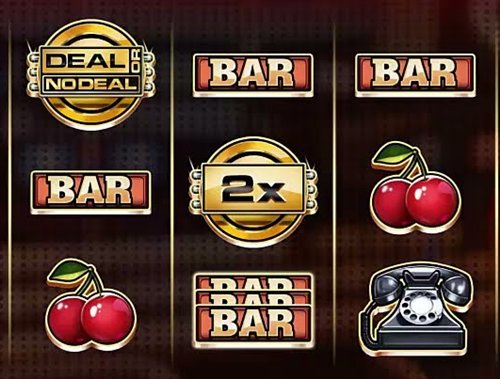
It is a slot with three rows and three columns. The aim is to land three qualification symbols in one spin. The spin cost is set by the chosen bet, and that same bet decides the money that appears in each briefcase.
Qualifying unlocks the main deal or no deal live game.
Deal or no deal live qualification can take one spin or many, depending on how quickly three qualification symbols line up.
Each unsuccessful spin costs the chosen bet.
Do qualification spins pay on their own?
Yes. Like a standard slot, matching three symbols on a line pays between 0.5x and 75x the bet, depending on the symbol. Qualification symbols can also carry multipliers between 2x and 10x that apply to the briefcase prizes.
Those multipliers raise every value on the board for that round.
Deal or no deal live therefore pays small slot wins during qualification, even before the briefcase round begins.
Multipliers found during qualification carry into the briefcase values.
Deal or no deal live line wins of 0.5x return half the stake, while the top line win of 75x returns seventy five times the bet.
How do qualification symbols carry over?
A qualification symbol that lands on the top or middle row stays on the slot and moves down one row on the next spin. It drops off once it reaches the bottom row.
That holding feature improves the chance of lining up three symbols across consecutive spins.
A deal or no deal live qualification symbol landing on the top row can stay on the slot for two further spins as it moves down.
That persistence builds toward the three needed to qualify.
What is Extreme Spin mode?
An optional spin mode costing fifteen times the base bet. It guarantees one qualification scatter per round and adds more multipliers. The base bet and the briefcase values stay unchanged.
Extreme spins shorten the path to qualifying at a higher price per spin.
At a one dollar base bet, a deal or no deal live Extreme spin costs fifteen dollars. The guaranteed scatter speeds up qualification without changing the case values.
Deal or no deal live Extreme spins keep the base bet unchanged for the briefcase values, so the extra cost buys speed rather than bigger prizes.
What is Xxxtreme Spin mode?
A second optional mode costing seventy five times the base bet. It guarantees two qualification scatters per spin and offers even more multipliers.
Live Casino Comparer warns that buying these spins becomes expensive when qualification still takes repeated attempts.
At a one dollar base bet, a deal or no deal live Xxxtreme spin costs seventy five dollars. The two guaranteed scatters make qualifying faster at a much higher price.
Deal or no deal live Xxxtreme spins return 96.07 percent according to Live Casino Comparer, almost identical to normal spins.
What is the Top Up phase?
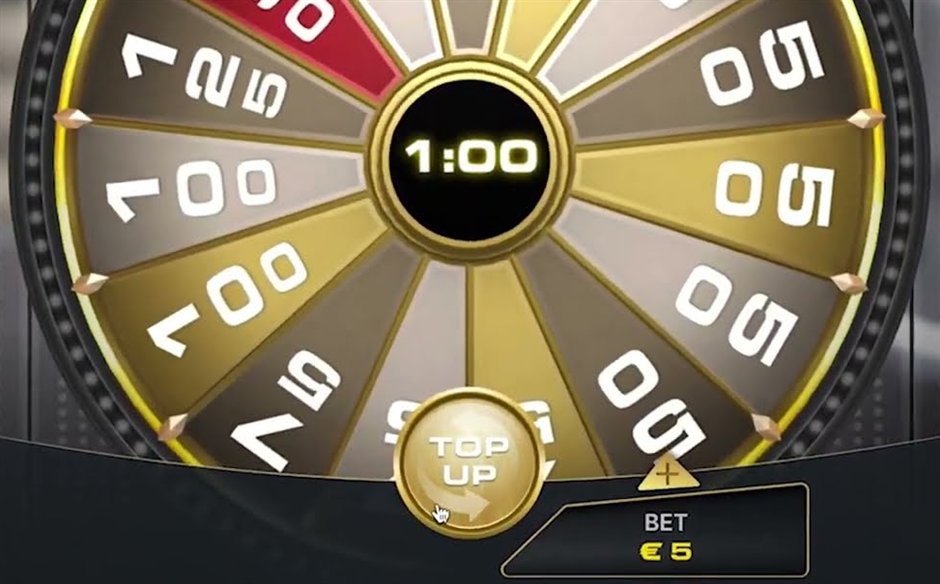
An optional stage after qualifying where players spin a wheel to add money to the briefcases. At the base bet, the wheel adds between 5x and 50x the bet to the highlighted case.
Players can keep spinning until the phase timer runs out.
Deal or no deal live Top Up spins each add the wheel result to one highlighted briefcase. The phase ends when its timer runs out.
Deal or no deal live Top Up is the only stage where the player chooses which case to strengthen, through the highlighted briefcase.
Does a bigger Top Up bet raise the prizes?
Yes. Increasing the bet amount in the Top Up phase increases the value of money going into the briefcases. A higher bet produces higher case values.
It also raises the total amount invested in that deal or no deal live round.
Deal or no deal live case values rise with every Top Up spin, but so does the amount of money already committed to the round.
How does the main game work?
The assistant opens three briefcases, and their values are removed from the prize board. The banker then makes an offer, and the player chooses Deal to take it or No Deal to continue.
The process then repeats with further groups of cases.
Deal or no deal live removes each opened case from the prize board, so the remaining values shape every banker offer that follows.
What is the order of offers?
After the first three cases, the process repeats for two more sets of four cases, with a banker offer after each set. When two briefcases remain, the banker makes a final offer.
That structure gives the player repeated chances to deal before the end.
Deal or no deal live runs through three cases, then four, then four more, with an offer after each group and a final offer when two cases remain.
What happens with the last two briefcases?
The banker makes a final offer and then gives the choice of swapping cases. The player either takes the offer or takes one of the two remaining boxes.
That decision ends the round.
Deal or no deal live offers the swap only at the very end, once the banker’s final offer is on the table.
Taking a box means accepting whatever value it holds.
Deal or no deal live swaps give the player a last chance to change boxes before the values are revealed.
What is the top prize?
Live Casino Comparer lists a 500x prize as the goal, and describes it as very difficult to achieve. Reaching it needs the top value to survive to the final box and the player to hold it.
Operator terms can set their own payout limits.
Deal or no deal live players reach the 500x prize only when the highest value stays hidden until the final box and the player keeps that box.
What is the RTP?
Live Casino Comparer lists an optimal return of 96.08 percent for the whole game. Normal spins return 96.04 percent, Extreme spins 96.08 percent, Xxxtreme spins 96.07 percent and the Top Up phase 95.42 percent.
The Top Up phase carries the lowest return of any stage.
Deal or no deal live returns differ slightly by spin mode, with Extreme spins listed at the highest figure.
Deal or no deal live returns are listed separately for normal spins, Extreme spins, Xxxtreme spins and the Top Up phase, so each stage carries its own cost.
What do those returns cost in dollars?
A 96.04 percent return means an average cost of about three dollars ninety six for every hundred dollars wagered on normal spins. The Top Up phase at 95.42 percent costs about four dollars fifty eight per hundred.
Those averages hold only over very long play.
A deal or no deal live player who spends one thousand dollars on Top Up spins would expect to lose about forty six dollars on average at 95.42 percent.
How volatile is deal or no deal live?
Live Casino Comparer calls it a highly volatile game. Money goes in at two stages, qualification and Top Up, and the final outcome can swing from a small offer to a large box value.
Short sessions can land far from the published return.
Deal or no deal live results depend heavily on which values survive to the final boxes, which makes single rounds unpredictable.
Deal or no deal live volatility rises with every Top Up spin, because more money rides on which boxes survive.
How long does a round last?
Live Casino Comparer reports that game rounds last about two minutes, with the qualification process taking about the same time. Qualifying late leaves little time for topping up.
The pace is set by the studio rather than the player.
A two minute deal or no deal live round leaves limited time for each decision, so players benefit from deciding their deal threshold before the round begins.
Deal or no deal live runs continuously, so a new round is always close for players who miss one.
What strategy does the reviewer suggest?
Live Casino Comparer’s reviewer took any offer that returned a profit on the money already invested. The advice is to track spending across qualification and Top Up, then deal as soon as an offer beats that total.
Waiting for the last box is described as a huge gamble.
Deal or no deal live rewards discipline more than daring, according to that reviewer’s experience.
Banking a profit ends the round cleanly.
When does the reviewer suggest taking an offer?
The reviewer suggests seriously considering any offer worth more than twice the amount bet, while noting that players sometimes stay in when a large number of high value boxes remain.
The only guaranteed payout in the game is an accepted offer.
Deal or no deal live offers above twice the stake represent a clear profit on the base bet, which is why the reviewer highlights that threshold.
Why track total spending?
Deal or no deal live takes money at the qualification stage and again at Top Up. Large payouts require large amounts added along the way, so a running total shows whether an offer is really a profit.
Live Casino Comparer calls the game a potential money pit without that discipline.
A deal or no deal live player who spends twenty dollars qualifying and thirty dollars topping up has fifty dollars invested before the first offer arrives.
Any offer below fifty dollars is a loss on the round.
Deal or no deal live spending across two stages adds up faster than a single bet on a wheel game.
What happens if a player does not qualify?
The qualification bet is lost, and the player spins again to try to qualify. Live Casino Comparer compares the qualification stage to ordinary gambling, because each spin is a bet placed in the hope of reaching the main game.
Deal or no deal live players who never qualify never see the briefcases in that round.
Can a player go straight back to qualifying?
Yes. Once the player takes the banker’s offer or opens the last box, the round ends and the player can return to the qualification process to try again.
Each new deal or no deal live round starts with fresh briefcase values set by the chosen bet.
Which spin mode returns the most?
Live Casino Comparer lists Extreme spins at 96.08 percent, Xxxtreme spins at 96.07 percent and normal spins at 96.04 percent. The differences are under five hundredths of a percent, while the cost per spin changes fifteen or seventy five times over.
Deal or no deal live spin modes change the pace and the stake far more than the return.
How do the returns compare with roulette and blackjack?
Live Casino Comparer’s reviewer compares the game with roulette at 97.30 percent and blackjack at around 99.5 percent, both higher than the 96.08 percent optimal figure listed for this game.
Deal or no deal live costs more per dollar than either of those table games.
What do qualification multipliers mean in dollars?
A qualification multiplier between 2x and 10x applies to the briefcase prizes. As an illustration, a case holding fifty dollars would rise to one hundred dollars at 2x and to five hundred dollars at 10x.
Deal or no deal live players see those raised values before any case opens.
What did the reviewer conclude?
Live Casino Comparer’s reviewer found the concept clever but did not enjoy the game, describing the case opening as a functional step rather than the most exciting part of the show. The review suggests it may appeal to new players looking for something different.
Trying deal or no deal live at the lowest stake shows whether the format suits a player before larger bets.
What do ten qualifying spins cost?
At a one dollar base bet, ten normal spins cost ten dollars, ten Extreme spins cost one hundred and fifty dollars, and ten Xxxtreme spins cost seven hundred and fifty dollars. The briefcase values stay tied to the one dollar base bet in every case.
Deal or no deal live spin modes therefore change the cost of reaching the briefcases far more than the size of the prizes.
Where is the only guaranteed payout?
Live Casino Comparer points out that the banker’s offer is the only guaranteed payout in the game. The final box can hold a high value or a low one, and nothing guarantees a large prize at the end.
Deal or no deal live players who accept an offer lock in that amount immediately.
What does the prize board show?
The board lists the values still in play. When the assistant opens briefcases, the matching values are removed from the board, so players can see which amounts remain before each banker offer.
Deal or no deal live decisions rest on that board at every stage of the main game.
How does a player decide between Deal and No Deal?
Comparing the offer with the total already spent on qualification and Top Up gives a clear line. An offer above that total is a profit on the round, while an offer below it locks in a loss.
Deal or no deal live rewards players who know that number before the first offer.
Can the outcome be influenced?
No. The briefcase values and discards are chosen randomly by the software. The player controls only the bet size, the spin mode, the Top Up spins and the deal decisions.
Presenters host the show but do not choose the boxes.
Deal or no deal live decisions affect only how much is staked and when to stop, never which values sit in which case.
Is deal or no deal live rigged?
Live Casino Comparer argues there is no reason for it to be, because the game already has a published return below one hundred percent that guarantees the house a long term profit.
Regulated operators run certified versions of every live game.
Deal or no deal live returns are published per stage, which lets players compare costs before choosing a spin mode.
Deal or no deal live on regulated sites uses certified software that sets the briefcase values randomly.
Can deal or no deal live be played on mobile?
Yes. Live Casino Comparer says it plays on all mobile devices in the browser with no app to download. Landscape and portrait layouts are both available.
Portrait suits one handed play on a phone.
Deal or no deal live runs in the same browser window on phones, tablets and computers, according to Live Casino Comparer.
How does it compare with the television show?
The television show built drama around one contestant and the banker’s calls. The live casino version keeps the briefcases and offers but adds qualification and Top Up stages that require bets.
Live Casino Comparer feels the case opening lost part of the suspense of television.
Deal or no deal live keeps the television tension of the final offer while adding stages that cost money before the cases open.
Deal or no deal live keeps the classic question at the heart of every banker offer.
How does it compare with Playtech’s version?
Live Casino Comparer notes that Playtech released its own deal or no deal live game about a year and a half after Evolution’s. The two share the briefcase and banker format.
Rules and returns differ by supplier, so the rules screen matters.
Deal or no deal live from Evolution arrived first, and Playtech’s version followed about eighteen months later, according to Live Casino Comparer.
Deal or no deal live players comparing the two versions read each rules screen for returns and stage costs.
How does it compare with Deal or No Deal Slingo?
OLG lists a Deal or No Deal Slingo game in its online casino. Slingo combines slot and bingo mechanics, while deal or no deal live is a hosted game show with a qualification slot and briefcases.
They share the brand but play differently.
Deal or no deal live uses a presenter and a studio, while the Slingo version is a software game without a live host.
How does it compare with cash or crash live?
Both Evolution shows ask players when to stop. Cash or crash live climbs a twenty level ladder with ball draws, while deal or no deal live works through banker offers on briefcases.
Cash or crash live lists a higher return of 99.59 percent.
Deal or no deal live and cash or crash live both reward stopping at the right moment, but only deal or no deal live asks for extra money before the decisions start.
How does it compare with dream catcher live?
Dream catcher live is a money wheel with no decisions after the bet. Deal or no deal live requires decisions at every banker offer and at the final swap.
Both come from Evolution’s game show range.
Deal or no deal live rounds run for about two minutes, while dream catcher live settles a spin as soon as the wheel stops.
What does a one dollar round cost?
At a one dollar base bet, a normal qualification spin costs one dollar, an Extreme spin fifteen dollars and an Xxxtreme spin seventy five dollars. Top Up spins at the base bet add five to fifty dollars to a case per spin.
Adding those costs together shows the real investment in one round.
A deal or no deal live round at one dollar with five normal qualifying spins and no Top Up costs five dollars before the briefcases appear.
What does the top prize mean in dollars?
At a one dollar base bet, the 500x prize is worth five hundred dollars before any operator cap. At ten dollars it is worth five thousand.
Reaching it requires the top value to remain in the final box the player holds.
A deal or no deal live base bet of twenty dollars would put ten thousand dollars on the table as the 500x prize.
Where can Canadians play deal or no deal live?
Live Casino Comparer says it can be played at most casinos that carry Evolution live games. Canadian players find it in the game show section of operators with Evolution lobbies.
Searching the live lobby by name confirms availability at a given operator.
Deal or no deal live sits beside Evolution’s other game shows in Canadian lobbies that carry the studio’s catalogue.
Deal or no deal live availability changes as operators update their live lobbies.

Vegazone is number 1 on our homepage list of casinos for Canadian players. Open its lobby and confirm Deal or No Deal Live is there before you deposit, and compare its welcome offer on our page on online casino reviews.
Is deal or no deal live certified in Ontario?
Registered Ontario operators run games tested by an approved laboratory, and the game rules and returns are fixed at certification. Operators display their registration number in the site footer.
Players can confirm registration through the regulator public register.
Certification covers the software that decides the briefcase values as well as the live studio feed.
Does deal or no deal live count toward wagering?
Live game shows often contribute at a reduced rate toward bonus wagering, and certain terms exclude them outright. The contribution clause matters more than the headline bonus.
Rates differ between operators.
Deal or no deal live contribution rates appear in each operator’s bonus terms, often in the live casino band.
How does a player keep deal or no deal live affordable?
Setting a budget for each round, including qualification and Top Up, keeps spending visible. Skipping the Xxxtreme mode keeps the cost per spin at the base bet.
Registered Ontario operators provide deposit limits inside the account menu.
Deal or no deal live players who set a maximum number of qualifying spins avoid chasing qualification across a long session.
What does a Canadian check before playing deal or no deal live?
Four lines decide the session. The base bet, the spin mode, any payout cap and the operator registration status all appear before any money moves.
Players in Ontario who want support can call ConnexOntario at 1-866-531-2600.
Deal or no deal live Top Up returns sit below the other stages, and the phase is optional for players on a budget.
Which game pages are worth reading next?
Four pages sit closest to this one. Each covers a game or a rule that touches the subject above, and each stands on its own.
Deal or no deal live asks for money twice before the first briefcase opens. Track every dollar in, take the first offer that beats it, and the game stays within budget.
3 thoughts on “Deal or No Deal Live Casino Canada: Qualify, Top Up, Beat the Banker”