
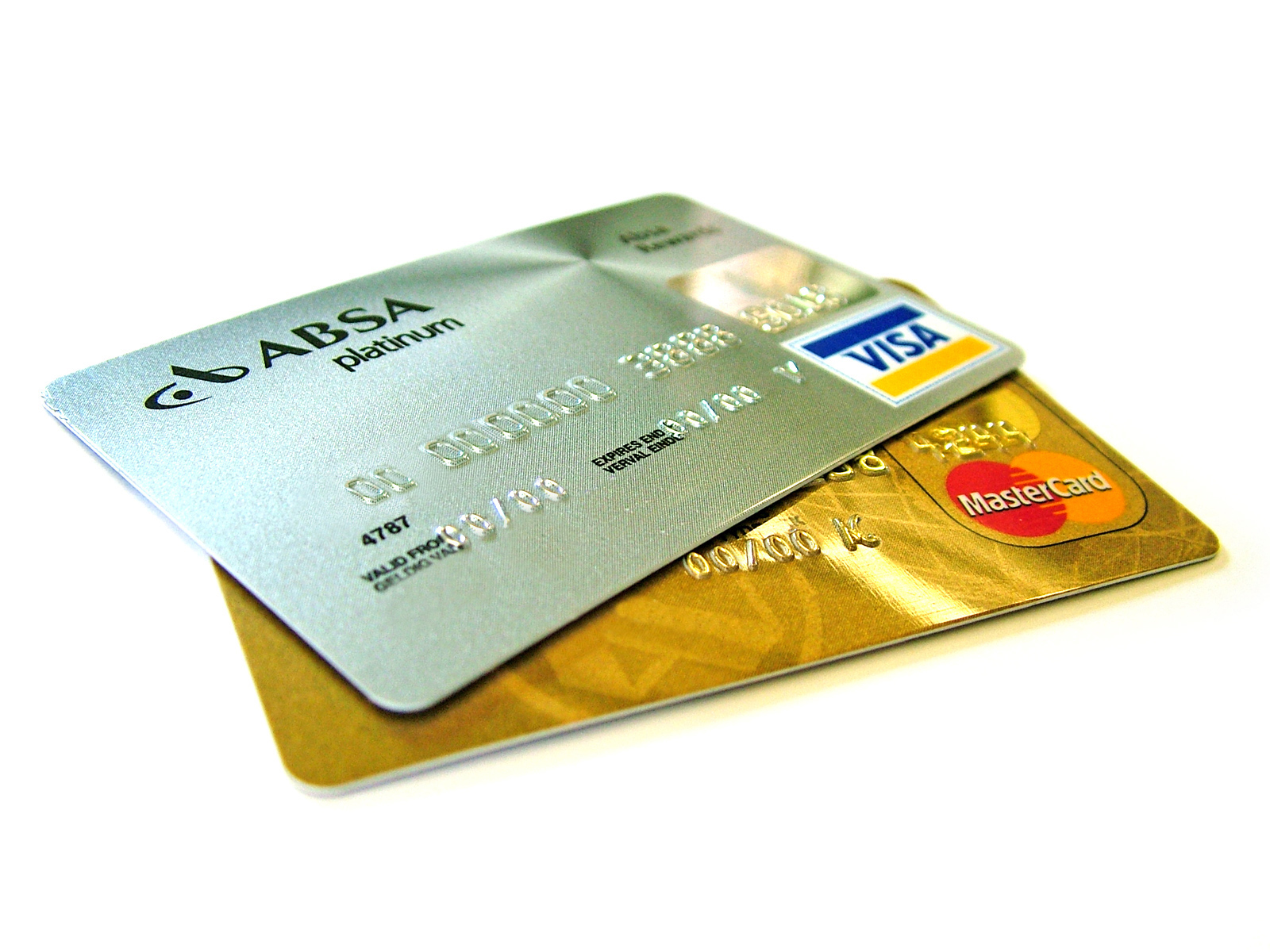
A credit card casino deposit is the most widely accepted funding method in Canada and the most likely to cost more than the amount deposited, because many Canadian issuers treat gambling as a cash advance rather than a purchase. This guide covers which cards work, what the cash advance treatment actually costs, why payouts rarely come back to the card, and when the method is the wrong choice outright. For the wider market picture, start at our online Canada casinos hub.
The table below sets out what separates a card deposit from the alternatives. Read it first, then work through the detail beneath.
| Aspect | Credit card at a casino |
|---|---|
| Deposit speed | Instant |
| Withdrawals | Refund route only, capped at the deposit, three to five business days |
| Possible cash advance treatment | Yes, at many Canadian issuers |
| Interest-free grace period | Lost where treated as a cash advance |
| Typical cash advance fee | A flat charge or a percentage of the amount |
| Rewards points | Usually excluded on cash advances |
| Acceptance at casinos | Near universal |
| Money spent | Borrowed rather than your own |
What is a credit card casino deposit?
A credit card casino deposit charges a gaming account to a line of credit, which means the money funding the play is borrowed from the issuer rather than drawn from an account balance.
That single fact separates it from every other method on the site. Interac, debit cards, vouchers and wallets all move money the player already has.
The transaction itself is ordinary. Card number, expiry and security code entered at the cashier, or the same card presented through a mobile wallet.

What differs is how the issuer classifies it afterwards. Gambling merchants carry their own category code, and Canadian banks apply their own policy to it.
That classification decides whether a credit card casino deposit behaves like a purchase or like withdrawing cash at an ATM.
Our comparison of casino payment methods covers the full range, and this page covers the borrowed-money route in detail.
Merchant category code 7995 is the label everything else follows from. It identifies betting and gambling transactions, it travels with the payment, and every issuer policy described on this page is applied by reading it.
Nothing about a credit card casino deposit is hidden from the bank. The category is attached at the point of sale, and the classification happens automatically rather than by review.
One framing worth keeping through the rest of this page: every other funding method described on this site moves money that already exists, and this one creates a debt. That is not a moral point, it is a mechanical one, and it changes what a losing session leaves behind.
A losing debit session ends with a smaller balance. A losing credit card casino session ends with a statement, a due date and interest running until it is cleared.
Borrowed money, instant deposit, uncertain classification. Those three describe a credit card casino deposit completely, and the third is the one that decides what it costs.
Which credit cards do Canadian casinos accept?
Visa and Mastercard are accepted almost universally at Canadian-facing operators, American Express far less often, and Discover rarely appears at all.
The two major networks dominate because their acquiring relationships cover gambling merchants broadly across offshore markets.
American Express restricts gambling merchants more tightly, which is why it appears on fewer cashier pages despite being common in Canadian wallets.
Prepaid and virtual cards sit in a separate category and frequently decline. Their issuers block gambling categories more often than mainstream banks do.
Corporate and business cards usually cannot be used at all. Most carry explicit gambling exclusions in their terms.
For most Canadian players a personal Visa or Mastercard is the only credit card casino option worth attempting.
Network acceptance and issuer permission are separate questions that players routinely merge. The casino accepting Visa says nothing about whether a particular Visa card will go through.
A declined credit card casino payment on a widely accepted network is almost always the issuer rather than the operator, and switching card resolves it more often than switching site.
Store cards and retail-branded credit products are worth mentioning because they almost never work. Their issuers restrict merchant categories tightly and gambling is among the first excluded.
A player holding only a retail card should treat a credit card casino deposit as unavailable and use a bank route instead.
Visa and Mastercard, personal rather than corporate. Everything else is a credit card casino attempt likely to decline before it reaches the operator.
Acceptance also varies by where the operator is licensed rather than only by the card. An offshore operator processing through an acquirer that handles gambling broadly will take cards a provincially registered site declines, and the reverse happens too. Neither pattern tells a player anything about which operator is worth using, and both explain why the same card behaves differently at two cashiers on the same evening. The only way to establish which applies at a given site is to try a small deposit and read what the statement says afterwards.
How does a credit card deposit work?
Enter the card number, expiry, security code and billing address at the cashier, confirm the amount, complete any bank verification step, and the balance updates within seconds.
Verification adds a step at many Canadian banks. A one-time code by text or an approval in the banking app confirms the transaction.
That step is a security measure rather than an obstacle. Declining to complete it cancels the deposit rather than delaying it.
Cards can usually be saved for future deposits. Storing card details on a gambling site is worth avoiding where a wallet is available instead.
The deposit reaches the balance immediately regardless of how the issuer later classifies it.
That delay in classification is why a credit card casino deposit can look free at the cashier and appear as a cash advance on the statement.
Saving a card at an operator is worth avoiding on principle. Stored details sit in that company systems indefinitely and are exposed by any breach.
Entering the card each time is mildly inconvenient and materially safer, and a wallet removes the trade-off entirely by tokenising the same credit card casino payment.
Three-D Secure is the verification layer behind most Canadian bank prompts. It shifts liability for fraud from the merchant to the issuer once the cardholder confirms.
Completing it is not optional at most operators, and skipping the prompt cancels the credit card casino deposit rather than approving it silently.
Enter, verify, deposit, wait for the statement. The first three steps take seconds and the fourth is where a credit card casino deposit reveals its real cost.
Do Canadian banks allow gambling on credit?
Policies differ by institution and by card product, with some Canadian issuers permitting gambling transactions normally, some treating them as cash advances, and some declining them outright.
None of this is published prominently. The policy sits in the cardholder agreement rather than on a webpage a player is likely to read.
Policies also change without notice. A card that worked last year can decline this year at the same bank.
Calling the issuer settles it definitively. Asking whether gambling transactions are permitted and how they are coded takes one call.
That call is worth making before the first credit card casino deposit rather than after reading a statement.
Our guide to banking safety covers how Canadian institutions treat gambling activity more broadly.
Policy differences between cards at the same bank catch people out. A premium travel card and a basic card from one issuer can classify the identical transaction differently.
Testing with a small credit card casino deposit and reading the resulting statement line is the only way to establish it for a specific card with certainty.
Regulatory direction elsewhere is worth noting because it tends to arrive eventually. Several markets have banned gambling on credit cards outright following harm research.
Canada has not, which leaves the decision with individual issuers and makes a credit card casino deposit a policy question rather than a legal one here.
Ask the issuer directly. One call settles whether a credit card casino transaction is permitted, blocked or coded as a cash advance at your bank.
A short practical script helps when calling. Ask three questions: are gambling transactions permitted on this card, are they coded as purchases or cash advances, and what is the cash advance sub-limit. Those three answers describe everything this page covers as it applies to one specific card, and the call takes a few minutes.
Is a casino deposit treated as a cash advance?
Many Canadian issuers classify gambling transactions as cash advances rather than purchases, which removes the interest-free grace period and applies a separate fee and a higher interest rate.
The reasoning is that funding a gambling account resembles obtaining cash more than buying goods.
Not every issuer does it. Policy varies enough that two cards in the same wallet can treat an identical deposit differently.
The statement is where it becomes visible. Cash advances appear under their own heading rather than among ordinary purchases.
Checking the first statement after a first credit card casino deposit is the only reliable way to find out how your own issuer treats it.
Where it is treated as a cash advance, the cost of the deposit is higher than the deposit itself from the moment it clears.
The classification is decided by the issuer rather than by the casino, which means an operator cannot tell a player how their deposit will appear.
Support desks that promise a credit card casino deposit will post as a purchase are describing their own coding rather than the issuer decision that follows it.
Coding can also change mid-relationship. A bank revising policy applies it to new transactions rather than announcing it to cardholders.
Reading the statement periodically rather than once is therefore the only reliable habit, because how a credit card casino deposit posts today does not guarantee how it posts next quarter.
Frequently, and not always. Reading the first statement after a credit card casino deposit is the only way to know which applies to your card.
What does a cash advance actually cost?
A cash advance typically carries a transaction fee plus interest that begins accruing immediately at a rate higher than the standard purchase rate, with no grace period at all.
The fee is usually a flat amount or a percentage, whichever is greater under the cardholder agreement.
The interest is the larger cost over time. Paying the statement in full does not avoid it, because it accrued from the transaction date.
A hundred dollar deposit can therefore cost several dollars in fees before any interest, and more if the balance is carried.
Repaying immediately limits the damage without eliminating it. The fee is charged regardless of how quickly the balance is cleared.
That structure makes a credit card casino deposit the most expensive funding route in a Canadian cashier where the cash advance treatment applies.
Working an example through makes the scale clear. A deposit of a few hundred dollars carrying a flat fee and daily interest can cost noticeably more than a modest bonus is worth.
That comparison is worth running before accepting any promotion funded by a credit card casino deposit, because the fee is certain and the bonus value is not.
Comparing against the house edge puts the fee in proportion. A deposit fee of several percent sits on top of a game edge of a few percent, effectively doubling the cost of the entertainment.
That combination is why a credit card casino deposit at a cash advance rate is the most expensive way to fund play available in a Canadian cashier.
A fee plus interest from day one, with no grace period. That is the standing price of a credit card casino deposit wherever the coding applies.
Two habits limit the damage where the coding cannot be avoided. Deposit only amounts that can be repaid immediately rather than carried, and pay the card down the same day rather than waiting for the statement. Neither removes the transaction fee, and both stop the interest compounding on a balance that produced nothing.
Can you withdraw winnings to a credit card?
Payouts to a credit card are processed as refunds against the original deposit rather than as payments, which caps the amount at what was deposited and takes three to five business days.
Anything above the deposit total has to travel by another route. Operators pay the excess by bank transfer or e-wallet.
Many Canadian-facing operators skip the refund route entirely and pay everything to a bank account instead.
A refund to a card reduces the balance owed rather than arriving as money. It does not appear in a bank account.
Where the deposit was treated as a cash advance, the fee and accrued interest are not refunded with it.
Our guide to Interac casinos covers the payout route most Canadian players use alongside a credit card casino deposit.
The refund cap is the structural limitation and is easy to overlook. Only the amount originally deposited can travel back along that route.
A player who deposited a hundred dollars and won a thousand receives a hundred as a refund and the rest elsewhere, which is why a credit card casino account still needs a bank payout route configured.
Processing time on a refund is set by the card scheme rather than by the operator, which is why it takes days when other methods take hours.
An operator releasing a payout promptly can still leave a credit card casino refund sitting in the settlement cycle for most of a week.
Refund only, capped at the deposit, days rather than hours. Every credit card casino account needs a bank route for anything above what was deposited.
One consequence worth planning for is that the refund and the payout can arrive separately and at different speeds. The deposit amount comes back to the card over several business days while the winnings above it travel by bank transfer in hours, which produces two entries days apart for what the player experienced as a single withdrawal.
What limits apply to credit card deposits?
Three ceilings apply at once: the casino’s per-transaction maximum, the available credit on the card, and a separate cash advance sub-limit that is usually far lower than the overall credit limit.
The cash advance sub-limit is the one that surprises people. A card with a substantial credit limit can carry a cash advance ceiling of a few hundred dollars.
Where gambling is coded as a cash advance, that smaller ceiling governs the deposit.
Casino minimums sit around ten or twenty dollars and are rarely the binding constraint.
Checking the sub-limit takes one look at the cardholder agreement or one call to the issuer.
That figure predicts more about a credit card casino deposit than the credit limit printed on the statement does.
Cash advance sub-limits reset on the statement cycle rather than daily, which means an exhausted limit can stay exhausted for weeks.
Discovering that mid-session is unpleasant, and checking the figure before funding a credit card casino account avoids it entirely.
Available credit is not the same as spending capacity for this purpose, and treating it as a bankroll is the specific danger described later on this page.
A credit card casino limit reflects what a bank will lend rather than what a player can afford to lose, and the two figures are unrelated.
Cash advance sub-limit, not credit limit. That smaller figure governs a credit card casino deposit wherever the transaction is coded as an advance.
Are chargebacks possible on a casino deposit?
A chargeback is technically available and is a poor remedy for a gambling dispute, because operators close accounts on receipt of one and the underlying transaction was authorised by the cardholder.
Legitimate grounds exist. Unauthorised use of a stolen card is a genuine fraud claim.
Regretting a deposit is not grounds. The transaction was authorised, the service was delivered, and the dispute fails on the facts.
Consequences follow either way. Account closure, balance forfeiture and a flag across the operator’s payment network are all common.
Disputes about a refused withdrawal belong with the licensing authority rather than with the card issuer.
Our guide to online casino legal regulations covers the escalation route that actually works.
Operators treat chargebacks as adversarial rather than administrative, and the response is usually immediate account closure with any balance forfeited.
Payment networks also share the record, which can affect a credit card casino player at other operators rather than only at the one disputed.
The legitimate case is worth stating clearly so it is not lost among the warnings. A card used without permission is fraud and the issuer should hear about it immediately.
Everything else described as a dispute over a credit card casino deposit belongs with the operator first and the licensing authority second.
Possible and rarely wise. A chargeback on a credit card casino deposit closes the account and forfeits the balance at most operators.
Is a credit card safe for casino payments?
Card networks provide strong fraud protection and the method requires handing full card details to a gambling operator, which is a meaningfully larger exposure than a tokenised wallet or a bank transfer.
Stored cards compound it. A card saved at an operator sits in that operator’s systems until it is removed.
Zero liability policies cover genuine fraud. That protection is real and applies to unauthorised use rather than to regret.
A wallet reduces the exposure without changing the funding. The same card charged through a wallet never reveals its number.
Our guide to Apple Pay casino deposits covers that tokenised route for players who want the card without the exposure.
None of this addresses the operator itself, and a credit card casino deposit at an unlicensed site carries the same counterparty risk any deposit would.
Fraud protection is the genuine advantage cards hold over bank transfers. An unauthorised charge is recoverable in a way a completed transfer is not.
That protection covers theft rather than choice, and it does nothing for a credit card casino deposit made deliberately at an operator that later refuses to pay.
Virtual card numbers offered by some Canadian issuers close much of the exposure gap. A number generated for one merchant limits what a breach can reveal.
Where an issuer offers them, using one for a credit card casino deposit is strictly better than entering the real card details.
Strong fraud cover, weak data hygiene. A credit card casino deposit hands full card details to a gambling site unless a wallet or virtual number is used instead.
Does a credit card deposit show on a statement?
Yes, and where the issuer treats it as a cash advance it appears under a separate heading that identifies it clearly rather than blending into ordinary purchases.
Merchant descriptors usually name a payment processor rather than the casino brand.
The cash advance heading is the giveaway regardless of the descriptor. It is a distinct section on most Canadian statements.
Anybody sharing an account or a statement should assume full visibility. Nothing about the method conceals it.
Players wanting genuine separation need a cash-funded route rather than any card.
Our guide to Paysafecard casino deposits covers that alternative, which leaves no gambling entry at all.
The cash advance section on a Canadian statement is separated deliberately for regulatory reasons, which makes gambling activity more visible on credit than on debit.
Anybody assuming a credit card casino deposit blends into ordinary spending has the position backwards, because this is the method most likely to stand out.
Credit applications are the other place this becomes visible. Lenders reviewing statements see gambling activity plainly, and cash advance entries stand out further.
Anybody applying for a mortgage should know that a pattern of credit card casino deposits is legible to an underwriter reading the statements.
Plainly, and under its own heading where coded as an advance. A credit card casino deposit is the most visible funding method on any statement.
Why do credit card casino deposits get declined?
Five causes account for most refusals: the issuer blocks gambling merchants outright, the cash advance sub-limit is exhausted, the address does not match, verification was not completed, or the card is prepaid or corporate.
Issuer blocks are the most common and the least visible. The decline message names no reason.
Address mismatches are the easiest to fix. The billing address entered must match the one the issuer holds exactly.
Verification steps time out silently. An unanswered text or app prompt cancels the transaction.
Repeated attempts can trigger a temporary card lock, which is why switching method beats retrying the same card.
Calling the issuer resolves it definitively where a credit card casino deposit fails repeatedly on an otherwise healthy card.
Issuer blocks are increasingly common as Canadian banks tighten gambling policy, and they are applied at the network level rather than per transaction.
Where a block exists, no retry succeeds and no cashier setting helps, and a credit card casino deposit at that bank is simply unavailable.
Travel and location mismatches add a sixth cause for players abroad. A transaction from an unfamiliar country triggers fraud rules independently of gambling policy.
Notifying the issuer before travelling prevents a credit card casino decline that has nothing to do with the merchant category.
Issuer block, sub-limit, address, verification, card type. Working through those five explains nearly every failed credit card casino payment.
Do bonuses work with credit card deposits?
Card deposits qualify for promotions at almost every operator, because they carry no unusual processing cost and are the most common funding route in the market.
Excluded method clauses name e-wallets far more often than cards.
Minimum qualifying deposits apply as normal and are unaffected by the funding route.
Wagering terms are identical whatever paid for the deposit. The multiplier, bet cap and weighting do not change.
The interaction worth noting is cost rather than eligibility. A bonus cleared on money that cost a cash advance fee is worth less than the headline suggests.
Our guide to reload bonuses covers how to price an offer before claiming it.
Eligibility is rarely the issue and value frequently is. An offer worth fifty dollars taken on a deposit carrying a cash advance fee returns less than it appears.
Subtracting the fee before judging any promotion funded by a credit card casino deposit gives the honest number.
Wagering requirements interact badly with borrowed money in a way worth stating explicitly. A locked balance cannot repay a statement.
A credit card casino bonus that ties funds up for thirty days is tying up money that is accruing interest for the whole period.
Eligible almost everywhere. Subtract the fee before judging any offer taken on a credit card casino deposit, because the headline value ignores it.
Do you earn rewards points on casino deposits?
Where the transaction is coded as a cash advance, rewards are almost always excluded, and where it is coded as a purchase, points usually accrue normally.
Cardholder agreements list the exclusions explicitly. Cash advances, balance transfers and gambling appear on those lists at many issuers.
Chasing points through gambling deposits is a poor strategy regardless. The house edge exceeds any rewards rate by a wide margin.
A one percent rewards rate against a four percent house edge is a losing trade in every session.
Anybody depositing for the points is describing a plan that costs money rather than earns it.
That arithmetic applies to every credit card casino deposit whatever the card offers on ordinary spending.
Some players deposit specifically to hit a spending threshold on a rewards card, which is worth naming as the poor plan it is.
The expected loss on the money gambled exceeds any welcome bonus or points value, and a credit card casino deposit made for points is a loss disguised as a strategy.
Insurance and purchase protection benefits are also usually void on cash advances, which removes another reason some players prefer cards.
Where the coding applies, a credit card casino deposit loses the points, the protections and the grace period together.
Rarely, and never worth chasing. The house edge dwarfs any rewards rate, so a credit card casino deposit made for points loses money by design.
What are the risks of gambling on credit?
Gambling with borrowed money removes the natural limit that a bank balance provides, and losses become debt carrying interest rather than money that has simply been spent.
The distinction matters more than any fee. A lost debit deposit is gone, and a lost credit deposit is owed.
Interest compounds the loss over time. A balance carried for months costs considerably more than the amount originally deposited.
Available credit also inflates the apparent bankroll. A player with a limit far above their income can lose far more than they hold.
Every responsible gambling framework treats gambling on credit as a recognised risk indicator rather than an ordinary payment choice.
Several regulated markets ban it outright for this reason, which is worth knowing before choosing the method.
The absence of a natural stopping point is the central danger. A bank balance runs out and a credit limit continues.
Every framework treating gambling harm seriously flags credit use as an indicator, and a credit card casino deposit made to continue after funds ran out is the pattern those frameworks describe.
Debt from gambling behaves differently from other consumer debt because the spending produced nothing to show for it and the impulse to recover it drives further spending.
That recovery loop is the specific harm pattern behind every restriction on credit card casino deposits anywhere in the world.
No natural stopping point, and losses become debt. That is the whole case against funding play with a credit card casino deposit rather than with your own funds.
One warning sign is worth naming precisely because it is easy to rationalise. Reaching for a credit card after a debit deposit has been lost is the moment the method stops being a payment choice and becomes a way of continuing past a limit that had already been reached. Anybody recognising that pattern in themselves is better served by a block than by a better card.
How does a credit card compare with debit and Interac?
Interac and debit both spend money the player already holds, arrive just as fast and avoid every cash advance charge, which makes them cheaper and safer for the same deposit.
Interac also handles payouts directly, which the card does only through a capped refund route.
Debit sits between the two. Same instant deposit, own funds, and no two-way movement at most operators.
Acceptance is where the card leads. Almost every operator takes Visa and Mastercard, and Interac coverage is broad rather than universal.
That advantage rarely matters in practice, because the operators worth using support the bank route as well.
Our guide to debit card casinos covers the closest alternative, which keeps the card convenience without the borrowing.
Ranking the three on total cost puts the card last in every scenario where the cash advance treatment applies and level with the others where it does not.
Since the classification is unknown until a statement arrives, a credit card casino deposit carries a cost uncertainty the alternatives simply do not have.
Speed is identical across all three at the deposit stage, which removes the one argument that would otherwise favour the card.
Where a bank route and a credit card casino option both appear at a cashier, nothing about the card is faster and several things about it are more expensive.
Same speed, higher cost, worse payouts. On every measure that matters a credit card casino deposit trails the bank routes available beside it.
Should you use a credit card at a casino?
Use it only where the issuer treats gambling as a purchase, you clear the balance immediately, and you would have deposited the same amount from your own funds anyway.
Where any of those three fails, another method is cheaper and simpler.
Confirming the issuer’s classification is the first step and takes one call.
Interac achieves the same deposit at no cost and pays winnings back directly.
Never deposit an amount that cannot be repaid on the next statement, because a losing session on credit produces debt rather than a spent budget.
Anybody who has ever deposited on credit to chase a loss should treat a credit card casino option as one to block rather than one to optimise.
The recommendation is narrower than for any other method on this site, and deliberately so.
Three conditions have to hold together before a credit card casino deposit makes sense, and where any one fails the same money moves more cheaply through Interac or a debit card.
For most Canadian players the honest recommendation is not to, and to use Interac instead for both directions.
That is a narrower conclusion than this site reaches about any other method, and the cash advance treatment plus the borrowing is what makes a credit card casino deposit the exception.
Only under three conditions, and rarely. For most Canadian players a credit card casino deposit is the method to skip rather than the one to optimise.
Nothing on this page argues that cards are illegitimate or that anybody using one is behaving irresponsibly. It argues that this specific method costs more, pays back worse and carries a risk the alternatives do not, and that a Canadian player with Interac available has a strictly better option sitting in the same cashier.
Gambling is entertainment rather than income, and money that has to be borrowed to gamble is money that should not be gambled. Set a deposit limit, decide the session budget in advance from funds you already hold, and stop when it stops being enjoyable. For independent help with gambling in Canada, the Responsible Gambling Council publishes free resources and support contacts, and our guide to casino self-exclusion covers the tools available if that line has already been crossed.
Site optimisation by SEO.