The keno terms Canada players meet come from two worlds: the provincial lottery games run by OLG, BCLC, WCLC and ALC, and the casino keno tradition with its tickets, catches and way bets. This glossary explains both in plain English. For licensed places to play, see our list of online casinos for Canadian players.
Terms are grouped by topic: the basics, ticket types, Canadian lottery features, payouts and odds, and the equipment and people behind a live game.
| Term | Short meaning |
|---|---|
| Spot or Pick | A number you choose to play |
| Catch or Hit | One of your numbers that is drawn |
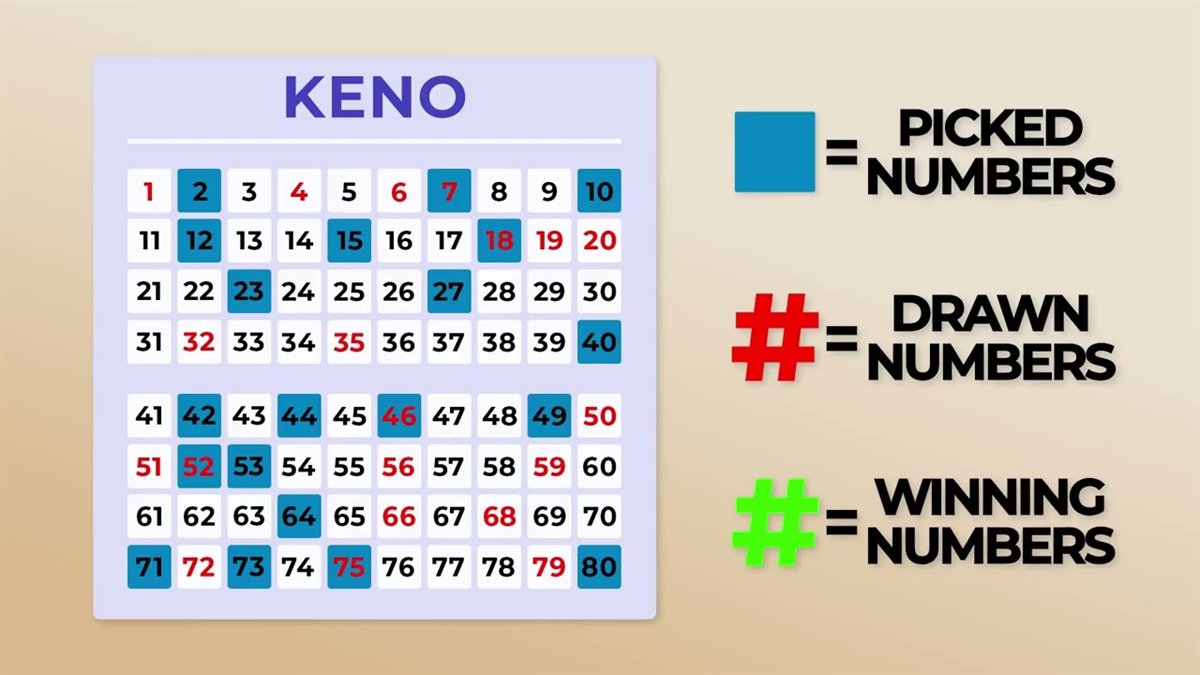
| Draw | The 20 numbers selected in one game |
| Quick Pick | Numbers chosen for you by the computer |
| Pay table | The chart of prizes for each result |
| Encore | OLG’s add-on game you can attach to Daily Keno |
What is keno?
Keno is a lottery-style game where you choose numbers and win by matching the numbers drawn. The Gambler’s Edge calls it the modern version of an old Chinese lottery. Every one of the keno terms Canada players learn builds on that idea.
BCLC and WCLC draw 20 numbers from 1 to 80.
In Ontario and Atlantic Canada, the lottery games draw 20 numbers from a smaller pool of 70.
Online casino keno usually follows the 20-from-80 format.
The words differ a little between lotteries, but the game itself works the same way everywhere.
What is a spot in keno?
A spot is one number you choose to play. A 5-spot ticket means you picked five numbers. ALC uses the word spot on KENO Atlantic, as in “2 SPOT”. It is one of the most common keno terms Canada players see on tickets.
Each spot count has its own prize table.
KENO Atlantic offers 2 spots up to 10 spots.
Casino keno games can allow more spots, up to 15 at certain online casinos.
What does “pick” mean on a keno ticket?
Pick means the same as spot: the count of numbers you play. OLG calls its options 2 PICK to 10 PICK, and BCLC uses Pick 1 to Pick 10. Of all the keno terms Canada players use, pick and spot are interchangeable.
WCLC’s conditions use “10 Pick”, “9 Pick” and so on.
Pick also describes the act of choosing your numbers.
Quick Pick lets the system make that choice for you.
What does “mark” mean?
A mark is the sign you make on a keno ticket to choose a number, by hand or by computer, The Gambler’s Edge says. Marked numbers are your spots. Mark is among the oldest keno terms Canada players still see on screens.
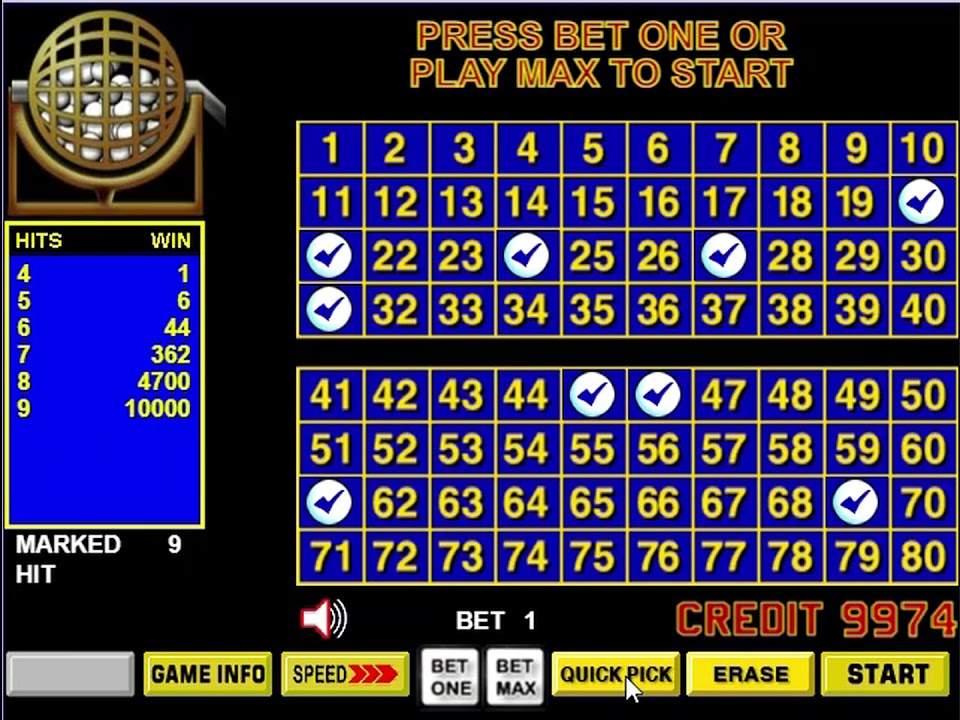
Video keno screens show a “Marked” counter for the numbers you chose.
Paper slips use a pen or the classic keno crayon.
Online, a click or tap marks a number.
Changing a mark before the draw is free; after the draw, it is too late.
What is a catch in keno?
A catch is one of your marked numbers that gets drawn. If you play 6 spots and 4 are drawn, you caught 4. The Gambler’s Edge defines it the same way. Catches decide every prize in the keno terms Canada players read on pay tables.
Pay tables list prizes by number of catches.
Catching more of your spots pays more.
Catching none can pay on certain tickets.
What does “hit” mean in keno?
A hit is the same as a catch: a drawn number that matches one of your spots. Video keno screens show a “Hit” count next to the “Marked” count. Hit and catch are the keno terms Canada players hear most often.
The Gambler’s Edge defines a hit as a drawn number matching your spot.
The game screen we show tracks hits as the balls fall.
Hits are counted after all 20 numbers are drawn.
Your prize depends on the final hit count, not on the order the numbers appeared.
What is a draw?
The draw is the set of 20 numbers selected in one game. The Gambler’s Edge says the 20 numbers are collectively called the draw. Draws are the clock of the keno terms Canada players follow.
OLG runs a MIDDAY and an EVENING draw each day.
ALC holds its KENO Atlantic draw each night just before 11:30 p.m. Atlantic time.
BCLC runs draws at intervals through its Draw Day.
What is a race?
A race is a single keno game, a term left over from when the game was called Horse Race Keno, The Gambler’s Edge says. You may still see it in casino keno. It is one of the historic keno terms Canada players come across.
A multi-race ticket covers a run of games in a row.
A quit race means cashing in a multi-game ticket before all games are played.
Online keno uses “draw” or “game” instead.
The old term survives in casino keno talk, such as a ticket with races left to play.
What is Quick Pick?
Quick Pick means the computer chooses your numbers. OLG, BCLC and WCLC all offer it, and OLG says retailers ask for your pick size and your bet. It is one of the most useful keno terms Canada players know.
Quick Pick numbers have the same odds as hand-picked ones.
OLG allows up to four boards on a Quick Pick at a retailer.
Online, a Quick Pick button fills the card instantly.
What is a keno board?
On OLG’s Daily Keno, a board is one set of numbers on a ticket. OLG allows up to two boards on a selection slip, or up to four with Quick Pick at a retailer. Board is one of the Ontario keno terms Canada players see.
Each board has its own pick size and bet.
The Gambler’s Edge also uses “keno board” for the electronic sign showing drawn numbers.
Context tells you which meaning applies.
On a ticket, board means your set of numbers; on a wall, it means the display.
What is a selection slip?
A selection slip is the paper form you fill in at a lottery retailer to choose your numbers, bet and draws. BCLC, WCLC and OLG all describe completing a slip. It is a basic part of the keno terms Canada players meet at stores.
WCLC says the wager defaults to 1 if you do not choose one.
If you do not mark the draws, the ticket covers one draw, WCLC says.
Online purchases replace the slip with a screen.
The screen asks for the same choices: numbers, bet and draws.
What is a keno ticket?
The ticket is your proof of play, showing your numbers, bet, draws and a control number. WCLC lists those details on every ticket. Tickets anchor the keno terms Canada players use when claiming prizes.
OLG prints the draw date and MIDDAY or EVENING on each Daily Keno ticket.
Keep the ticket until every draw it covers is checked.
The Gambler’s Edge calls the official copy the outside ticket.
What are the inside and outside tickets?
In casino keno, the inside ticket is the one you mark and hand in, and the outside ticket is the official ticket you get back, The Gambler’s Edge says. These are traditional keno terms Canada players see at land casinos.
The outside ticket is the one that counts for prizes.
Computer tickets now replace most hand-marked slips.
Check the outside ticket for errors before the draw.
What is Advance Play?
Advance Play lets you buy one ticket for a run of consecutive draws. OLG allows up to 10 for Daily Keno, and BCLC and WCLC allow up to 99. It is one of the time-saving keno terms Canada players use.
OLG says you can only enter an EVENING draw before 2 p.m. with an Advance Play ticket of at least two draws.
Each draw is a separate game with its own result.
WCLC explains refund rules if you cancel a multi-draw ticket.
What are MIDDAY and EVENING draws?
OLG holds Daily Keno draws shortly after 2 p.m. and 10:30 p.m. Eastern Time. Tickets sold before 2 p.m. are for the MIDDAY draw, and later sales are for the EVENING draw. These are Ontario-specific keno terms Canada players see on tickets.
The draw type is printed on the ticket.
Encore follows the same MIDDAY and EVENING split.
Check the right draw when looking for wins.
What is a Draw Day at BCLC?
BCLC defines a Draw Day as running from 4:30 a.m. to about 4:00 a.m. Pacific Time, with draws at intervals it sets. The term appears in BCLC’s game conditions. It is one of the British Columbia keno terms Canada players read in the rules.
If a draw does not happen, BCLC runs it at the next available time.
Tickets show the Draw Day they were bought on.
BCLC Keno can also be played on PlayNow.com.
What is Encore?
Encore is OLG’s add-on game, and OLG confirms it can be played with Daily Keno. It is a separate game with its own numbers and prizes. Encore is one of the add-on keno terms Canada players in Ontario see at checkout.
Encore has its own cost and odds.
It follows the MIDDAY or EVENING draw of the ticket.
Adding it raises the total cost of the ticket.
What does BCLC’s Keno Bonus add?
Keno Bonus is a BCLC add-on that multiplies a winning Keno prize by a drawn multiplier of 1.5x, 2x, 5x, 7x or 10x. It costs extra per draw. It is one of the BC keno terms Canada players weigh at purchase.
BCLC’s maximum Keno Bonus wager is 100.
Keno Bonus is only available with a Keno draw, not on Pattern Play.
Higher prize caps apply when Keno Bonus is played.
What does Pattern Play mean at BCLC?
Pattern Play is a BCLC game that pays by how the 20 drawn numbers fall inside a chosen pattern on the board, from 20 or 0 inside down to 13 or 7. It costs 2 per play. It is one of the newer keno terms Canada players in BC meet.
BCLC lists the top Pattern Play prize at 50,000 for 20 or 0.
Pattern Play is not offered on PlayNow.com.
Its prizes are symmetric, paying the same for 20 as for 0.
What are Keno Doubler and Keno Tripler?
They are free BCLC promotions that can randomly double or triple a winning prize during set periods. Seeing the promotion on a ticket is not itself a prize, BCLC notes. They are among the promotional keno terms Canada players see now and then.
They only run during temporary promotion periods.
Keno Doubler is not available on PlayNow.com.
Only valid prize claims qualify.
What are Keno Value Bundles?
BCLC’s Value Bundles let you buy a set number of advance draws and get extra draws free, with the numbers set by BCLC from time to time. It is a pricing term among the keno terms Canada players see in BC.
Bundles cover Keno, Keno Bonus and Pattern Play tickets.
The free draws follow the paid ones.
Check the current offer at the retailer or online.
What is a subscription in lottery keno?
A subscription enters you in draws automatically. ALC lets players set one up for every KENO Atlantic draw, and OLG offers consecutive-draw and never-miss-a-draw options online. It is one of the newer keno terms Canada players see.
Subscriptions need funds or a valid card on file.
They make spending automatic, so set limits.
Review active subscriptions in your account settings.
What is a pay table?
A pay table, or prize structure, shows what each number of catches pays for each spot count. The Gambler’s Edge also calls the full booklet a paybook. Pay tables are the most important keno terms Canada players read before playing.
BCLC prints its table per 1 played.
Online games show the table on screen, often as a Hits and Win list.
Tables differ between lotteries and casino games.
Always read the table for the exact game and spot count you plan to play.
What is the difference between a payoff and a net win?
The payoff is the total paid on a winning ticket, and the net win is the payoff minus the cost of the ticket, The Gambler’s Edge says. A payoff of 2 on a 1 bet is a net win of 1. Knowing the difference keeps keno terms Canada players see honest.
Prize tables usually show payoffs, not net wins.
A payoff equal to your bet is a push.
Count net wins when you track results.
What is the conditioning on a keno ticket?
Conditioning is the set of terms for a wager, normally written on the ticket, The Gambler’s Edge says. It mostly applies to way and combination tickets rather than straight plays. It is one of the technical keno terms Canada players see at casino counters.
Conditioning shows the ways played and the rate per way.
Read it before the draw to confirm the bet is right.
Lottery keno tickets keep conditions simple.
What is a fractional rate ticket?
A fractional rate ticket is played for part of the normal rate, usually on a way ticket, The Gambler’s Edge says. It lets players cover more ways for less per way. It is one of the cost-saving keno terms Canada players meet in casino keno.
Prizes scale down with the fraction.
Fractional rates make large way tickets affordable.
The total cost still adds up across every way.
What is a push in keno?
A push is a win equal to the amount bet, so you get your stake back and nothing more. On BCLC’s table, Pick 4 pays 1 for two catches, which is a push. It is one of the keno terms Canada players mistake for a real win.
Pushes keep the game moving but add no profit.
Pick 6 and Pick 7 also pay 1 for three catches on BCLC’s table.
The Gambler’s Edge defines a push the same way.
What is the house edge or PC?
The house edge, also called PC or percent casino, is the share of all bets the house expects to keep over time. The Gambler’s Edge says it is normally about 30% in keno. It is the costliest of the keno terms Canada players can learn.
On BCLC’s table, our calculation puts it at 32.8% to 50% by pick size.
Betway puts online keno edges at around 25% to 40%.
Our keno strategy page ranks every pick by return.
What are handle and hold?
Handle is all the money taken in for a game or period, and hold is the handle minus payouts, The Gambler’s Edge says. Hold is the house’s gross win. These are business keno terms Canada players see in lottery reports.
Hold divided by handle approximates the house edge.
Players rarely need these terms day to day.
They help explain where lottery and casino money goes.
They appear in gaming revenue news.
What is the difference between odds and probability?
Probability is the chance of an outcome, often as a percent, and odds express it as a ratio, such as 1 in 13. ALC prints approximate odds beside each KENO Atlantic prize. Both are core keno terms Canada players use to compare bets.
A 1-in-4 chance is a 25% probability.
ALC lists 2 of 2 at about 1 in 13.
Lower odds numbers mean likelier results.
What is expected value?
Expected value is the average result of a bet over the long run, prizes times their chances, minus the stake. In keno it is negative for every standard bet. Of the keno terms Canada players learn, it explains why the house always wins over time.
A return of 67% means an expected value of minus 0.33 per 1 bet.
Short sessions can still end ahead by luck.
Expected value only shows in the long run, which is why it matters among the keno terms Canada players study.
What is the difference between spot odds and catch odds?
Spot count is the count of numbers you play, and catch odds are the chance of catching a given number of them. ALC lists odds for catching all spots on each KENO Atlantic bet. Separating the two avoids confusion among keno terms Canada players compare.
More spots raise the top prize and lengthen the odds of catching them all.
ALC lists 10 of 10 at about 1 in 2,147,181.
Partial catches pay smaller prizes on the same ticket.
What is an enhanced payoff?
An enhanced payoff pays more for a combination of games on one ticket than the same games would pay on separate tickets, The Gambler’s Edge says. It is a reward term among the keno terms Canada players can find in casino paybooks.
Enhanced payoffs encourage larger combination tickets.
Check whether the extra pay offsets the extra cost.
Lottery keno uses fixed prize tables instead.
What is a jackpot or progressive?
A progressive is a keno game whose top prize grows until someone wins it, and the jackpot is the amount above the normal top prize, The Gambler’s Edge says. Betway notes that a large progressive gives players a slightly better return. These are jackpot keno terms Canada players see online.
A jackpot meter shows the current amount.
Progressives grow by a share of bets or a set amount over time.
Lottery keno usually uses fixed prizes.
What is a prize limit?
A prize limit caps what the house pays on one draw. WCLC caps any one ticket at 100,000 per draw, BCLC caps Keno at 200,000 per draw before add-ons, and ALC can cap total prizes at 3 million. Limits are important keno terms Canada players find in the fine print.
The Gambler’s Edge calls a casino’s total liability the aggregate limit.
When a cap is hit, prizes can be shared in proportion.
Read your lottery’s game conditions for its caps.
What is a catch-zero ticket?
A catch-zero ticket pays if none of your numbers is drawn. BCLC’s Pick 10 pays 3 per 1 for zero catches, and WCLC’s 10 Pick also wins on none. It is one of the surprising keno terms Canada players discover.
Zero catches on 10 spots happens about 1 time in 21.8 on an 80-number draw.
The Gambler’s Edge also lists catch-all tickets that only pay when every spot is caught.
All-or-nothing tickets pay for all or none.
What is a way ticket?
A way ticket splits your spots into groups and plays a set of combinations at once, each at a set rate. Casino keno writers handle these, and The Gambler’s Edge links them to kings and fractional rates. Way tickets are advanced keno terms Canada players meet at land casinos.
Each way is a separate bet on one ticket.
The total cost is the number of ways times the rate.
Lottery keno does not use way tickets.
What is a king in keno?
A king is a single circled number that combines with other groups to form ways, The Gambler’s Edge says. A king ticket is a way ticket with one or more kings. These are traditional keno terms Canada players see in casino keno lounges.
Kings add flexibility to way tickets.
A ticket with two kings and a group can form a range of ways.
Ask the keno writer to explain the cost before playing.
What are groups and fields?
A group is a set of spots circled or separated on a ticket, and a field is a group of marked spots that is not circled, The Gambler’s Edge says. Both are building blocks for way and combination tickets among the keno terms Canada players learn.
Groups define how ways are counted.
A deuce is two spots grouped together.
Combination tickets mix more than one wager on a single ticket.
What are edge and left-right tickets?
An edge ticket marks the 32 numbers on the outer edge of the keno card. A left-right ticket splits the card down the middle and pays for catches on one half. Both are pattern keno terms Canada players see in casino paybooks.
The Gambler’s Edge defines both ticket types.
BCLC’s Pattern Play is a modern lottery version of the idea.
These tickets use special pay tables.
What is a high-end ticket?
A high-end ticket pays more for catching a large number of spots and less, or nothing, for small catches, The Gambler’s Edge says. It suits players chasing big prizes. It is one of the volatility keno terms Canada players can spot in paybooks.
The opposite is a pay-any-catch ticket that pays something for any result.
High-end tickets have long losing runs.
Compare the total return, not just the top prize.
What is free play in keno?
The Gambler’s Edge defines free play as a keno win that pays no money but lets you play your bet again. It is a rare prize type among the keno terms Canada players see on older casino tickets.
BCLC’s Value Bundles give free draws in a different way.
A free play does not add to your balance.
It works like a push carried into the next game.
What is an exacta in keno?
The Gambler’s Edge defines an exacta as a ticket played for two games with a special payoff rate. It borrows a word from horse racing. Exacta is one of the rarer keno terms Canada players see in older paybooks.
It links the results of two consecutive games.
Special payoff rates apply to the pair.
Modern lottery products rarely use the term.
What are keno tournaments?
The Gambler’s Edge describes buy-in tournaments, where players pay a fee, play set games and keep their winnings, and entry-fee tournaments, where players compete for prizes. Tournaments are event keno terms Canada players meet at land casinos.
Read the format before paying the fee, since tournament rules vary more than any other keno terms Canada players meet.
Buy-in events let you keep game winnings.
Entry-fee events pay prizes by ranking.
What is a keno ball, blower and goose?
In live keno, numbered balls from 1 to 80 are mixed by a blower that uses air, and the goose blows them up into tubes, The Gambler’s Edge says. These equipment names are classic keno terms Canada players see at land casinos.
The bowl holds the balls when the blower is off.
The rack holds the balls between games.
Online keno replaces all of this with a random number generator.
What is a flashboard?
A flashboard, or keno board, is the electronic sign that shows the numbers drawn, The Gambler’s Edge says. Most are now LED displays. It is one of the venue keno terms Canada players see in lounges and bars.
The draw sheet, or punch-out, shows the previous game’s numbers.
Players compare the board with their tickets.
Online games show drawn numbers on the card itself.
Drawn numbers usually light up or change colour as they fall.
Who are the caller, keno writer and keno manager?
The caller announces the numbers, the keno writer takes bets and pays winners, and the keno manager runs the operation, The Gambler’s Edge says. These are staff keno terms Canada players hear at casino keno counters.
The keno counter is where bets are placed.
The keno lounge is the seating area for players.
Lottery keno uses retailers instead of keno staff.
What is live keno versus video keno?
Live keno uses tickets and a drawing at a counter, while video keno is a machine or online game where you mark a card on screen. The Gambler’s Edge defines live keno as regular keno played on tickets. Both are common keno terms Canada players use.
Video keno screens show Bet One, Bet Max, Quick Pick, Erase and Start buttons.
Video keno plays a game in seconds.
Live and lottery keno run on draw schedules.
What do Bet One and Bet Max mean?
On video keno, Bet One raises the bet one credit at a time, and Bet Max jumps to the highest bet. The Wizard of Odds keno game shows both buttons. They are the betting keno terms Canada players tap most on screen.
Erase clears your marked numbers.
Start runs the draw.
A Hits and Win table shows prizes for the numbers you marked.
How does an RNG pick keno numbers?
A random number generator is the software that picks the 20 numbers in electronic keno. OLG says its Daily Keno numbers are drawn by RNG, and The Gambler’s Edge defines it as a program used to randomly select keno numbers. It is the technical heart of the keno terms Canada players see.
Every number has the same chance in each draw.
Past draws do not affect the next one.
WCLC also selects its numbers at random.
What are hot and cold numbers?
Hot numbers are those drawn often recently, and cold numbers those drawn rarely. PokerNews explains both terms but stresses that every number has an equal chance in each draw. They are popular but misleading keno terms Canada players hear.
Tracking hot and cold numbers is a pastime, not an edge.
A cold number is never due.
A hot number is never more likely next time.
Where does the word keno come from?
The Toronto Star says the name comes from the French word quine, meaning a group of five, and the game grew from the Chinese baige piao. Knowing the roots adds colour to the keno terms Canada players use.
The Gambler’s Edge says bingo was the original name for keno.
Early versions used 80 Chinese characters instead of numbers.
The 80-number grid survives in BC and casino keno.
Which keno terms matter most for Canadian players?
Spot or pick, catch, draw, pay table, house edge and Quick Pick matter most, along with your province’s add-ons such as Encore, Keno Bonus or Advance Play. Master these and the rest of the keno terms Canada players meet fall into place.
Read your lottery’s game conditions for exact rules.
Check the pay table before choosing a spot count.
Related games are covered on our online keno, bingo and scratch cards page.
How do you keep keno play safe?
Set a budget, use account limits and avoid open-ended subscriptions or long multi-draw tickets you will forget. Keno’s high edge makes limits essential. Safe-play words belong among the keno terms Canada players know.
In Ontario, lottery play starts at 18 and online casino play at 19, OLG says.
Our page on gambling limits online shows the steps.
ConnexOntario offers free, confidential help.