
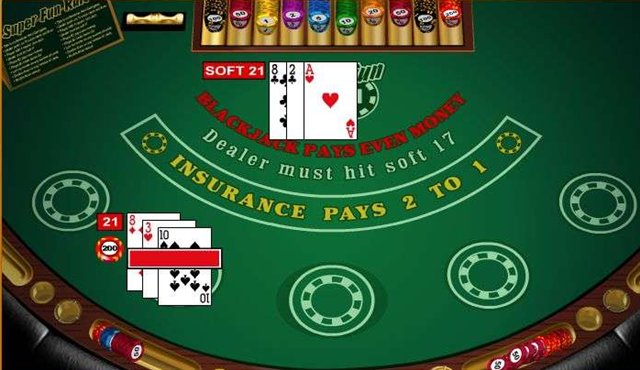
Super fun 21 hands the player almost every rule a blackjack player wishes for. Double on any number of cards, surrender at any point, split aces and keep hitting, and win automatically with six cards. The house takes all of it back in one line on the felt: most blackjacks pay even money. For the wider market picture, start at our online casino Canada hub.
The table below sets out how the game behaves. Read it first, then work through the detail beneath.
| Trait | Detail |
|---|---|
| Decks | One, two or six |
| Blackjack pays | Even money, 2 to 1 in diamonds, always wins |
| Doubling | Any number of cards, with double down rescue |
| Surrender | Late surrender on any number of cards |
| Bonus hands | Six card 20 or less wins, five card 21 pays 2 to 1 |
| House edge | 1.16 to 1.40 percent depending on decks |
What is super fun 21?
A blackjack variant with extremely liberal player rules and a reduced blackjack payout. The deck, card values and dealer rules follow standard blackjack, while almost every player option expands.
Casinos market super fun 21 on the length of its rule list.
The rule list reads like a wish list, which is exactly the appeal. Super fun 21 lets a player do nearly everything standard blackjack forbids.
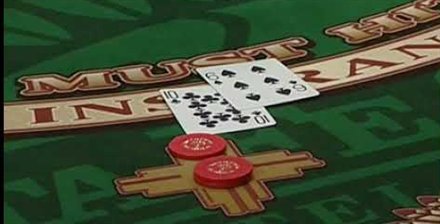
The trade sits in plain view on the felt, beside the payout line.
What does blackjack pay?
Even money, except a blackjack made entirely of diamonds, which pays 2 to 1. A player blackjack also always wins, even against a dealer blackjack.
That even money payout is where super fun 21 recovers the value of every generous rule.
A diamond blackjack means both the ace and the ten value card are diamonds. Super fun 21 pays those at 2 to 1 and every other natural at even money.
Diamond naturals arrive on roughly one blackjack in sixteen.
A diamond super fun 21 natural paying 2 to 1 returns twice the profit of a standard even money natural at the same stake.
Why does even money matter so much?
Blackjacks arrive on about one hand in twenty one. Cutting the payout from three to two down to even money costs the player more than two percent on its own.
Every other rule on the table exists to give most of that back.
No single rule on the super fun 21 list is worth more than the lost half unit on naturals.
Players who ignore that trade overrate the game.
A player who sees a natural every twenty one hands loses half a unit on each one compared with a three to two table.
Does a player blackjack always win?
Yes. A player natural wins even when the dealer also holds blackjack, so the usual blackjack against blackjack push never happens in super fun 21.
The payout remains even money unless the cards are diamonds.
The always win rule adds a small amount of value back. Super fun 21 players never see a natural returned as a push.
Dealer blackjacks still beat every other player hand.
How does doubling work?
The player may double on any number of cards, not only the first two. A three card eleven or a four card ten can double exactly as a two card hand does.
Doubling after a split is also allowed.
Multi card doubles create decisions standard players never meet. A super fun 21 player holding a three card ten against a dealer six doubles without hesitation.
Doubled hands receive one card only.
A super fun 21 player may even double a five card total when the total and the dealer upcard justify it.
What is double down rescue?
After doubling, a player may surrender and lose half the total wager instead of playing the hand out. The option turns a bad double card into a controlled loss.
Spanish 21 uses the same name for the same rule.
Rescue caps the damage from a bad draw on a doubled hand. Super fun 21 returns half of the total doubled stake to the player.
The option disappears once the hand stands.
Rescue is offered before the dealer plays out the hand, so the player decides with the doubled card in view.
When does a player use double down rescue?
Surrender after doubling on twelve through sixteen against a dealer eight, nine, ten or ace, and on seventeen against a dealer ace. Every other doubled hand plays out.
That short rule covers the whole super fun 21 rescue decision.
A super fun 21 player who doubles eleven and draws a four against a dealer ten rescues the hand.
Standing on that fifteen loses far more often.
Rescue is never correct on a doubled hand of eighteen or better, whatever the dealer shows.
How does surrender work?
Late surrender is available on any number of cards, not just the first two. A player who hits a twelve into a sixteen may still surrender half the wager.
The dealer checks for blackjack before surrender applies.
Surrender on large hands is rare elsewhere. Super fun 21 allows it on a four or five card total, which rescues hands that drift into sixteen.
The dealer collects half the stake.
Super fun 21 surrender after hitting is the rule that separates it most clearly from standard tables in Canada.
How does splitting work?
Pairs split up to four hands, including aces. Split aces may be hit and doubled, which standard blackjack almost never allows.
That single rule makes split aces far stronger in super fun 21.
Hitting split aces turns a weak ace plus deuce into a live hand. Super fun 21 players draw to eleven and beyond instead of standing on thirteen.
Resplits follow the four hand limit.
Doubling split aces lets a super fun 21 player press an ace plus six against a weak dealer upcard.
What is the six card rule?
A player hand of six or more cards totalling twenty or less wins automatically, whatever the dealer holds. The rule does not apply to hands that have been doubled.
Players chasing six cards hit low totals more often than standard strategy suggests.
Six card hands are rare, yet the rule changes borderline decisions. A super fun 21 player holding a five card fourteen hits more readily.
The rule applies only to hands built by hitting.
A six card hand of twenty wins even when the dealer later reaches twenty one without busting.
What is the five card 21 bonus?
A player hand of five or more cards totalling twenty one pays 2 to 1 immediately. Doubled hands are excluded from the bonus.
The payout settles on the spot, before the dealer acts.
The bonus pays immediately, so the player collects even if the dealer later reaches twenty one. Super fun 21 settles that hand before the dealer turns the hole card.
Four card twenty ones pay even money as usual.
Five card twenty ones arrive most often on hands that start with small cards and hit repeatedly against a strong dealer upcard.
Which deck counts are used?
One, two or six decks, depending on the casino or software build. Fewer decks produce a lower house edge, from 1.16 percent with one deck to 1.40 percent with six.
Most super fun 21 tables have the dealer hit soft seventeen.
Single deck super fun 21 carries the lowest edge of the three versions. Six deck shoes carry the highest.
Players choose the smallest deck count available.
The deck count appears on the first line of the super fun 21 rules screen on software tables.
What is the house edge?
With the dealer hitting soft seventeen, simulations put it at about 1.16 percent with one deck, 1.30 percent with two and 1.40 percent with six, assuming correct strategy.
That is higher than a good standard blackjack table despite the generous rules.
A super fun 21 table standing on soft seventeen lowers those figures slightly. The rules screen states which dealer rule applies.
Poor strategy raises the figure sharply.
Is super fun 21 better than blackjack?
No. A standard table paying three to two with decent rules costs well under one percent. Super fun 21 costs more, and the generous options mostly compensate for the even money payout.
Players choose it for the variety rather than the value.
Super fun 21 suits players who enjoy active decisions on every hand.
A standard table suits players chasing the lowest possible cost.
The gap between super fun 21 and a good standard table is roughly half a percent to a full percent, depending on decks.
Does basic strategy work here?
Standard charts leave money on the table. Super fun 21 needs its own chart covering multi card doubles, late surrender on large hands and the six card win.
Published charts exist for one, two and six deck versions.
A standard chart used at a super fun 21 table misses multi card doubles and late surrender entirely.
Those misses add up across a session.
Super fun 21 charts often mark decisions that change with the number of cards in the hand.
How does strategy change?
Doubling appears more often, including on three and four card hands. Surrender becomes a regular option after hitting, and split aces play aggressively.
Hitting low totals gains value because of the six card win.
Surrendering sixteen against a dealer ten after three cards is a common super fun 21 play.
Standard blackjack offers no such escape.
Soft doubles on three or more cards also appear on super fun 21 charts, which standard charts never show.
How does it compare with Spanish 21?
Spanish 21 removes the tens, keeps three to two blackjack and adds bonus payouts. Super fun 21 keeps the full deck and cuts the blackjack payout instead.
Both games use double down rescue.
Spanish 21 bonuses reward five, six and seven card twenty ones. Super fun 21 rewards five card twenty ones and six card hands of any total up to twenty.
Both need their own charts.
Spanish 21 generally carries the lower house edge of the two on comparable rules.
How does it compare with free bet blackjack?
Free bet blackjack keeps three to two naturals and hands out free doubles and splits, then pushes dealer twenty two. Super fun 21 cuts the natural payout and never uses a push twenty two rule.
Free bet blackjack carries the lower house edge.
Free bet blackjack limits free doubles to nine, ten and eleven. Super fun 21 allows paid doubles on any total and any number of cards.
Both reward aggressive doubling.
How does it compare with blackjack switch?
Both games pay blackjack at even money. Blackjack switch spends the saving on swapping cards between two hands, while super fun 21 spends it on doubling and surrender options.
Blackjack switch runs the lower edge on good rules.
Blackjack switch plays two hands at once. Super fun 21 plays one hand with far more options.
Both require a dedicated chart.
Is there a super fun 21 extreme version?
Yes. Super fun 21 extreme appears as a software title in slot and table catalogues, with its own presentation and paytable details.
Players read the rules screen before assuming identical rules.
Software catalogues list super fun 21 extreme separately from the standard title.
Rules and payouts follow the build rather than the name.
Players who find super fun 21 extreme in a slot catalogue check whether it runs as a table game or a card themed slot.
Where can Canadians play super fun 21?
Canadian sources list super fun 21 among blackjack variants, and Ontario registered operators with deep table catalogues carry software versions. Land based availability is limited.
Searching by name is faster than browsing a lobby.
Canadian review sites cover super fun 21 rules and strategy for players on registered sites.
Availability varies by operator catalogue.
Cruise ship casinos have also carried super fun 21, which is where travellers often meet the game first.
Is super fun 21 certified in Ontario?
Registered operators run builds tested by an approved laboratory. The deck count, the payout table and every rule are fixed at certification and cannot change afterwards.
Operators display their registration number in the site footer.
Certification is granted per market as well as per title. A super fun 21 build approved elsewhere is retested before an Ontario release.
Does super fun 21 count toward wagering?
Blackjack variants usually contribute at a reduced rate, and certain bonus terms exclude them outright. The contribution clause matters more than the headline bonus figure.
Rates differ between operators.
An excluded game can void a bonus rather than simply contributing nothing. That clause matters more than the rate beside super fun 21.
What does a Canadian check before playing super fun 21?
Four lines decide the table. The deck count, the soft seventeen rule, the blackjack payout and the operator registration status all appear before any money moves.
None of it requires a deposit to read.
The diamond blackjack payout and the six card rule also sit on the super fun 21 rules screen.
Deposit limits sit inside every registered Ontario account.
A super fun 21 table missing the six card rule or double down rescue carries a higher edge than the published figures.
Which game pages are worth reading next?
Four pages sit closest to this one. Each covers a game or a rule that touches the subject above, and each stands on its own.
Super fun 21 gives away the rulebook and keeps half the blackjack payout. Use the doubles, the surrenders and the split aces with a proper chart, and the table plays close to its published edge.