
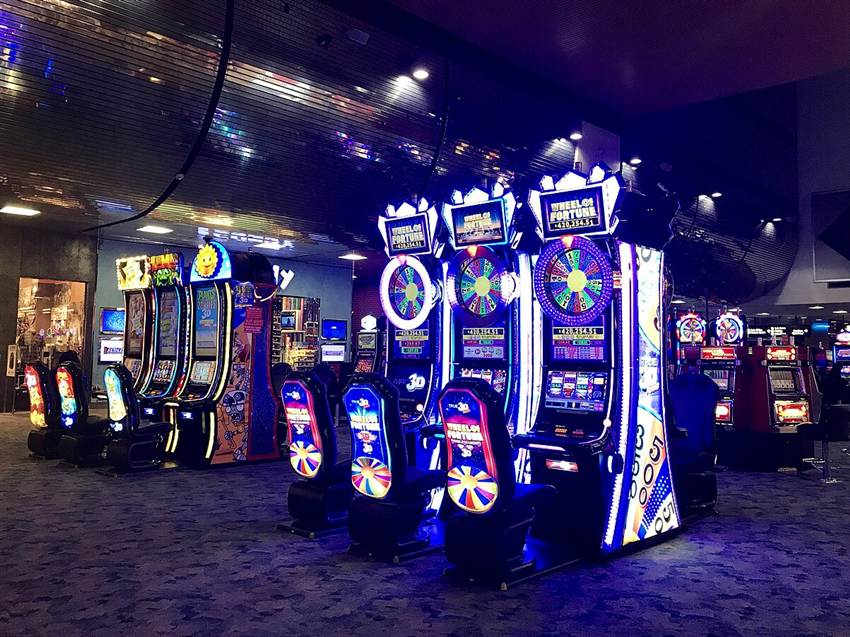
3D slots are video slots built with rendered characters, animated cutscenes and depth effects rather than flat symbol art. The label describes presentation rather than a mechanic, which means a 3D slot can carry any paytable, any volatility and any return figure. What it reliably carries is a larger download, longer animations and a production budget the studio has to recover somewhere. This page covers what qualifies as a 3D slot, which studios build them, how the mathematics compares, and whether the presentation costs a Canadian player anything measurable. For the wider market picture, start at our online Canada casinos hub.
The table below sets out how 3D slots work for a Canadian player. Read it first, then work through the detail beneath.
| Aspect | 3D slots in Canada |
|---|---|
| What 3D slots are | Video slots with rendered art, depth effects and animated sequences |
| Is it a mechanic | No, it describes presentation only |
| Typical RTP | Around the 96 percent slot average |
| Volatility | Varies by title, unrelated to the visuals |
| Hardware needed | An ordinary browser or phone, no glasses or headset |
| Best known studios | Betsoft, NetEnt, Yggdrasil, Play n GO |
| Best known titles | Gonzo Quest, Dead or Alive, Slotfather, Vikings Go Berzerk |
| Available in Canada | Yes, at crown sites, Ontario operators and offshore |
| Main trade-off | Longer animations and larger file sizes |
What are 3D slots?
3D slots are video slots whose symbols, backgrounds and feature sequences are rendered with depth, lighting and animation rather than drawn as flat two dimensional artwork on a static reel.
Characters move, react to wins and appear in cutscenes between rounds.
Nothing about the term describes how the game pays.

It describes how the game looks.
Holding one distinction through the rest of this page makes every claim easy to sort.
3D slots are a presentation category rather than a mechanical one.
Cascading reels change how outcomes resolve, Megaways changes how many ways exist, and bonus buys change how a feature is reached.
Rendering changes none of those and alters only what a player sees while the result plays out.
Two titles under the same label can share nothing except their art budget.
Everything else on this page follows from that single point.
Readers who take one thing from this page take that 3D slots describe a look rather than a rule.
Nothing below contradicts that and every section adds detail to one side of it.
A player who filters a lobby for 3D slots is filtering on art direction alone.
The resulting list will span every volatility band and every feature structure the studio catalogue contains.
Choosing within that list still requires reading the numbers.
3D slots reward a player who wants a themed session and tell them nothing about what the session returns.
One more consequence follows from treating the label as presentation.
Two 3D slots sitting next to each other in the same lobby row can differ more from each other than either differs from a flat title.
The row groups them by how they were drawn.
Grouping by volatility band or by feature type would produce a genuinely useful list, and no lobby offers that filter.
Players build the useful list themselves by noting titles as they test them.
The list ends up spanning several studios and ignoring the lobby categories entirely.
That is the correct outcome rather than a failure of the filter.
A presentation category was never going to sort a catalogue by behaviour.
Anybody who reads only this section has the answer already.
3D slots are drawn differently and play by the same rules as everything else in the lobby.
The rest of this page is detail on that one sentence.
Do 3D slots need special glasses or a headset?
No hardware is required, because the depth in a 3D slot is rendered inside a flat screen exactly as it is in an animated film rather than projected stereoscopically.
An ordinary browser or phone displays them without any accessory.
Genuine stereoscopic gambling belongs to virtual reality rather than to this category.
The name predates the confusion and has stuck.
The naming confusion is worth clearing up because it sends players looking for hardware.
Rendered depth means the art was built in three dimensional software and then displayed flat.
Stereoscopic depth means each eye receives a different image and requires a headset or glasses.
Every 3D slot in a Canadian lobby uses the first and none uses the second.
Genuine headset gambling sits in the virtual reality category, where no licensed real money product exists in Canada.
Anybody arriving here after a headset search has found the wrong page.
The distinction matters because two entirely different products share a number.
3D slots render depth into a flat image the way an animated film does.
Virtual reality gambling projects separate images to each eye and requires a headset.
No Canadian province licenses the second and every Canadian lobby stocks the first.
A player searching for immersive gambling meets both categories in the same results page.
Only one of them can be played this evening on the device already in their hand.
Hardware questions reach this page for a reason worth naming.
Headset gambling has been announced repeatedly and demonstrated at trade shows for over a decade.
Nothing has reached a Canadian licensed lobby as a real money product.
Ontario has no registered virtual reality casino and no crown corporation offers one.
Players who own a headset can browse social casino applications that take no real stakes.
The rendered titles described on this page run in an ordinary browser on an ordinary screen.
3D slots therefore need nothing beyond the device already being used to read this.
No purchase, no download and no plugin sits between a player and the category.
Two words separate the categories cleanly.
Rendered means drawn in depth and shown flat, which is what 3D slots are.
Stereoscopic means shown in depth through a headset, which no Canadian licensed casino offers.
Is 3D a mechanic or a marketing label?
3D is a marketing label describing visual production values, not a mechanic like cascading reels or Megaways that changes how outcomes are calculated.
Two 3D slots can behave completely differently from one another.
A 3D slot and a flat slot can behave identically.
Reading the mechanics rather than the label is the only way to know what a title does.
Testing the label against real titles shows how little it predicts.
Dead or Alive is rendered and runs extreme volatility with a modest feature set.
A Betsoft cinematic title can run medium volatility with an elaborate pick bonus.
Gonzo Quest combines rendering with cascades and a multiplier ladder.
All three carry the 3D label and none behaves like the others.
Reading the paytable, the volatility rating and the feature list is what actually describes a game.
Lobby filters treat the label loosely, which compounds the problem.
Operators tag titles as 3D slots on the strength of a rendered background alone.
Studios apply it to anything built in modern animation software, which is most of the catalogue.
The result is a filter that returns half a lobby and predicts nothing about any of it.
Mechanical filters for cascades, Megaways or bonus buys narrow a search usefully.
The 3D filter narrows it visually and leaves every other question open.
There is a defensible narrow reading of the term worth acknowledging.
A small group of titles use rendered depth as part of the actual game surface, with reels that rotate as cylinders or symbols that occupy space in a scene.
That is closer to a mechanic because the geometry affects how a player reads the grid.
Those titles remain rare and no lobby filter separates them out.
Everything else tagged as 3D slots renders a flat grid against a rendered background.
The narrow reading describes perhaps a dozen titles and the label covers thousands.
Treating the term as marketing is therefore correct in almost every case a player will meet.
The practical instruction fits on one line.
Never select a title because the lobby tagged it under 3D slots.
Select it after reading the return figure, the volatility rating and the feature list.
Do 3D slots have lower RTP?
3D slots publish returns in the same range as any other video slot, generally clustering near 96 percent, because the production budget is recovered through volume rather than through a reduced return.
A studio spending more on art still competes against every other studio on the published figure.
Reducing the return would make the title less attractive rather than more profitable.
The number sits in the game information panel exactly as it does elsewhere.
The economics behind the answer are worth stating.
A studio recovers a larger art budget by shipping the title to more operators and attracting more play, not by lowering the return.
Return figures are the one number players and affiliates compare directly across titles.
Publishing a low figure on an expensive game would suppress the volume the budget depends on.
Operators deploying reduced certified versions lower the figure on rendered and flat titles alike.
Checking the panel at your own operator is the only reliable method on either.
Comparing catalogues directly supports the point.
Betsoft, the studio most identified with 3D slots, publishes figures in the same band as flat studios.
NetEnt renders selectively and its rendered and flat titles sit together in the same range.
Yggdrasil does the same.
No studio has ever advertised a lower return as the price of better art, because no player would accept the trade.
What the budget buys is attention rather than margin.
One qualification belongs on the answer.
3D slots cluster in the video slot band rather than in the classic slot band, and that band averages lower.
Nothing about the rendering causes it.
Classic slots run higher returns because they carry no feature structure to fund, and no rendered title has ever been built that stripped down.
So a player comparing 3D slots against three reel classics will see a real gap of around a percentage point.
A player comparing them against other video slots will see none.
Naming the comparison group is what makes the answer meaningful.
Against like for like the presentation costs nothing.
The figure to trust is the one on the screen in front of you.
Operator panels state the deployed return for the exact build being played.
Review sites state the studio default, which an operator can legally change.
Which studios build 3D slots?
Betsoft built its entire catalogue around cinematic 3D presentation, and NetEnt, Yggdrasil, Play n GO, Nolimit City and Pragmatic Play all produce heavily rendered titles alongside flatter ones.
Betsoft remains the studio most associated with the category.
Yggdrasil built a reputation on animation quality.
Most modern studios now render at least some of their catalogue.
Studio identity across 3D slots predicts the style of rendering more than the mathematics.
Betsoft built its whole catalogue around cinematic presentation with characters and story sequences.
Yggdrasil produced heavily animated titles with distinctive art direction.
NetEnt rendered selectively, with Gonzo Quest and Dead or Alive among the best known results.
Play n GO, Pragmatic Play and Nolimit City all render parts of their catalogues.
Recognising the studio tells a player what the presentation will feel like and nothing about the return.
The category has widened enough that studio labels matter more than the term does.
Betsoft remains the reference point and its titles are recognisable within a second.
Yggdrasil built distinctive art direction into a mid sized catalogue.
Push Gaming, Relax and Hacksaw all render heavily in a modern flat styled way that reads as contemporary rather than cinematic.
Older 3D slots look dated in a way flat titles from the same era do not.
Recognising four or five studios replaces browsing the filter entirely.
Distribution rather than reputation decides which 3D slots a Canadian player actually reaches.
NetEnt, Play n GO and Pragmatic Play hold agreements that put them on crown sites, Ontario operators and offshore lobbies together.
Betsoft sits mainly offshore.
Yggdrasil, Push Gaming and Nolimit City reach Ontario registered operators and a narrower set of crown catalogues.
A player who likes a particular studio can find out in one search which route carries it.
Choosing an operator by studio catalogue works better than choosing by the count of 3D slots advertised on the front page.
Those counts are inflated by the loose filter described above.
Studio recognition is the fastest shortcut available across 3D slots.
Five studio names learned once will identify the presentation style of most 3D slots in any Canadian lobby.
No filter delivers that in a single glance.
Which 3D slots are best known in Canada?
Gonzo Quest, Dead or Alive, Slotfather, Vikings Go Berzerk, Wolf Gold and the Betsoft catalogue all appear across Canadian facing lobbies with heavily rendered presentation.
Gonzo Quest combined 3D art with a cascade mechanic and became the reference point for both.
Betsoft titles carry the strongest cinematic identity.
Availability varies by operator rather than by province.
The familiar titles reached Canadian lobbies through the same studio deals that supply every other market.
Gonzo Quest appears on crown sites, Ontario operators and offshore lobbies alike.
Dead or Alive and its sequel are almost as widely stocked.
Betsoft titles concentrate offshore because crown catalogues favour larger studios.
Vikings Go Berzerk and the Yggdrasil range sit between the two in availability.
Which titles a player reaches depends on the operator rather than on the province.
Familiarity in Canadian lobbies tracks studio distribution rather than player preference.
NetEnt titles reach every route because crown corporations and Ontario operators both license the catalogue.
Betsoft concentrates offshore because its distribution favours the international market.
Yggdrasil sits between the two.
A Canadian player on a crown site meets a narrower selection of 3D slots than one playing offshore.
The narrower selection carries provincial recourse with it.
Recognition and quality diverge more among 3D slots than in any other.
The best known rendered titles are the oldest ones because they had a decade to accumulate players.
Their animation looks dated beside a current release and their returns sit in the same band.
Newer 3D slots from Push Gaming, Hacksaw and Relax render to a far higher standard with less recognition attached.
A player selecting on familiarity alone systematically picks older art.
Sorting a lobby by release date surfaces the newer work immediately.
Both groups certify identically and both publish the same figures.
Availability differs by route and by operator rather than by province.
Two Ontario sites can stock entirely different rendered catalogues.
Checking the game list before registering is faster than registering and then browsing.
Are 3D slots available at Canadian licensed casinos?
Ontario registered operators carry 3D slots across the studio catalogues they license, and provincial crown sites carry a selection weighted toward established studios such as NetEnt and Play n GO.
Nothing in Canadian regulation addresses presentation style.
Crown catalogues include several of the best known rendered titles.
Offshore lobbies carry the deepest Betsoft selection.
Route by route the picture is straightforward.
Ontario registered operators license broad studio catalogues and carry rendered titles throughout them.
Provincial crown corporations curate toward established studios, which includes several of the best known 3D slots.
What crown catalogues avoid is extreme volatility rather than heavy rendering.
Offshore lobbies carry everything including the full Betsoft range.
Only two of those three routes attach provincial recourse to the account.
What crown catalogues actually screen for is worth stating precisely.
Selection favours established studios, familiar mechanics and moderate volatility.
Rendering fails none of those tests, which is why 3D slots appear on every provincial site.
What gets excluded is extreme volatility and newer mechanics rather than production style.
Ontario supplies the widest licensed selection because it licenses the widest studio range.
Offshore adds depth and removes accountability.
Comparing the three routes on one measure clarifies the trade.
Offshore lobbies carry the largest count of 3D slots and no provincial recourse.
Ontario registered operators carry a slightly smaller count with a regulator that accepts complaints.
Crown corporations carry the smallest count with the strongest consumer protection in the country.
The difference in catalogue size between the three is far smaller than the difference in accountability.
A player giving up a handful of unfamiliar titles gains a complaints process that works.
For this category the licensed routes lose almost nothing worth having.
Every province offers a legal route to this category.
Crown corporations serve the whole country and Ontario adds a competitive market on top.
Nobody in Canada needs an offshore account to play 3D slots.
How do 3D slots affect loading and performance?
3D slots download more assets than flat titles, which lengthens the initial load and raises the demand on an older phone or a slow connection.
Modern devices handle them without difficulty.
Data usage over a mobile connection is measurably higher.
Studios increasingly build lighter mobile versions of the same title.
Asset size is the practical difference between 3D slots and flat ones.
A heavily animated slot downloads more textures, more sound and more animation data on first load.
Subsequent loads draw on the browser cache and run faster.
Mobile data consumption is measurably higher across a session.
Older phones show it as slower animation rather than as a failure to run.
Studios increasingly ship lighter mobile builds of the same title to address exactly this.
Two practical consequences follow for a Canadian player on a phone.
Data consumption over a mobile plan runs measurably higher on 3D slots than on flat titles.
A session of a few hundred spins can move several tens of megabytes.
Players on metered plans notice it and players on unlimited plans do not.
Loading over a weak connection is the other visible effect, and it shows as a long first load rather than as stutter.
Once cached the title runs at normal speed.
Two settings reduce the loading effect on 3D slots for anybody who notices it.
Playing over home broadband rather than a mobile connection removes the data question entirely.
Closing other browser tabs frees memory that a heavily animated title will use.
Beyond that the studio decides how heavy the build is and the player cannot change it.
Lighter mobile builds now ship alongside desktop builds on most new 3D slots.
Older converted titles ship one build for both and run heavier on a phone as a result.
A slow first load followed by smooth play is normal and needs no action.
Performance complaints almost always trace to the device or the connection.
The same title that stutters on a five year old phone runs smoothly on a current one.
Studios build to the hardware the majority of players carry.
Do 3D slots play more slowly?
Animated sequences make 3D slots slower per spin than flat titles, particularly when a feature triggers and a cutscene plays before the round begins.
Turbo or quick spin settings shorten but rarely remove the animations.
Fewer spins per hour means less turnover at the same stake.
That reduction is the one measurable effect the presentation has on a bankroll.
Measuring the spin rate of 3D slots makes the difference concrete.
A flat slot with quick spin enabled can complete well over a thousand spins in an hour.
A heavily animated 3D slot with unskippable feature sequences completes considerably fewer.
The gap widens on titles where every feature trigger plays a cutscene.
Turbo settings narrow it without closing it.
That difference in spins per hour is the only measurable effect the presentation has on a bankroll.
The gap between titles inside the category is as large as the gap to flat slots.
A lightly rendered modern title with quick spin enabled runs close to flat speed.
A cinematic title with a cutscene on every feature trigger runs at a fraction of it.
Both carry the 3D slots label.
Testing a title in demo mode for two minutes reveals which end it sits at.
That test predicts the session better than any review.
Speed across 3D slots varies by studio in a predictable way.
Betsoft cinematic titles sit at the slow end because story sequences are the product.
Modern releases from Push Gaming, Hacksaw and Relax run close to flat speed despite rendering heavily, because their animation is short and their feature entry is quick.
Older converted titles sit slowest of all with no speed control at all.
Release year predicts spin speed on 3D slots better than art style does.
A title from the last two or three years will almost always offer quick spin.
Checking the options menu confirms it before any money is staked.
One measurement settles it for any given title.
Time sixty seconds of demo play and count the spins.
That number describes how the session will actually run better than any description of the artwork.
Is a slower spin rate good or bad for a player?
A slower spin rate reduces total wagering per session, which lowers the amount lost to the house edge over the same period of play.
A player spending an hour on a slow 3D slot stakes less than the same hour on a fast flat title.
Expected loss falls in proportion.
Players who find the animations tedious are describing the same property from the other side.
Working the arithmetic settles a question players argue about constantly.
Expected loss equals turnover multiplied by the house edge.
Halving the spins per hour halves the turnover and therefore halves the expected loss over that hour.
The return figure has not changed and the exposure has.
A player treating an hour as the unit loses less on a slow game and a player treating a hundred spins as the unit loses the same.
Which framing applies depends on whether time or spin count is the constraint.
Framing the question around the actual constraint resolves it.
A player with a fixed bankroll and unlimited time loses the same amount whatever the speed.
A player with a fixed hour and unlimited bankroll loses less on a slow game.
Most recreational players sit closer to the second case than they realise.
3D slots therefore reduce expected loss for anybody budgeting an evening rather than a stake.
The same property reads as tedium to anybody budgeting spins.
The arithmetic has a practical use beyond settling arguments.
A player who wants to extend a fixed deposit across a longer evening gets exactly that from a slow title at the same stake.
Lowering the stake on a fast title achieves the same extension by a different route.
Doing both extends it furthest.
3D slots therefore suit anybody treating a deposit as an entertainment budget rather than as a shot at a jackpot.
Players chasing a large win at high variance want spins, and the format works against them.
Both are legitimate and they point at different games.
Neither, in isolation.
Speed is a lever on exposure per hour and the player decides which direction helps.
Knowing that the lever exists is worth more than any verdict on which setting is correct.
Can you skip the animations in 3D slots?
Most 3D slots offer a quick spin or turbo setting that shortens reel animations, though feature cutscenes are frequently unskippable on the first play.
The setting sits in the game options menu.
Some titles remember the preference between sessions and others reset it.
Checking before a long session saves considerable time.
What can and cannot be skipped varies by studio.
Reel spin animations shorten under a quick spin or turbo setting on almost every modern title.
Win celebration animations frequently shorten with the same setting.
Feature intro cutscenes are often unskippable the first time and skippable afterwards.
A handful of older rendered titles offer no speed control at all.
Checking the options menu before a long session is worth the ten seconds it takes.
Settings behaviour varies enough to be worth checking per title.
Quick spin usually appears in the options menu rather than on the main interface.
Some 3D slots remember the setting across sessions and others reset it every load.
Autoplay frequently shortens animations automatically whether or not quick spin is enabled.
Feature cutscenes remain the slowest element on cinematic titles regardless of settings.
Ten seconds in the options menu is the whole preparation required.
Autoplay deserves a separate note because it interacts with the speed question.
Running autoplay on a slow rendered title removes the tapping without removing the waiting.
Canadian licensed operators cap autoplay spin counts and require loss limits on the panel.
Offshore sites frequently allow unlimited autoplay with no such stop.
Combining autoplay with quick spin on 3D slots produces the fastest possible session and the highest turnover per hour.
Anybody who chose the format for its pace works against that choice by enabling both.
Leaving the animations running is the whole point of the category.
The setting lives in the same place on almost every title.
Open the menu, find quick spin or turbo, and set it before the first stake.
Titles without the option are usually the oldest ones in the lobby.
Do 3D slots have different volatility?
Volatility on a 3D slot is set by the paytable and the feature structure exactly as it is on any other slot, so the category spans the full range from low to extreme.
Dead or Alive runs extreme volatility with rendered presentation.
Plenty of Betsoft titles run comfortably in the middle.
The rating appears in the game panel and the artwork predicts nothing.
Spanning the range is exactly what the category does.
Dead or Alive sits at the extreme end with long dry stretches and enormous potential.
Plenty of Betsoft titles sit comfortably in the middle with regular feature triggers.
A small number of rendered titles run genuinely low volatility.
Nothing in the artwork signals which of the three a title is.
The volatility rating in the game panel does, and it takes one look.
Reading the rating rather than the artwork is the practical instruction.
3D slots span low, medium and extreme volatility in roughly the same proportions as flat ones.
Art direction correlates with theme and studio rather than with mathematics.
A cheerful cartoon 3D slot can run higher volatility than a stark flat one.
The rating sits in the same panel as the return figure.
Both take one look and neither can be inferred from a thumbnail.
One pattern is worth flagging even though it proves nothing.
Cinematic titles built around a story tend toward medium volatility because a feature that triggers rarely wastes the animation budget.
Studios that invest in cutscenes want players to see them.
That is a tendency rather than a rule and plenty of counterexamples exist at both extremes.
Reading the rating takes one second and reading the tendency takes a paragraph.
Players choosing 3D slots for the presentation happen to land on medium volatility fairly often as a side effect.
That suits a recreational bankroll better than either extreme does.
Artwork on 3D slots carries no information about variance.
A dark cinematic title can run low volatility and a bright cartoon one can run extreme.
The rating panel is the only place the answer appears.
What features do 3D slots usually carry?
3D slots typically carry the same feature set as any modern video slot, with free spins rounds, expanding wilds, pick bonuses and multiplier ladders presented through animated sequences.
Pick bonuses suit the format because a rendered scene can be interacted with directly.
Cutscenes between feature stages are the format signature.
Nothing in the feature list is exclusive to rendered titles.
Feature design in 3D slots interacts with rendering in one specific way.
Pick bonuses suit rendered games because a player can interact with objects in a scene rather than with abstract boxes.
Story driven multi stage features work better when characters can react between stages.
Free spins, expanding wilds and multiplier ladders carry across from flat titles unchanged.
Nothing in the feature list belongs exclusively to rendered games.
What differs is how the same feature is dressed.
One feature type genuinely suits the format better than any other.
Pick bonuses ask a player to choose objects in a scene, and a rendered scene makes that choice feel physical.
Flat titles present the same mechanic as abstract boxes.
Multi stage story features also work better when characters can react between stages.
Everything else, including free spins, wilds and multiplier ladders, transfers unchanged.
3D slots dress familiar mechanics rather than inventing new ones.
Feature transparency is where 3D slots occasionally cause real trouble.
An elaborate multi stage bonus with characters and cutscenes can obscure how the win is actually calculated.
The rules screen states it plainly and the animation does not.
Players who read the paytable before the first spin avoid discovering mid feature that a stage they enjoyed contributed nothing.
Flat titles suffer from the same problem with less spectacle attached.
3D slots simply make it easier to enjoy a feature without understanding it.
Two minutes on the rules screen fixes that permanently for any given title.
Feature names on 3D slots transfer directly from flat titles.
Free spins, wilds, multipliers, pick bonuses and jackpot wheels all appear in flat titles too.
Presentation is the variable and the mechanics are shared across the whole market.
Are 3D slots good on mobile?
Modern 3D slots run well on current phones because studios build responsive versions, though older devices and weak connections struggle with the heavier titles.
Battery consumption is higher than on flat slots.
Portrait mode support varies by studio and by title age.
Testing in demo mode before depositing settles it in a minute.
Mobile performance divides 3D slots into two groups.
Games built or rebuilt in the last few years run responsively in portrait and landscape.
Older Flash era titles converted to modern frameworks frequently run landscape only and load slowly.
Battery drain is higher on both groups than on flat slots.
Testing a title in demo mode on the actual device answers the question in a minute.
Crown sites and Ontario operators both offer demo play on much of the catalogue.
Device age is the variable that decides the answer.
A phone from the last three or four years runs any current 3D slot without difficulty.
An older device shows dropped frames during feature sequences rather than outright failure.
Portrait support is now standard on new releases and absent on older converted titles.
Battery consumption runs noticeably higher across a long session.
Demo mode on the actual device settles every one of those questions in a minute.
Portrait support is the single detail worth checking first when opening 3D slots on a phone.
A title built for portrait puts the reels and the controls in the natural grip position.
A landscape only title forces the phone sideways for the entire session.
Older converted 3D slots are the group that most often lacks portrait support.
New releases from every major studio now ship portrait first because mobile carries the majority of play.
Opening a title in demo mode and rotating the phone answers it in five seconds.
That check costs nothing and prevents an awkward hour.
Mobile is where most Canadian play now happens.
Studios know it and build accordingly, which is why current 3D slots run well on a phone.
Only the older converted titles disappoint on a small screen.
Do 3D slots cost more to play?
3D slots cost the same per spin as any other slot at the same stake, because the production budget is recovered through player volume rather than through higher minimum bets.
Minimum stakes sit in the usual range.
Nothing about the presentation changes the coin denominations offered.
The only cost difference is data usage on a mobile connection.
Separating cost per spin from cost per session clarifies the question.
Cost per spin is set by the stake and identical across presentation styles.
Cost per session depends on how many spins fit into the time available.
A slower rendered title therefore costs less per hour at the same stake than a fast flat one.
Mobile data is the only genuine extra cost and it is small.
Nothing about rendering raises the minimum bet a player can place.
The question usually hides a different one about value.
Cost per spin is identical to any other slot at the same stake.
Value per spin depends on the return figure, which sits in the same range.
Value per hour is arguably better because fewer spins fit into the hour.
The only true extra cost is mobile data, and it amounts to very little.
Nothing about 3D slots raises the price of a bet.
Minimum stakes on 3D slots are worth a direct comparison because players assume otherwise.
3D slots commonly start at ten or twenty cents per spin, exactly where flat video slots start.
Classic three reel titles frequently start lower.
Progressive jackpot titles frequently start higher and demand a maximum bet for the jackpot to qualify.
Neither of those two patterns has anything to do with rendering.
The stake range on 3D slots sits in the middle of the market and always has.
Any title showing an unusually high minimum is signalling a jackpot condition rather than an art budget.
Stake control on 3D slots belongs entirely to the player.
The bet selector on a rendered title works exactly as it does on any other slot.
Nothing about the format pushes a minimum upward.
How do 3D slots compare with classic slots?
Classic slots strip presentation down to three reels and a short paytable while 3D slots do the opposite, and the return figures usually favour the classic format by around a point.
The comparison is presentation against return.
Classic titles run faster and pay more steadily.
3D titles offer narrative, characters and feature variety the classic format removed.
The two categories sit at opposite ends of the same trade.
Classic slots remove presentation to fund a higher return and a faster pace.
3D slots add presentation and accept the average return every video slot carries.
Classic titles publish figures around a point higher on average.
3D titles offer narrative, characters and feature variety that classic slots deliberately discarded.
A player who states what they want from a session gets an unambiguous answer from that comparison.
Putting the two side by side on four measures settles most preferences.
Return favours classic slots by roughly a point on average.
Speed favours classic slots decisively.
Feature variety and theme favour 3D slots by an enormous margin.
Maximum win favours 3D slots because modern feature structures fund larger ceilings.
A player who ranks those four in order of importance has already chosen.
A hybrid approach serves players who value both sides.
Running classic slots while clearing a wagering requirement captures the higher return and the faster pace.
Switching to 3D slots afterward with the cleared balance captures the presentation.
The wagering requirement is where return and speed carry real money value, because turnover is mandatory and the edge applies to all of it.
Once the requirement is met the choice becomes purely a preference.
Canadian licensed operators publish game weightings that show which category counts fully toward wagering.
Reading that table before depositing decides the sequence.
Both categories earn their place for different reasons.
Classic titles win on return and pace and 3D slots win on variety and spectacle.
Keeping a few of each bookmarked covers whatever a given evening calls for.
Do 3D slots use cascading reels?
Some 3D slots use cascading reels and most do not, because the two properties are independent and a studio can combine them or not as it chooses.
Gonzo Quest combined both and made each famous.
Betsoft titles largely use conventional spinning reels.
Reading the mechanics separately from the artwork avoids the confusion entirely.
Keeping the two properties separate avoids a common misreading.
Rendering describes the art pipeline and cascades describe the outcome loop.
Gonzo Quest carried both and made each famous, which is why players associate them.
Most Betsoft titles render heavily and spin conventionally.
Plenty of flat looking modern grid slots cascade constantly.
Reading the rules screen separates the two in seconds.
The association exists for a specific historical reason.
Gonzo Quest arrived with both rendered art and an avalanche mechanic and defined both for a generation of players.
Studios copying the cascade frequently copied the art style with it.
That correlation is cultural rather than technical.
Plenty of 3D slots spin conventionally and plenty of flat grid slots cascade.
The rules screen states which applies in one line.
Sorting the four combinations shows how independent cascades and 3D slots are.
Rendered and cascading covers Gonzo Quest and its many descendants.
Rendered and conventional covers most of the Betsoft catalogue.
Flat and cascading covers a large share of modern grid slots and cluster pays titles.
Flat and conventional covers every classic three reel title ever built.
All four groups exist in quantity in any Canadian lobby.
A player who wants cascades filters for cascades, and whether the result renders is incidental.
Treating 3D slots and cascades as a package eliminates three quarters of the available titles for no reason.
The rules screen answers this in one sentence per title.
Look for the word cascade, avalanche, tumble or rolling reels in the mechanics description.
Its absence means the reels spin and stop conventionally.
Are 3D slots fair?
3D slots are certified by the same testing laboratories under the same standards as flat slots, because the random number generator and the paytable are unaffected by the rendering layer.
Animation runs after the outcome is determined.
Nothing visual influences what the spin returns.
A cutscene showing a character reacting is presentation applied to a result already fixed.
The certification process behind 3D slots is identical across presentation styles.
A testing laboratory reviews the random number generator, the reel mapping and the paytable.
None of those three lives in the rendering layer.
The animation system reads a result that has already been determined and plays it back.
Changing the art would require no recertification of the mathematics.
A rendered title from a certified studio is exactly as sound as a flat one from the same studio.
Where the certification boundary sits is worth knowing.
Laboratories test the random number generator, the reel strips, the paytable and the feature logic.
The rendering layer sits outside that boundary because it cannot influence any of them.
A studio could replace all the artwork tomorrow without retesting the mathematics.
That separation is why 3D slots carry exactly the same assurance as flat ones.
The certification mark in the footer covers both identically.
Verifying the certification behind 3D slots takes less effort than the question suggests.
Licensed Canadian sites publish the testing laboratory name in the footer alongside the regulator.
The laboratory maintains public records of certified titles.
Provincial crown sites and Ontario registered operators both carry that documentation.
Offshore sites vary from full transparency to none, and the absence of a named laboratory is the warning sign.
3D slots from a certified studio on a licensed site carry the identical assurance a flat title does.
The art budget is the only thing that changed and it never touched the mathematics.
Fairness across 3D slots is a property of the licence and the laboratory.
It attaches to the operator and the studio rather than to the art style.
A certified rendered title on a licensed Canadian site raises no additional question.
Do animations affect the outcome of a spin?
Animations never affect an outcome, because the result is generated the instant the spin begins and the visuals simply display it over the following seconds.
A near miss animation shows a result that was already decided.
Stopping a reel early changes nothing.
Players who believe otherwise are describing presentation designed to feel consequential.
Understanding the order of operations removes a persistent superstition.
Pressing spin generates the outcome immediately from the random number generator.
The animation then plays for as long as the studio designed it to.
Stopping the reels early with a tap displays the same result sooner.
Near miss sequences are chosen from a result already fixed rather than produced by the animation.
Nothing a player does during the animation influences anything.
The superstition survives because the presentation is designed to suggest otherwise.
Reels that slow near a scatter, characters that lean forward, sound that builds toward a stop.
All of it is played back from a result that was fixed before the first frame rendered.
Tapping to stop the reels changes the timing and nothing else.
3D slots do this more elaborately than flat titles and no more consequentially.
Understanding the order removes the frustration entirely.
Two related beliefs deserve the same treatment.
Pressing the stop button harder or faster changes nothing because the result already exists.
Watching a feature sequence to the end rather than skipping it changes nothing either, because the award was calculated when the feature triggered.
Studios animate a near miss as often as the reel strips produce one, which is exactly as often as chance dictates.
3D slots present all of this more convincingly than flat titles, which is the entire reason the belief attaches to them.
Better animation makes a fixed result feel negotiable.
It never is, on any title, in any lobby.
The order inside 3D slots never changes.
Result first, animation second, balance updated third.
Every rendered flourish between those steps is playback of a decision already made.
What is the biggest criticism of 3D slots?
The commonest criticism is that long animations slow play without improving the return, so a player pays the same house edge while waiting longer for each result.
Lower turnover reduces expected loss in absolute terms.
It also reduces the number of chances at a feature in the same session.
Whether that trade appeals depends entirely on what a player wants from an hour.
The criticism has two halves and only one of them holds up.
The first half says animations waste time, which is a preference rather than a defect.
The second says players pay the same edge for fewer chances at a feature, which is measurably true per spin and false per hour.
Expected loss per hour actually falls on a slower game.
Expected loss per hundred spins does not change at all.
Which of those two matters depends on what the player is budgeting.
A second criticism deserves a hearing alongside the first.
Elaborate presentation can obscure how much is being staked and how quickly.
A session that feels like watching a film is still a session moving money at a fixed edge.
Deposit and loss limits at a licensed site cap the total regardless of how the game feels.
Players tracking spend by spin count on a slow game will underestimate the elapsed time instead.
Both measures are worth watching on any title that holds attention this well.
A fair defence belongs beside the criticism.
Every entertainment product is designed to hold attention and gambling products are regulated on top of that design.
Canadian licensed operators require deposit limits, offer loss limits and run self exclusion through the regulator.
Those tools apply regardless of how absorbing a title is.
A player using them treats 3D slots as an evening of entertainment with a known ceiling.
A player ignoring them is exposed on any title, rendered or flat.
The criticism describes a real design pressure and the licensed framework already answers it.
The honest summary is short.
The format is designed to hold attention and it succeeds.
Deposit and loss limits are the correct response and every licensed Canadian operator provides them.
Who should play 3D slots?
3D slots suit players who value theme, characters and production quality, and they frustrate anybody who wants maximum spins per hour or the highest available return.
A player clearing a wagering requirement wants speed and a high figure, which points elsewhere.
A player wanting an experience rather than a grind is in the right category.
Neither preference is wrong and they pull in opposite directions.
Matching the category to a purpose gives clearer guidance than a general verdict.
Players who want a themed experience with characters and story get exactly what the format sells.
Players clearing a wagering requirement want speed and a high return, which points at classic slots instead.
Players chasing maximum spins per hour are choosing against the format by definition.
Players on older phones or metered mobile data should test before committing.
Stating the purpose first makes the choice obvious.
One group is worth naming specifically.
Players who find flat slots repetitive frequently stay engaged far longer on rendered titles.
That engagement is the product working as designed and it cuts both ways.
Longer sessions at the same stake mean more turnover unless the slower speed offsets it.
Anybody who enjoys the format should still set a limit before starting.
Enjoyment and exposure rise together on 3D slots more than on any other category.
Naming who the format actively suits badly closes the question.
Bonus hunters clearing wagering want turnover and a high return.
High variance players chasing a maximum win want spins per hour.
Players on older phones or metered data want lighter titles.
Everybody else, meaning the large majority playing recreationally for an evening, is well served by 3D slots at a stake they have decided in advance.
The format delivers exactly what it advertises and hides nothing behind the artwork.
The numbers sit in the panel and the limits sit in the account settings.
Purpose decides the answer more reliably than taste does.
Entertainment for an evening points at 3D slots and clearing a bonus points elsewhere.
Stating the purpose before opening the lobby makes the choice immediate.
What should you check before playing a 3D slot?
Read the RTP in the game panel, check the volatility rating, test the quick spin setting, and confirm the mobile version performs on your device before committing a bankroll.
The artwork predicts none of those four things.
Each check takes seconds inside a demo session.
Operators deploy certified versions at different settings on rendered titles as on any other.
Running the checks in a fixed order turns a preference into a short procedure.
RTP first, because operators deploy different certified versions of the same title.
Volatility second, because the artwork gives no clue and the bankroll depends on it.
Quick spin third, because it determines how the session will feel over an hour.
Mobile performance last, tested in demo mode on the device actually being used.
Four checks under two minutes cover everything the category can do to a session.
Recording the results turns four checks into a permanent reference.
A short note per title listing RTP, volatility, quick spin availability and mobile behaviour covers everything.
Only an operator deploying a different certified version invalidates the RTP entry.
The other three never change.
Players who keep such notes stop reselecting 3D slots on artwork alone.
Two minutes of checking replaces every list ranking rendered titles by appearance.
A fifth check applies to the operator rather than the title.
Confirming that the site is a provincial crown corporation or an Ontario registered operator settles every question about recourse before any of the game questions matter.
The regulator name appears in the footer and the register is public.
A certified title on an unlicensed site still leaves a player without a complaints route.
3D slots are worth playing on the licensed routes and the catalogue difference is small.
Four checks on the game and one on the operator cover the whole decision.
Nothing else about the category requires research.
The whole procedure fits in two minutes.
Licence, return figure, volatility, quick spin and mobile behaviour.
Five items checked once per title and never again.
Where do 3D slots sit against the other slot categories?
3D slots occupy the presentation end of a market that also splits by return, by mechanic and by hardware. The pages below cover the neighbouring categories a Canadian player weighs against this one.
- Slots with the highest published return figures
- Three reel titles that trade presentation for pace
- Games where symbols drop away and refill
- Titles that let you pay straight into the feature
- Headset gambling and where it actually stands
The checklist is short because the label is thin. 3D describes how a slot looks rather than how it pays, the return figures sit where every other video slot sits, and the one measurable effect is a slower spin rate. Anybody in Canada who understands that can choose deliberately rather than by accident.
1 thought on “3D Slots Canada: What the Label Means and What It Costs You”