
Irish slots are the one major theme with no single mechanic underneath it. Where a book scatter defines the Egyptian shelf, the Irish shelf runs on trails, pots and pick rounds inherited from British pub fruit machines, which is why two Irish slots can play nothing alike. For the wider market picture, start at our online casino Canada hub.
The table below sets out what Irish slots actually contain. Read it first, then work through the detail beneath.
| Trait | What it means |
|---|---|
| Defining mechanic | None, Irish slots run three unrelated bonus structures |
| Most common bonus | A board trail the player advances along |
| Signature family | The Rainbow Riches line from Barcrest |
| Return range | Roughly 94 to 96.5 percent across Irish slots |
| Volatility | Medium on the trail builds, high on the jackpot links |
| Heritage | British pub and arcade cabinets rather than Las Vegas floors |
What are Irish slots?
Irish slots are titles built around Irish folklore iconography, using leprechauns, rainbows, pots of gold, shamrocks and harps as symbols.
Irish slots span hundreds of games across every studio serving Canada.
The setting is the only constant across Irish slots. Everything beneath it varies from title to title.
The symbol vocabulary is tight and instantly readable. A leprechaun in a green coat, a rainbow arcing into a pot of gold, a shamrock, a harp, a horseshoe and a pint glass fill the high paying rows, and card royals rendered in green and gold fill the low rows on almost every build.
What sits behind that vocabulary varies enormously. Irish slots span ten line payline builds, six reel Megaways engines, cluster grids and hold and respin structures, all wearing the same artwork and all behaving completely differently once a feature opens.
That is the single most useful thing to know about Irish slots. A Canadian player who has enjoyed one Irish slot cannot assume the next one plays anything like it, which is the opposite of the assumption that holds across most other themes.
Canadian lobbies carry the full spread. A registered Ontario operator will list a pub style trail build beside a modern Megaways release, both under a rainbow thumbnail, and only the rules screen separates them.
Why is the Irish theme so common in slot lobbies?
Because luck is the one idea every slot is selling, and Irish folklore packages it in symbols a player recognises instantly.
A rainbow ending in a pot of gold states the promise of the machine without a word of text.
The symbols carry no cultural barrier anywhere. That matters for a studio shipping worldwide.
Luck is the product every slot is selling, and Irish folklore has spent centuries packaging luck into objects. A four leaf clover, a horseshoe and a pot of gold at the end of a rainbow all mean the same thing without translation, which is a rare property for any visual language.
The commercial history reinforced it. British pub operators wanted machines that read as cheerful rather than predatory, and green fields and leprechauns delivered that far better than the fruit and bar symbols they replaced.
Seasonality added a second push. A date in the calendar devoted to Irish celebration gives operators a promotional hook every year, and studios time Irish slots releases to reach lobbies ahead of it, which keeps a steady flow of new Irish slots arriving.
None of that says anything about what the games return. It explains why the Irish shelf is crowded and nothing else about Irish slots.
Do Irish slots share one mechanic?
No, and that separates Irish slots from every other major theme. A trail board, a pots collection, a pick screen, a free spins round and a jackpot wheel all appear under the same artwork, frequently inside a single title.
Irish slots predict nothing about the structure. The rules screen has to be read.
This is where Irish slots genuinely differ from their rivals. Egyptian slots converged on one expanding symbol round, jungle titles converged on cascades, and Irish slots never converged at all, because the theme arrived through three unrelated hardware lineages at once.
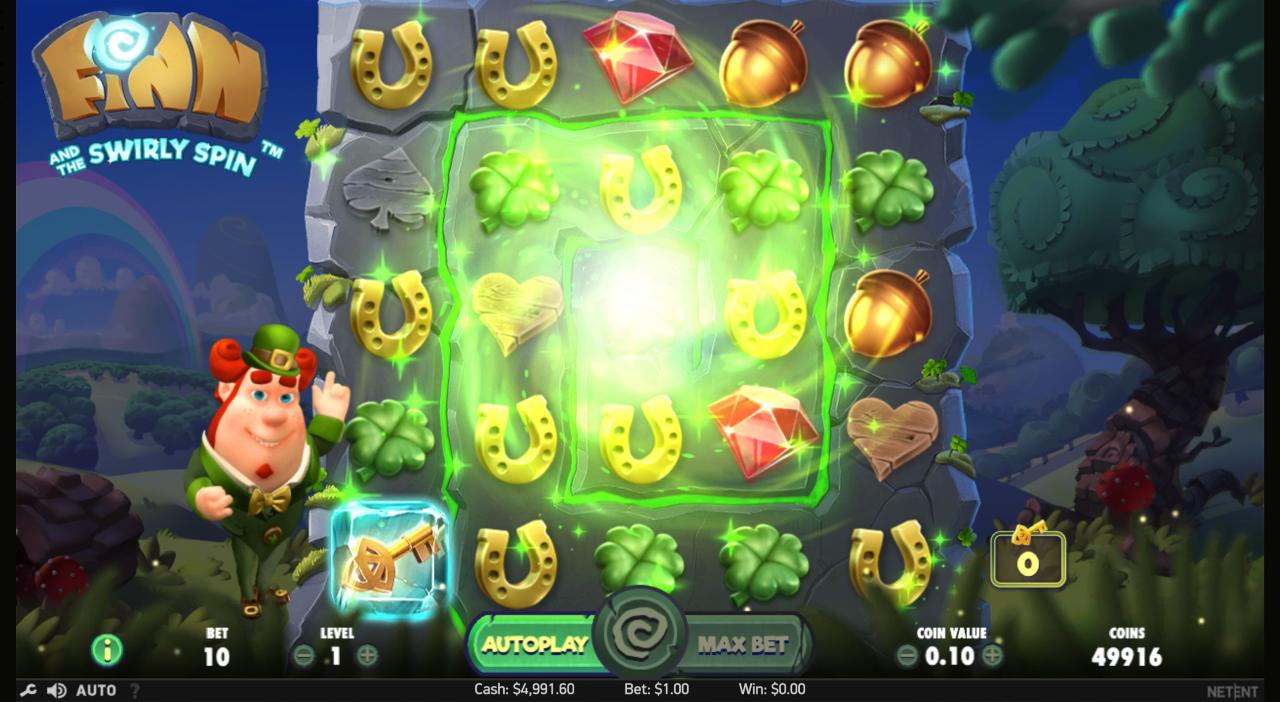
Barcrest brought trail boards from pub cabinets. Blueprint brought jackpot wheels and a progressive network. NetEnt brought a spiral grid with avalanche wins in Finn and the Swirly Spin, and Games Global brought a hold and respin structure in the pots titles.
The practical result is that reading one Irish slot teaches you nothing about the next. A player who expects a trail and meets a cluster grid has learned the wrong lesson from the artwork.
That variety is a genuine strength for a lobby. It also means the rules screen has to be opened on every unfamiliar title rather than assumed from the thumbnail.
What is a trail bonus?
A board the player advances along, one step per dice roll or spinner result, with a cash value printed on every square.
The round ends when a collect square lands, and the value under the final position is awarded.
The format on Irish slots comes directly from British pub cabinets. It survived the move online intact.
The mechanic predates video slots entirely. British pub cabinets ran board trails in the eighties because a physical machine could light a path of squares cheaply, and the format gave a player something visible to follow while the outcome resolved.
Modern implementations keep the structure and improve the presentation. A spinner or dice roll decides the number of steps, each square carries a printed multiple of the total bet, and the values climb steeply toward the far end of the board.
The collect square is what shapes the distribution. Landing on it ends the round immediately and pays whatever the previous square held, so a long advance is rare and a short one is ordinary, which produces a medium variance outcome rather than a wide one.
A number of Irish slots stack two trails or attach a multiplier to the board. Those variants raise the ceiling without changing the underlying idea, and the rules screen states which version a title runs.
Trail boards also explain why Irish slots read as gentler than most of a modern lobby. The round has a visible beginning, a visible end and a number printed on every square, so a player always knows what is at stake and what has already been banked, which is not true of a free spins round with a climbing multiplier. That transparency was a requirement on a pub floor where a machine had to be understood by someone who had never seen it before, and it survived into the online builds untouched.
What is Rainbow Riches?
The Barcrest title that defined Irish slots and spawned a family of sequels. It carries three separate bonus rounds at once, which is unusual for a ten line slot and explains why the name outlived its own generation.
Most Irish slots since borrow at least one of its three rounds.
Barcrest released it for pub cabinets and it became the defining Irish slot almost immediately. The structure was unusual for a ten line slot because it carried three separate bonus rounds rather than one, giving a player three distinct things to chase inside the same game.
The three are a trail, a pots wheel and a free spins round with wild multipliers. Each triggers on its own symbol combination, and a session can reach one, two or all three in any order, which was novel at the time and remains uncommon now.
The name became a family rather than a title. Pick n Mix, Drops of Gold, Reels of Gold, Megaways and a dozen other variants all carry the brand, and each reshuffles the three rounds or replaces one of them entirely.
For Canadian players the family is the most reliable entry point into Irish slots. The rounds are simple, the return figures are published clearly, and the variants make it easy to find a version at a preferred volatility.
Brand recognition is the other half of why the family matters. A Canadian player scanning a lobby will recognise the name even without having played it, because the brand travelled from pub cabinets through arcade machines into browsers over several product generations. That recall is worth a great deal to an operator, which is why Rainbow Riches variants occupy more lobby positions than any other Irish slots family and why new versions keep arriving.
What is the road to riches?
The trail bonus inside Rainbow Riches, triggered by three leprechaun symbols. A spinner decides how many steps to advance, and each square carries a multiplier of the total bet that rises steeply toward the end.
Landing a collect square stops an Irish slots trail immediately. The multiplier reached is paid.
The trail round inside the Rainbow Riches family, and the single most copied bonus on the Irish shelf. Three leprechaun symbols anywhere on the reels open it, and a spinner decides how many squares the player advances on each turn.
The board runs from a modest multiple of total bet at the first square to a very large one at the last. Because the spinner can land on a collect segment at any point, most rounds end early and a small proportion travel the full distance.
That distribution is the reason the title feels fair without paying heavily. A player reaches the round often, sees visible progress, and banks something almost every time, which is exactly what a pub cabinet needed to do.
Variants in the family change the board length, add multipliers to individual squares or allow a second pass. None of them change the basic shape, and the rules screen states the maximum the board can reach.
What are the pots in a pots of gold slot?
Three or more pots that spin around a wheel above the reels, each holding a multiplier, and the pointer decides which one pays.
Bronze, silver and gold pots carry rising values on most builds.
The round resolves in one action, which is why Irish slots feel fast. That speed is the appeal.
The pots round is a wheel rather than a board. Three or more pots rotate above the reels, each holding a multiplier of the total bet, and an arrow settles on one of them when the round triggers.
Colour indicates value on most builds. A bronze pot holds the smallest multiplier, silver sits in the middle, and gold holds the largest, with the rotation weighted so that the gold pot lands far less often than its size alone suggests.
Modern pots titles have extended the idea considerably. The 9 Pots of Gold family from Games Global replaces the wheel with a collection meter, where pot symbols accumulate across spins and a full set awards a fixed jackpot tier.
Both versions appear on Canadian lobbies under similar artwork. Reading which one a title runs takes a single line of the rules screen and changes the expected session shape completely.
Why do Irish slots feel like pub fruit machines?
Because that is where Irish slots came from. Barcrest, Blueprint and Gamesys all built for British pub and arcade cabinets before the online market existed, and the bonus structures moved across unchanged.
Las Vegas heritage shows in other themes. Irish slots show an entirely different lineage.
Because most of the Irish catalogue was literally built for them. Barcrest, Blueprint, Gamesys and Inspired all designed for British pub and arcade hardware long before browsers mattered, and the online catalogue is a conversion of that work rather than a fresh start.
Cabinet design imposed particular habits. A pub machine had to pay something regularly to hold a player at the bar, had to explain its bonus in a glance, and had to resolve a round in seconds rather than minutes.
Those constraints produced exactly the features the Irish shelf still carries. Trails, pots wheels and simple pick rounds are all fast, visual and legible, and none of them require a player to read anything before starting.
Themes with a Las Vegas lineage behave differently. Higher variance, longer feature rounds and far more elaborate mathematics reflect a floor where a player had already committed to sitting down.
Which Irish slots are the best known?
Rainbow Riches leads the Irish slots shortlist, followed by Luck of the Irish, Irish Riches Megaways, 9 Pots of Gold, Finn and the Swirly Spin and Leprechaun Goes Wild.
Each runs a different structure underneath.
Availability differs by operator. The Irish slots shortlist changes slowly.
Rainbow Riches anchors the catalogue and its variants fill three or four lobby rows on their own. Luck of the Irish from Barcrest sits close behind, and Ontario Lottery and Gaming carries its Fortune Spins version in the crown catalogue.
Irish Riches Megaways from Blueprint is the best known modern entry, pairing the six reel engine with the Jackpot King progressive network. 9 Pots of Gold and its sequels represent the collection mechanic, and both families see heavy promotion on Canadian sites.
NetEnt built the outlier. Finn and the Swirly Spin runs a spiral grid where symbols travel inward along a path, which shares nothing structurally with the rest of the Irish catalogue and remains one of the more original Irish slots released.
Beneath that tier sit hundreds of smaller releases. Return figures across them vary more than the artwork suggests, which makes the rules screen worth opening on anything unfamiliar.
What is Jackpot King and which Irish slots feed it?
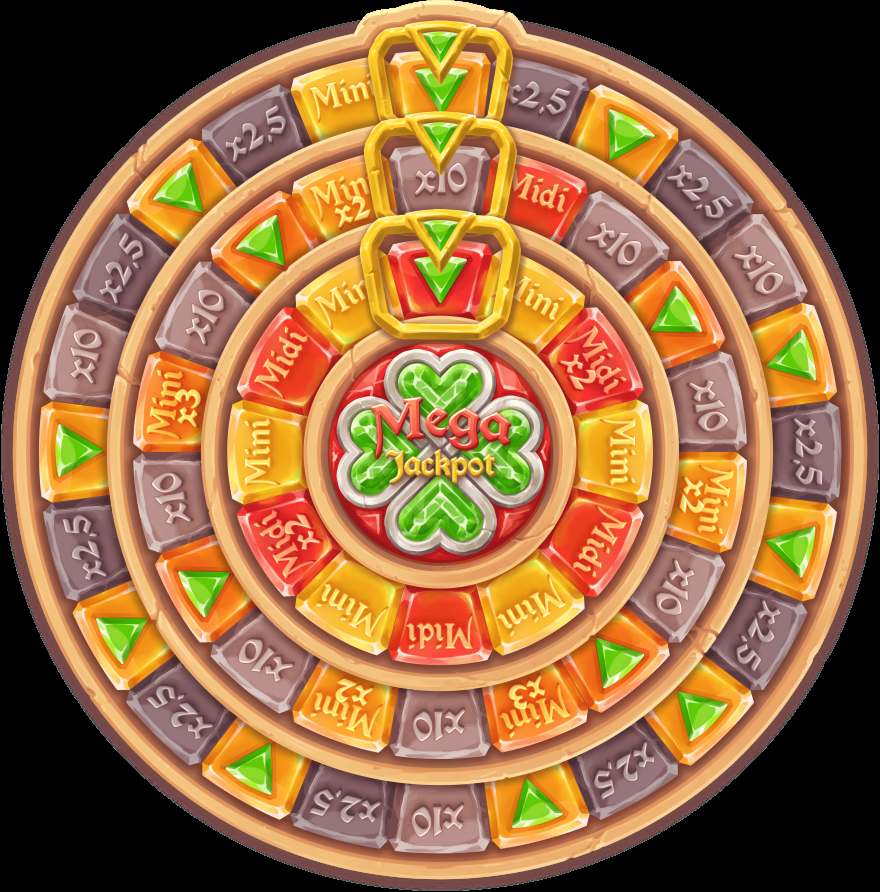
A progressive network run by Blueprint that attaches to dozens of its titles, several of them Irish. Landing five crown symbols opens a wheel round that can climb to the network jackpot.
Irish Riches Megaways is the best known Irish entry. The pool is shared across the network.
Blueprint runs the network and attaches it to dozens of its titles across every theme. A small share of every qualifying spin flows into a shared pool, and the pool keeps growing until a player reaches the final wheel and takes it.
Entry works through crown symbols rather than a random trigger. Landing enough of them opens a separate wheel round, and reaching the top tier of that wheel awards the network jackpot rather than a fixed prize.
Irish Riches Megaways is the Irish entry Canadians meet most often, and several other Irish slots from the studio carry the same link. The pool is shared across all of them, so the prize grows from play on every connected title.
The trade is the base return. A jackpot linked build publishes a lower percentage than the same title without the link, because the pool contribution has to come from somewhere, and that difference is stated in the rules screen.
Network size is what makes the structure work commercially. A pool fed by dozens of titles across every theme grows far faster than one fed by a single game, so a player on an Irish entry is benefiting from activity on titles they have never opened. The trade is that the jackpot linked Irish slots run a harsher base game than their unlinked siblings, and the published return figure states exactly how much has been taken out to fund the pool.
What return figures do Irish slots publish?
Most sit between 94 and 96.5 percent. The Rainbow Riches family ships in multiple certified versions, so the figure printed on one Canadian lobby can differ from the same title elsewhere.
The rules screen states the deployed figure. Nothing on a lobby tile does.
The spread across Irish slots is wide enough to matter. Major releases cluster near 96 percent, jackpot linked builds sit lower to fund the pool, and the long tail of small studio clones routinely ships at 94 percent or below.
Multiple certified versions complicate every comparison. The Rainbow Riches family in particular ships at multiple different percentages, and an operator selects which one to deploy, so an affiliate table quoting one figure is describing one deployment rather than the title.
The practical consequence is simple. The figure inside the running game is the only one that applies, and reading it takes seconds on a Canadian regulated client where disclosure is required.
Across a long session that gap costs more than any difference in bonus structure. Two Irish slots sitting side by side on a lobby page can differ by well over two percentage points.
How volatile are Irish slots?
The trail builds run medium. A round that pays a modest multiple on most triggers keeps the outcome distribution narrow, which is the opposite of what a book style expanding symbol produces.
The jackpot linked Irish slots run high. The network prize funds itself from the base game.
The pub heritage keeps most Irish slots in the medium band. A trail bonus that pays a modest multiple on almost every trigger produces a narrow outcome distribution, and a pots wheel behaves the same way, so a session moves in small steps rather than long flat stretches.
That makes Irish slots unusually forgiving compared with the book driven Egyptian shelf or the modern high variance releases from the newer studios. A fixed balance covers more spins and reaches a feature more often.
The jackpot linked titles are the exception and they are a sharp one. A build funding a network pool takes return out of the base game, which lowers the hit rate and widens the distribution considerably.
Megaways variants sit between the two. The engine itself raises variance through its changing ways count, so an Irish Megaways title runs hotter than the ten line original wearing the same brand.
Comparing Irish slots against the rest of a Canadian lobby makes the pattern obvious. Irish slots built on trails and pots wheels sit where a player expects steady small returns, Irish slots built on Megaways engines sit a full band higher, and Irish slots feeding a jackpot network sit higher again. Three titles under one rainbow thumbnail can therefore occupy three different volatility bands, which is why the rating in the rules screen is worth more than the theme name on the tile.
Do Irish slots pay better around St Patrick’s Day?
No. The certified build is unchanged year round, and the reel strips carry no calendar awareness of any kind, so the seventeenth of March plays exactly like any other date.
What does change is promotion. Operators schedule Irish slots offers around the date.
The certified build has no clock and no calendar. Reel strips are fixed at certification, the random number generator holds no state between spins, and nothing inside the package can read a date or adjust a distribution because of one.
The belief persists because promotion clusters around the date. Operators schedule free spins offers, tournaments and featured lobby rows on Irish slots in the days before the seventeenth of March, so activity on Irish slots rises sharply and so does the number of results people hear about.
More players spinning produces more large wins in absolute terms without any change in the underlying rate. That is arithmetic rather than generosity, and it is the same effect that makes popular titles look luckier than obscure ones.
What genuinely improves around the date is bonus value. An offer attached to a title is real money, and reading its terms is a far better use of attention than looking for a pattern in the reels.
What is a leprechaun bonus?
A pick or trail round triggered by leprechaun symbols rather than by a scatter. The character usually appears on screen and performs the action, which is presentation rather than mechanics.
The underlying draw on Irish slots is settled before the animation starts. It always is.
The name covers any round triggered by the character rather than by a conventional scatter. In practice that means trails, pick screens and wheel rounds all appear under the label, which is why it describes presentation rather than a mechanic.
The animation is doing real work commercially. A character stepping along a board or pointing at a pot gives a player something to watch while a predetermined result reveals itself, and that engagement is exactly what the pub cabinets were designed around.
The outcome was settled before the animation started. A certified random draw fixes the result at the moment the round opens, and nothing the player does during the sequence changes the distribution in any way.
Reading what an Irish slots round actually is matters more than the name. The rules screen states whether a leprechaun bonus is a trail, a pick or a wheel, and those three pay very differently.
Where can Canadians play Irish slots?
Ontario registered operators carry the full shelf, and provincial crown platforms carry a curated selection. Ontario Lottery and Gaming lists Luck of the Irish Fortune Spins among its own catalogue.
The certified build behind Irish slots is identical in both places. The return version selected can differ.
Ontario registered operators carry the deepest selection. Barcrest, Blueprint and Games Global all hold supplier registration, so the major Irish families appear on private lobbies as certified builds with the return figure stated inside each one.
Provincial crown platforms carry a curated subset. Ontario Lottery and Gaming lists Luck of the Irish Fortune Spins in its own catalogue, and the other provincial operators each run smaller selections shaped by their supplier agreements.
The certified package is identical wherever it is deployed. What differs is which return version an operator selected and how deep the catalogue runs, and both are visible from inside the running game.
Players outside Ontario reach the same titles through crown platforms or through offshore operators. The build is the same and the accountability is not, which is the practical argument for the regulated market.
Catalogue depth is the practical difference between the two channels. A registered private operator in Ontario lists thousands of titles and will carry most of the Irish slots a studio has released, while a crown platform curates a few hundred and carries the strongest handful. Finding a specific title on a crown site therefore takes more searching, and the one that is there runs identically to the same certified build anywhere else in the country.
Which studios build Irish slots?
Barcrest and Blueprint dominate through their pub cabinet heritage, with Games Global, Pragmatic Play, NetEnt and Inspired all holding major titles.
Smaller studios release variations constantly.
Studio heritage predicts the bonus structure on Irish slots. It predicts little else.
Barcrest holds the heritage and the brand that defines Irish slots. The studio now sits inside Light and Wonder, and the Rainbow Riches family continues to receive new variants that reach Canadian lobbies as certified online builds.
Blueprint Gaming is the strongest modern presence. Its Irish slots feed the Jackpot King network, its Megaways licences produce six reel versions of familiar brands, and its cabinet heritage shows in the same fast legible bonus rounds.
Games Global carries the collection mechanic through the 9 Pots of Gold family, and Inspired Entertainment converts its own arcade catalogue. Pragmatic Play and NetEnt each hold a handful of Irish slots built from scratch for browsers rather than converted.
Studio origin is a reasonable predictor of structure. A Barcrest or Blueprint title will almost certainly carry a trail or a wheel, and a Pragmatic or NetEnt title is far more likely to run a modern grid engine.
Studio choice is a practical shortcut when a lobby offers hundreds of Irish slots at once. Filtering to Barcrest returns the Rainbow Riches family and its trail rounds, filtering to Blueprint returns the jackpot linked Irish slots and the Megaways conversions, and filtering to Games Global returns the pots collection builds. That single filter narrows a crowded shelf faster than reading thumbnails, and it predicts the structure of the Irish slots it surfaces with reasonable accuracy.
Are Irish slots aimed at low stakes players?
Largely yes, and the pub cabinet lineage explains it. A trail bonus paying a modest multiple suits a long session on a small balance far better than a rare feature paying enormously.
The jackpot linked Irish slots break that pattern. They chase a different player.
Most Irish slots are, and it is a deliberate inheritance. A pub machine served players spending small amounts across a long evening, so the mathematics rewarded frequency over size, and the online conversions kept that balance.
Minimum stakes reflect it. Ten line Irish builds commonly start at ten or twenty cents a spin on Canadian lobbies, which is low enough to make a modest balance last through several bonus rounds rather than ending before the first one.
The medium volatility does the rest. Reaching a trail or a pots wheel regularly keeps a balance moving, and the modest awards mean a session rarely ends abruptly in either direction.
The jackpot linked titles chase a different player entirely. Funding a network pool requires a longer, harsher base game, and a small balance on one of those will frequently see nothing at all.
The pairing worth understanding is stake against volatility rather than stake alone. A small balance on medium volatility Irish slots covers a long session and reaches the trail round repeatedly, and the same balance on jackpot linked Irish slots frequently ends before the crown symbols ever land. The minimum stake printed on the lobby tile says nothing about which of those two a title is, and the volatility rating inside the game says it in one line.
Do Irish slots use the same symbols every time?
Close to it. A leprechaun, a pot of gold, a rainbow, a shamrock, a harp and a horseshoe appear on most Irish slots, above card royals rendered in green and gold.
Recognition is the point of that repetition on Irish slots. Studios rarely depart from it.
The core set barely moves. A leprechaun, a pot of gold, a rainbow, a shamrock, a harp and a horseshoe appear across most Irish slots, and the low rows are almost always card royals rendered in green and gold.
Studios treat that consistency as an asset rather than a limitation. A player scanning a lobby recognises an Irish slot in a fraction of a second, which is the entire purpose of a thumbnail, and departing from the vocabulary would cost Irish slots more than it gained.
The variation appears in the peripheral symbols. Pints, fiddles, cottages, sheep, castles and four leaf clovers fill out individual builds, and the character design of the leprechaun is where studios do most of their differentiating.
None of it predicts the mechanics. Two Irish slots with near identical symbol sets can run a trail board and a cluster grid respectively, which is exactly why the artwork on Irish slots is the wrong thing to read.
How do Irish slots differ from each other?
By bonus count and bonus type. One title carries a single trail, another stacks a trail, a pots wheel and a free spins round, and a third replaces all of it with a cluster grid wearing the same artwork.
That range is wider than any other theme carries. On Irish slots the rules screen settles it.
Start with the bonus count. A single trail is the baseline, the Rainbow Riches family stacks three separate rounds, and several modern builds carry a feature plus a jackpot link on top, which produces very different session rhythms.
Engine type is the second axis and the larger one. A ten line payline build, a Megaways engine recounting ways every spin and a cluster grid paying on touching groups share nothing structurally, and all three appear on the Irish shelf.
Progressive attachment is the third. A jackpot linked title publishes a lower base return, runs a harsher base game and carries a ceiling several orders of magnitude above an unlinked build, and the difference is visible in one line.
Beyond those three, Irish slots differ in stake range, retrigger rules and whether a purchase option exists. All of it sits in the rules screen and none of it is visible from the lobby.
Stake range deserves a mention of its own because it varies more here than on other shelves. The pub heritage keeps most Irish slots accessible at ten or twenty cents a spin, and the modern Megaways and jackpot linked builds frequently start higher and run to ceilings several times above the older conversions. A player moving between two titles under the same brand can find the minimum stake has doubled without any visible change in the artwork.
What should you check before playing an Irish slot?
Three things in the rules screen. The published return figure, which bonus rounds the title actually carries, and whether a progressive network is attached to it.
All three take one read. They separate Irish slots that share a lobby thumbnail.
The return figure comes first because it is the only number describing cost. Two Irish slots on the same lobby can differ by more than two percentage points, and over a session that gap outweighs every difference in presentation.
The bonus list comes second and it matters more here than on any other shelf. Knowing whether a title runs a trail, a pots wheel, a free spins round or all three is the difference between an accurate expectation and a mistaken one.
Progressive attachment comes third. A jackpot link changes the base return, the hit rate and the ceiling all at once, and it is the single largest structural variable across Irish slots.
Read those three alongside the volatility rating and the stated maximum win, and the title is fully described before the first spin. The whole check takes under a minute.
One habit covers all of it. Open the rules screen before the first spin, read the return figure, the bonus list and the progressive line, and treat the rainbow on the tile as the last thing on the page rather than the first. Irish slots reward that order of reading more than any other theme on a Canadian lobby, because the shelf hides three unrelated engines behind one set of symbols.
What separates Rainbow Riches from Luck of the Irish?
Both come from Barcrest and both wear the same folklore, but the structures differ completely. Rainbow Riches stacks three separate bonus rounds inside one ten line game, while Luck of the Irish runs a single free spins round with a multiplier attached.
That difference changes the rhythm of a session substantially. A player on Rainbow Riches reaches one of three features fairly often, and a player on Luck of the Irish waits longer for a single round that pays more when it opens.
Variant count is the second separation. The Rainbow Riches brand has spawned dozens of versions across cabinets and browsers, and Luck of the Irish has produced a much shorter line, of which the Fortune Spins build is the one Ontario Lottery and Gaming carries in its own catalogue.
Return figures overlap rather than separate them. Both families ship in multiple certified versions across the same rough band, so the deployed figure inside the running client decides which of the two is the better value on any given lobby.
For a Canadian player choosing between them the honest advice is structural. Pick Rainbow Riches for frequency and variety, and pick Luck of the Irish for a simpler game with a heavier single feature.
How have Irish slots changed since the pub cabinets?
The first generation was constrained by hardware. A pub machine had a small screen, limited processing and a mechanical reel feel, so the bonus rounds were board trails and simple wheels that could be drawn with lights rather than animation.
The first online wave changed almost nothing structurally. Studios converted the cabinet builds directly, keeping the ten line grids, the trail boards and the modest return figures, and improved only the artwork and the sound.
The current generation is where Irish slots finally diverged. Megaways licences produced six reel versions of familiar brands, cluster and cascade engines arrived wearing the same folklore, and progressive networks attached themselves to titles that had previously carried fixed ceilings.
Maximum wins climbed hardest of all. A shelf that once capped at a few hundred times the stake now carries jackpot linked builds with no practical ceiling at all, funded by a lower base return rather than by any increase in generosity.
What has not changed is the reason players open these titles. The artwork still promises luck, the trails still resolve in seconds, and the rules screen still holds the only numbers that separate one Irish slot from the next.
What do Canadian players ask most about Irish slots?
Four questions recur. Whether the theme pays better, which title to start with, whether the bonus round can be purchased, and whether the crown platforms run different versions from the private operators.
On payout, the folklore changes nothing. Certified return figures across Irish slots span the same band as every other theme, and the difference between two titles on one lobby is far larger than any difference between themes.
On where to start, the Rainbow Riches family is the reasonable entry. Three simple rounds, clearly published figures and a long list of variants make it easy to learn Irish slots and then move to a version at a preferred volatility.
On purchasing a feature, a minority of modern Irish slots carry the option and the older conversions never do. The pricing behind it and the separate certified figure attached to it are covered on our bonus buy slots page rather than here.
On crown platforms, the certified package is identical. Ontario Lottery and Gaming and the other provincial operators deploy the same tested builds a registered private operator deploys, and the only variables are the return version selected and the depth of the catalogue.
Which slot pages are worth reading next?
A theme sits on top of a mechanic, a scoring rule and a published return figure. The pages below cover the parts of a slot that a rainbow thumbnail never tells you anything about.
- The engine behind the six reel Irish variants
- The collection mechanic behind the pots titles
- How a shared jackpot pool actually builds
- Why a medium build pays more often
- The theme that did converge on one mechanic
Irish slots are a shelf rather than a mechanic, and the only way to know what a title does is to open the rules screen. Read the published return figure, the bonus list and any progressive attachment before the first spin, and the artwork becomes what it was always meant to be. Irish slots reward a reader more than almost any other theme, because the visual similarity across it hides genuine structural differences that change a session completely. Two titles under the same rainbow can run a pub trail and a six reel Megaways engine, and nothing on the lobby page will tell you which is which.