

Explanations of why the wealthy gamble Canada begin with arithmetic rather than appetite. A stake that barely dents a large balance carries a different emotional weight than the same stake for a household living payday to payday. Affordability rewrites the cost of a loss. Our Canadian casino rankings and research pages track how the regulated market treats high-value players, and this page collects what researchers, regulators and reporters have established about wealth and wagering.
Wealth does not confer immunity. Statistics Canada reported that 71.5 per cent of people in the highest household-income group gambled during a year, against 53.8 per cent in the lowest group. The registry study by Lisa-Christine Girard and colleagues concluded that income is a risk marker for gambling disorder. Those two findings frame everything that follows.
| Measure | Figure and source |
|---|---|
| Canadians aged 15 and older who gambled in the past year | 64.5 per cent, or 18.9 million people, Statistics Canada |
| Past-year gambling in the highest household-income group | 71.5 per cent, Statistics Canada |
| Past-year gambling in the lowest household-income group | 53.8 per cent, Statistics Canada |
| Moderate-to-severe gambling risk in the highest income group | 1.1 per cent, Statistics Canada |
| Moderate-to-severe gambling risk in the lowest income group | 2.7 per cent, Statistics Canada |
| Average annual spending on games of chance, top income group | 256 dollars, Statistics Canada |
| Average annual spending on games of chance, bottom income group | 111 dollars, Statistics Canada |
| Patients diagnosed with gambling disorder in the Norway registry sample | 5,131 people, Girard and colleagues |
| Cash transactions of 10,000 dollars or more taken by B.C. casinos in one reviewed year | nearly 1.2 billion dollars, Cullen Commission |
| Losses recorded by one flagged Ontario player | more than 500,000 dollars in under three months, AGCO |
| Share of 301 million dollars in patron gaming-fund deposits held by the top ten users | 47 per cent, Vancouver Sun |
| Top one per cent of profitable prediction-market users | 76.5 per cent of profits, Akey and colleagues |
How does a large bank balance shape why the wealthy gamble Canada?
The plain answer to why the wealthy gamble Canada starts with arithmetic. A stake measured against a portfolio feels smaller than the same stake measured against a paycheque. Kahneman and Tversky showed that people judge outcomes from a reference point rather than from total wealth.
Their prospect theory, published in Econometrica, treats value as a gain or loss measured against that reference point. The value curve is concave for gains and convex for losses, and it is steeper on the loss side.
That steepness is loss aversion. Alexander Brown, Taisuke Imai, Ferdinand Vieider and Colin Camerer pooled 607 estimates drawn from 150 articles for the Journal of Economic Literature. Their mean loss-aversion coefficient was 1.955, with a 95 per cent probability interval of 1.820 to 2.102.
By our sums, a coefficient close to two means a loss bites about twice as hard as an equal gain. For a player holding a large cushion, that doubled bite is a thin slice of total wealth.
What does an affordable loss mean for why the wealthy gamble Canada?
An affordable loss is one that changes nothing about a person’s week. Research on why the wealthy gamble Canada treats that cushion as a licence to accept variance. Claudia Sahm found that a ten per cent higher average income went with 0.9 per cent higher relative risk tolerance in her panel of older adults.
Sahm’s panel is unusual because it separates people from one another while also tracking the same person over time. Within a person, a change in current income or wealth produced no discernible change in willingness to take a financial risk.
Ming Fang, Haiyang Li and Qin Wang used Chinese Household Finance Survey data for Economic Modelling. Household wealth accumulation raised household risk tolerance, and the link was strongest among high-income households and weaker with age.
How does prospect theory explain why the wealthy gamble Canada?
Prospect theory explains why the wealthy gamble Canada through weighting. Kahneman and Tversky found that people overweight small probabilities, which makes insurance and long-shot bets attractive for the same reason. A wealthy player can buy that long shot without disturbing daily life.
Their certainty effect matters here as well. People underweight outcomes that are merely probable next to outcomes that are certain, and that pattern pushes risk aversion for gains while pushing risk seeking for losses.
The reference point does not have to be current assets. Kahneman and Tversky noted that it can instead be an expected position, and that a shift in the reference point can flip a person’s preference between two risky prospects.
How does a shrinking sting of loss explain why the wealthy gamble Canada?
Each extra dollar of wealth buys less additional comfort, so the pain attached to a lost dollar falls as the pile grows. Diminishing marginal utility sits behind why the wealthy gamble Canada without the dread that a tighter budget brings to the same table.
Richard Thaler described mental accounting as choice shaped by notional boundaries between pots of money. A loss hurts less when it is bundled with a larger gain, which lets a casino loss disappear into a broader account.
Thaler’s hedonic framing rules say people separate gains, combine losses, merge a small loss with a large gain, and split a small gain away from a large loss. Each rule softens a blow that would otherwise land alone.
How does mental accounting shape why the wealthy gamble Canada at the cage?
A player can label a sum as entertainment money before arriving at the cage. Research into why the wealthy gamble Canada points to that labelling, because a dedicated pot keeps a casino loss away from the household budget.
Thaler and Eric Johnson reported real-money evidence for the house money effect in Management Science. A prior gain increased risk seeking in a later choice placed inside the same account.
The same paper described break-even effects. After prior losses, a choice offering a chance to return to even looked especially attractive to participants.
James Juergensen and colleagues tested the idea in a multi-trial real-money experiment for Frontiers in Psychology. They found support for neither the house money effect nor the break-even effect, and participants in a positive mood wagered less after a win.
How does the house money effect explain why the wealthy gamble Canada in high-limit rooms?
The house money effect is a willingness to risk money that feels like a windfall. In a high-limit room, a player who is ahead treats the gain as the casino’s cash. That habit is one strand of why the wealthy gamble Canada so freely after a win.
In Thaler’s student experiments, 70 per cent accepted a later equal-chance gamble after a prior gain. Only 40 per cent accepted the same gamble after a prior loss.
Samantha Hollingshead, Michael Wohl and Christopher Davis studied 649 Canadian casino loyalty members through player-account records. High-tier members wagered more than low-tier members at every level of gambling-disorder symptoms, and the widest tier difference appeared in the no-risk group.
Why does the illusion of control matter to why the wealthy gamble Canada?
Successful operators are used to influencing outcomes. Work on why the wealthy gamble Canada links that habit to the illusion of control, which Dr Luke Clark of the University of Cambridge defines as the belief that skill can steer an outcome governed by chance.
Clark’s review in the Journal of Neuroscience notes that choice, instrumental action and apparent competition all feed the illusion. A player who selects numbers or throws dice gains a feeling of influence that the odds do not support.
He told Hylton that most gamblers are well informed, understand the house edge and read books about the games. Our casino books page for Canadian readers collects titles in that tradition.
Clark also defines the gambler’s fallacy as treating an event as less likely after a long run of that same event. He traces the bias to representativeness, the belief that a short sequence mirrors its overall distribution.
Clark told Hylton that he feels the fallacy himself when a roulette wheel lands on red four or five times in a row. The distance between a measured edge and an imagined one is the theme of the story of the gambler who beat the roulette wheel in Canada.
How does a near miss shape why the wealthy gamble Canada on the slot floor?
A near miss looks like progress even though it pays nothing. Research on why the wealthy gamble Canada keeps returning to that design feature, because informed players still report motivation after a symbol lands one position away.
Clark’s slot-machine research found that near misses produced higher self-reported motivation to gamble than full misses, although both outcomes are nonwins.
Wil Hylton interviewed Clark for Wealthsimple Magazine. Clark told him that each spin on a modern slot machine takes five seconds or less, which creates a feeling of continuous play.
Clark added that visual and auditory cues raise risk-taking even when the cues carry no reward. He told Hylton that lab rats showed the same pattern when food rewards arrived with sensory feedback.
What did Dr Luke Clark tell Wealthsimple Magazine about trading and gambling?
Clark told Wealthsimple Magazine that gambling and stock trading overlap heavily. He said it is difficult to define gambling in a way that excludes trading, since both place money on an uncertain event in the hope of more money. That overlap shapes why the wealthy gamble Canada.
Martin Zack, Ross St George and Clark argued in Progress in Neuro-Psychopharmacology and Biological Psychiatry that reward uncertainty is the core feature giving gambling its addictive capacity.
Adam Goodie reported in the Journal of Gambling Studies that probable pathological and problem gamblers in a college sample earned fewer points than other players. Overconfidence led those participants to accept less favourable bets.
How does sensation seeking feed why the wealthy gamble Canada?
Sensation seeking describes an appetite for intense and novel experience, and it tracks with financial risk-taking. Alan Wong and Bernardo Carducci found that high sensation seekers took greater everyday financial risks than low sensation seekers. That trait feeds why the wealthy gamble Canada.
Wong and Carducci reported the pattern within each gender group in the Journal of Business and Psychology, so the result was not an artefact of comparing men with women.
Nower, Derevensky and Gupta studied 1,339 people aged 17 to 21. Impulsivity predicted disordered gambling in both sexes, while intensity seeking predicted it among female participants.
Alex Russell, Erika Langham and Nerilee Hing studied 784 Australian adults. Higher-risk gamblers reported more influential contacts who gambled, which adds a social layer to why the wealthy gamble Canada.
What role does boredom play in why the wealthy gamble Canada?
Boredom is a stated motive rather than a theory. Fayetta Martin, Peter Lichtenberg and Thomas Templin followed older urban casino patrons and found that 38.2 per cent gambled to relieve boredom or loneliness. Spare leisure time plus spare capital helps explain why the wealthy gamble Canada.
The same longitudinal study reported that 79.5 per cent of those patrons gambled for entertainment, while 62.7 per cent named winning money.
Clayton Neighbors and colleagues coded 762 open-ended reasons from college gamblers into 16 motives. Money, enjoyment, social reasons, excitement and boredom accounted for slightly above 70 per cent of all stated reasons.
Stephanie Dias and colleagues reviewed 53 studies in Current Addiction Reports. Financial and enhancement motives showed small-to-medium links with problem-gambling severity, and social affiliation motives showed a small but significant link.
What did Friehe and Mechtel find about status and why the wealthy gamble Canada?
Friehe and Mechtel used conspicuous consumption as a proxy for status concern in German household data. Households with stronger status concern were more likely to gamble and put more money into gambling. Status seeking sits high among the answers to why the wealthy gamble Canada.
Their study appeared in the Review of Economics of the Household. It treats a visible bet as a signal, which fits a room where the size of a stack is public information.
Zhonglu Zeng and David Forrest examined 99 publicised high-roller cases from mainland China. They reported that those players gambled to win money or to experience excitement, and they highlighted early large wins as a factor.
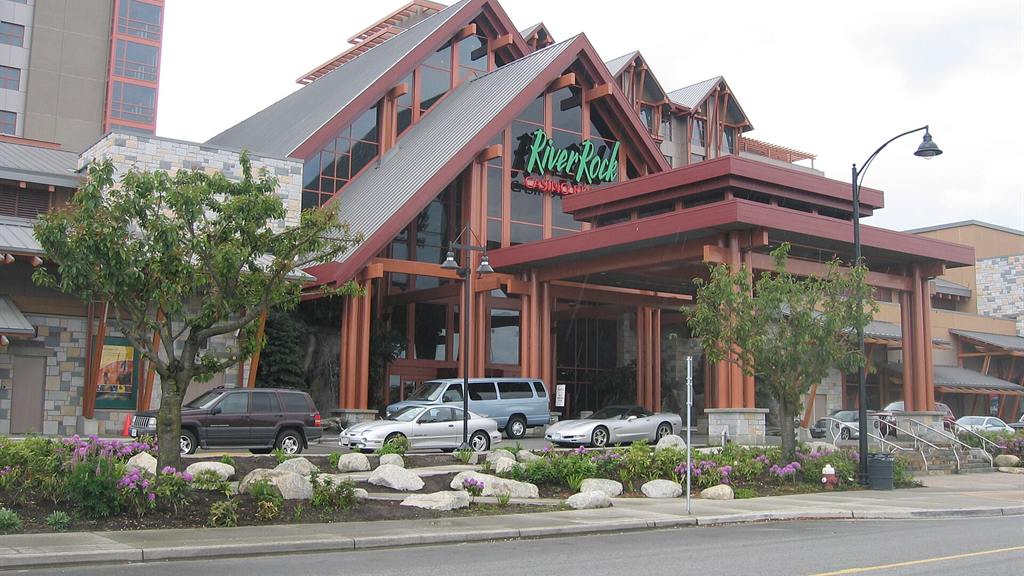
The National Post reported that major casinos ran daily shuttles from Asian population centres and hired Asian-language staff, and it noted a River Rock posting for a marketing manager for the Asian market. Targeting of that kind belongs in why the wealthy gamble Canada alongside the psychology.
What do high rollers’ own motives reveal about why the wealthy gamble Canada?
High rollers describe the same drives as other players, but with larger numbers attached. Zeng and Forrest found money and excitement at the top of the list. Their 99 cases were mostly men aged 30 to 49 who ran businesses or held state posts. That profile answers why the wealthy gamble Canada in part.
Alex Blaszczynski and Lia Nower surveyed 127 electronic gaming machine players. Problem gamblers reported stronger money obsessions and viewed money as prestige and power more than other players did, and they also reported greater money anxiety.
In a nationally representative sample, Declan Barry and colleagues found that middle and higher income recreational gamblers recorded larger maximum daily wins and losses. Those players also gambled more strategically than lower-income recreational gamblers.
What did the Norway registry study add to why the wealthy gamble Canada?
Girard, Leino, Griffiths and Pallesen found that income was a risk marker for gambling disorder, not a protective shield. Their Norwegian registry evidence is central to why the wealthy gamble Canada: a clinical group held both low-income and high-income paths, even while expected income stayed below national averages.
The SSM – Population Health study linked tax-return income with registry diagnoses. Its matched design included 5,131 people diagnosed with gambling disorder, 30,467 psychiatric or somatic controls and 30,164 general-population controls.
At baseline, people diagnosed with gambling disorder were more likely than general-population controls to be in the bottom quartile of nationally reported average income. That pattern was absent from the psychiatric and somatic comparison group.
Why does the Norway evidence reject a simple rich-versus-poor story?
The registry evidence rejects a simple class label. Girard and colleagues found seven distinct income paths among people with gambling disorder. Stable high earners and highest income earners were present beside low earners. This complexity matters when discussing why the wealthy gamble Canada.
The lowest-income trajectory contained 17.0 per cent of the gambling-disorder sample. Low stable earners formed the largest trajectory at 25.9 per cent, while average earners formed 20.0 per cent.
Stable high earners formed 3.9 per cent of the sample. The highest-income path formed 2.9 per cent. Males had higher odds than females of belonging to each of the three highest income trajectories.
Youssef Allami and colleagues reviewed 104 jurisdiction-wide adult prevalence studies for Addiction. Impulsivity showed a medium-sized association with problem gambling while socioeconomic correlates had small effect sizes, which tempers any single-factor account of why the wealthy gamble Canada.
How do Canadian household figures and the Norway study answer why the wealthy gamble Canada?
Canadian data show higher participation at the top of the household-income scale, while the Norway clinical sample shows disorder across income paths. Together, those findings say why the wealthy gamble Canada is a question about participation, exposure and harm rather than a claim that wealth causes disorder.
Michelle Rotermann and Heather Gilmour reported for Statistics Canada that past-year gambling rose across household-income quintiles, from 53.8 per cent in the lowest quintile to 71.5 per cent in the highest.
Moderate-to-severe risk moved in the opposite direction: 2.7 per cent in the lowest quintile and 1.1 per cent in the highest. Risk at the top was lower, not zero.
| Income and risk lens | What the source reported |
|---|---|
| Highest Canadian household-income quintile | 71.5 per cent reported past-year gambling, Statistics Canada |
| Lowest Canadian household-income quintile | 53.8 per cent reported past-year gambling, Statistics Canada |
| Highest quintile, moderate-to-severe risk | 1.1 per cent, Statistics Canada |
| Lowest quintile, moderate-to-severe risk | 2.7 per cent, Statistics Canada |
| Norway disorder sample, stable high income trajectory | 3.9 per cent, Girard and colleagues |
| Norway disorder sample, highest income trajectory | 2.9 per cent, Girard and colleagues |
| Norway disorder sample, low stable income trajectory | 25.9 per cent, Girard and colleagues |
| Norway disorder sample, average income trajectory | 20.0 per cent, Girard and colleagues |
Does high income erase the harm risk behind why the wealthy gamble Canada?
No. CAMH states that gambling problems occur across age groups, income groups, cultures and jobs. Higher income changes capacity to absorb a loss, but not the behavioural patterns that define harm. That distinction is essential to why the wealthy gamble Canada.
CAMH defines a gambling problem as gambling that disrupts activities, health, finances, reputation, family or friendships. Its list of warning signs includes borrowing, cashing savings or insurance plans, conflict over money, withdrawal, anxiety and suicidal feelings.
Robert Williams and colleagues found electronic gambling machine participation was the strongest predictor of problem-gambling status in their Canadian analysis. Mood disorder and lower household income added predictive power in their multivariable model.
Provincial participation ranged from 74.6 per cent in Newfoundland and Labrador to 59.0 per cent in British Columbia on the same survey, with Ontario at 62.2 per cent. Regional patterns therefore join income in explaining why the wealthy gamble Canada participation differences.
What does Statistics Canada report about why the wealthy gamble Canada?
Statistics Canada reported a clear income gradient in participation. People in the highest household-income quintile gambled more often than people in the lowest quintile, 71.5 per cent against 53.8 per cent. This is the cleanest population-level starting point for why the wealthy gamble Canada.
The same report estimated that 64.5 per cent of Canadians aged 15 or older, or 18.9 million people, had gambled in the preceding year.
Lottery or raffle tickets were the most common activity at 51.8 per cent. Instant lottery tickets or instant online games reached 33.0 per cent.
Lottery or raffle tickets were also the most frequent activity, with 13.8 per cent of the population buying them one or more times per week, a pattern collected in our Canadian gambling statistics pages.
Statistics Canada recorded one activity for 27.3 per cent of people, two for 23.2 per cent, three for 8.7 per cent and four or more for 5.2 per cent.
Why do high-income households spend more dollars, and what does that say about why the wealthy gamble Canada?
High-income households spent more absolute dollars on games of chance, yet gambling formed a smaller slice of their total spending. Statistics Canada recorded 256 dollars in the top quintile and 111 dollars in the bottom quintile. This relative burden is another answer to why the wealthy gamble Canada.
Games of chance represented 0.3 per cent of total household expenditure in each of the bottom three quintiles. The share was 0.2 per cent in the fourth quintile and 0.1 per cent in the top quintile.
Statistics Canada cautioned that the household figures are not adjusted for winnings. It also said household reports understate lottery purchases by more than half when compared with lottery-corporation records.
A GREO summary of work by MacDonald, McMullan and Perrier found that 81 per cent of Canadian households spent money on games of chance, with Nova Scotia at 83 per cent and Saskatchewan at 82 per cent. Exposure at that level is the base layer under why the wealthy gamble Canada.
What does regressive spending reveal about why the wealthy gamble Canada?
Gambling can be affordable in dollars and still unequal in burden. A Canadian Medical Association Journal report found households below 20 thousand dollars of income spent 2.2 per cent of income on gambling, against 0.5 per cent for households at or above 80 thousand. That contrast qualifies why the wealthy gamble Canada.
Those lower-income gambling households spent an average of 296 dollars annually. The higher-income households spent 536 dollars annually, which was more cash but a far smaller income share.
A GREO summary of work by Martha MacDonald, John McMullan and David Perrier found lower-income households over-represented in the top gambling-expenditure quintiles and devoting a larger share of income to gambling products.
How do casino loyalty tiers shape why the wealthy gamble Canada?
Loyalty tiers turn spending volume into status. Casino programs award points for gambling and give richer rewards at higher tiers. That system offers a concrete commercial answer to why the wealthy gamble Canada, because a high spender sees access, recognition and perks alongside the wager.
Hollingshead, Wohl and Davis found that high-tier Canadian loyalty members wagered more than low-tier members at every symptom level. High-tier members with no, low or moderate symptoms also visited more often.
The authors wrote that loyalty programs award points for gambling expenditure and attach better rewards to higher spend tiers. Their finding did not show a significant visit-count tier difference for high-risk participants.
BCLC returns ten per cent of a facility’s net income to the local government or First Nation that hosts it. Public revenue drawn from private play is a structural strand in why the wealthy gamble Canada carries policy weight.
How do Casino Privilèges tiers in Quebec relate to why the wealthy gamble Canada?
Loto-Québec’s Casino Privilèges uses status points and four membership levels: Privilèges, Privilèges Plus, Prestige and Prestige Plus. The escalating structure illustrates why the wealthy gamble Canada when recognition and hospitality become part of the product.
Loto-Québec says members earn points through participating slot machines, electronic gaming terminals and gaming tables. The program advertises personalized gaming, dining and accommodation offers, exclusive promotions, hotel deals and show-ticket presales.
The corporation states that higher point totals unlock higher status and more perks. That is a rewards rule, not proof that any individual player faces harm.
The Canadian Press reported that Quebec’s exclusion regulation covered people convicted within the prior five years of laundering, forgery, criminal-rate interest and drug offences, after a Deloitte audit ordered following reports that organized-crime members allegedly received VIP treatment at the Casino de Montréal. Quebec’s hospitality rules sit beside the high-roller casino bonus terms in Canada that operators publish for large spenders.
What does Player’s Club Privé show about status and why the wealthy gamble Canada?
Casino Nova Scotia’s Player’s Club moves from Bronze through Silver and Gold to Privé. Membership reflects points earned during a prior six-month qualification period. The ladder makes a social signal visible, one reason discussed in research on why the wealthy gamble Canada.
Casino Nova Scotia lists play-based event, show-ticket and hotel comps, free parking and front-of-the-line service among listed membership benefits.
Its Halifax venue operates a High Limit section from 5 p.m. to 4 a.m. The listed games include blackjack, roulette, Ruyi Baccarat and Ultimate Texas Hold’em.
How did B.C. high-limit rooms tie into why the wealthy gamble Canada?
The Cullen Commission recorded a River Rock proposal for higher limits, premium-player credit, multilingual hosts, an upgraded high-limit room and a dedicated exclusive room. Those physical and service features help explain why the wealthy gamble Canada without reducing every premium patron to a risk category.
Commissioner Austin Cullen wrote that VIP was not a precise industry term. In the report’s usage, it generally meant players gambling substantial sums in designated high-limit areas.
CBC News reported that B.C. high-limit table players were able to place wagers up to 100 thousand dollars. It also reported a BCLC strategy focused on visitors who had the wealth and desire to play at higher limits, including private and semi-private baccarat salons, a strategy that answers why the wealthy gamble Canada with hospitality rather than odds.
Why did the Cullen Commission link VIP growth and cash exposure to why the wealthy gamble Canada?
Cullen found that B.C. gaming had been exclusively cash-based until about 15 years ago and remained predominantly cash-based afterward. Higher limits and efforts to serve VIP patrons therefore raised cash exposure. This is the regulatory side of why the wealthy gamble Canada.
The Commission found that B.C. casinos accepted nearly 1.2 billion dollars in cash transactions of 10 thousand dollars or more in one reviewed year. It recorded 1,881 cash buy-ins of at least 100 thousand dollars in that period.
Cullen did not say all high-limit play was criminal. His finding addressed a system where high-value cash flowed into casinos without adequate controls.
What did concentrated patron gaming-fund deposits reveal about why the wealthy gamble Canada?
Vancouver Sun reporting found strong concentration in BCLC patron gaming-fund accounts. Its top ten users, out of 387, accounted for 47 per cent of 301 million dollars in deposits. Concentrated volume explains why the wealthy gamble Canada attracts special compliance attention.
Sam Cooper reported that bank drafts made up 185 million dollars of the 186 million dollars deposited through the accounts. Concentration does not establish illegality, but it raises the value of source-of-funds checks.
BCLC now says casino staff track accumulated transactions of 1,500 dollars or more. It verifies identity where same-day buy-ins or disbursements reach 3,000 dollars.
CBC News reported that casino chips came in denominations up to 5,000 dollars and that transferring chips between people was prohibited, with staff reporting detected transfers. Chip controls are one way why the wealthy gamble Canada play draws surveillance.
What is the Vancouver model described in the Cullen Commission report?
The Vancouver model involved wealthy casino patrons receiving illicit cash from facilitators linked with criminal organizations, gambling with it and repaying the advance by non-cash means, often by electronic transfer elsewhere. It is a money-laundering finding rather than a description of ordinary wealth, which is why the wealthy gamble Canada analysis keeps the two apart.
Cullen concluded that Lower Mainland casinos accepted hundreds of millions of dollars in criminal proceeds across roughly a decade. He called those transactions an integral part of the Vancouver model.
The Commission found the activity concentrated in Lower Mainland casinos, with River Rock receiving the greatest volume of suspicious cash. It said BCLC failed to introduce a significant measure to reduce suspicious cash or check legitimacy until late in the reviewed period.
What does FINTRAC reporting reveal about why the wealthy gamble Canada?
FINTRAC requires a large cash transaction report when a casino receives 10,000 Canadian dollars or more in cash in one transaction. The duty covers chip sales, front-cash deposits and casino cheque purchases, which is where the paperwork side of why the wealthy gamble Canada begins.
FINTRAC lists suspicious transaction reports, large cash transaction reports, large virtual currency transaction reports, electronic funds transfer reports and casino disbursement reports among casino duties.
For a reportable cash transaction, the casino verifies the identity of the person or entity providing the cash. A provincial lottery corporation that delegates reporting to another entity remains the responsible reporting entity, FINTRAC states.
Federal legislation also requires a casino to report a completed or attempted transaction where reasonable grounds exist to suspect a money-laundering offence. That suspicion standard is lower than proof.
How does the 24-hour rule catch split cash transactions?
FINTRAC’s 24-hour rule captures two or more cash amounts that total 10,000 Canadian dollars inside the same day. Reporting applies when the casino knows a common person, entity, third party or beneficiary is involved. Splitting a buy-in is a documented tactic, and it sits under why the wealthy gamble Canada as a compliance question.
FINTRAC’s online gambling bulletin lists multiple below-threshold deposits or withdrawals across one or multiple gaming sites as an indicator aimed at avoiding reporting thresholds.
The Act and its regulations also cover large virtual currency transactions and casino disbursements, so the reporting perimeter reaches beyond banknotes.
When must a casino file a casino disbursement report?
A casino files a casino disbursement report within 15 calendar days when a single disbursement reaches 10,000 Canadian dollars. Pairing a disbursement rule with the cash rule gives regulators a two-way window, which is a structural reason why the wealthy gamble Canada carries heavy reporting.
The disbursement duty also applies when two or more payments total the threshold in a consecutive 24-hour period and the casino knows a common requester or recipient, including a third party.
Loto-Québec received a 147,015 dollar FINTRAC penalty for three violations. FINTRAC cited a failure to file a suspicious transaction report and a failure to provide prescribed occupation details in casino disbursement reports.
Why did proof-of-source rules cut reported suspicious cash at B.C. casinos?
Justine Hunter reported in the Globe and Mail that BCLC’s reported suspicious transaction values fell by nearly 90 per cent after the province demanded proof that cash of 10,000 dollars or more came from a legal source. Cullen credited the rule. Friction of that kind sits inside why the wealthy gamble Canada.
The Globe and Mail reported that B.C. required casinos to complete a source-of-funds declaration for cash deposits or bearer bonds of 10,000 dollars or more, including customer identification, a financial institution and an account.
Gordon Hoekstra reported in the Vancouver Sun that David Eby said suspicious casino transactions had fallen to 200,000 dollars in March from a high of 20 million dollars in July. Great Canadian Gaming attributed part of a B.C. revenue decline to the declaration requirement.
Cullen recommended lowering the proof-of-source threshold to 3,000 dollars for cash and other bearer instruments. BCLC says it is working with the provincial government on that recommendation and two related ones.
What penalties has FINTRAC placed on casino-sector reporting entities?
FINTRAC issued a 1,075,000 dollar penalty to the British Columbia Lottery Corporation over three violations. It found two unfiled suspicious transaction reports and gaps in enhanced due diligence for a high-risk patron, which is where regulation of why the wealthy gamble Canada lands in practice.
FINTRAC issued CNE Casino a 199,000 dollar penalty for two violations, citing failures to document a risk assessment and the prescribed review of a compliance program.
The lottery corporation appealed its penalty to Federal Court. Vancouver Sun reporting said FINTRAC had cited the corporation for more than 1,000 violations, with most involving late reports.
FINTRAC reported 633,882 suspicious transaction reports and 263,568 casino disbursement reports across sectors in one annual report. It also described Project Athena, with 42 actionable disclosures on 88 subjects across five provinces.
What did the MNP review of River Rock add to why the wealthy gamble Canada?
Times Colonist reporting on the MNP review said River Rock allowed individual Asian VIPs to buy chips with more than 500,000 dollars in small bills at one time without a known source of funds. The finding became a case study in why the wealthy gamble Canada is a compliance issue.
Eric Rankin wrote for CBC News that the review found source-of-funds or source-of-wealth information was not gathered for high-risk, high-volume cash players.
The Toronto Star reported inquiry testimony that River Rock had not reported two cash buy-ins of 450,000 dollars each, one entirely in 20-dollar bills. That account named John Karlovcec, the corporation’s former anti-money-laundering and investigations director.
Why did twenty-dollar bills become a clue in why the wealthy gamble Canada?
Cullen wrote that suspicious casino cash was often made up predominantly of 20-dollar bills, non-uniformly oriented, bundled in bricks and bound with elastic bands. The packaging, not the denomination alone, drew attention. It shows why the wealthy gamble Canada cannot be studied apart from cash logistics.
The cash arrived in shopping bags, knapsacks, suitcases, gym bags and cardboard boxes, often in unmarked luxury vehicles late at night or early in the morning, per the Commission report.
A provincial report found River Rock accepted 13.5 million dollars in 20-dollar bills during one month, per the Globe and Mail. Mike Hager reported that a River Rock spreadsheet showed roughly 14.856 million dollars in 20-dollar bills in one month.
Briefing notes reported by the Globe and Mail said B.C. casinos accepted 137 million dollars in 20-dollar bills flagged as suspect in one calendar year.
How did staff knowledge gaps weaken casino reporting?
CBC News reported that FINTRAC examiners found 80 per cent of River Rock staff interviewed had limited knowledge of money laundering. Reporting depends on trained people at the cage. Training gaps are a practical constraint on regulating why the wealthy gamble Canada.
BCLC planned a 7.4-million-dollar system to flag suspected laundering transactions. Vancouver Sun reporting by Sam Cooper found the system barely functioning, with analysts relying on manual work for records on large and risky transactions.
The Commission heard that one River Rock patron completed 1.8 million dollars in cash transactions during seven days, largely in small bills. Bethany Lindsay reported for CBC that the corporation’s former anti-money-laundering director agreed those transactions were suspicious.
What does BCLC say it does today to guard against laundering?
BCLC says it identifies and reports suspicious transactions to FINTRAC. Casino service providers operate facilities under its oversight, the Independent Gambling Control Office regulates integrity, and police investigate suspected offences. That division of labour frames why the wealthy gamble Canada is a shared responsibility.
The corporation says it tracks accumulated transactions of 1,500 dollars or more. It verifies identity where same-day buy-ins or disbursements reach 3,000 dollars, and it requires a source-of-funds declaration at 10,000 dollars.
The B.C. government lists a new Gaming Control Act, casino identification checks, buy-in limits, increased verified play and a transaction-monitoring system among its responses.
Cullen found that Canada lacked a legal gateway for tactical information sharing between public and private bodies, which he called a hard limit on the federal regime. That gap shapes why the wealthy gamble Canada oversight rests on provincial action.
How does Project Dolus target laundering through online gambling?
FINTRAC says Project Dolus targets laundering of proceeds from crime through online gambling sites. Its bulletin asks reporters to place a project tag in the suspicious-activity description of related reports. Online channels widen why the wealthy gamble Canada beyond the casino floor.
The bulletin lists excessive transactions with gambling sites that are not provincially or federally authorised, and with sites that collect no know-your-client information.
It also flags circular account activity, accounts used exclusively for gambling with no everyday banking, and reloading prepaid cards repeatedly on the same day and consecutive days.
What does FINTRAC say about prepaid cards and multiple gambling accounts?
FINTRAC identifies prepaid cards and vouchers as high-risk funding methods because they obscure the source of funds. It observed vouchers bought with suspected crime proceeds, used for gambling deposits and then withdrawn as apparent winnings. That pattern explains why the wealthy gamble Canada is monitored across payment channels.
The bulletin describes mule accounts and notes that multiple gambling accounts controlled by one person can be identified through a shared internet-protocol address and interconnected activity.
FINTRAC lists a client who buys a large volume of chips with cash, gambles little and cashes the chips for a casino cheque as a casino indicator. Attempts to avoid a cash report by breaking up a transaction appear on the same list.
FINTRAC requires enhanced measures for a foreign politically exposed person who brings cash or virtual currency of 100,000 dollars or more. The casino must establish source of funds and source of wealth and obtain senior management review, which shows how why the wealthy gamble Canada compliance escalates with size.
How do prediction market contracts differ from a sportsbook bet?
A prediction market contract is a position on a yes-or-no outcome. Wealthsimple Magazine explains that the price usually tracks the probability expressed as a percentage, and a correct one-share position pays one US dollar at resolution. Users set prices rather than a house, which reframes why the wealthy gamble Canada.
Brennan Doherty wrote in the Wealthsimple explainer that a sportsbook takes the opposite side of a bet and sets the odds. In a prediction market, users set prices through their own trades.
Nathan Goldman wrote in Forbes that prediction-market providers collect transaction fees rather than carrying outcome risk. Sportsbook operators take the other side of wagers and add a margin.
Which Canadian firms were authorised to offer prediction market contracts?
Jeffrey Derevensky reported in The Conversation Canada that Wealthsimple became the second Canadian firm authorised by CIRO to offer prediction-market contracts, following Interactive Brokers Canada. Both are investment dealers, which makes why the wealthy gamble Canada a securities question as well.
CIRO defines event contracts as derivative contracts based on the outcome of a future event. It says prediction markets facilitate trading in those contracts.
Derevensky wrote that the Wealthsimple app gives Canadians access to nearly 4,000 of Kalshi’s event contracts.
What restrictions did CIRO place on event contracts sold in Canada?
CIRO permits only economic forecasts, environmental forecasts and financial indicators. Contracts must have at least 30 days to maturity, leverage is barred, and elections, political events and unlawful activities are prohibited. Those limits keep why the wealthy gamble Canada partly inside securities rules.
CIRO and the Canadian Securities Administrators said no prediction market had been recognised as an exchange, registered as a dealer or exempted from those requirements in Canada.
Multilateral Instrument 91-102 bans advertising, offering, selling or trading a binary option with a term under 30 days to an individual in the applicable jurisdictions.
How does prediction market profit concentration bear on why the wealthy gamble Canada?
A study of Polymarket using 67 billion US dollars of trading volume found that the top one per cent of profitable users captured 76.5 per cent of profits. Pat Akey, Vincent Grégoire, Nicolas Harvie and Charles Martineau wrote it. Concentration of that scale sits inside why the wealthy gamble Canada.
The authors concluded that insider trading was unlikely to explain the performance of the platform’s largest winners.
CBC News reported on a paper that had not been peer reviewed. Milla Ewart wrote that three per cent of Polymarket accounts were labelled skilled traders who consistently earned profits while losing traders funded them.
What did the Wall Street Journal find about professionals on those platforms?
Neil Mehta, Katherine Long and Caitlin Ostroff reported for the Wall Street Journal that a small number of accounts on Polymarket and Kalshi take home the bulk of winnings. Those accounts often belong to professionals running data-driven algorithmic trading. Skill concentration is a key strand in why the wealthy gamble Canada.
CBC quoted Roberto Gómez-Cram warning that a casual clicker gets eaten alive on those platforms. CBC also quoted Luis Seco saying the retail investor is the one who always loses.
BBC News reported that federal charging papers alleged that a United States Army Special Forces master sergeant used classified information to trade on Polymarket and cashed out more than 400,000 US dollars. The allegations show why the wealthy gamble Canada and information edges sit close together on those platforms.
Derevensky reported fee revenue of 263.5 million US dollars for Kalshi and 17.9 million US dollars for Polymarket. Platform revenue does not depend on which side of a contract wins.
What does the Newall and Weiss-Cohen definition of a gamblified product include?
Philip Newall and Leonardo Weiss-Cohen define a gamblified investment product as one where the bulk of investors lose, people vulnerable to gambling-related harm are drawn in, and design encourages frequent use or lottery-like wins. That test sharpens why the wealthy gamble Canada debates about investing apps.
They published the framework in the International Journal of Environmental Research and Public Health. It argues that financial regulators can borrow from gambling research on product design.
Their review cites a 12-year dataset in which about five per cent of day traders were profitable. It also reports that higher stock-trading rates were associated with problem-gambling scores in a sample of 795 personal investors.
How does the day trader profit rate compare with prediction market concentration, by our sums?
Newall and Weiss-Cohen cite a 12-year dataset in which five per cent of day traders were profitable. By our sums, that is one winner in twenty, and the Akey team found the top one per cent of profitable prediction-market users taking 76.5 per cent of profits. It bears on why the wealthy gamble Canada.
The comparison is imperfect because day traders pick their own positions while a slot machine sets the odds. The direction still matters, because a small winning minority is the pattern in both settings.
Derevensky noted that a study found consumers viewed gambling and prediction markets as functionally similar for satisfaction, motivation and perceived legality.
Why does the age rule difference between prediction markets and gambling sites matter to why the wealthy gamble Canada?
Derevensky wrote that online gambling sites usually set a minimum age of 21, while prediction markets often set 18. Ontario’s regulated gambling market uses 19. Younger entry into investing-style products changes the exposure curve behind why the wealthy gamble Canada.
Derevensky also noted that online gambling sites use enrolment procedures and responsible-gambling tools such as self-exclusion and time or money limits, while prediction markets carry fewer of those safeguards.
CIRO and the Canadian Securities Administrators reminded the industry that no prediction market had been recognised as an exchange or registered as a dealer in Canada.
How does the legal gambling age work across Canada?
The legal age is 19 in most of Canada and 18 in Alberta, Manitoba and Quebec. Atlantic Lottery’s online terms require a player to be at least 19 and resident in one of the four Atlantic provinces. Age rules apply regardless of bankroll, which shapes why the wealthy gamble Canada.
Ontario’s iGaming Ontario directory states that players must be at least 19 and physically located in Ontario to play on its listed regulated sites.
Alberta’s regulator bars anyone under 18 from playing video lottery terminals. Casino de Montréal admits guests aged 18 or older, including to its restaurants and Cabaret du Casino.
Which self-exclusion tools apply, whatever the answer to why the wealthy gamble Canada?
Ontario’s BetGuard lets a person self-exclude from every regulated Ontario online gambling site. AGCO states that self-exclusion can run for six months, one year or five years. A large bankroll does not block those tools, which is a practical answer to why the wealthy gamble Canada requires protection.
OLG’s My PlayBreak offers casino and charitable-gaming breaks from three months through five years. During a casino break, a participant cannot visit any Ontario casino or play on the provincial site.
BCLC’s Game Break terms run six months, one year, two years or three years, and the agreement cannot be cancelled or changed before it expires. Atlantic Lottery lets account holders self-exclude for six, 12, 24 or 36 months.
What break options sit between a short pause and full exclusion?
AGCO requires players to have options for one-day, one-week, one-month, two-month and three-month breaks in play. A shorter pause suits a player testing limits rather than quitting outright. Intermediate tools widen the practical menu attached to why the wealthy gamble Canada.
Alberta’s regulator integrates a centralized Self-Exclusion Program. Players can exclude themselves from registered online platforms, from land-based casinos and racing entertainment centres, or from both categories.
AGLC says people can exclude themselves from casinos, racing entertainment centres and PlayAlberta for terms from six months through three years.
How do deposit and loss limits fit the question of why the wealthy gamble Canada?
AGCO requires operators to offer deposit and loss limits at registration. A player asking to relax or remove a limit must wait at least 24 hours for it to take effect. Pre-commitment tools matter because intention shifts once play starts, which is a recurring finding behind why the wealthy gamble Canada.
Atlantic Lottery says alc.ca uses mandatory age and identity verification and mandatory weekly deposit limits, while daily wager and time limits, session caps and reminders are optional.
AGCO also requires that self-excluded people be logged out, denied account access during the exclusion and protected from marketing, incentives and promotions, the same logic behind how to set gambling limits online in Canada.
BCLC’s GameSense program supplies the province’s self-exclusion service, and AGCO says operators must make live customer support available around the clock.
What did the AGCO penalty on PointsBet reveal about monitoring high spenders?
AGCO issued PointsBet Canada Operations a 150,000 dollar penalty after a player lost more than 500,000 dollars in under three months. The player had been flagged as potentially high risk and received no interventions. That case defines the duty attached to why the wealthy gamble Canada.
Karin Schnarr, the AGCO’s chief executive officer and registrar, said Ontario operators must proactively monitor play for signs of high-risk gambling and intervene to reduce potential harm.
AGCO standards require a mechanism to monitor player risk profiles, a specific profile for players at high risk of harm, interventions tailored to severity, and live customer support around the clock.
The AGCO annual report recorded 50 registered operators and 83 active websites, the market where why the wealthy gamble Canada protections apply.
What did the AGCO penalties on inducement marketing show about bonus rules?
AGCO fined BetMGM Canada 110,000 dollars after marketing companies offered cash to members of the public for opening accounts. It fined Crown DK CAN 100,000 dollars over broad inducements, including boosted odds on television and social media. Bonus rules apply to why the wealthy gamble Canada and to casual players alike.
AGCO Standard 2.05 prohibits advertising or marketing that communicates inducements, bonuses or credits outside the operator’s own gaming site and consented direct marketing.
AGCO says an allowed offer must disclose all material conditions at first presentation and cannot be described as free or risk-free where a player must risk money or meet conditions. AGCO also fined Unibet ON 48,000 dollars.
Why does a large bankroll fail to protect a player, and what does that say about why the wealthy gamble Canada?
CAMH states that gambling problems occur across every income group and defines harm by its effects on life rather than by stake size. Williams and colleagues found lower household income added predictive power, not sole predictive power. Wealth changes scale, not mechanism, which is the core of why the wealthy gamble Canada.
CAMH lists borrowing, cashing savings or insurance plans, conflict over money, withdrawal from family and friends, depression, anxiety and suicidal feelings among signs linked with problem gambling.
CAMH cites a Canadian study of people who had recently tried to quit gambling in which almost 40 per cent had thought about suicide and 33 per cent had attempted it. Another cited study found people with problem gambling were three times as likely to attempt suicide.
CAMH reports that about 20 to 40 per cent of adults receiving treatment for problem gambling have a history of suicide attempts. Free counselling is available in Ontario for people affected and for family members.
What three limits make up the lower risk gambling guidelines?
The Lower-Risk Gambling Guidelines set three limits: no more than one per cent of household income before tax each month, no more than four gambling days a month, and no regular play at more than two types of games. All three apply together, which frames any discussion of why the wealthy gamble Canada.
The Canadian Centre on Substance Use and Addiction published the guidelines. Its table converts the one per cent rule into monthly maximums, from 8 dollars at 10,000 dollars of income to 108 dollars at 130,000 dollars.
The working group chose a percentage of household income rather than a fixed amount because household incomes vary so widely.
Why does the one per cent rule still apply when we ask why the wealthy gamble Canada?
The guidelines set aside one per cent of household income before tax each month, so the dollar ceiling rises with income by definition. By our sums, a household at a million dollars faces a monthly ceiling of 10,000 dollars. Proportion, not a fixed cap, is what makes why the wealthy gamble Canada answerable.
The working group’s printed table covers annual household incomes from 10,000 through 130,000 dollars, with monthly maximums from 8 through 108 dollars.
The published reasoning is that a flat dollar limit treats a low-income household and a high-income household as if their budgets were identical.
iGaming Ontario reported 22.7 billion dollars in wagers and 825.8 million dollars in gaming revenue for one recent quarter. Volume at that scale is why the wealthy gamble Canada limits matter alongside player education.
What harms does the lower risk evidence link to heavy gambling?
The guidelines identify erosion of savings, relationship neglect, psychological distress and increased substance use as harms. Pooled analysis of 59,099 participants showed each harm category carried at least four times the reference risk once monthly spending passed one per cent of household income. That evidence applies to why the wealthy gamble Canada.
The same report found that gambling five or six days a month carried two to 2.5 times the harm risk of gambling once a month or less, while nine or more days carried more than seven times the risk.
The guidelines note that special risk populations include people with alcohol, cannabis or other drug problems, people with anxiety or depression, and people with a personal or family history of gambling problems.
How does revenue concentration shape why the wealthy gamble Canada as a market question?
GREO reported that five per cent of players on British Columbia’s government online site generated 46 per cent of revenue, and the most active 20 per cent placed 82 per cent of bets. Concentration means market economics depend on heavy players, which is one commercial answer to why the wealthy gamble Canada.
Robert Williams and Robert Wood estimated that problem gamblers generated 23.1 per cent of gaming revenue across eight provinces while prevalence was 4.2 per cent. They described the estimate as tentative because self-reported spending ran 2.1 times actual provincial gaming revenue.
A GREO summary of Ontario research estimated that moderate and severe problem gamblers supplied about 35 per cent of provincial government gambling revenue.
Canada has no estimates of gambling’s health and social costs comparable with those for alcohol, tobacco and cannabis, according to the Canadian Centre on Substance Use and Addiction and Greo. The Alberta GPI Accounts put a rough social-cost range of 145.7 million to 2.167 billion dollars.
What did the inquiry conclude about the criminal cash that entered B.C. casinos?
Cullen concluded that Lower Mainland casinos accepted hundreds of millions of dollars in criminal proceeds across roughly a decade, and he described that cash as an integral part of the Vancouver model. The scale is the reason why the wealthy gamble Canada compliance research exists.
The Commission recorded figures from the casino sector and from the federal reporting system. Together they show the volume of money that moved and the small amount of intelligence that came back.
| Measure from the inquiry record | Figure |
|---|---|
| Cash transactions of 10,000 dollars or more accepted by B.C. casinos in one reviewed year | nearly 1.2 billion dollars, Cullen Commission |
| Cash buy-ins of at least 100,000 dollars recorded that year | 1,881, Cullen Commission |
| Suspicious transactions the corporation reported to FINTRAC that year | nearly 200 million dollars, Cullen Commission |
| Reported transactions valued at 100,000 dollars or more | 595, Cullen Commission |
| Reports FINTRAC received in one fiscal year | 31,417,429, Cullen Commission |
| Unique disclosures FINTRAC made to law enforcement | 2,057, Cullen Commission |
| Disclosures that directly concerned money laundering | 1,582, Cullen Commission |
| Disclosures received by B.C. law enforcement bodies | 335, Cullen Commission |
Which provincial corporations run the casinos where large bets are placed?
Provincial Crown corporations run most Canadian casinos. OLG is responsible for gaming at 30 casino gaming facilities and 37 charitable gaming centres, and BCLC lists 36 casinos and a bingo hall in 33 communities. Public ownership is a structural part of why the wealthy gamble Canada matters to policy.
| Operator and asset | Reported scale |
|---|---|
| OLG casino gaming facilities in Ontario | 30, OLG |
| OLG charitable gaming centres | 37, OLG |
| BCLC casinos and bingo hall in British Columbia | 36 casinos and one bingo hall in 33 communities, BCLC |
| Table games across BCLC gaming facilities | 491, BCLC |
| Slot machines at Casino de Montréal | more than 3,000, Loto-Québec |
| Gaming tables at Casino de Montréal | 84, Loto-Québec |
Loto-Québec reports that its consolidated net income is reinvested entirely in the community. Atlantic Lottery says it returns all of its profit to the four Atlantic provinces for public services including health care, infrastructure and education.
How do Ontario’s market figures show the scale behind why the wealthy gamble Canada?
iGaming Ontario reported about 35.6 billion dollars in wagers and about 1.4 billion dollars in gaming revenue in the market’s first year. In the second full year, wagers reached 63 billion dollars. Those totals are the backdrop to why the wealthy gamble Canada involves regulated private operators.
| Period or measure | Reported figure |
|---|---|
| First year of Ontario’s regulated private-operator market | about 35.6 billion dollars in wagers and about 1.4 billion dollars in revenue, iGaming Ontario |
| Second full year | 63 billion dollars in wagers and 2.4 billion dollars in revenue, iGaming Ontario |
| Operators and websites in the player directory | 49 operators and 84 websites, iGaming Ontario |
| Share of wagers from casino games in a recent quarter | 86 per cent, iGaming Ontario |
| Share of revenue from casino games in that quarter | 75 per cent, iGaming Ontario |
| Provincial channelization figure reported by the regulator | about 85 per cent, AGCO |
iGaming Ontario’s annual report recorded 2.2 billion dollars in total gaming revenue and more than 261 million dollars contributed to the province during one fiscal year.
What did the Commission recommend to close the reporting gaps?
Cullen made 101 recommendations. They included lowering the proof-of-source threshold to 3,000 dollars, account-based known play, a provincial intelligence and investigation unit and an independent Anti-Money Laundering Commissioner. Reform design is where why the wealthy gamble Canada oversight debates land.
- A lower proof-of-source threshold of 3,000 dollars for cash and other bearer instruments
- Account-based known play across the province
- Continued limits on convenience-cheque payouts
- A provincial money-laundering intelligence and investigation unit delivered through the Combined Forces Special Enforcement Unit
- An independent Anti-Money Laundering Commissioner with public annual reports and audit powers
Kim Bolan reported in the Vancouver Sun that the proposed unit would sit with the Combined Forces Special Enforcement Unit rather than the RCMP, giving the province greater control.
Cullen was unable to conclude that money laundering or foreign investment was a primary cause of B.C. residential price increases. He found supply and demand, population and interest rates were far more important drivers of housing unaffordability.
How does a casino decide that a patron’s cash is suspicious?
FINTRAC lists the indicators. They include buy-ins inconsistent with a client’s apparent financial standing, deposits well beyond what usual play requires, and attempts to avoid a reporting threshold by breaking up a transaction. Pattern matching, not a single act, drives why the wealthy gamble Canada reporting.
| Indicator FINTRAC publishes | Source |
|---|---|
| Transaction activity inconsistent with the client’s apparent financial standing | FINTRAC |
| Deposits well in excess of what usual gambling patterns require | FINTRAC |
| Multiple below-threshold deposits or withdrawals across sites to avoid reporting thresholds | FINTRAC |
| Buying a large volume of chips with cash, gambling little and cashing the chips for a cheque | FINTRAC |
| Funding details that do not match the player’s registration details | FINTRAC |
| Bank drafts deposited to a patron gaming-fund account in high volume | FINTRAC |
FINTRAC states that a suspicious transaction report is filed as soon as practicable after reasonable grounds to suspect money laundering are established, and that no monetary threshold applies.
Which groups carry elevated gambling risk in Canada?
Statistics Canada reported higher past-year gambling and higher risk among Indigenous people than among non-Indigenous respondents. The agency also linked multiple activity types and fair or poor mental health with gambling problems. That finding frames why the wealthy gamble Canada alongside other risk markers.
| Group or measure | Reported figure |
|---|---|
| Indigenous respondents reporting past-year gambling | 72.4 per cent, Statistics Canada |
| Non-Indigenous respondents reporting past-year gambling | 64.2 per cent, Statistics Canada |
| Indigenous respondents at moderate-to-severe risk | 4.5 per cent, Statistics Canada |
| Non-Indigenous respondents at moderate-to-severe risk | 1.5 per cent, Statistics Canada |
| Electronic gaming machine participation in Manitoba and Saskatchewan | 22.9 per cent, Williams and colleagues |
| Electronic gaming machine participation nationally | 13.0 per cent, Williams and colleagues |
| Online gambling participation across provinces | 4.5 per cent in Manitoba to 8.3 per cent in Alberta, Williams and colleagues |
Williams and colleagues found no statistically significant provincial differences in problem-gambling rates. They reported a 45 per cent lower prevalence than an earlier national assessment.
Where does a wealthy player find help in Canada?
Support is free and confidential. ConnexOntario answers calls at 1-866-531-2600, texts at 247247 and offers chat, and CAMH runs problem-gambling treatment in Toronto. Ontario’s problem gambling helpline is 1-888-230-3505, and each route folds into why the wealthy gamble Canada safeguards exist.
CAMH says counselling can address finances, family relationships and trust, and that its Toronto service accepts self-referral and offers assessment, referrals, group treatment and family psychoeducation.
AGCO points to ConnexOntario for round-the-clock support and describes BetGuard, which can block access to regulated Ontario sites for six months, one year or five years.
AGLC lists exclusion terms from six months through three years, and Atlantic Lottery’s site allows breaks of six, 12, 24 or 36 months.